Tag Archives: history

words have no wings.

Standard

From the Library of Congress:
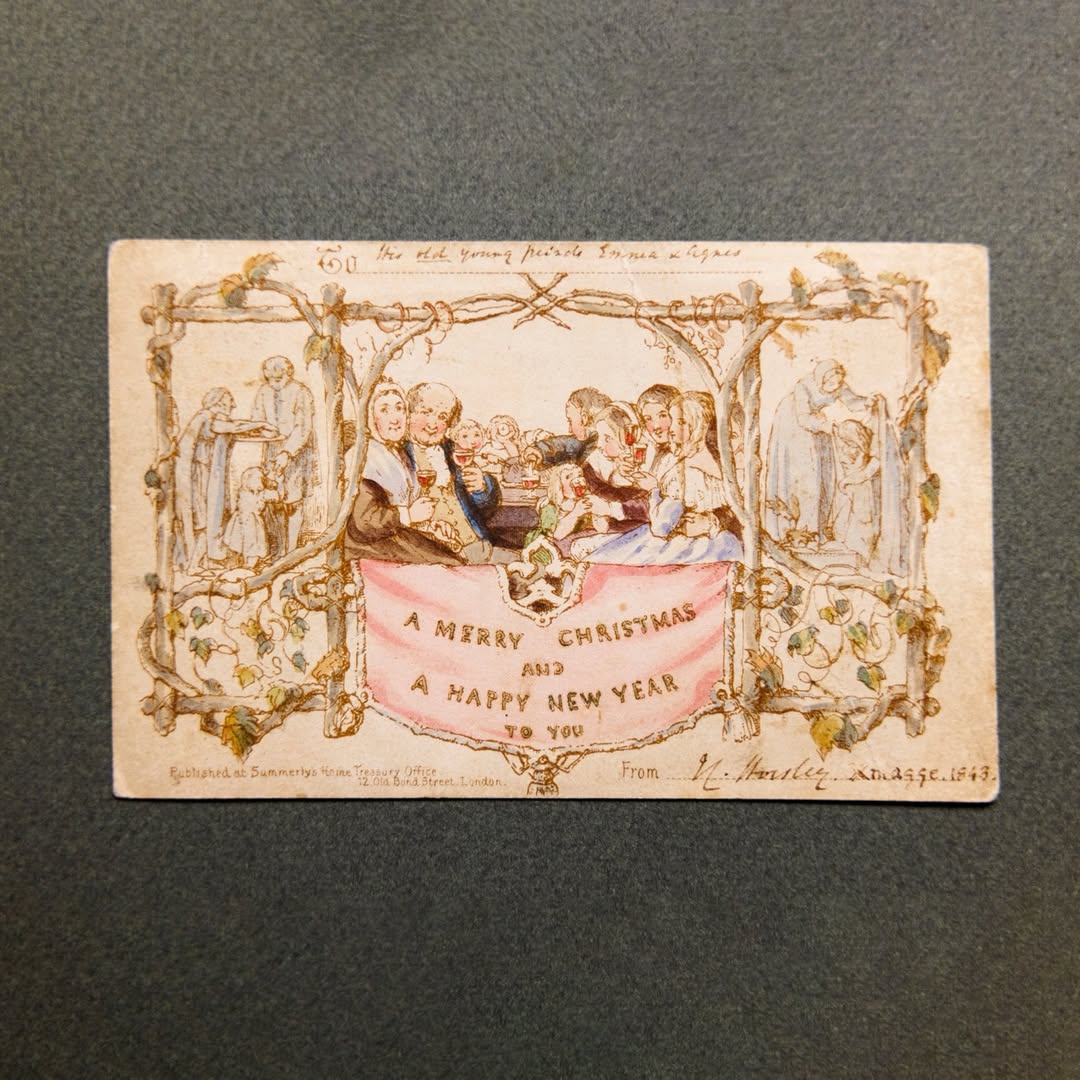
On National Christmas Card Day we are pleased to share, from the Library’s Rare Book and Special Collections Division, a copy of the first commercial Christmas card, created in 1843.
It was, by coincidence, the same year that Charles Dickens published “A Christmas Carol.”
The two creations, and the iconography they inspired, went a long way toward establishing the Victorian concept of Christmas, which, in turn, we now regard as the “traditional” Christmas.
Henry Cole, a British civil servant and patron of the arts, commissioned friend and illustrator John Calcott Horsley to design a card that he could send to friends and family in lieu of writing lengthy Christmas letters. Horsley used chromolithography, a process suited to making lots and lots of copies.
You can see the lines at the top and bottom of the card where recipient and sender names are meant to be written. Horsley signed this card in the “From” field in the bottom right corner.
‘words have no wings, but they can fly a thousand miles.’
-korean proverb
Image: The very first mass-produced Christmas card, 1843.
Illustrated by John Calcott Horsley. 1843.
Photographed by Shawn Miller/Library of Congress.

haint.

Standard

this is the haint blue ceiling of the porch on the very old house

where we are staying in south carolina

Haint Blue is a term used for a range of pale, blue-green colors that are similar to the color of water or the sky. They’re often used to paint the porch ceilings of homes in the southern United States. The reason people paint their porch ceilings this color is a tale of tradition from the Deep South.

The word “haint” is a colloquial way to pronounce “haunt,” another word for ghosts or evil spirits. The word comes from the Gullah, a community of people descended from West African enslaved people who settled on the coast of Georgia and South Carolina.

The Gullah people  created this color by mixing indigo with lime, milk, and other natural ingredients. They painted porch ceilings, shutters, and even doors in this shade to keep away “haints” aka. restless spirits. The idea was simple but powerful: they believed that haints were afraid of water, spirits couldn’t cross water or sky, and so the color blue would protect the home.

Haint Blue paint was a form of protection for the Gullah and the southern communities embraced it wholeheartedly. That’s why so many porch ceilings throughout the south are painted a beautiful light blue-green, which has become known as haint blue.This  color is tied to memory, protection, and survival.

‘color is a power which directly influences the soul.’

-wassily kandinsky


charleston, south carolina, usa, October 2025

fighting words.

Standard

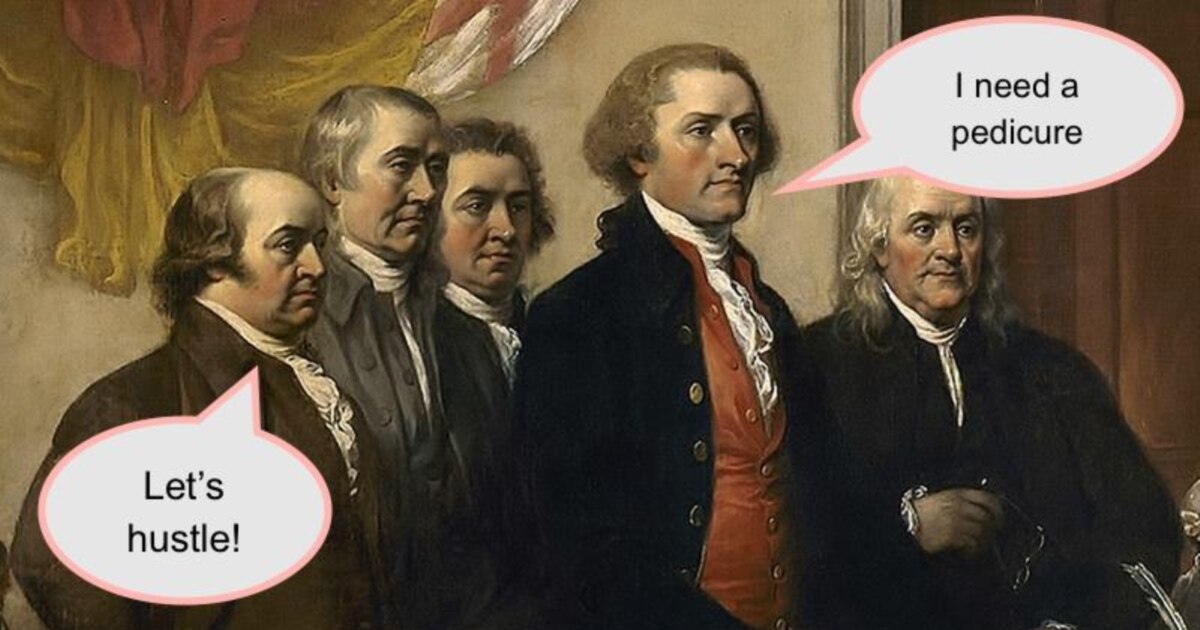
our founding fathers irked england by inventing american english

thomas jefferson is credited with coining over 100 words — more than any other president. among the words the third president introduced are “indecipherable,” “belittle,” and “pedicure,” the latter of which means to care for the feet and toenails. “Pedicure” was one of several words that Jefferson borrowed from the French after spending many years in Paris.

next time you get your pedicure,

you’ll have TJ to thank for bringing this word to us,

otherwise you wouldn’t have known what service to ask for

when you booked your appointment. 

‘where can i find a man who has forgotten words so i can have a word with him?’

-zhuangzi


source credits: VOA, Saturday Evening Post

history.

Standard


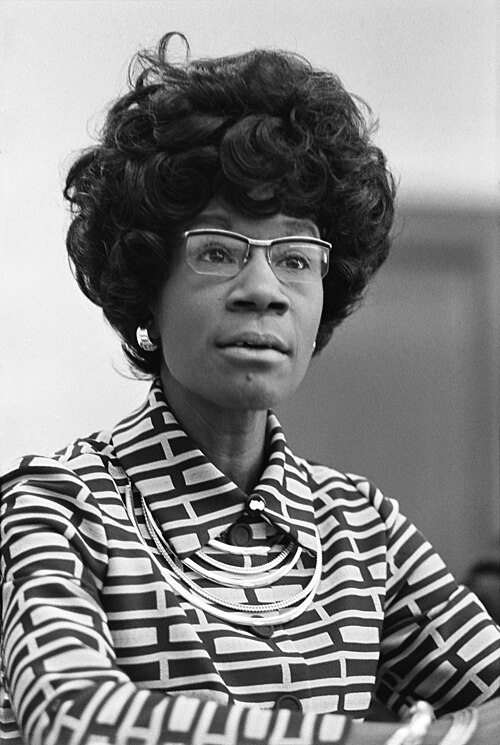
February is Black History Month 

The Library of Congress, National Archives and Records Administration, National Endowment for the Humanities, National Gallery of Art, National Park Service, Smithsonian Institution and United States Holocaust Memorial Museum join in paying tribute to the generations of African Americans who struggled with adversity to achieve full citizenship in American society.

‘all labor that uplifts humanity has dignity.’— Reverend Doctor Martin Luther King, Jr.


image credit: pbs

waffle frolic.

Standard

‘why can’t i just eat my waffle?’

– barack obama


Early Americans held waffle-eating parties called “waffle frolics.”

Brunch has an understandable hold on Americans — after all, who can pass up the opportunity to enjoy a delicious smattering of sweet and savory plates (alongside good company, of course)? Apparently, Americans of the past couldn’t say no either, gathering to share food and fun at so-called “waffle frolics.” These waffle-eating get-togethers were most popular during the colonial era, eventually petering out by the mid-20th century. At their peak, they were elaborate, multi-course meals that showcased freshly ironed waffles as the  main course.

Little is recorded about the particulars of early waffle frolics, but one description, by William Livingstone, a 21-year-old Yale student who recounted his party experience in a 1744 letter, describes the soiree as a lavish affair. “After a few games, a magnificent supper appeared in grand order and decorum,” he wrote. “But for my own part I was not a little grieved that so luxurious a feast should come under the name of a wafel-frolic, because if this be the case I must expect but a few wafel-frolics for the future.”

Waffles have been widely eaten throughout Europe since the Middle Ages, sold by street vendors and often consumed on religious holidays. Eventually, they made their way to the American colonies alongside the Pilgrims, and it was in the New World where they were paired with maple syrup for the first time. Culinary lore sometimes suggests it was founding father Thomas Jefferson who ignited the waffle frolic craze in the 1790s upon his return from France, after he arrived with four  waffle irons in his luggage. As president, Jefferson reportedly served the treat to Meriwether Lewis at the White House prior to the Lewis and Clark expedition.

‘a wafffle is like a pancake with a syrup trap.’

-mitch hedberg

Waffles cooked and served every minute at Waffle House restaurants -145

Weight (in pounds) of the world’s largest waffle, created in the Netherlands in 2013 – 110


image and source credits: interesting facts, waffle house, babycenter.com, king arthur baking

unfit for consumption. but so good.

Standard


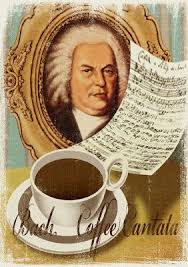
Johann Bach is remembered as one of the world’s greatest composers, known for orchestral compositions such as the Brandenburg Concertos. But one of Bach’s lesser-known works is Schweigt stille, plaudert nicht (“Be Still, Stop Chattering”) — a humorous ode to coffee popularly known as the Coffee Canata. Written sometime in the 1730s, Bach’s mini comic opera makes light of fears at the time that coffee was an immoral beverage entirely unfit for consumption. In the 18th century, coffee shops in Europe were known to be boisterous places of conversation, unchaperoned meeting places for young romantics, and the birthplaces of political plots. A reported lover of coffee, Bach wrote a 10-movement piece that pokes fun at the uproar over coffee. The opera tells the story of a father attempting to persuade his daughter to give up her coffee addiction so that she might get married, but in the end, she just becomes a coffee-imbibing bride.

If I couldn’t three times a day,

be allowed to drink my little cup of coffee, in my anguish,

I will turn into a shriveled-up roast goat.

-Johann Sebastian Bach

*thank you for putting this to music, johann, i feel the same.


source credits: interesting facts, flypaper, wikipedia, etsy mug

neither rain, nor sleet, nor children….

Standard

ask anyone in my family

 they’ll tell you

i’m a huge fan of going to the post office

i love mailing hand-written letters

buying cool stamps

 sending packages to my special people

filled with things i just  know they’d love

even though they don’t know it yet.

all this being said

the post office does have

its own huge set of negatives and challenges

as i’ve written about a number of times

and even a bit of a dark past from the early days.

People Used to Mail Their Children Via the Postal Service

(can’t say if i may have wondered if this was an option

during those sleep-deprived times with 3 small children, back in the day,

just kidding for my now-grown and non-mailed children

who i love dearly and are likely to read this.)

When the United States Postal Service launched their parcel service in 1913, Americans immediately began testing its boundaries. People started mailing coffins, eggs, and even dogs, and a few decided to mail the ultimate precious cargo: human children.

The first known case of baby-shipping happened that same year, when an Ohio couple mailed their 10-pound infant to his grandmother a mile away, which cost them about 15 cents. Some kids traveled farther, like 6-year-old Edna Neff, who was mailed 720 miles from Pensacola, Florida, to her father’s home in Christiansburg, Virginia.

There was only a brief window for mailing kids, though; the postmaster general instituted a strict no-humans rule in 1914. At least two more children managed to slip through: Charlotte May Pierstorff was mailed via rail to her grandparents’ house with the appropriate postage stuck to her coat in 1914, but a postal worker relative escorted her (her story was later turned into a children’s book called ‘Mailing May’). The last recorded case was in 1915, when 3-year-old Maud Smith’s grandparents mailed her 40 miles across Kentucky to visit her sick mother. In 1920, the Postal Service declined two applications to mail children who had been listed as “harmless live animals,” a classification for creatures that don’t require food or water on their journey.

Many of us have heard the postal carriers’ motto in one form or another. “Neither rain, nor snow, nor sleet, nor hail shall keep the postmen from their appointed rounds.”

The original saying was spoken about 2500 years ago by the Greek historian, Herodotus. He actually said “Neither snow, nor rain, nor heat, nor gloom of night stays these courageous couriers from the swift completion of their appointed rounds.” This was said during the war between the Greeks and Persians about 500 B.C. in reference to the Persian mounted postal couriers whom he observed and held in high esteem.

advertisement
According to the U.S.P.S. they have no slogan at all. The reason it has become identified with the U.S.P.S. is because, back in 1896-97, when the NYC General Post Office was being designed, architect, Mitchell Kendal, came up with the idea of engraving Herodotus’ saying all around the outside of the building.

From that time on the saying has been associated with U.S. postal carriers.

source credit: interesting facts

‘if you can dream it, you can do it.’ -walt disney

Standard

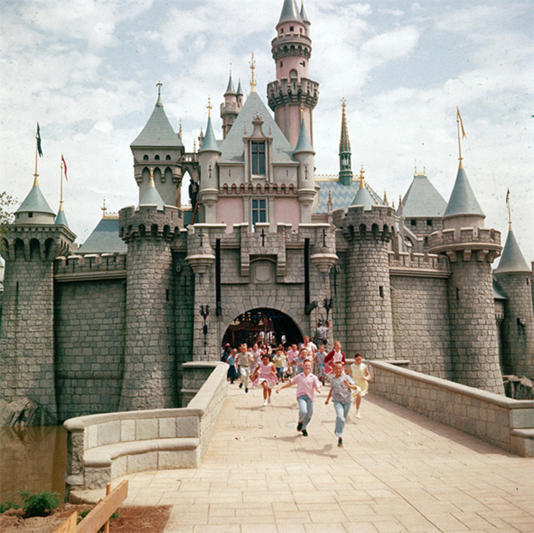
Today, the “Happiest Place on Earth” turns 69 years old. After a year of construction and a $17 million investment  (the equivalent of nearly $200 million today), Disneyland welcomed its first visitors, inviting thousands of studio staffers, construction workers, members of the press, and company sponsors to preview the Anaheim, California, park before it opened to the public the following day. At the time, tickets to explore Adventureland, Frontierland, Fantasyland, Tomorrowland, and Main Street USA cost $1 for adults and 50 cents for kids.

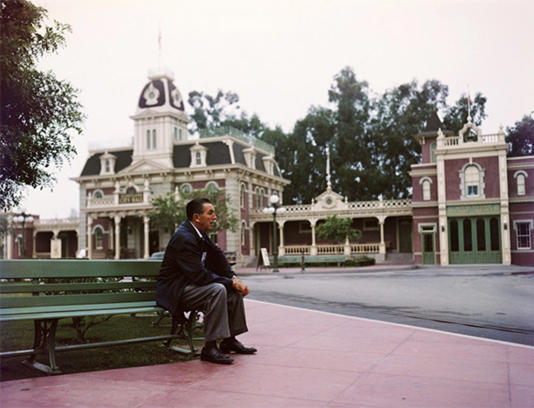
American movie producer, artist, and animator Walt Disney (1901 – 1966) at the end of opening day, as he sits on a bench in his Disneyland amusement park, Anaheim, California, USA. 
“To all who come to this happy place: Welcome. Disneyland is your land,” Walt Disney once said.


‘it’s kind of fun to do the impossible.’

-walt disney


source/image credits: travel and leisure, getty images, gene lester


an instant out of time.

Standard

The first candid photograph of a person was taken in 1838.

Before the 19th century, photography did not exist, so people who wanted a lasting image of their home, their family, or themselves had to have one painted, sculpted, or drawn. In the early 1800s, inventors in France and England were at the center of the effort to create photographic representations of objects and people. In France, Joseph Nicéphore Niépce stunned the world in 1827 when he released what is believed to be the first photograph ever taken, titled “View from the Window at Le Gras.” Niépce rendered the image using a camera obscura combined with a light-sensitive metal plate, a process he called heliography. Despite its success, the heliograph required several days of exposure to capture the scene, eliminating the opportunity to photograph any people who may have been on the street

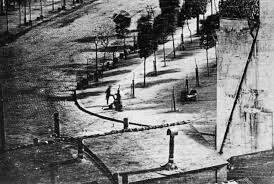
In 1829, Niépce met artist and printmaker Louis-Jacques-Mandé Daguerre. Each man was familiar with the other’s work. Niépce admired Daguerre’s rotating diorama that had captivated Parisian audiences in 1822. Daguerre, like Niépce, saw the potential of improving upon the camera obscura to create clear and permanent images. They entered into a business partnership that resulted in the creation of the daguerreotype, an innovative photographic process that required only four to five minutes of exposure.  The quicker shutter speed allowed Daguerre’s camera to capture an image never seen before: a photo of a human being. In 1838, he debuted a daguerreotype of a street scene on the Boulevard du Temple in Paris. In the lower left corner of the photo we can see a man having his shoes shined; remaining stationary allowed him to be included in the photo, something that would have been impossible using the multiple-day exposure that heliographs required. This anonymous stranger on Boulevard du Temple was not simply the subject of the world’s first candid photograph— he’s also believed to be the first human being ever photographed.

“photography takes an instant out of time, altering life by holding it still.”
– dorothea lange


source credit: historyfacts


on *juneteenth.

Standard

Jordi Prat Pons.Books that had been cast aside, unwanted.

Villa del Arte Galleries Barcelona (at Mandarin Oriental). Passeig de Gràcia 38-40


“it really boils down to this: that all life is interrelated. we are all caught in an inescapable network of mutuality, tired into a single garment of destiny. whatever affects one destiny, affects all indirectly.”

-REV. DR. MARTIN LUTHER KING JR.

*Juneteenth (short for “June Nineteenth”) marks the day when federal troops arrived in Galveston, Texas in 1865 to take control of the state and ensure that all enslaved people be freed. The troops’ arrival came a full two and a half years after the signing of the Emancipation Proclamation. Juneteenth honors the end to slavery in the United States and is considered the longest-running African American holiday. On June 17, 2021, it  officially became a federal holiday.