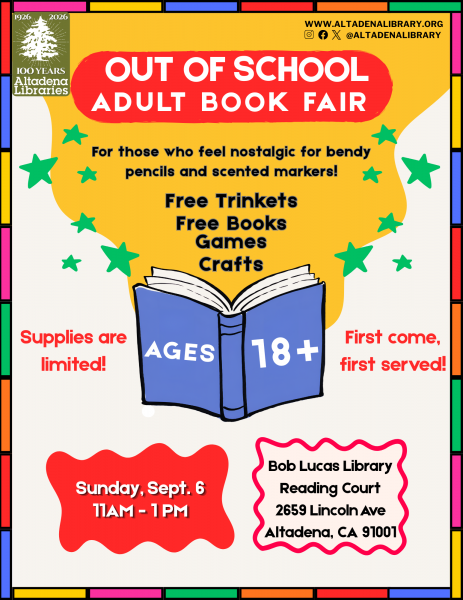
Are you still chasing the feeling of your school’s annual book fair? Nostalgic for bendy pencils, scented markers, and novelty erasers? Come feel like a kid again at our Out of School Adult Book Fair!
We’ll offer free trinkets and books that bring meld nostalgia with adult interests! We’ll have games and crafts set up for a fun time together!
For adults, 18 and over
Bob Lucas Memorial Library & Literacy Center
Our library serves an ethnically-diverse community of disaster survivors, most of whom lost everything. They are well worth supporting. – www.altadenalibrary.org
—
‘joy doesn’t have to wait until the hard stuff is over.
it can exist in simple, ordinary moments alongside the mess.
he kindly agreed to let me share and reblog this wonderful lesson
i wonder if everyone read this and took it to heart,
would they understand more
about how lucky they are in this world
and begin to help others
who are not as lucky?
—
When I was a young kid, I was small for my age. We’d line up at the start of the year, smallest to the tallest, and I would always be one of the shortest boys in my class. I wasn’t the smartest either, I had to work hard for my grades. Every ‘A’ felt like I had run a grueling marathon to earn it.
On top of that, I would compete against my bigger, stronger brothers and always seemed to get my butt whooped. I write this to say that I didn’t feel special or lucky. When I was successful in school or sports, I would inevitably downplay my wins, assuming the test was easy or the challenge lighter than in past years.
My feeling of being just average persisted for a long time. I was curious about others, but I didn’t have great perspective. It took going off to college for me to see how fortunate I was. I walked in one day to my Economics 101 class and the prof started talking about how fortunate we were to be sitting in his classroom and to have the “luxuries” that we took for granted. He broke the world down into 100 people and called us some of the lucky ones.
Getting to the heart of the issue
We were supposed to be talking about some abstract economics concept that was going to be on the next test, but none of my classmates nor I were going to remind him. I was curious about this new topic and found it fascinating. With a few simple numbers, he showed that I was luckier than I ever could have imagined.
Here’s what I mean.
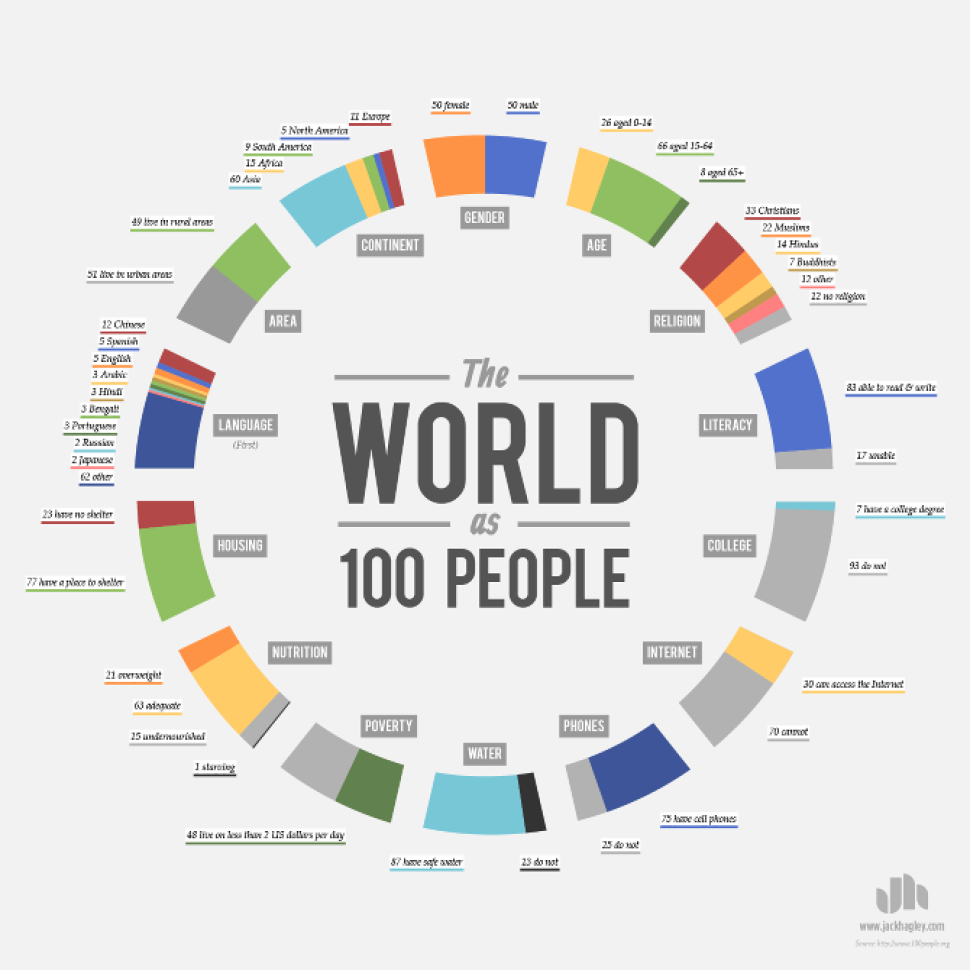
The 100 People Foundation, regularly uses World Factbook data to break the world into smaller more easily digestible numbers. If the world were a village of 100 people, of course, there would be an equal number of men and women. The majority of the people, 66 to be exact, would be between 15-64 years old, 25 would be between infant and 14 years of age, and 9 would be 65 and older.
From a geographic standpoint, 61 villagers would be Asian (of that, 20 would be Chinese and 17 would be Indian), 14 would be African, 11 would be European, 9 would be Latin or South American, 5 would be North American. As far as languages go, the largest number, 12, would speak Chinese, with 6 speaking Spanish, and five English.
One of the lucky ones
But here’s where it gets interesting. Less than 7 percent of the people would have their own home, eat full meals and drink clean water, have a mobile phone, surf the internet, and have gone to college. Yes, the devil is in the details. Let that sink in, less than 7 percent. Um, I get annoyed when the wifi goes down for a minute, 93% don’t have the Internet or a mobile phone? Really?
Of the 100, close to 80 people would have a place to shelter them from the wind and the rain, but 22 would not. Can you imagine, no shelter? Nothing substantial to save them from Mother Nature’s slights including storms, hurricanes, fires. Eleven of the 100 would be undernourished and 1 would die of starvation. Of the 100, 86 would be able to read and write; 14 would not, with only 7 having a college degree.
I can’t speak for the rest of my Econ class, but when I started to view wins and losses from a different lens, I started to see how fortunate I’ve been in my life.
What about you? How fortunate do you feel when you look at your life from this perspective? Brian
—
“The Overview effect is a cognitive shift. You look down at the earth and realize that everyone who ever lived and died, every person that has ever been born was within this tiny blue speck in space. Divisions such as race, gender, country and language fall away.
The design is round because the world is round, and I wanted to make it a defined and pleasing shape. The colours are chosen from flags. It uses natural frequencies instead of percentages. This is a deliberate choice so that it can be as accessible to as many people as possible.”
credit: This graphic was tweeted byAstronaut Chris Hadfield, and reprinted in many publications.
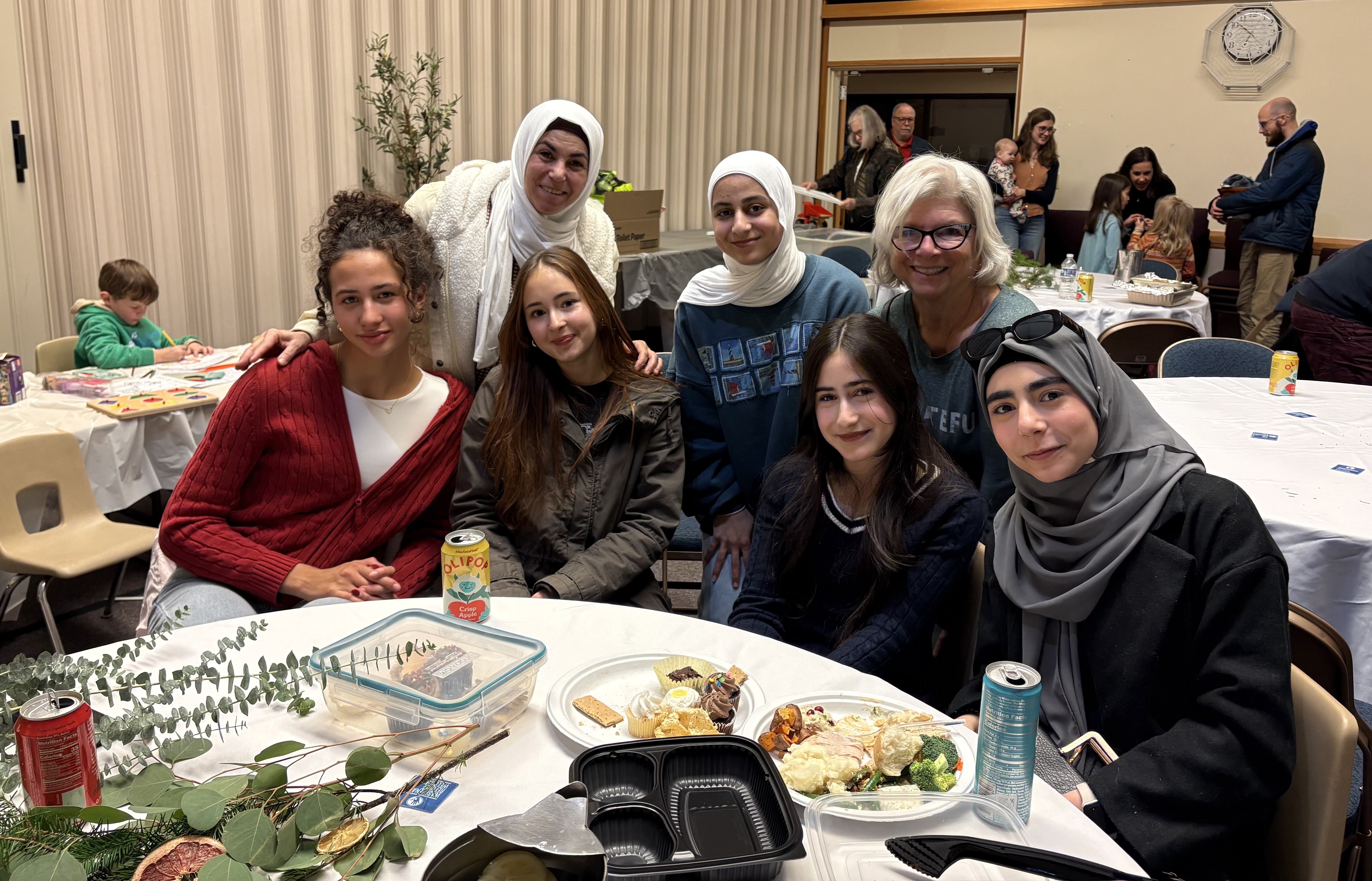
Last night I had the honor of sharing a meal with neighbors in my community. Some were volunteers, some came just to be friendly, and others were refugees from all over the world, now part of our community. The annual Thanksgiving Potluck get together was organized by Washtenaw Refugee Welcome, (whose mission is to identify and mobilize resources to support refugees and resettlement agencies in Washtenaw County), and EVERYONE in the community was invited.
Having gratitude for our neighbors was a great reason to come together and a shared meal was a natural way to get to know each other. Many of our refugee families brought food from their cultures and some local residents brought traditional North American foods to share. There was music, and art and things to play with, and toys for the children to take home.
The refugee crisis is a humanitarian issue that continues to touch every corner of our globe. Today, there are millions of refugees worldwide, each with their own unique story of resilience, hope, and survival against overwhelming odds.
They have been forced to flee their homes due to war, persecution or natural disasters, often embarking on dangerous journeys in search of safety and a better life. They represent some of the most vulnerable populations in the world, yet their courage and strength in the face of adversity are remarkable.
Over dinner, they shared their experience, their hardships, resilience, and hope for a safer future. Their words were a reminder of our shared responsibility to protect and support refugees and the importance of compassion, empathy, and understanding in addressing the refugee crisis. There is a shared humanity that connects us all.
“refugees are mothers, fathers, sisters, brothers, children,
with the same hopes and ambitions as us-
except that a twist of fate has bound their lives
to a global refugee crisis on an unprecedented scale.”
“i will always be on the side of those who have nothing
and who are not even allowed to enjoy the nothing they have in peace.”
-federico garcía lorca
—
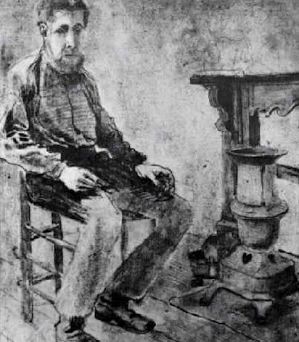
“Man Sitting by the Stove The Pauper” by Vincent van Gogh, created in 1882 in The Hague, Netherlands. Chalk and pencil on paper. Currently held in a private collection.
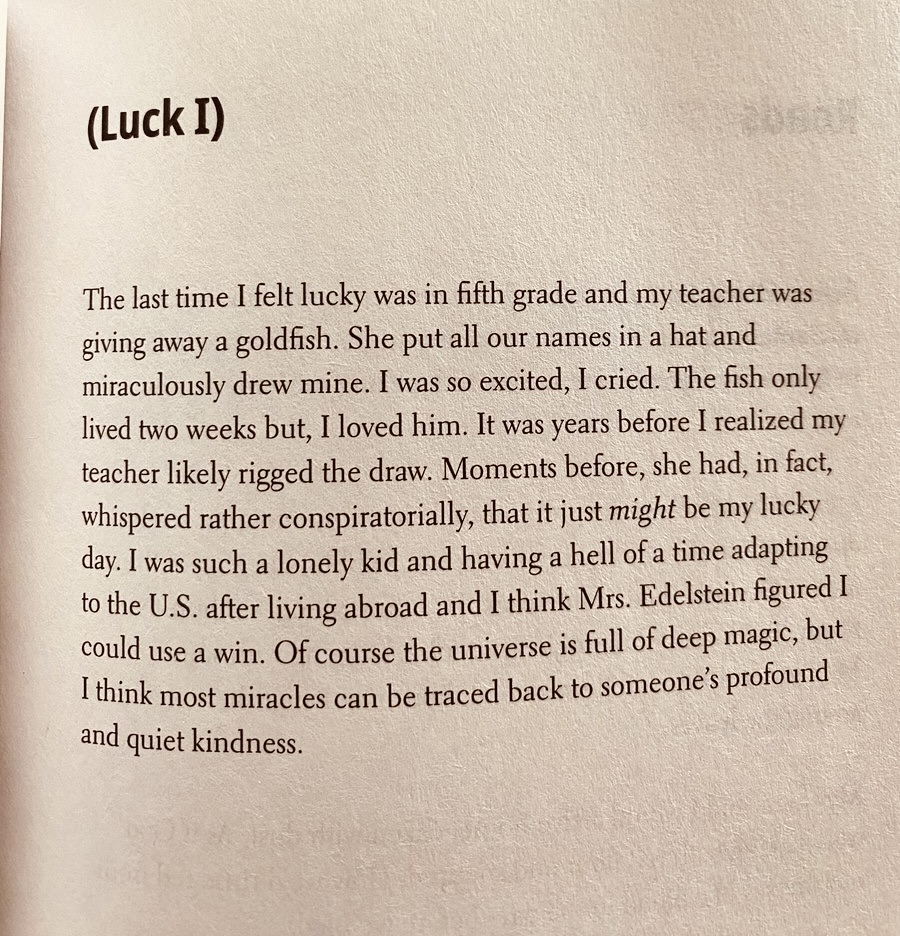
this very moving page popped up on my screen recently
proof once again
that one person’s simple act
can have a huge impact on another
often without them ever knowing.
profound and quiet kindness
yes.
—
source credit: Luck (I), by Joy Sullivan
Joy lives in Portland, Oregon and is a poet and educator. She has a masters degree in poetry and served as the poet-in-residence for the Wexner Center for the Arts. She also leads live transformative writing workshops for individuals who have experienced trauma and has guest-lectured in classrooms from Stanford to Florida State University.
Joy’s work is a part of The San Marcos Writing Project and is one of over 200 writing project sites in the country devoted to developing teacher leaders that improve the writing and learning of all students.
A wildlife hospital just solved a hilarious case of mistaken identity.
On Thursday, a woman brought in a baby hedgehog to the Lower Moss Nature Reserve and Wildlife Hospital in Cheshire, England — only to be told it wasn’t an animal in need, but a beanie hat pop-pom.
The caring woman had picked up the ‘hedgehog’ from the side of the road after she noticed it “hadn’t moved or pooped all night,” reported U.K. newspaper The Independent.
“From a distance, you take it at face value. She didn’t handle it at all — she scooped it in a box with some cat food and left it alone in a warm, dark place,” veterinarian Janet Kotze, told the paper.
“She did everything so well. She barely peeked at it because she didn’t want to stress it out.”
Kotze described the woman who made the rescue as having “well-meaning” intentions. She said she knew immediately when presented with the box containing the ‘hedgehog’ what it actually was.
“It was pretty obvious to us but I can also see how she was mistaken,” she recalled. “She said, ‘You’re joking! Oh my goodness, how did I do that?’ ”
“She was so concentrated on doing the right thing. She was concerned it hadn’t moved or even pooed — that would be spooky if it had,” Kotze added.
A real-life hedgehog
The wildlife hospital wrote of the rescue attempt on Facebook, “Our hearts melted as a kind soul thought she was rescuing a baby hedgehog,” as they jokingly nicknamed the pop-pom ‘hoglet.’
Despite the mistake, the reserve shared that the “adorable” new visitor “still got all the love, complete with some cozy TLC.”
“Remember, kindness knows no bounds, even when it’s to a faux furry friend! 🐾,” the wildlife hospital added while highlighting the importance of rescuing hedgehogs in vulnerable situations.
“Please remember, if you spot a hedgehog out during the day, it’s a sign something’s not right. Pop them in a box with a warm source and seek help from your local vets. Let’s keep our prickly friends safe!”
—
“he was so benevolent, so merciful a man that, in his mistaken passion, he
would have held an umbrella over a duck in a shower of rain.”
-douglas william jerrold
—
p.s. confession: this could have easily been me. especially if i didn’t have my glasses on.
—
source credits: escher walcott, people, the independent, kennedy news media photo,
where are those kids going and what are they up to?
—
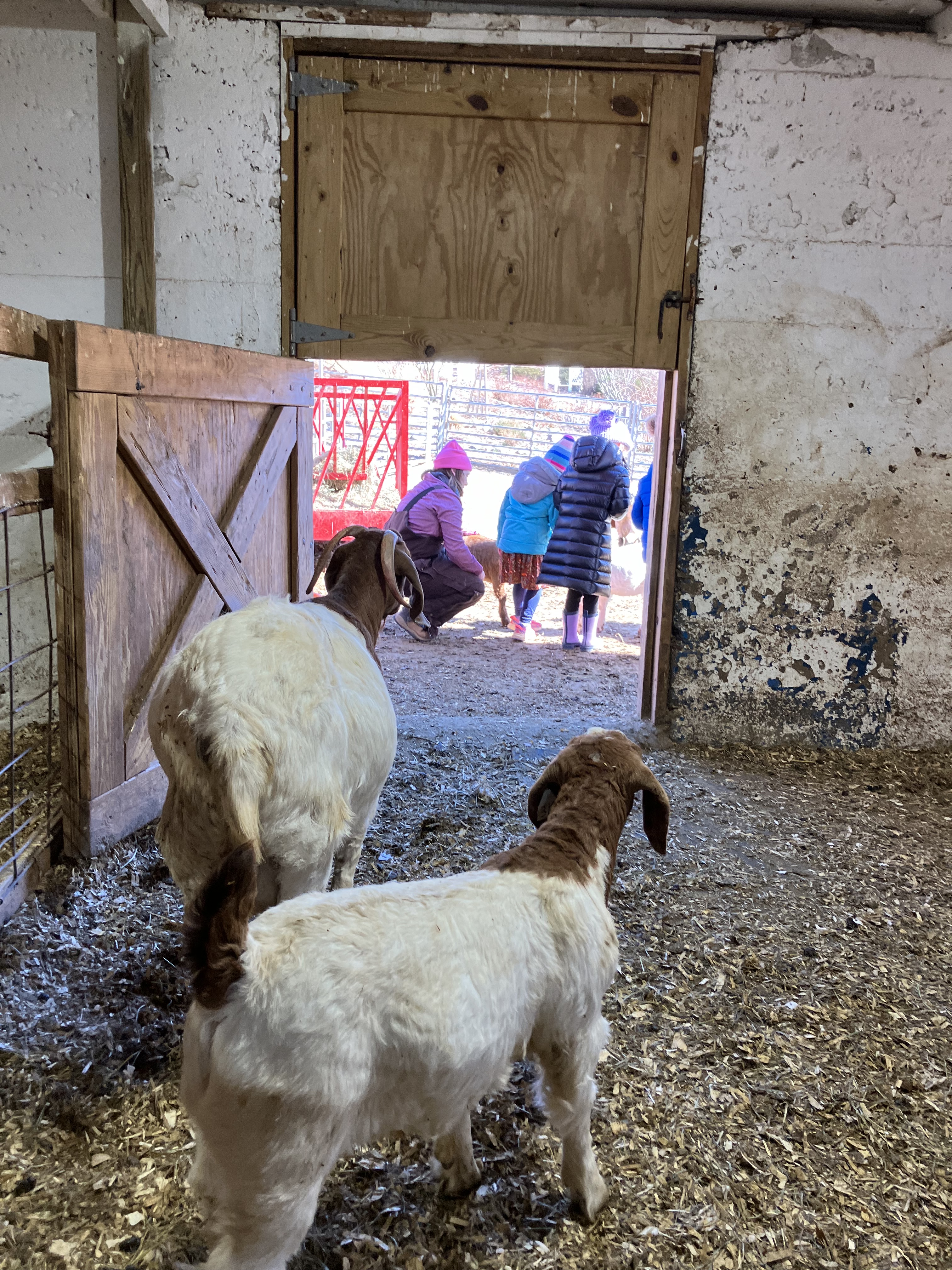
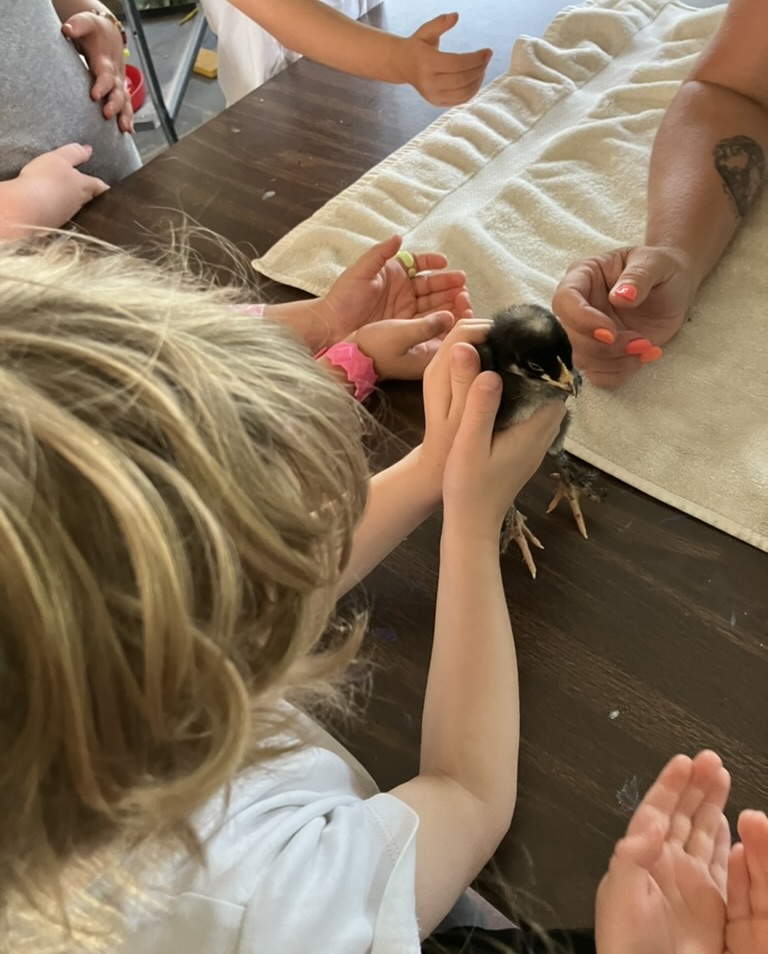
today we went back to the farm
to see how it has changed since our fall visit
there were no leaves
there were no pumpkins
there were lots of new babies
there was not a lot of green
but the animals were as sweet as ever
and that never changes.
—
‘to teach children that animals have certain rights
creates in their minds a respect and regard for life.’
*-caroline earle white
*Caroline Earle White founded the first animal shelter in the United States in 1869. Born on September 28, 1833 in Philadelphia, Penn., White became an influential figure not only in animal welfare, but also fought for women’s suffrage and equality. White and a group of 30 women activists created the Women’s Pennsylvania Society for the Prevention of Cruelty to Animals (WPSPCA), America’s first official animal shelter. Later known as the Women’s Humane Society, the organization pioneered programs that helped save homeless animals and employed animal cruelty officers to prevent and punish animal abuse. The organization still operates today as the Women’s Animal Center.

:max_bytes(150000):strip_icc():focal(749x0:751x2)/hedgehog-bobble-fail-032724-1-f42e941af4d84eeab2f40df5fefc86be.jpg)
:max_bytes(150000):strip_icc():focal(626x0:628x2)/GettyImages-89246695-56a2bd503df78cf7727964f3.jpg)