American Sampler
Activating the Archive
Guest Curator: Julie Ault, Artist
Jan, 2026 – Ongoing
Vertical Gallery
THE ART, LANGUAGE, AND LEGACY OF PROTEST
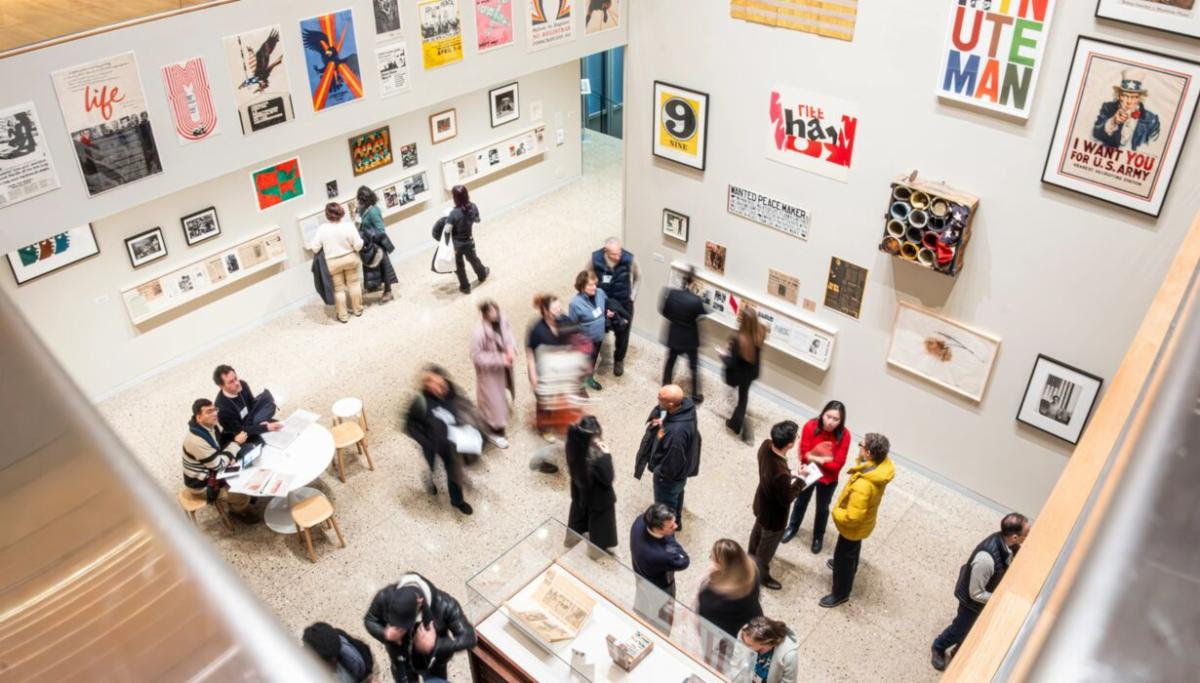
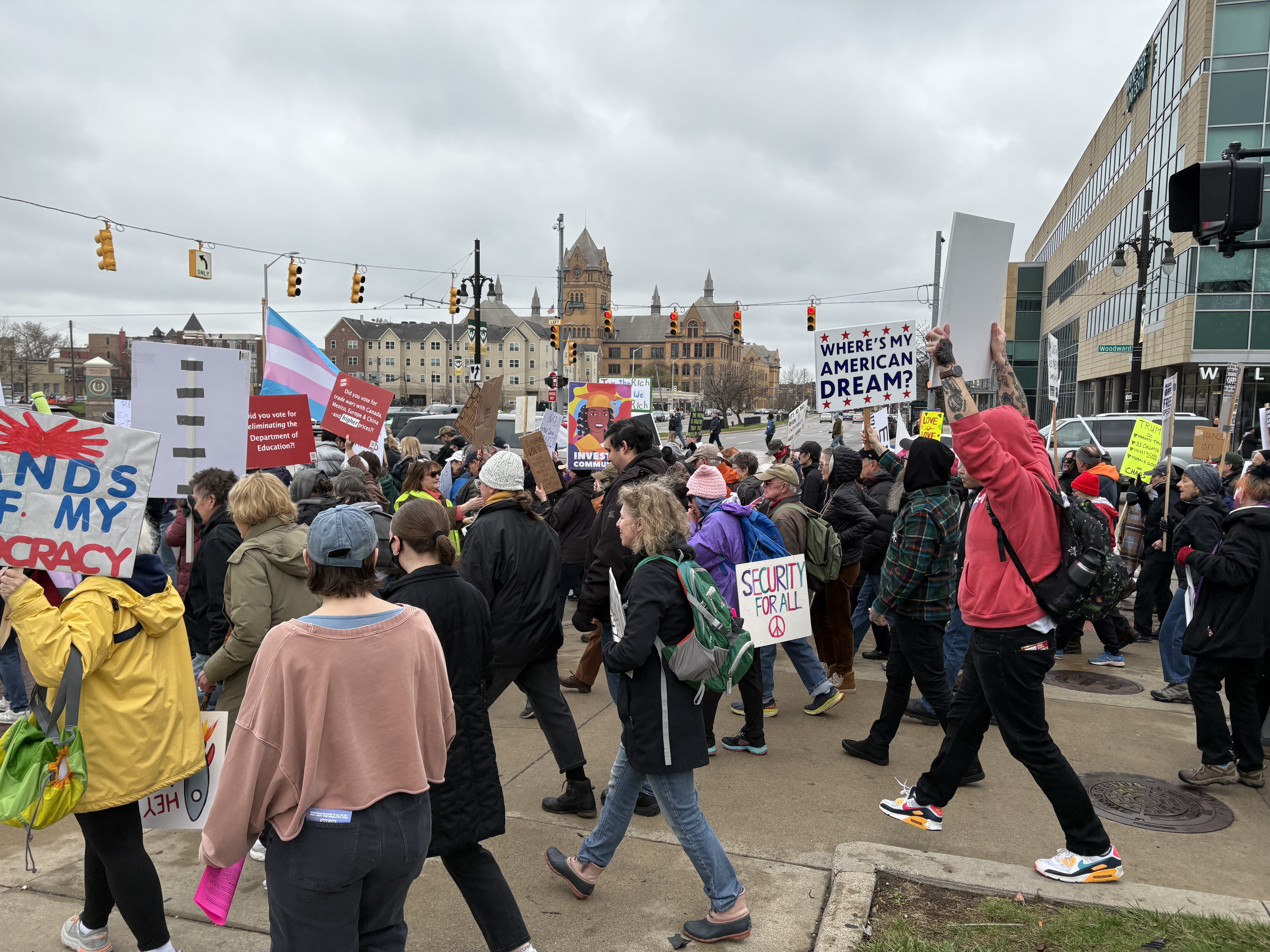
This archive looks back to a period when protest reshaped the nation. Curated by MacArthur Fellow Julie Ault in collaboration with the University of Michigan’s Labadie Collection of political dissent, this eighteen-month exhibition transforms UMMA’s towering Vertical Gallery into a living record of activism.
Bringing together artworks, archival documents, and rare ephemera from the 1950s through the 1970s, American Sampler explores the interconnected movements for Black Freedom, civil rights, and resistance to the Vietnam War—and the visual strategies that gave them power. Through striking juxtapositions of art and protest material, the exhibition asks visitors to consider how acts of dissent are built, communicated, and remembered.
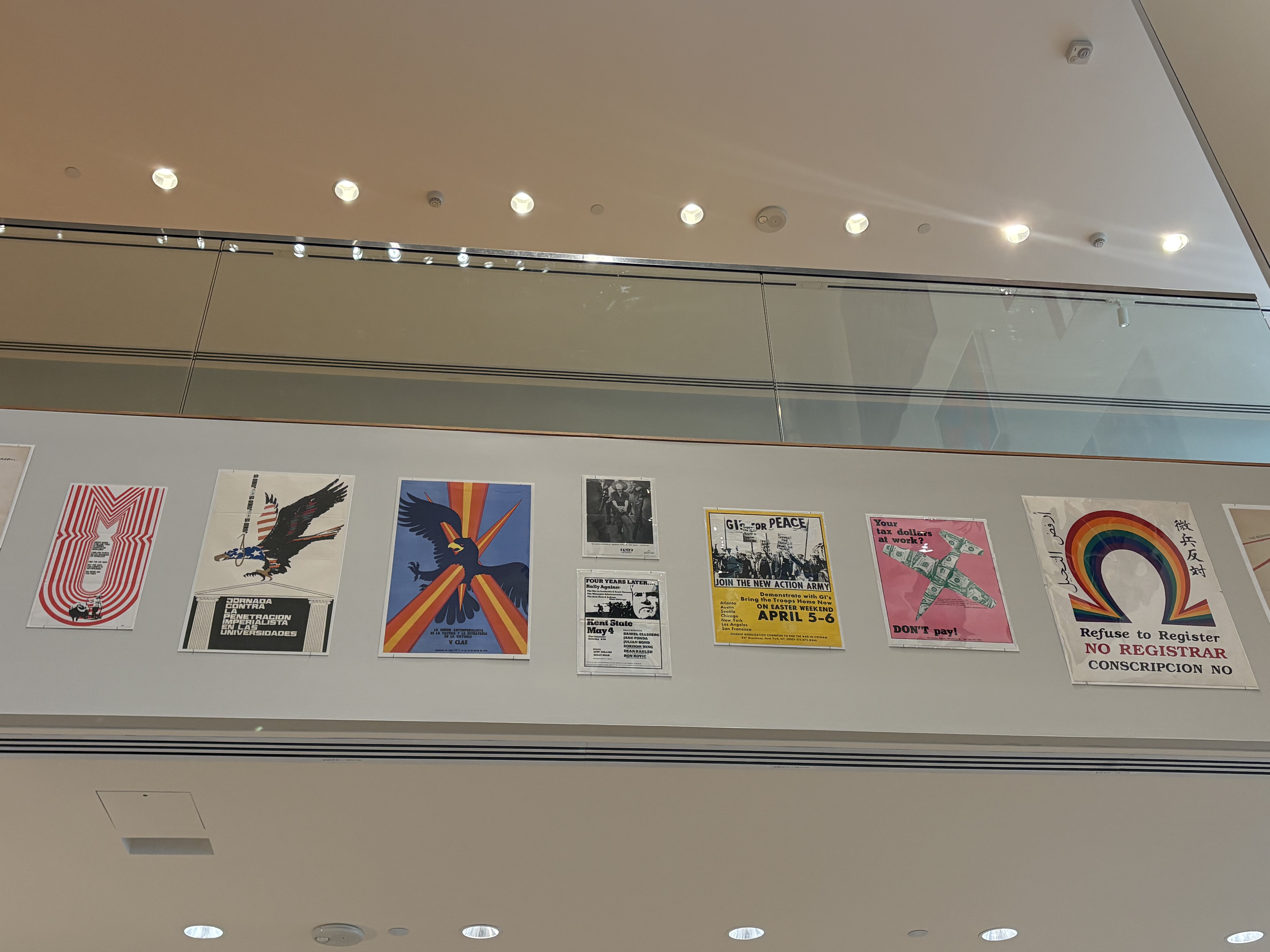
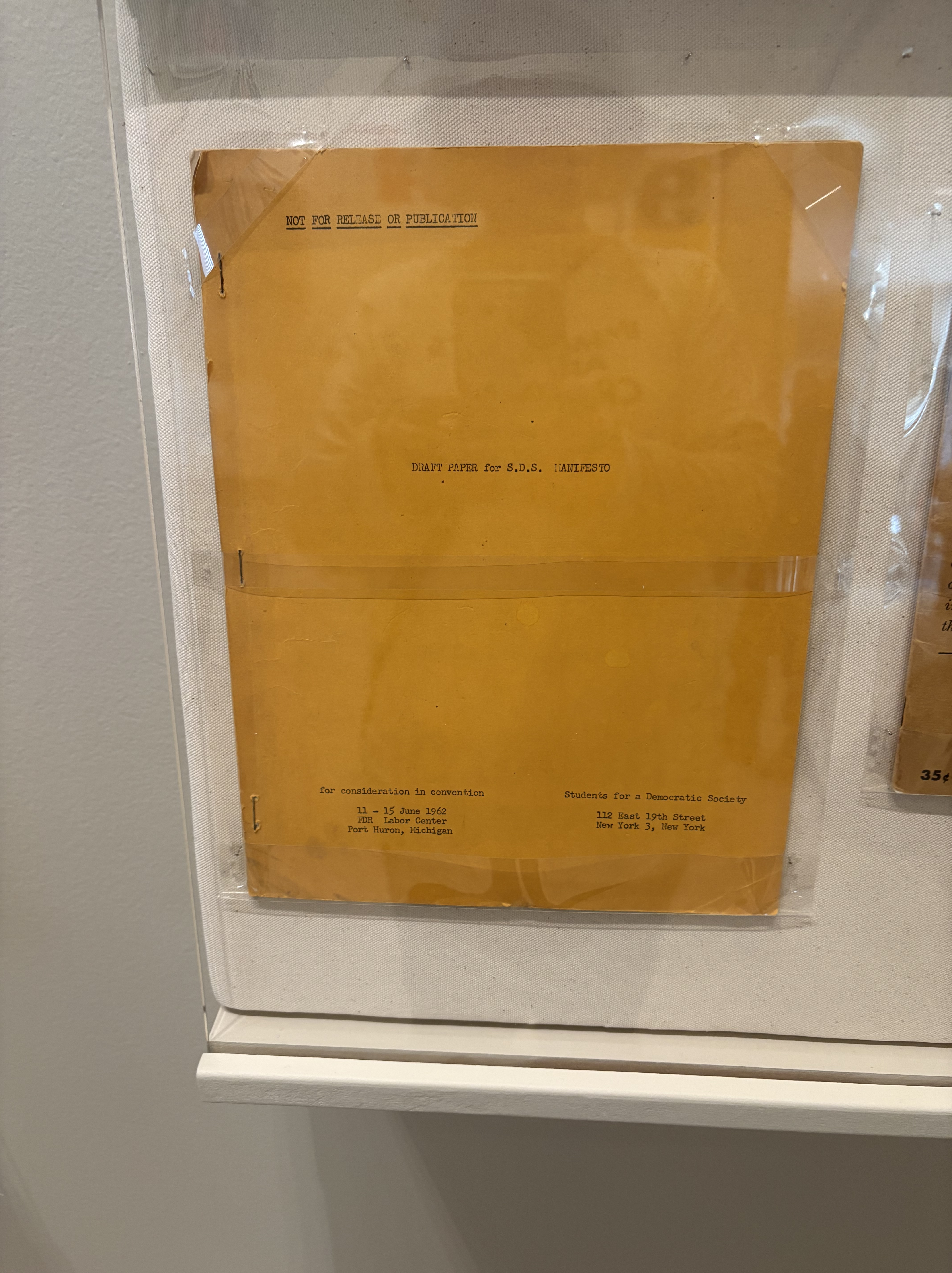
Featuring works by Romare Bearden, Robert Indiana, Corita Kent, Jacob Lawrence, Nancy Spero, Félix González-Torres, and others alongside archival materials such as protest posters, Freedom Rider testimonials, GI resistance material, and courtroom records from the Chicago Seven trial, American Sampler uplifts the shared aims of art and activism. Opening in advance of the United States’ 250th anniversary, Ault offers a timely reflection on dissent as a cornerstone of American democracy and identity.
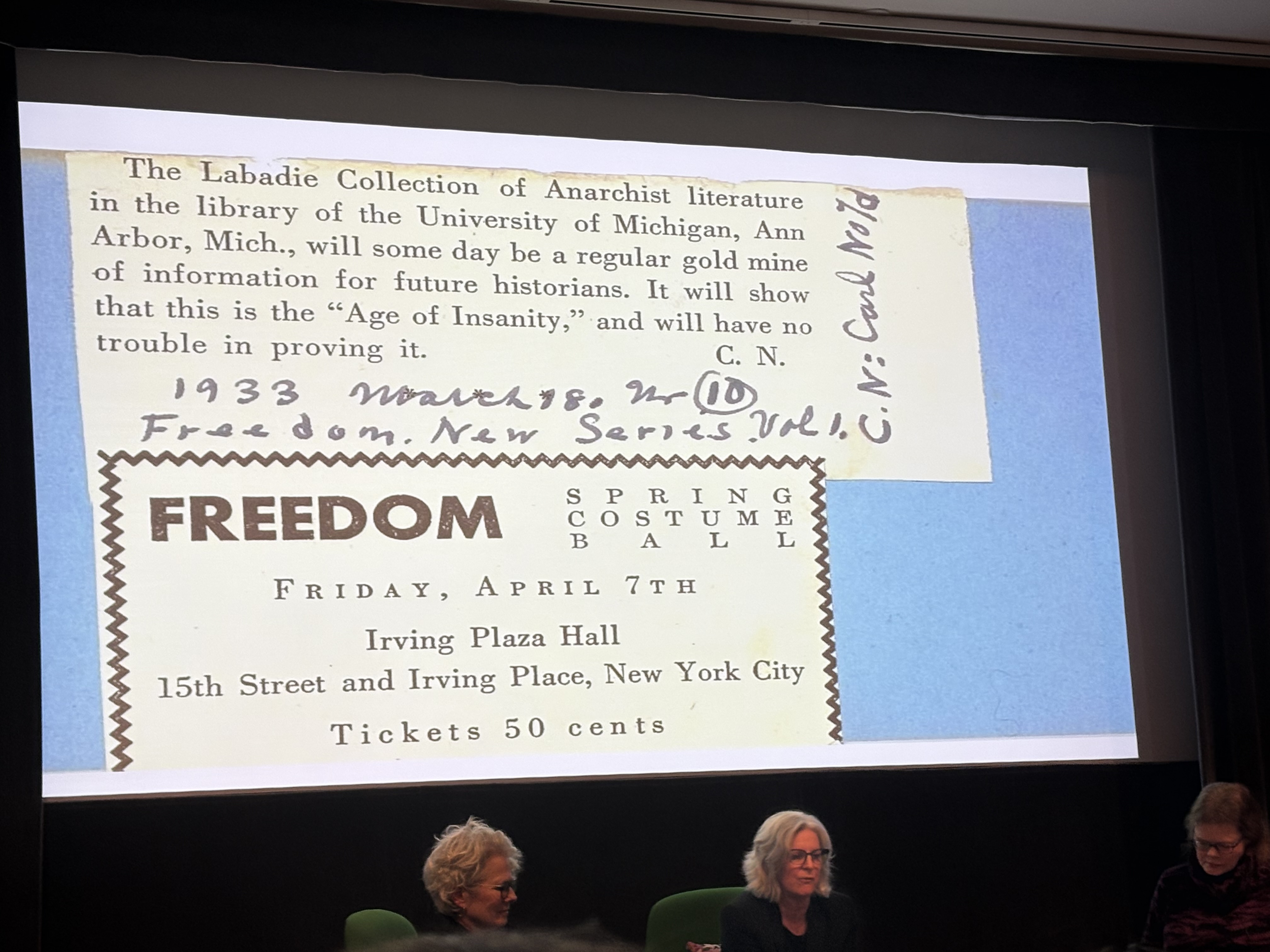
I went to see American Sampler and it was fascinating to see the artistic and written expression of artists, writers, and activists of the past. Original documents, posters, writings and historical pieces were on display, and I learned many new things about the history of politics, protest, and social movements in the process. Afterwords, I attended a discussion with the curator of the University of Michigan Library’s Labadie Collection, Julie Herrada, who worked closely with artist and curator, Julie Ault on the project.
—
“artists are the gatekeepers of truth.
we are civilization’s radical voice.”
-paul robeson






 I didn't have my glasses on....