Category Archives: indigenous people

a powerful symbol on indigenous peoples’ day.

Standard

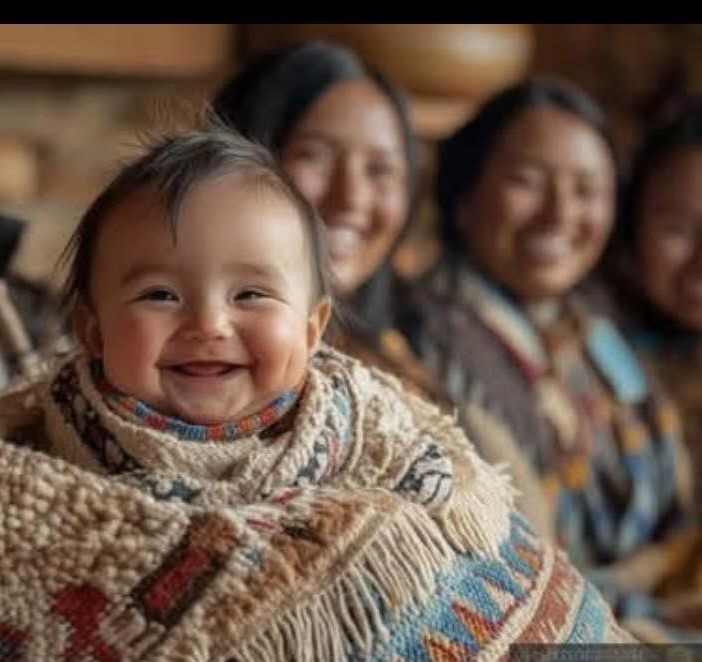
In Navajo (Diné) culture, laughter is considered a powerful symbol of connection. The moment a baby laughs for the first time, it is believed they are choosing to join the human community. Until then, the baby is viewed as still being in transition between the spiritual and physical worlds.

This tradition, known as the A’wee Chi’deedloh ceremony, is typically observed around three months of age. Family members pay close attention during this period, eager to be the one who makes the child laugh. Whoever succeeds earns the honor of hosting the celebration, often preparing a meal of salted food and gifts to mark the occasion.
The ceremony not only celebrates the baby’s first expression of joy, but also emphasizes generosity and community. Salt is symbolically offered to guests to encourage the child to grow up to be generous and kind. It’s one of the earliest social teachings given to a Navajo child, using joy as a path toward belonging and humanity.
Indigenous Peoples’ Day is an official city and state holiday in various localities in the United States that celebrates and honors Indigenous American peoples and commemorates their histories and cultures. It is celebrated on the second Monday in October.

source credits: unity, navajo traditions
action on behalf of life transforms.

Standard

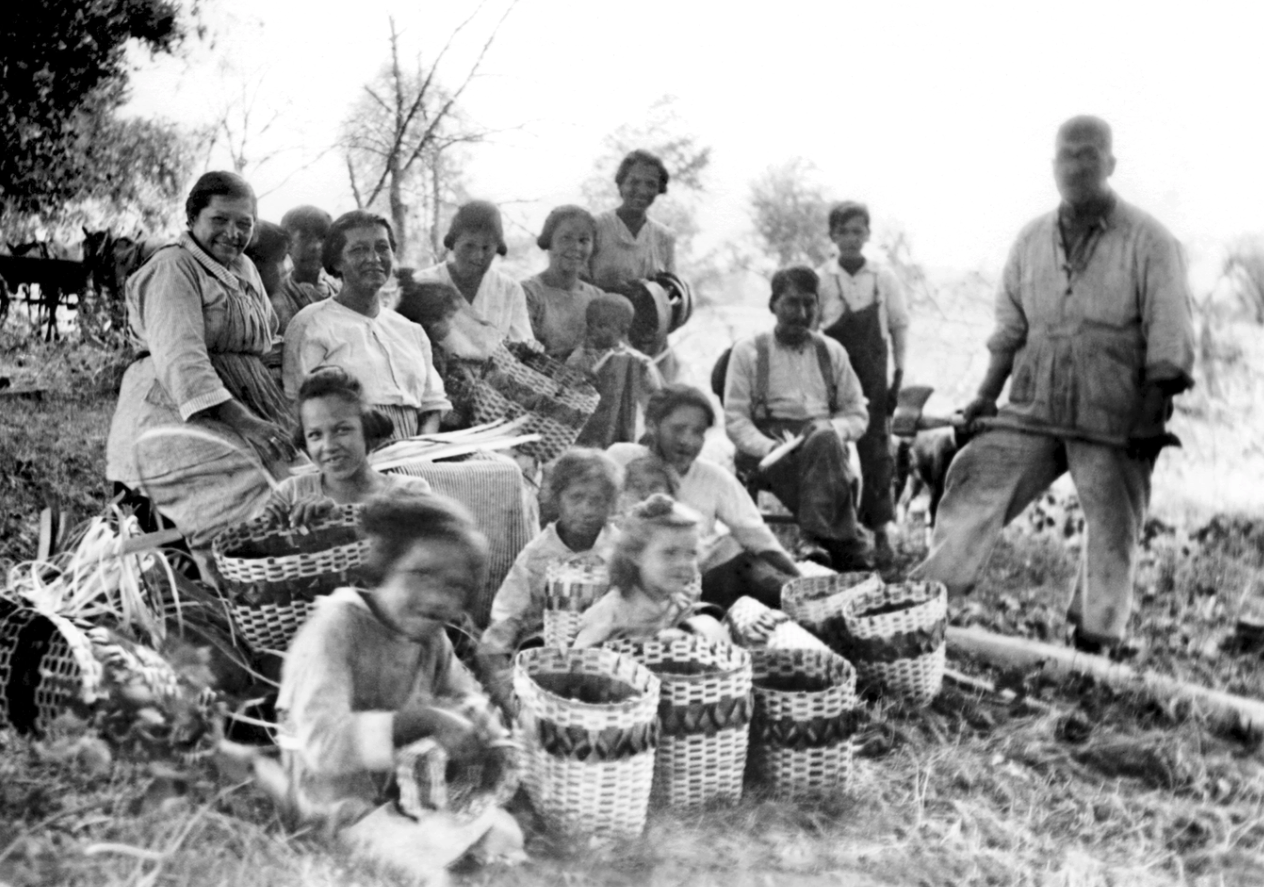
 Group portrait of Potawatomi Indians, including men, women, and children, gathered for a special occasion

at Rush Lake Mission near Watervliet, Michigan, on Sept. 4, 1906.

Library of Congress image attributed to T.R. Hamilton

‘action on behalf of life transforms.

because the relationship between self and world is reciprocal…

as we work to heal the earth, the earth heals us.’

-robin wall kimmerer

robin is a mother, plant ecologist, decorated professor, author, and enrolled member of the Citizen Potawatomi Nation. In her books, she blends scientific understanding with the traditional ecological knowledge of Indigenous Peoples. The above quote is from her book, Braiding Sweetgrass, and I had the great honor to hear her speak last year.

on Indigenous Peoples’ Day


u.s. presidential proclamation:

https://www.whitehouse.gov/briefing-room/presidential-actions/2021/10/08/a-proclamation-indigenous-peoples-day-2021/

indigenous peoples.

Standard

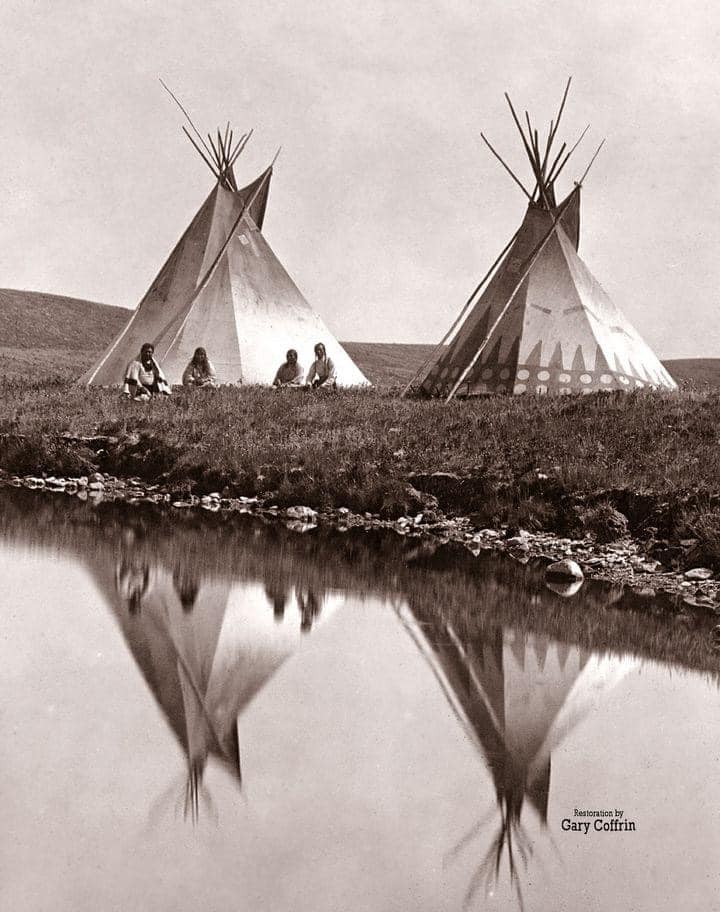
At The Water’s Edge, 1910. Edward S. Curtis photographed Piegan tepees at the Blackfeet Indian Reservation in northwest Montana. The Reservation is bordered by Canada to the north and Glacier Park to the west. Browning, site of tribal headquarters, has an average of 196 days per year with temperatures below freezing.

In Montana, Blackfeet is used as both the singular and plural designation for tribal members. The Siksika of Canada describe themselves as Blackfoot.


“it does not require many words to speak the truth.”

– Chief Joseph, of the Wallowa Band of Nez Perce


 Indigenous Peoples’ Day is a holiday in the  United States that celebrates and honors Indigenous Americans and commemorates their histories and cultures. It is celebrated across the United States on the second Monday in October, and is an official city and state holiday in various localities.


credits: text and digital restoration of photo, gary coffrin, edward s. curtis, native american history site

gichi-gami.

Standard

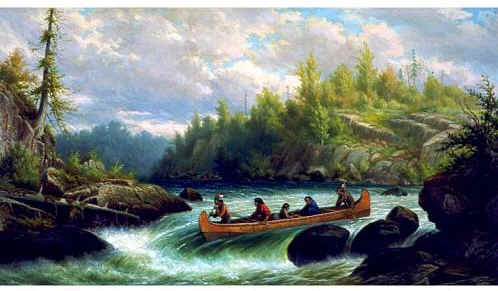
Ojibwe entering the gichi-gami

(artist unknown)

In honor of Indigenous Peoples Day

City of Ann Arbor Land Acknowledgment: 

Equity and justice are at the center of our city’s critical principles. In that light, we’d like to take a moment to honor the geographic and historic space we share. We acknowledge that the land the City of Ann Arbor occupies is the ancestral, traditional, and contemporary lands of the Anishinaabeg – (including Odawa, Ojibwe and Boodewadomi) and Wyandot peoples. We further acknowledge that our City stands, like almost all property in the United States, on lands obtained, generally in unconscionable ways, from indigenous peoples. The taking of this land was formalized by the Treaty of Detroit in 1807. Knowing where we live, work, study, and recreate does not change the past, but a thorough understanding of the ongoing consequences of this past can empower us in our work to create a future that supports human flourishing and justice for all individuals.

 Lake Michigan is named after the Ojibwe word “mishigami” which means “large water” or “large lake.”

Also known as Michigamme/”mishigamaa” meaning “great water“, also etymology for state of Michigan.

The Great Lakes were called  “gichi-gami” (from Ojibwe gichi “big, large, great”; gami “water, lake, sea”).

“man belongs to the earth, the earth does not belong to man.”

-ojibwe saying


credits: project.geo.msu.ed, city of ann arbor, ann arbor public libraries