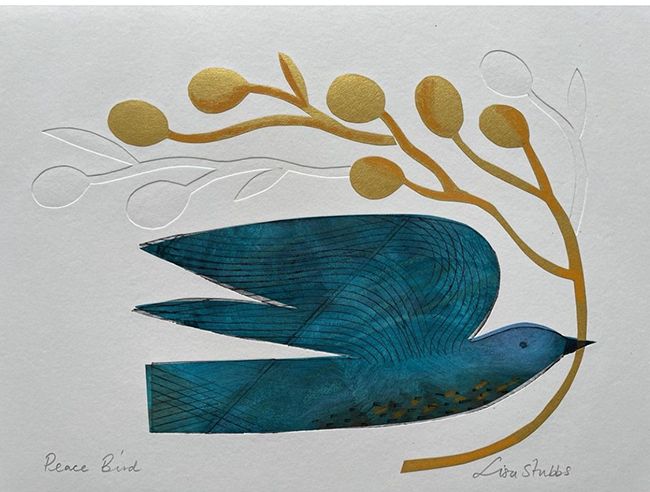
“peace is the only battle worth waging.”
– -albert camus, french philosopher, author, 1913 – 1960
—
art credit: lisa stubbs
“peace is the only battle worth waging.”
– -albert camus, french philosopher, author, 1913 – 1960
—
art credit: lisa stubbs

‘if you don’t know the guy on the other side of the world, love him anyway, because he’s just like you. he has the same dreams, the same hopes and fears. it’s one world, pal. we’re all neighbors.’
-frank sinatra
—
art credit: happy toddler rock art
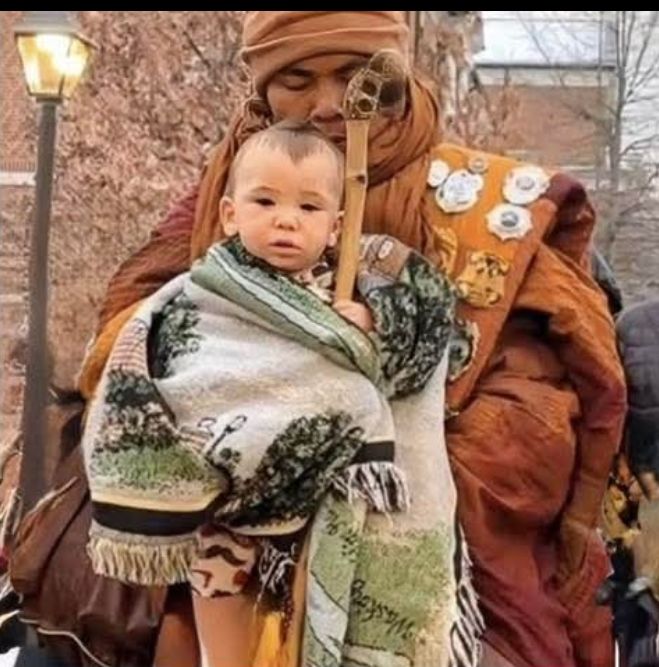
This baby crawled up to Venerable Pannakara, who said that he is one of 10 siblings with nieces and nephews who come to him and they talk. it is not surprising this baby found his way into his arms, peace like his is familiar and transcends time, especially for a baby who hasn’t been away from it long enough for life to clutter it with noise. A forever memory. A baby naturally recognizes and senses peace and a kind person. – Michelle Myers
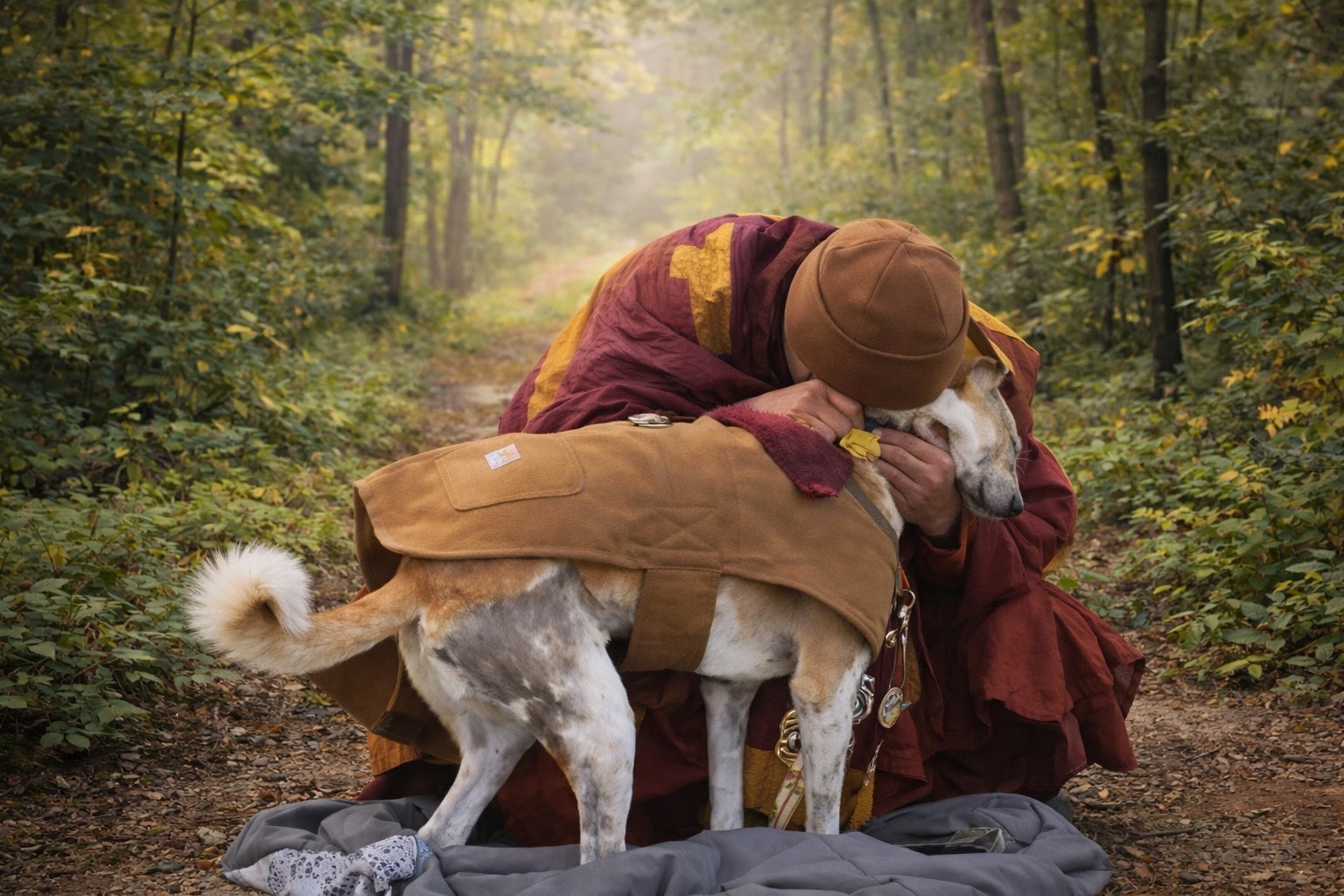
His name is Aloka, the Peace Dog. He is believed to be a Pariah dog.
In Sanskrit, Aloka means light, brightness, vision, splendor, and symbolizes knowledge, clarity, and enlightenment. He has a distinctive heart-shaped marking on his forehead and recently walked with the group of Buddhist monks across the United States in their Walk for Peace.
Before Aloka was walking here, he was a stray dog in India. When a group of Buddhist monks began a peace walk in India, he started following them, and never stopped. He stayed by their side through bad weather, illness, and even after being hit by a car.
While most dogs eventually wandered off, Aloka chose to keep going. That quiet loyalty is what led the monks to officially welcome Aloka as part of their group. They brought him with them to the United States.
Their months-long, mindful journey was focused on compassion, kindness, and connection. The Buddhist monks and Aloka began their Walk for Peace in Texas and made their way to Washington, D.C. Aloka walked when he wanted to and rode in a small cart when he needed rest. Along the way, local veterinarians met Aloka and offered to give him checkups, medical help, and massages as needed.
If you were fortunate enough to see Aloka and the monks during their Walk for Peace, you were welcome to observe, walk alongside them for a bit or simply wave from a safe spot. There were no signs, just presence.
The art of being. – Kaitlin Ross

‘all things are bound together. all things connect.’
-chief seattle
—
photo images: Facebook walkforpeace
A group of Buddhist monks reached Washington, D.C., Tuesday, walking single file across a bridge over the Potomac River to cap a 15-week trek from Texas that has captivated the country.
The monks in their saffron robes have become fixtures on social media, along with their rescue dog, Aloka. After spending Monday night in Arlington, Virginia, they crossed over the Chain Bridge into the District of Columbia shortly after 8 a.m.
They walk to advocate for peace, and their simple message has resonated across the U.S. as a welcome respite from conflict and political division. Thousands gathered along Southern roadsides, often in unusually chilly weather, to watch the monks’ quiet procession that began in late October.
Large crowds greeted them as they began their two-day stay in Washington. The Metropolitan Police Department issued a traffic advisory announcing there would be “rolling road closures” along the monks’ route to ensure safety for them and spectators.
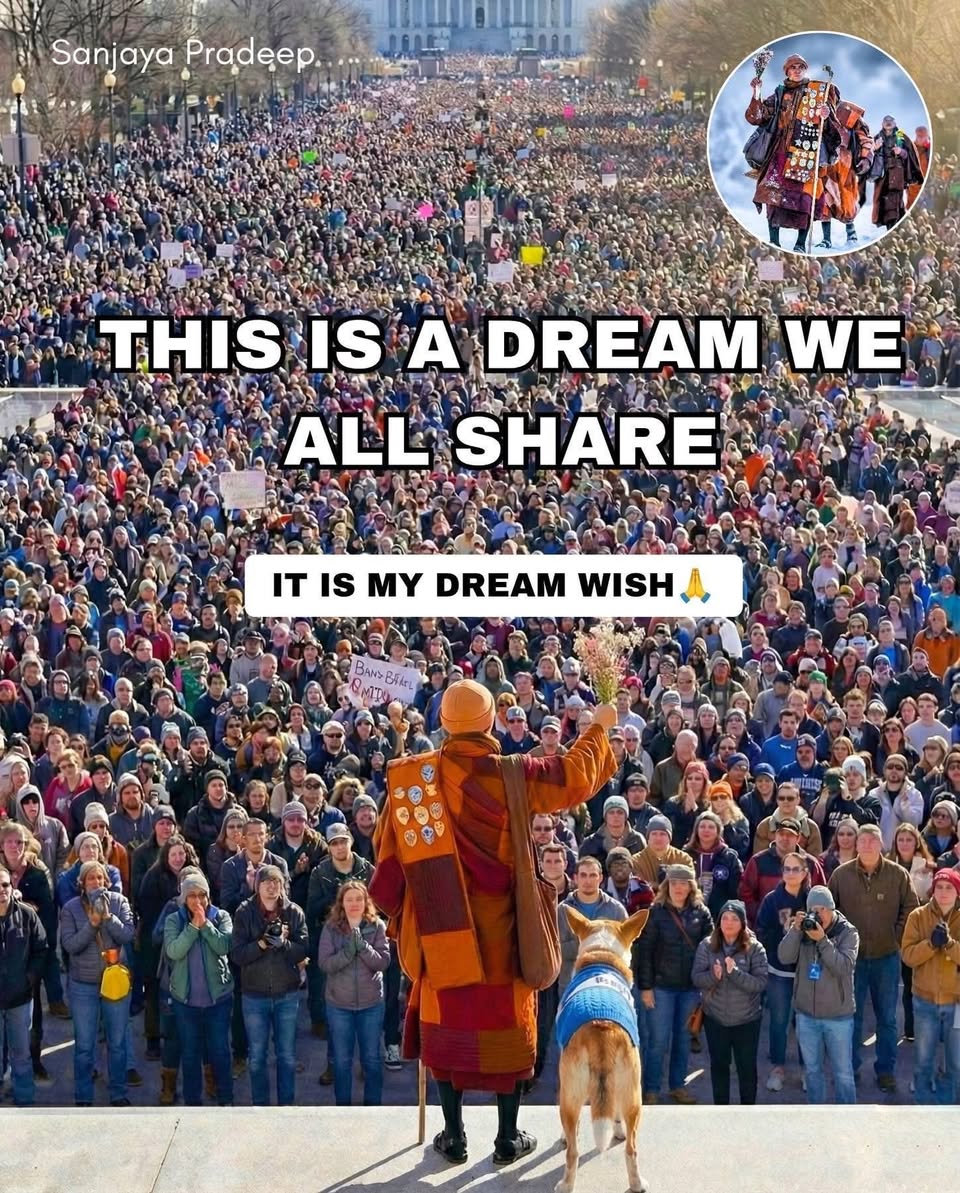
Nearly 3,500 people packed American University’s Bender Arena for the monks’ first public stop in Washington. But no raucous sports cheers greeted them: Spectators remained silent as they walked into the arena, as a sign of respect for the monks and their quest for peace.
“This walk is very meaningful. This walk could change our life. How many of us are willing to walk to bring world peace?” the Venerable Bhikkhu Pannakara, the group’s charismatic and soft-spoken leader, told the crowd.
Pannakara entered the arena with Aloka, a celebrity in his own right, who rested on a blanket that organizers had placed on the basketball court.
The trek has had its perils. In November outside Houston, the monks were walking on the side of a highway when their escort vehicle was hit by a truck. Two monks were injured; Venerable Maha Dam Phommasan had his leg amputated. Phommasan, abbot of a temple in Snellville, Georgia, rejoined the monks near Washington and entered American University’s arena in a wheelchair.
The monks stopped at the Washington National Cathedral on Tuesday afternoon and were expected to appear at the Lincoln Memorial on Wednesday. As they moved between venues, they were joined by a number of other monks from diverse locations. Police on bicycles and in vehicles provided an escort.
“It is overwhelming for us,” Pannakara said, standing before thousands of people on the steps of the cathedral.
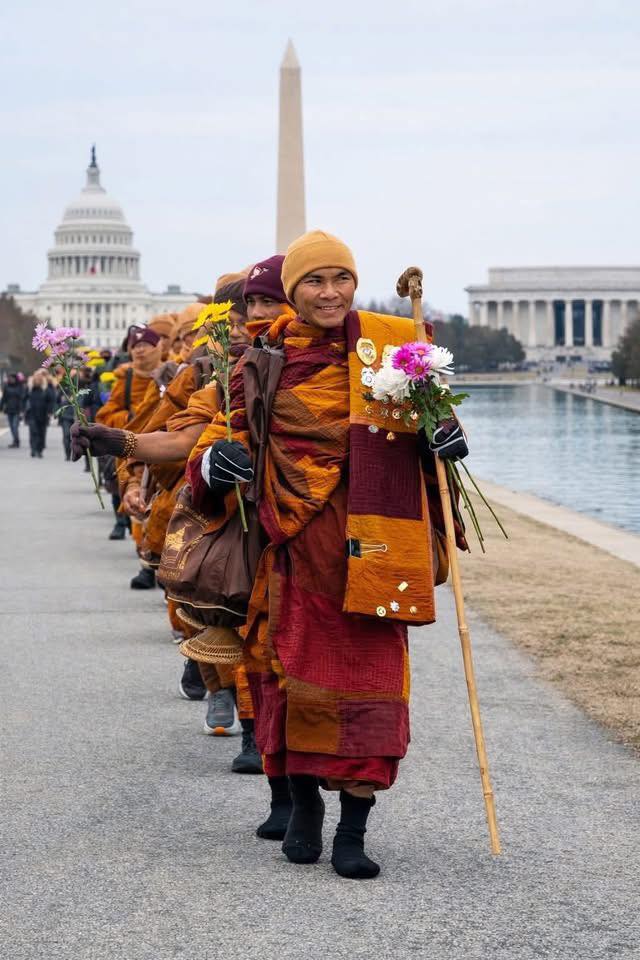
Flanked by dozens of faith leaders across traditions — including Washington Episcopal Bishop Mariann Budde who helped host the interfaith reception — Pannakara said he was moved by their shared cause for peace.
“This is the moment I will remember for the rest of my life,” he said. “And I hope you do the same.”
Nineteen monks began the 2,300-mile (3,700-kilometer) journey from the Huong Dao Vipassana Bhavana Center in Fort Worth on Oct. 26, 2025. They came from Theravada Buddhist monasteries around the globe, led by Pannakara, who is vice president of the Fort Worth temple.
The monks have been surprised to see their message transcend ideologies. Millions have followed them online, and crowds have greeted them at numerous venues, from a church in Opelika, Alabama, to City Hall in Richmond, Virginia.
While in the U.S. capital, they plan to submit a request to lawmakers to declare Vesak — Buddha’s birthday — a national holiday. But, Pannakara and others have emphasized that is not the goal of the walk.
Long Si Dong, a spokesperson for the temple, said the walk is neither a political movement nor is it focused on advocacy or legislation.
“It’s a spiritual offering, an invitation to live peace through everyday actions, mindful steps and open hearts,” he said. “We believe when peace is cultivated within, it naturally ripples outward into society.”
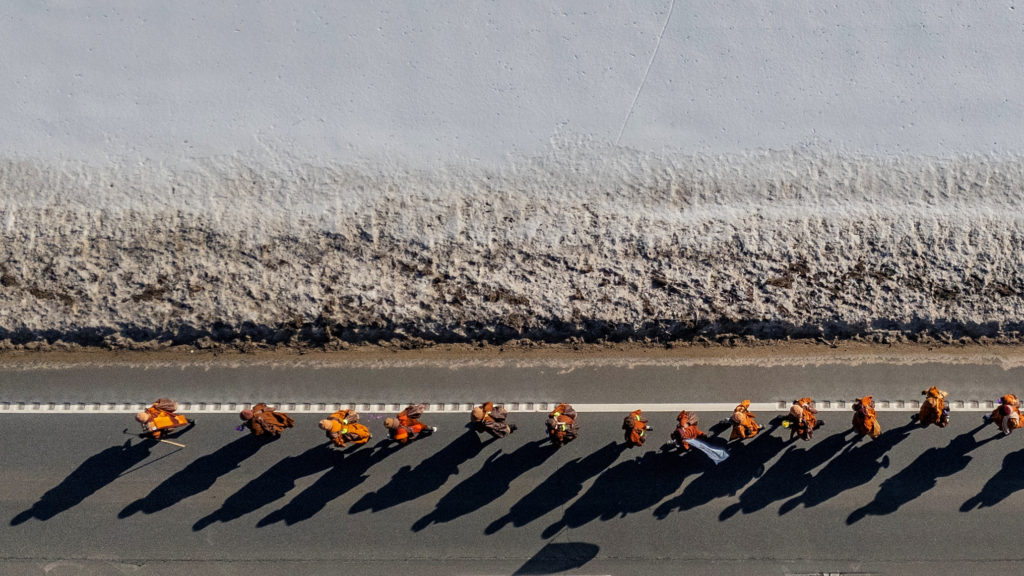
A drone view shows monks during the “Walk for Peace”, in which a group of Buddhist monks are walking from Texas to Washington, D.C., U.S., February 5, 2026. Photo by Evelyn Hockstein/REUTERS
Peace walks are a cherished tradition in Theravada Buddhism. Pannakara first encountered Aloka, a former stray whose name means “divine light” in Sanskrit, during a 112-day journey across India in 2022.
Some of the monks, including Pannakara, have walked barefoot or in socks for most of the journey to Washington, to feel the ground directly and be present in the moment. As they have pressed on through snow and cold, they’ve at times donned winter boots.
On Tuesday, the monks completed 108 days of walking. It’s a sacred number in Buddhism, Hinduism and Jainism. It represents spiritual completion, cosmic order and the wholeness of existence.
The monks’ return trip should be less arduous. After an appearance at Maryland’s Capitol, a bus will take them back to Texas, where they expect to arrive in downtown Fort Worth early on Saturday.
From there, the monks will walk together again, traversing 6 miles (9.6 kilometers) to the temple where their trip began.
—
‘it’s a spiritual offering, an invitation to live peace.’
—
click on the link below to see the baby who crawled into the monk’s arms
as they were singing a meditation
https://www.facebook.com/share/r/188QKmhydt/
—
source credits: AP, PBS, Facebook, Bharath
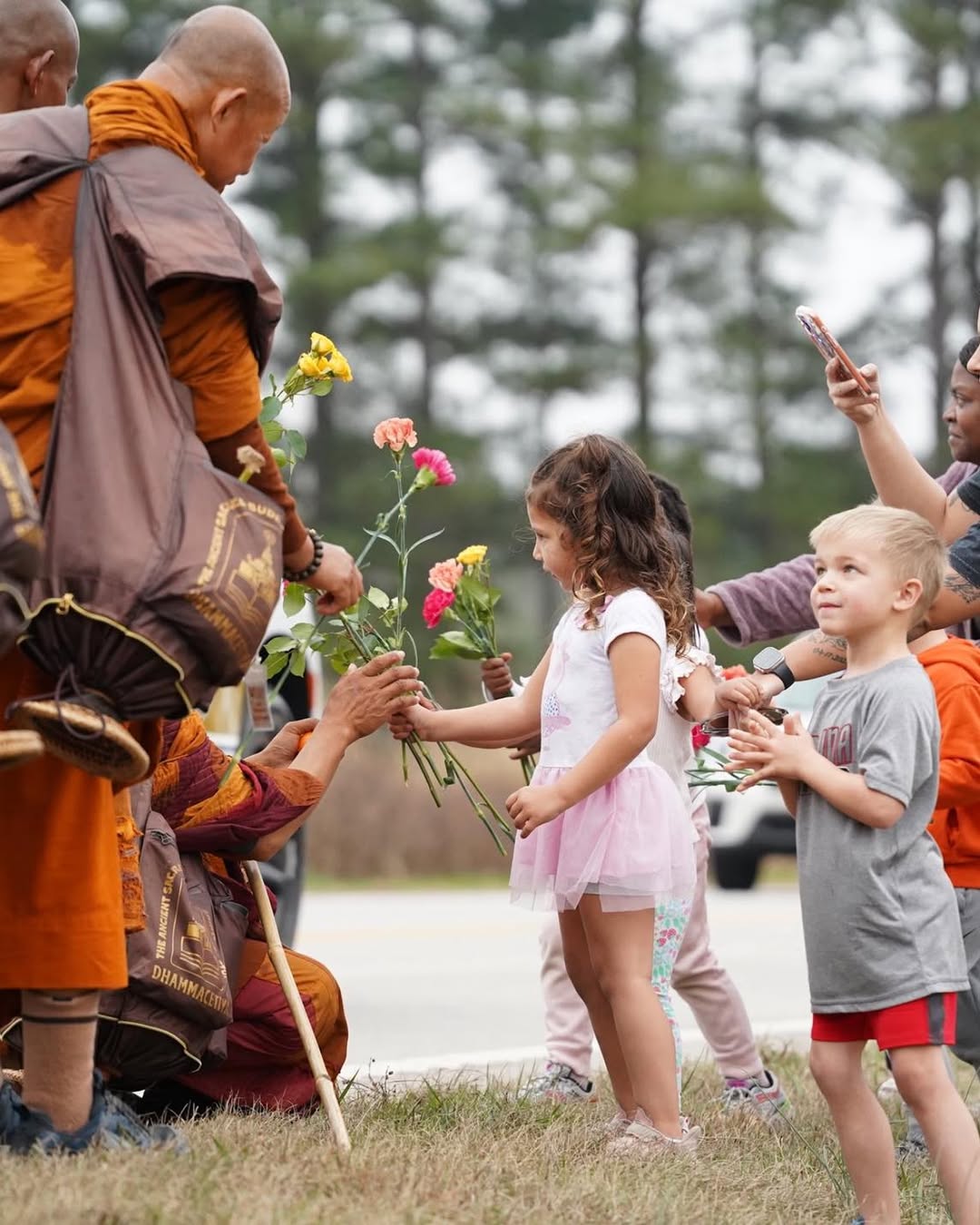
checking in with the buddhist monks again
still on their walk for peace journey
across the states
we can all use a bit of peace today
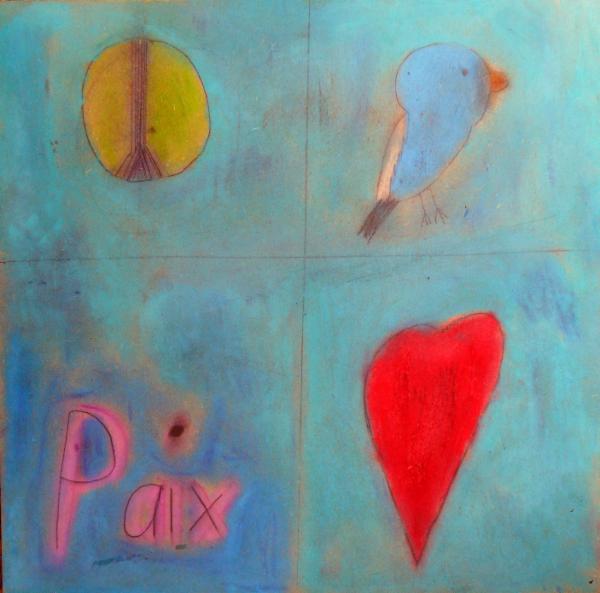
‘peace and not war is the father of all things.’
-ludwig von mises
—
*PAIX is the French word for peace, coming from the Latin word pax, and is used in names, art, and as a symbol for harmony and the absence of conflict. It signifies tranquility, agreement, and the cessation of war, appearing in French culture in names and artistic expressions.
—
*Armann’s painting above was part of the following project:
Art For Peace
International Art Contest for Young People
United Nations Office for Disarmament Affairs
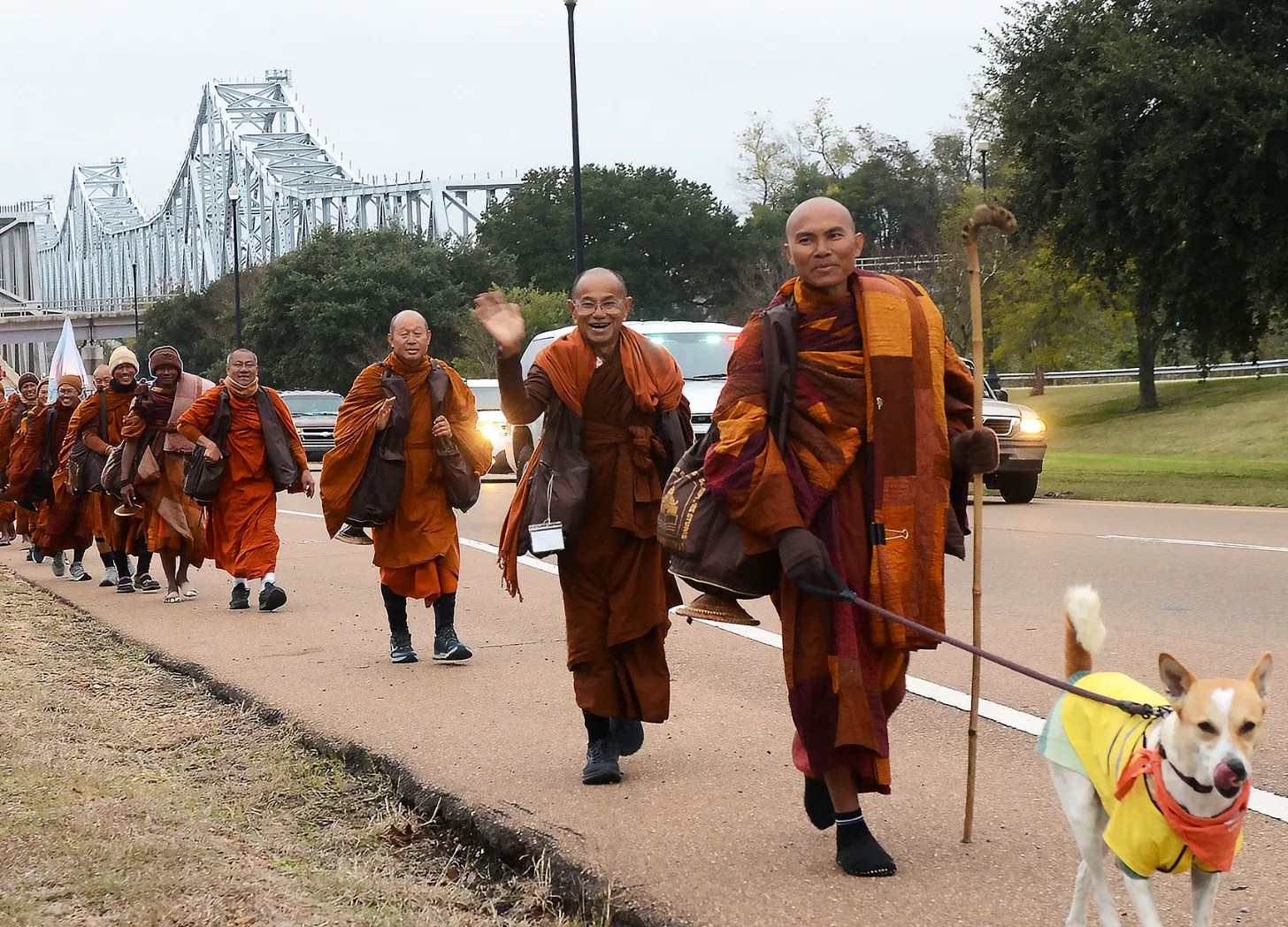
Why a quiet walk across America
is becoming a collective call to practice peace
—
The Walk for Peace began with a simple, radical question: what would happen if a small group of Buddhist monks crossed an entire country on foot, carrying nothing but presence, prayer, and a willingness to suffer just enough to remind the rest of us what peace feels like?
This year, about twenty monks set out from the Huong Dao temple in Fort Worth, Texas, beginning a 2,300-mile pilgrimage to Washington, D.C. that will take roughly 120 days and carry them through ten states. As the monks moved steadily forward, their arrival in Georgia drew quiet attention not because of spectacle, but because of stillness. They walk in sandals. They often eat one meal a day. They sleep wherever kindness allows. They rely entirely on strangers.
Wherever they pass, people respond in the same way. In LaGrange, Georgia, hundreds gathered at a local church after word spread that the monks had arrived. A community organizer described the visit as “inspiring hope” in a divided time. The monks didn’t argue. They didn’t persuade. They walked, bowed, and listened. That was enough.
In Peachtree City, residents, business owners, and city leaders turned out on a gray morning to greet a quiet line of orange robes moving slowly down an ordinary road. A city doesn’t always get to choose its symbols. In that moment, the symbol wasn’t a flag or a slogan. It was patience, made visible.
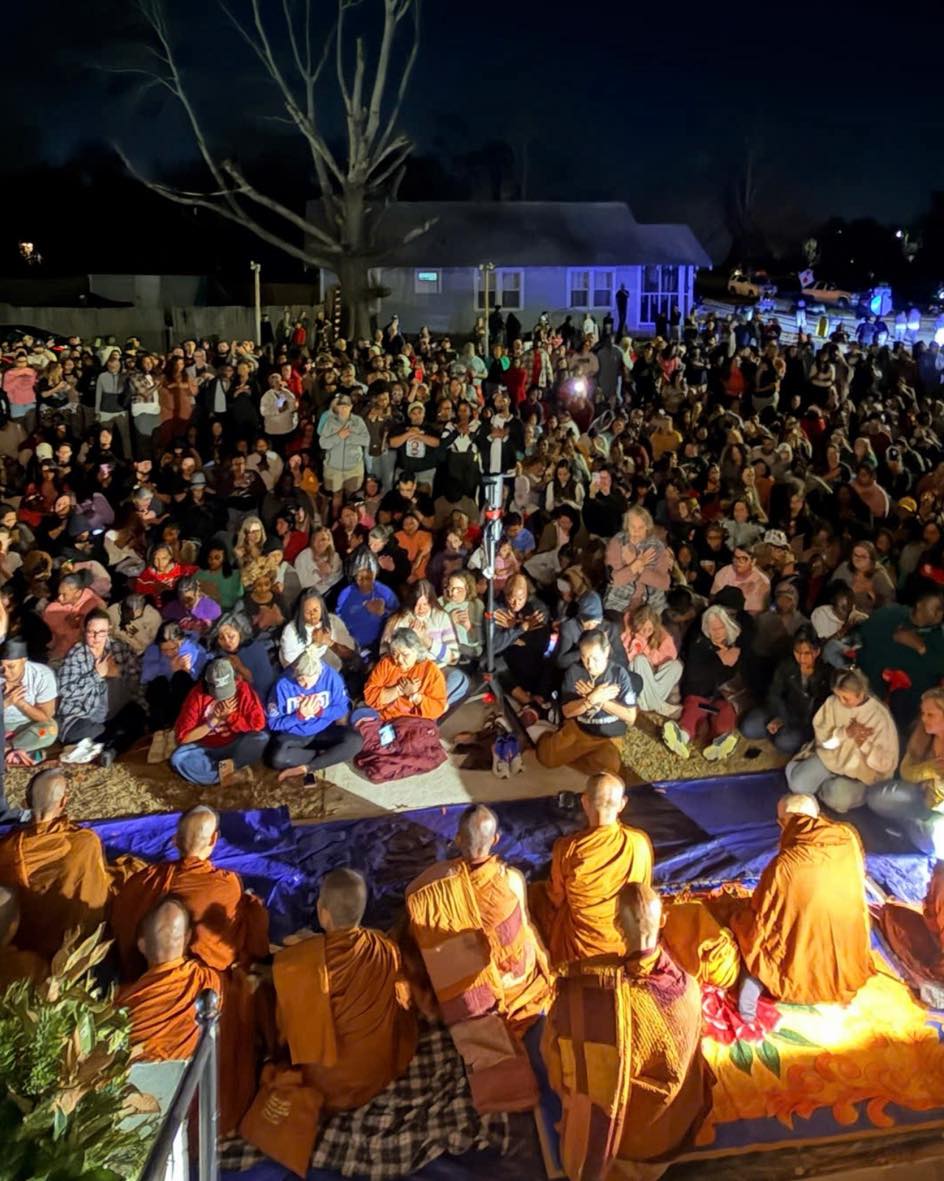
The impact shows up most clearly in small, intimate encounters. One widely shared video shows a venerable monk kneeling to hug and bless a little boy by the roadside, a moment the child’s family described as unforgettable. Another clip captures the steady rhythm of the walk itself, robes moving forward as people pause and watch, something that feels like a living meditation. Those who spend time alongside the monks often describe leaving calmer and more grounded, calling the experience “soul-touching” and deeply human, as reflected in one such account. And if you’ve seen the long, silent line advancing down the road, you understand why that image continues to travel, quietly stopping people mid-scroll.

Community leaders hosting the walk have been clear about its purpose. Messages shared along the route insist the pilgrimage “is not political. It is not divisive. It is a walk for peace, for healing, for unity, and for hope,” a sentiment echoed as towns across Georgia opened churches, sidewalks, and streets to welcome the monks, as seen in this moment of arrival. The organizers themselves describe each step as a living prayer meant to awaken the peace already inside the people they meet, a message they continue to share through videos from the road.
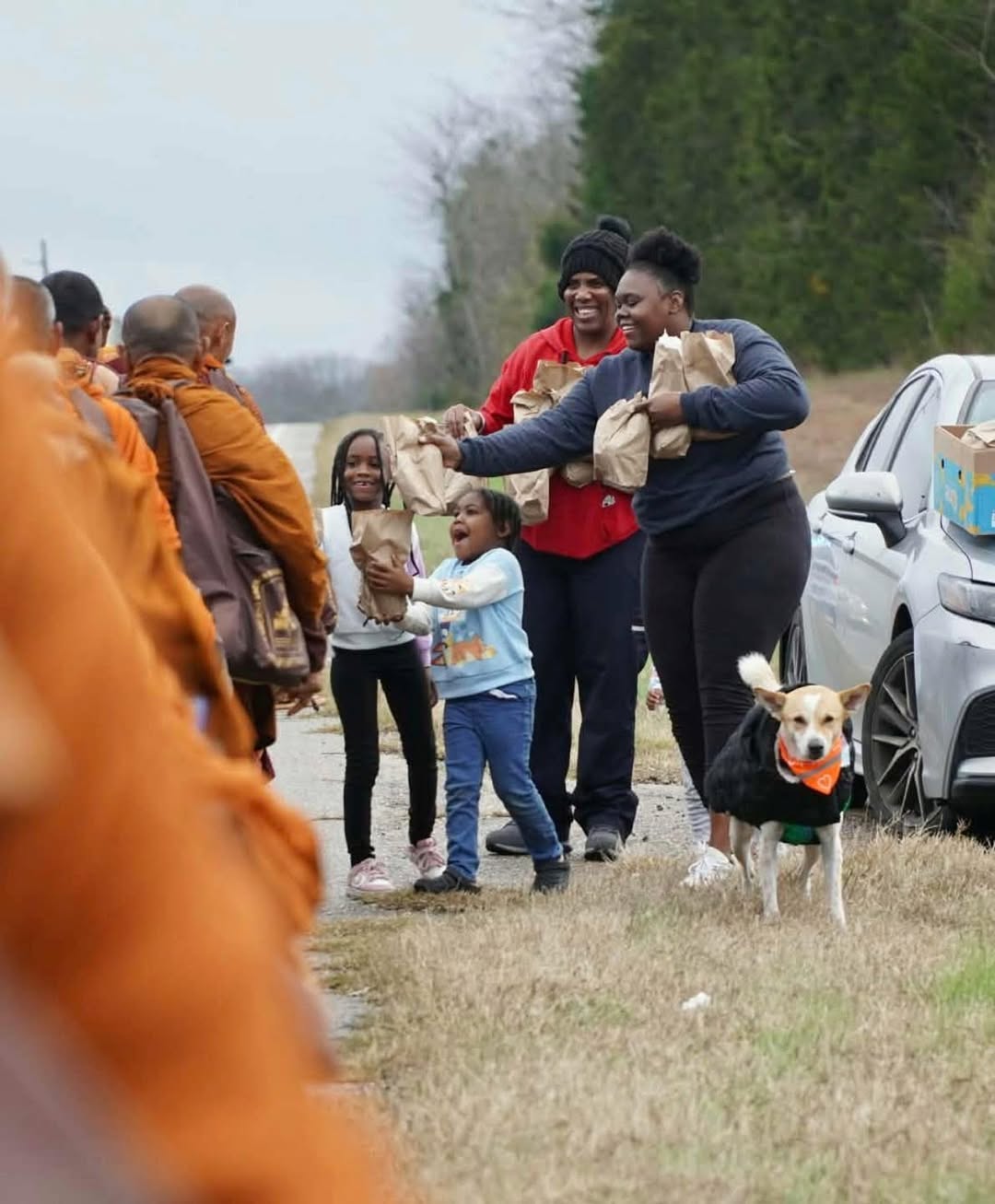
Watching from afar, many people sound surprised by their own emotions. Some admit they are crying as they watch the monks walk from Texas toward D.C., saying the crowds lining the roads prove people do not want hate, reflections shared among supporters in posts like these. Others keep sharing clips and reactions as the journey unfolds, part of a growing stream of responses now filling feeds and timelines, including this broader collection.
The monks are not asking us to walk 2,300 miles. They are asking something harder: to put one peaceful step in front of another in our own lives. To choose kindness when indifference feels easier. To treat our commutes, our feeds, and our neighborhoods the way they treat the open road, as places to practice compassion.
As the New Year begins, their message feels less symbolic and more practical. Peace is not a destination. It’s a daily practice. Their pilgrimage will end in Washington, but the Walk for Peace continues every time we decide, in the midst of chaos, to let our next step be a living prayer for the world.
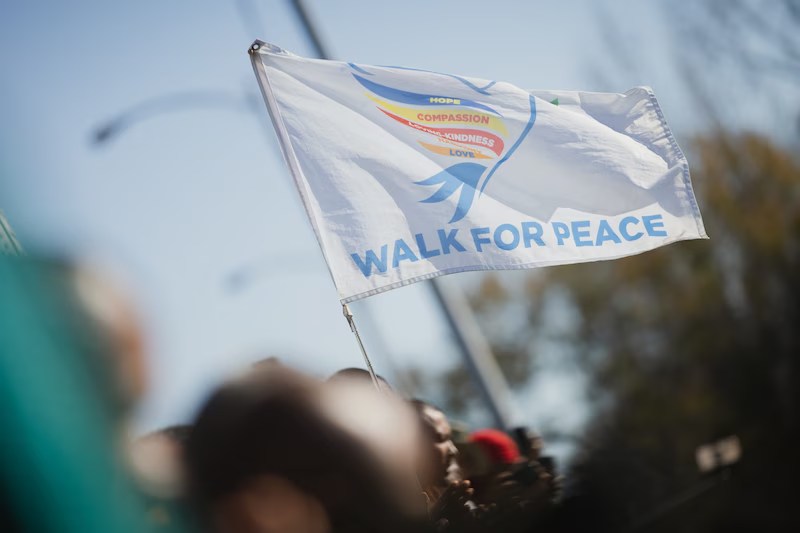
And as they keep walking, they will keep sharing the videos and moments from their journey, not as a religious message, but as a shared human experience we can learn from, pass along, and carry into the year ahead.
As we head into a new year it feels like an offering, not a sermon. You don’t have to be religious or spiritual to connect with what’s happening here. This walk isn’t about belief. It’s about how we treat one another when no one’s keeping score.
You can continue to follow the monks’ journey as they continue walking, and think of them as small pauses in the day — reminders of what patience, kindness, and shared humanity can look like in real life.
In a loud and divided moment, this walk offers something quietly radical: people choosing presence over performance and care over contempt, one careful step at a time.
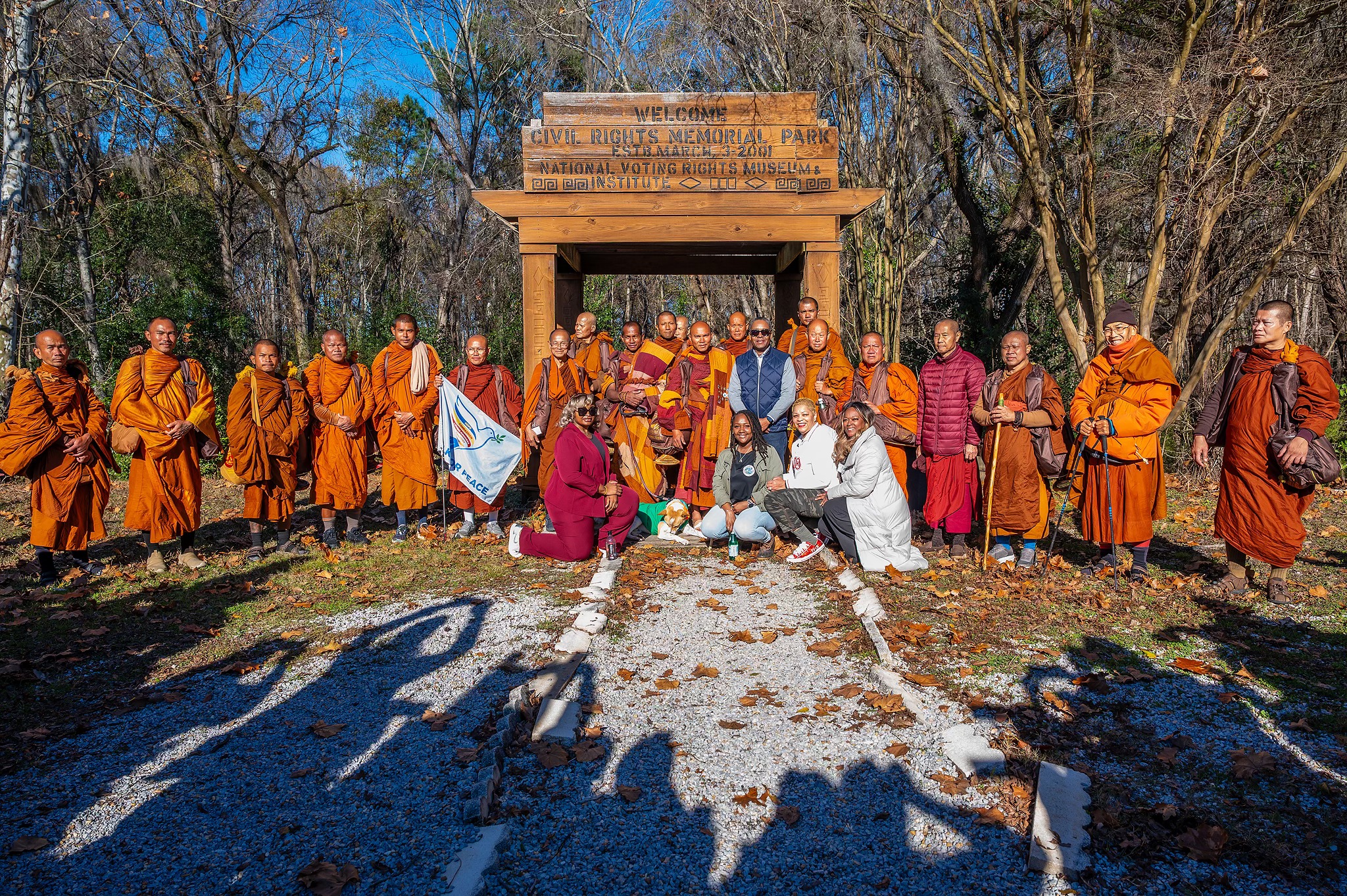
“Choose your mind every morning.
Forgive yourself every night.
Replace your worn-out habits with higher ones.
And declare,
“Today will be my peaceful day.”
-the Huong Dao monks
—
Source/story credits: DEMCAST USA AND JENNIFER CANTER
(they will continue to follow and share the journey on their substack,
click on the link above to follow them)
—
(and to follow on Facebook options, click on the links below)
Walk For Peace Facebook links:
Official Facebook Pages of Walk for Peace, the 120-day, 2,300-mile journey by Buddhist monks — with loyal dog, Aloka — walking from Fort Worth, Texas, to Washington, D.C. to raise awareness of peace, loving kindness, and compassion across America and the world.
https://www.facebook.com/walkforpeaceusa
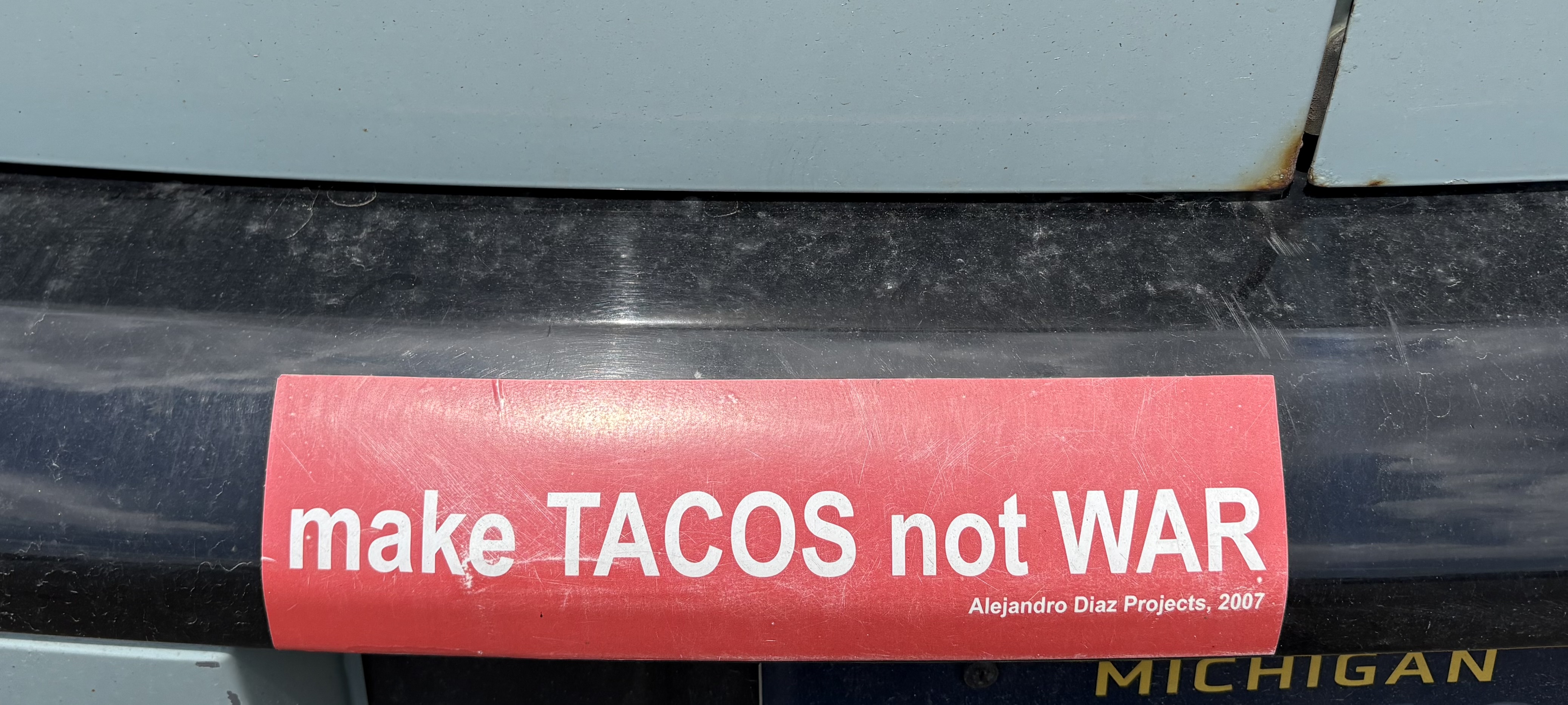
i’m all in on this approach.
a much better way to live.
—
’embrace the taco.’
– john kresl
peace drawing – h.k., age 5
—
“peace is the only battle worth waging.”
— Albert Camus, France, 1913–1960
*Albert Camus was a French philosopher, author, dramatist, journalist, world federalist, and political activist.
He was the recipient of the 1957 Nobel Prize in Literature at the age of 44, the second-youngest recipient in history.
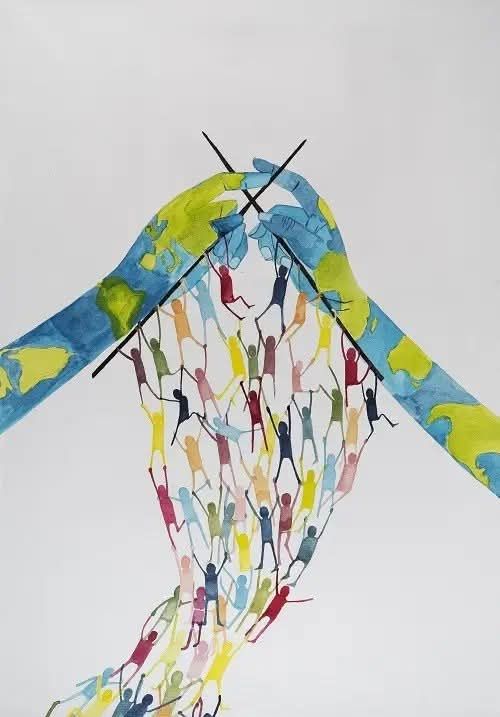
This drawing is by Anja Rozen, a 13-year-old primary school student in Slovenia.
She was chosen from 600,000 children around the world
to create a piece of art to show what peace looks like.
She is the winner of the international Plakat Miru competition.
“My drawing represents the land that binds us and unites us.”
“Humans are woven together.
If someone gives up, others fall.
We are all connected to our planet and to each other,
but unfortunately we are little aware of it.
We are woven together.
Other people weave alongside me my own story; and I weave theirs,”
said the young designer.
—
‘the cause of freedom and the cause of peace are bound together.’
-Leon Blum, three-time Prime Minister of France
 I didn't have my glasses on....