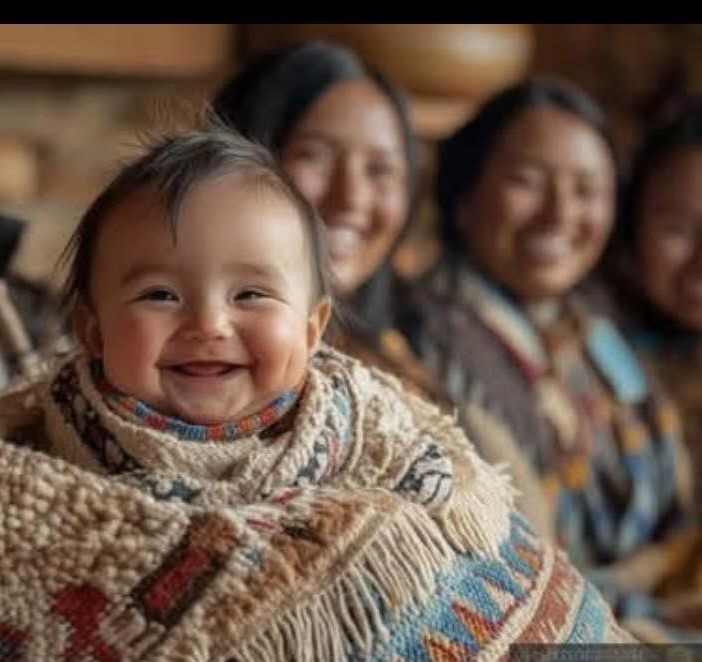
In Navajo (Diné) culture, laughter is considered a powerful symbol of connection. The moment a baby laughs for the first time, it is believed they are choosing to join the human community. Until then, the baby is viewed as still being in transition between the spiritual and physical worlds.
This tradition, known as the A’wee Chi’deedloh ceremony, is typically observed around three months of age. Family members pay close attention during this period, eager to be the one who makes the child laugh. Whoever succeeds earns the honor of hosting the celebration, often preparing a meal of salted food and gifts to mark the occasion.
The ceremony not only celebrates the baby’s first expression of joy, but also emphasizes generosity and community. Salt is symbolically offered to guests to encourage the child to grow up to be generous and kind. It’s one of the earliest social teachings given to a Navajo child, using joy as a path toward belonging and humanity.
—
Indigenous Peoples’ Day is an official city and state holiday in various localities in the United States that celebrates and honors Indigenous American peoples and commemorates their histories and cultures. It is celebrated on the second Monday in October.
—
source credits: unity, navajo traditions

 I didn't have my glasses on....