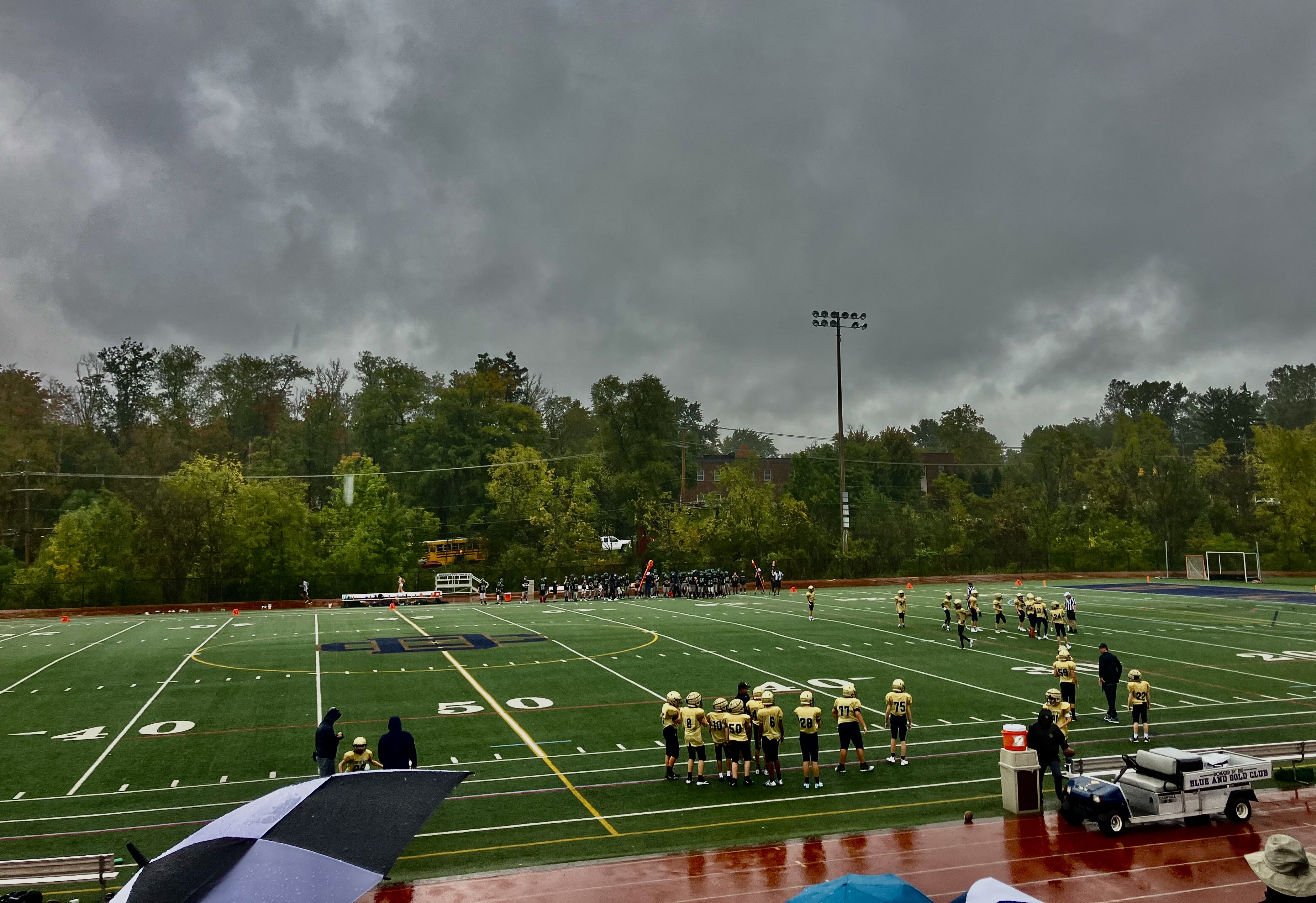
at the moment of kickoff
at my grandson’s game
the skies opened up
serving up a main course
of biting sideways rain
with a side dish of high-winded temperature drop
no lighting or thunder
so the game went on
having just taken the umbrella out of my car
at least there was a rain jacket still on the seat
yet quickly apparent that it wasn’t built
for sudden deluge-level weather
nor were the fans’ soon to be inside-out umbrellas
but they kept on playing and playing
while they didn’t win
they stayed in the game
as did the families/fans
showing a lot of heart
when we got to the car
as we made our way out
and onto the road home
the weather left
just as quickly as it had arrived
not one more drop of rain fell
not a wisp of wind was blown
not a chill in the air to be found
as we dripped and dropped in the car
laughing about the crazy storm
so looking forward to hot showers, warm food, and cozy, dry pajamas
our just desserts
after a game
well-played by all.
—
‘the best thing one can do when it’s raining is to let it rain.’
-henry wadsworth longfellow
Discover more from I didn't have my glasses on....
Subscribe to get the latest posts sent to your email.


When family and friends support their people~storms and all. The best of the human spirit and love raining on us all, Beth! Perfect quote, too🙌🏻💕
LikeLiked by 2 people
thanks so much –
LikeLiked by 2 people
You’re welcome ☺️
LikeLiked by 1 person
sounds wild! Glad you enjoyed the game despite the wind and rain!
LikeLiked by 2 people
absolutely – thanks
LikeLiked by 1 person
oh that‘s the best – supporting our young ones, showing them that no weather is more important than a great game!
LikeLiked by 2 people
it was quite a game –
LikeLiked by 1 person
That’s a wonderful attitude! Love that everyone stayed!
LikeLiked by 2 people
it was the best, looking back, everyone kind of bonded together because of the circumstances
LikeLiked by 2 people
I bet!!
LikeLiked by 2 people
Oh, the joy of hard-earned family fan loyalty, Beth! Cheers to your young player, both teams and all the hearty fans sticking it out in the quick rain storm.
LikeLiked by 2 people
here’s to that
LikeLiked by 1 person
Look at the unexpected place the Longfellow quotation is from (https://blog.oup.com/2017/05/henry-wadsworth-longfellow-birds-poetry-immigration):
Longfellow kept careful track of the changes in his environment. In one of his most prescient and, yes, political poems, “The Birds of Killingworth” (1863), a poem so outspoken that it would have made [Senator Charles] Sumner proud, he imagined what nature would be like if all the birds were gone. In Longfellow’s clever fable, the citizens of the fictitious New England town of Killingworth decide to rid their fields of all marauding birds. Profit is not the only motive at play. The Parson, for example, simply loves to kill: “His favorite pastime was to slay the deer / In summer on some Adirondack hill.” The pompous Squire is too full of himself to think about the consequences of his actions, while the ponderous Deacon is so proud of his ability to forecast the future that he’s not worried about inaction in the present. At a quickly convened town hall meeting, the only one willing to defend the birds is the local schoolteacher. “You slay them all! And wherefore?” The dismal vision that he paints for his listeners anticipates the dystopian story that opens Rachel Carson’s famous bestseller Silent Spring (1962): “Think of your woods and orchards without birds! / Of empty nests that cling to boughs and beams.” But he doesn’t convince anyone, and the “ceaseless fusillade of terror” commences, “a slaughter to be told in groans, not words.”
What is left is an ecological disaster site. The grounds have turned ashen, caterpillars rule the garden beds, and the beetles, with no one to keep them in check, have seized the farmers’ fields. Come spring, the anxious citizens of Killingworth have begun re-importing birds from elsewhere. At the end of the poem, the birds sing again, but to the experienced ear it seems as if they were mocking the people.
LikeLiked by 3 people
ah, very interesting –
LikeLiked by 1 person
And Mother Nature laughed and laughed as you drip-dried in the car. Gotta love life’s crazy moments. Ha ha! 🤣 🤣🤣😎
LikeLiked by 2 people
exactly!
LikeLiked by 2 people
You did your duty as a caring grandparent, and the players braved the storm and kept playing. Good examples of the indomitable nature of the human spirit.
Best wishes, Pete.
LikeLiked by 2 people
my shoes are still wet a day after )
LikeLiked by 2 people
The showing of the hearts often times is a victory in itself!
LikeLiked by 2 people
you are so right –
LikeLiked by 2 people
Rain is predictable. And fortunately for us that it is. We just need to know when “to come in out of the rain.”
LikeLiked by 2 people
yes, at times we ignore that too -)
LikeLiked by 1 person
I do love the photo of the stormy sky! Something beautiful even when it makes you feel gloomy
LikeLiked by 1 person
Wow…that’s an imposing looking sky! 😲
LikeLiked by 2 people
was it ever!
LikeLiked by 2 people
🥰🥰🥰
LikeLiked by 1 person
It’s great that the game went on. Well done.
LikeLiked by 2 people
it was good that it did, absolutely
LikeLiked by 2 people
What’s the quote? “There is no such thing as bad weather, there is only inappropriate clothing.” But stuff like that makes memories that mellow and warm over time.
LikeLiked by 2 people
you are so right
LikeLiked by 1 person
How brave both the players and spectators were.
LikeLiked by 2 people
I agree)
LikeLiked by 2 people
👍🏼👍🏼👍🏼
LikeLiked by 1 person
A game well-played. Love the heart in the players staying on the field — and the families on the sidelines. So funny and the heart-warming dedication is beautiful!
LikeLiked by 2 people
thanks so much, wynne
LikeLiked by 2 people
What a detailed storm description. I felt like I was there, except I stayed dry. What a hardy bunch to stay and play.
LikeLiked by 2 people
amazing grit
LikeLiked by 1 person
I hope your grandson gets away healthy. My son is a soccer coach. The past week he came home three times drenched in rain. The temps were low and we also had winds. Ugly. Since yesterday he has had a heavy cold but bites through bravely.
LikeLiked by 2 people
oh no – I hope he’s feeling better soon.
LikeLiked by 2 people
Thank you, I hope so too!
LikeLiked by 2 people
That’s perseverance by all the folks, from the players to the supporters in the stands!
LikeLiked by 2 people
that’s right!)
LikeLiked by 2 people
Shorts, t-shirts and flip flops are the Gulf Coast way.
LikeLiked by 2 people
if it was warm, yes-
LikeLiked by 1 person
When I lived in New Mexico, being a refugee from the storm, 35 degrees was about my limit. Anything much less and we had snow. Flip flops and snow don’t mix.
LikeLiked by 2 people
trust me, I’ve pushed the limits )
LikeLiked by 1 person
Nothing stops a football game.
LikeLiked by 2 people
i know this to be true )
LikeLiked by 1 person
Gumption! Great that everyone stayed. Now if only those clouds would drift out here to Denver …
LikeLiked by 2 people
perfect word for it, and i’ll send it your way –
LikeLiked by 1 person
Not a pleasant day but a wonderful memory to talk about and laugh over for years.
LikeLiked by 2 people
exactly, and we were both happy at the end
LikeLiked by 1 person
That’s all that matters.
LikeLiked by 2 people
you told this wonderfully well, Beth :)
LikeLiked by 2 people
thanks, John –
LikeLiked by 2 people
Been watching our son’s games first as a player and now as a coach for the last 19 years. Sometimes the weather was miserable, but I loved it all. His team played a game in Montana where the snow was a foot deep in some places and spectators were shoveling during the game so the refs and players could see the lines on the field. The only weather they don’t play football in is lightning.
LikeLiked by 2 people
there is such dedication in that –
LikeLiked by 2 people
We could use a sideways biting rain right about now.
LikeLiked by 2 people
amazing how the grass is always wetter on the other side.
LikeLiked by 2 people
It’s all about taking part!
LikeLiked by 2 people
that’s right –
LikeLiked by 1 person
What a great Grandma you are Beth! Been there, my son’s team won the state championship and we went until the first week in December if I remember right.
LikeLiked by 2 people
wow!
LikeLiked by 1 person
All part of the fun. You will all remember that game!
LikeLiked by 2 people
yes, and I gained 10 pounds of water weight in my clothes and shoes, easy to lose!
LikeLiked by 2 people
Hope you read this 🙂. Feel free to subscribe the blog
LikeLiked by 1 person
❤️
LikeLiked by 2 people
thanks, Jennie –
LikeLiked by 2 people
You’re welcome, Beth.
LikeLiked by 1 person
Beautiful post…let it rain ☔
LikeLiked by 2 people
yes –
LikeLiked by 1 person
This is encouraging.
I like this. Just let it rain. And live in the moment.
Thank you Beth
LikeLiked by 2 people
Exactly
LikeLiked by 2 people
Wonderful!
LikeLike