Why a quiet walk across America
is becoming a collective call to practice peace
—
The Walk for Peace began with a simple, radical question: what would happen if a small group of Buddhist monks crossed an entire country on foot, carrying nothing but presence, prayer, and a willingness to suffer just enough to remind the rest of us what peace feels like?
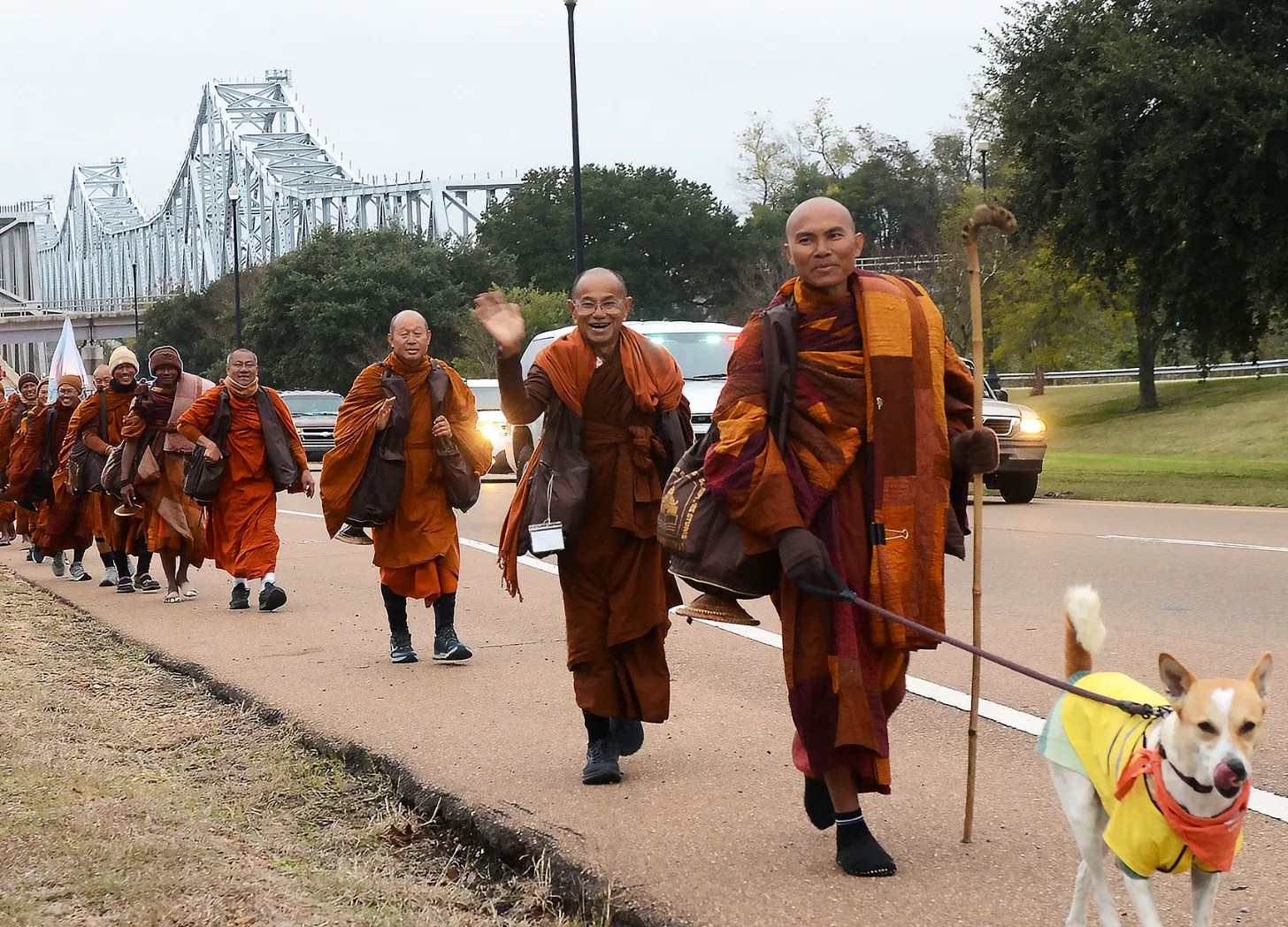
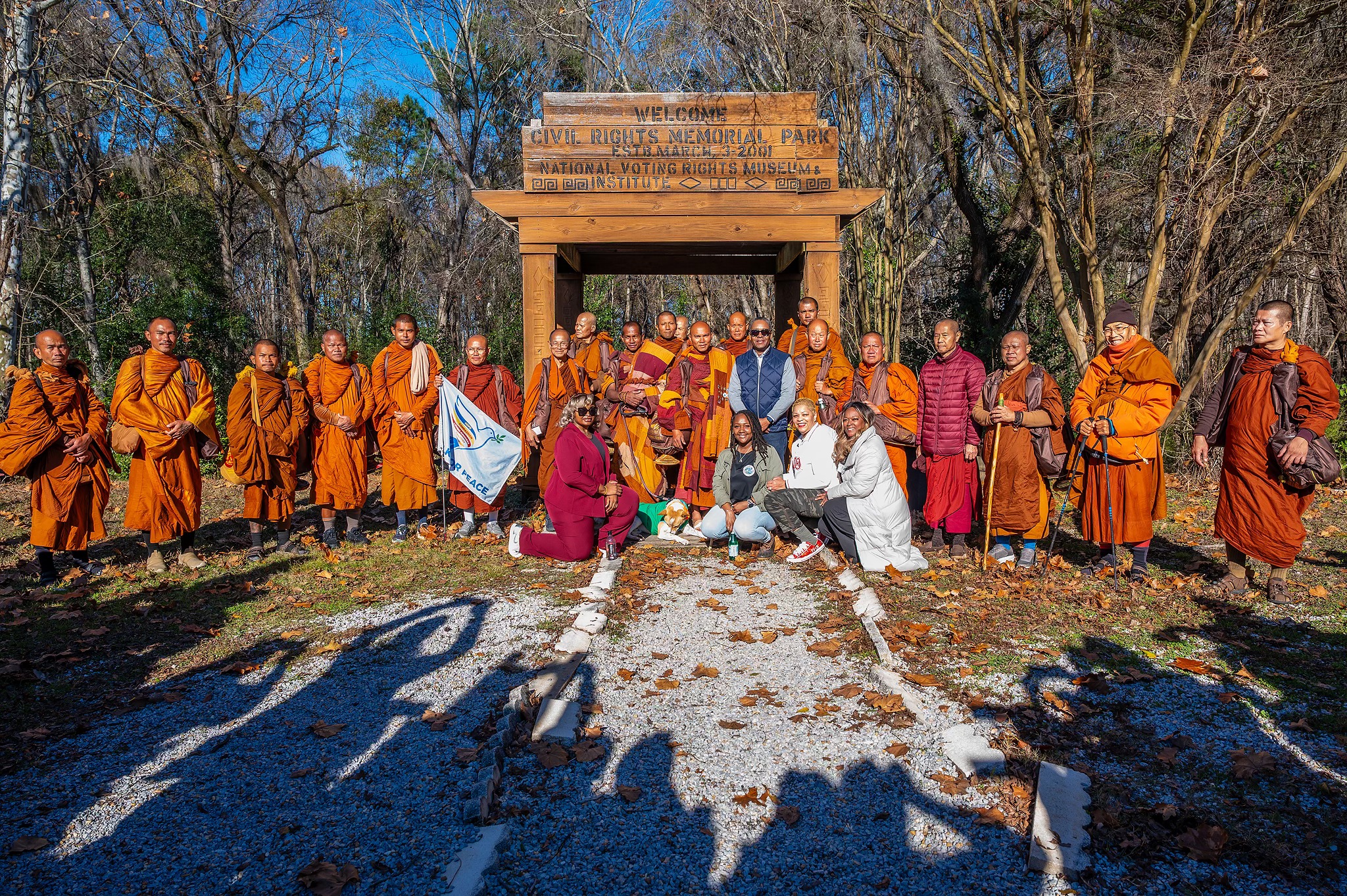
This year, about twenty monks set out from the Huong Dao temple in Fort Worth, Texas, beginning a 2,300-mile pilgrimage to Washington, D.C. that will take roughly 120 days and carry them through ten states. As the monks moved steadily forward, their arrival in Georgia drew quiet attention not because of spectacle, but because of stillness. They walk in sandals. They often eat one meal a day. They sleep wherever kindness allows. They rely entirely on strangers.
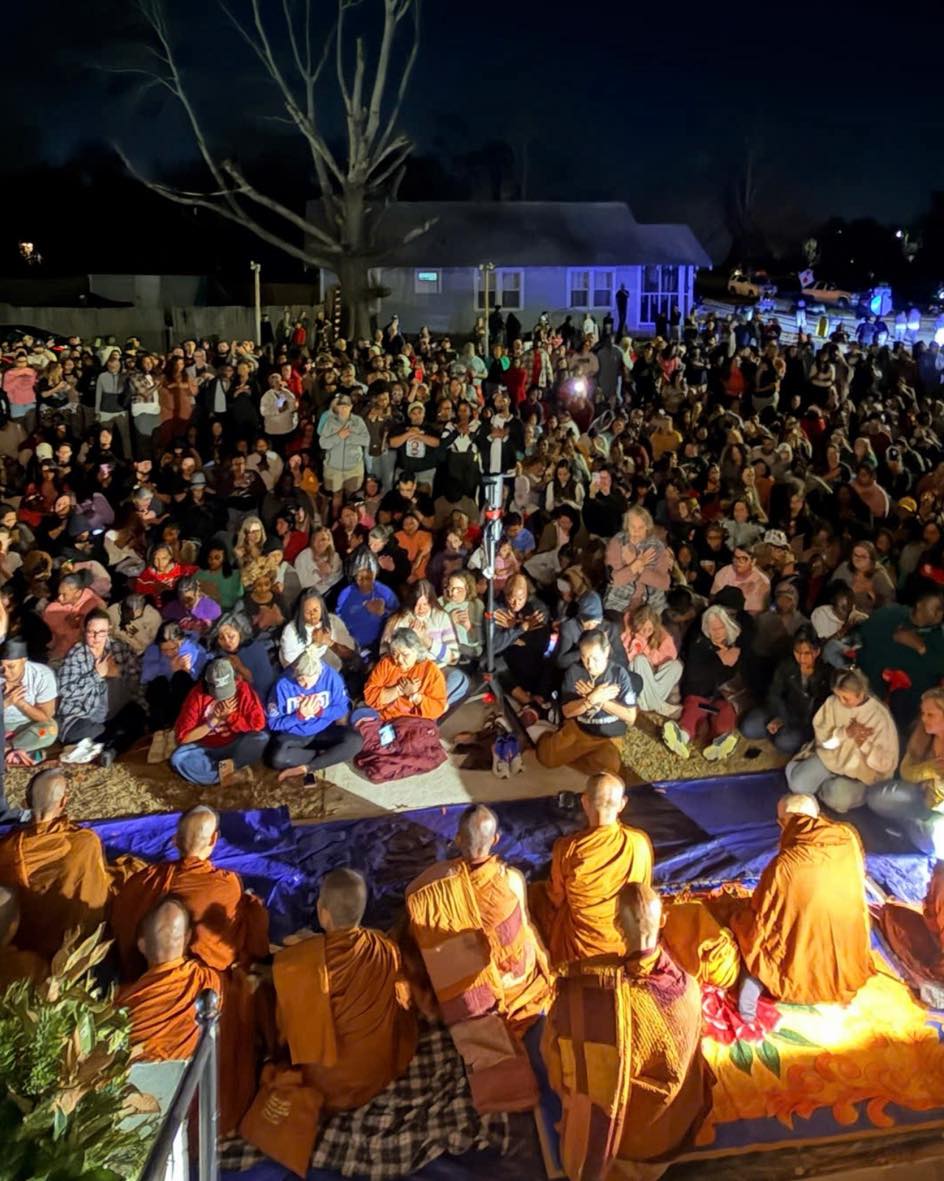
Wherever they pass, people respond in the same way. In LaGrange, Georgia, hundreds gathered at a local church after word spread that the monks had arrived. A community organizer described the visit as “inspiring hope” in a divided time. The monks didn’t argue. They didn’t persuade. They walked, bowed, and listened. That was enough.
In Peachtree City, residents, business owners, and city leaders turned out on a gray morning to greet a quiet line of orange robes moving slowly down an ordinary road. A city doesn’t always get to choose its symbols. In that moment, the symbol wasn’t a flag or a slogan. It was patience, made visible.
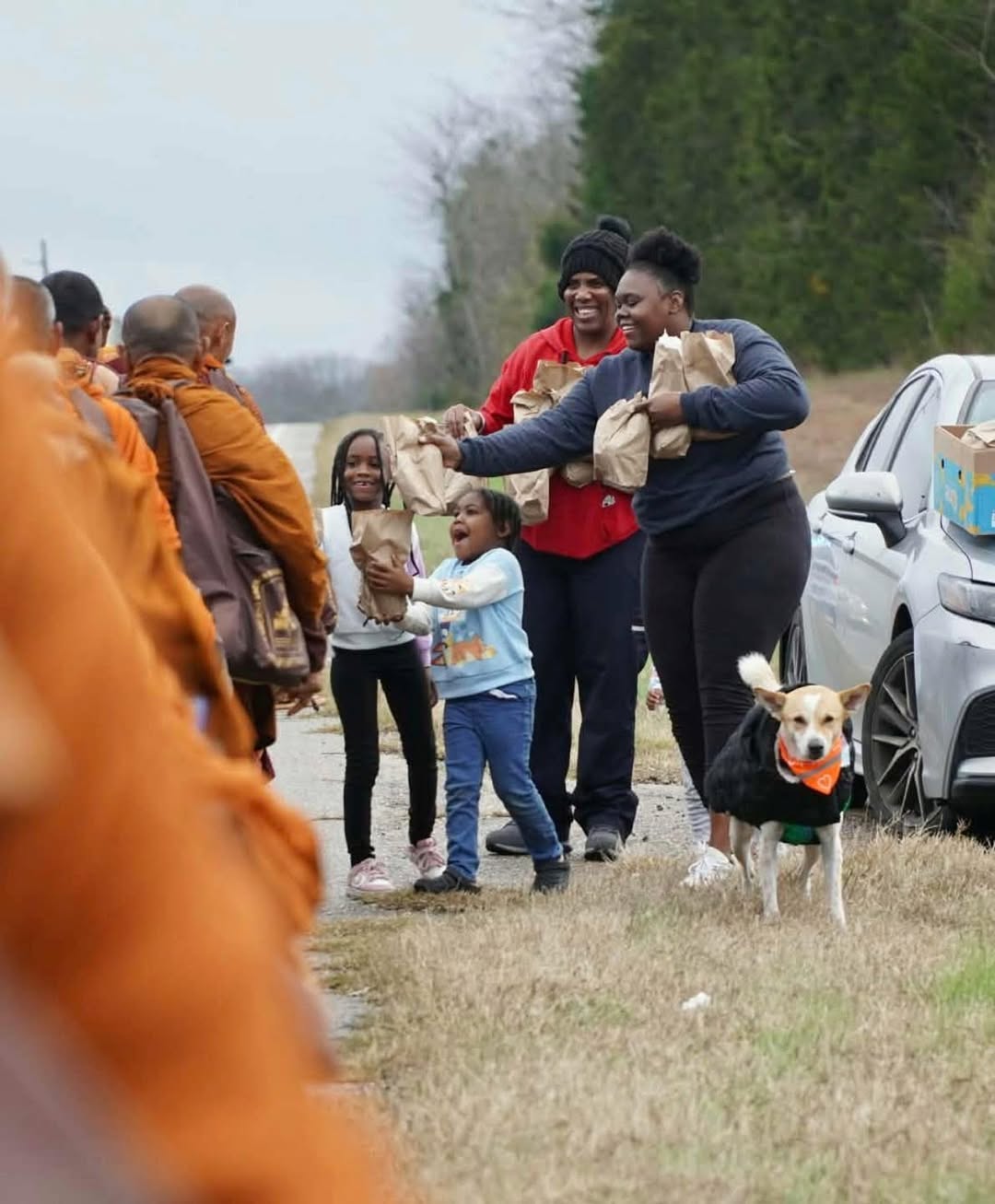
The impact shows up most clearly in small, intimate encounters. One widely shared video shows a venerable monk kneeling to hug and bless a little boy by the roadside, a moment the child’s family described as unforgettable. Another clip captures the steady rhythm of the walk itself, robes moving forward as people pause and watch, something that feels like a living meditation. Those who spend time alongside the monks often describe leaving calmer and more grounded, calling the experience “soul-touching” and deeply human, as reflected in one such account. And if you’ve seen the long, silent line advancing down the road, you understand why that image continues to travel, quietly stopping people mid-scroll.

Community leaders hosting the walk have been clear about its purpose. Messages shared along the route insist the pilgrimage “is not political. It is not divisive. It is a walk for peace, for healing, for unity, and for hope,” a sentiment echoed as towns across Georgia opened churches, sidewalks, and streets to welcome the monks, as seen in this moment of arrival. The organizers themselves describe each step as a living prayer meant to awaken the peace already inside the people they meet, a message they continue to share through videos from the road.
Watching from afar, many people sound surprised by their own emotions. Some admit they are crying as they watch the monks walk from Texas toward D.C., saying the crowds lining the roads prove people do not want hate, reflections shared among supporters in posts like these. Others keep sharing clips and reactions as the journey unfolds, part of a growing stream of responses now filling feeds and timelines, including this broader collection.
The monks are not asking us to walk 2,300 miles. They are asking something harder: to put one peaceful step in front of another in our own lives. To choose kindness when indifference feels easier. To treat our commutes, our feeds, and our neighborhoods the way they treat the open road, as places to practice compassion.
As the New Year begins, their message feels less symbolic and more practical. Peace is not a destination. It’s a daily practice. Their pilgrimage will end in Washington, but the Walk for Peace continues every time we decide, in the midst of chaos, to let our next step be a living prayer for the world.
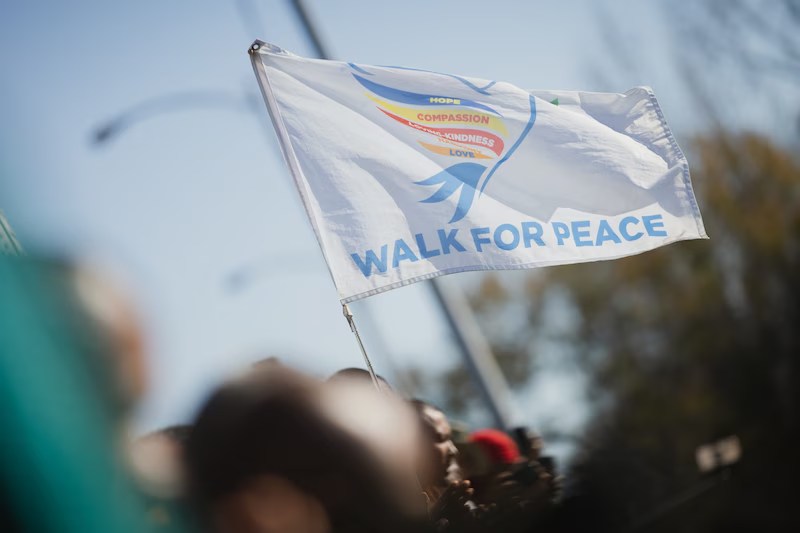
And as they keep walking, they will keep sharing the videos and moments from their journey, not as a religious message, but as a shared human experience we can learn from, pass along, and carry into the year ahead.
As we head into a new year it feels like an offering, not a sermon. You don’t have to be religious or spiritual to connect with what’s happening here. This walk isn’t about belief. It’s about how we treat one another when no one’s keeping score.
You can continue to follow the monks’ journey as they continue walking, and think of them as small pauses in the day — reminders of what patience, kindness, and shared humanity can look like in real life.
In a loud and divided moment, this walk offers something quietly radical: people choosing presence over performance and care over contempt, one careful step at a time.
“Choose your mind every morning.
Forgive yourself every night.
Replace your worn-out habits with higher ones.
And declare,
“Today will be my peaceful day.”
-the Huong Dao monks
—
Source/story credits: DEMCAST USA AND JENNIFER CANTER
(they will continue to follow and share the journey on their substack,
click on the link above to follow them)
—
(and to follow on Facebook options, click on the links below)
Walk For Peace Facebook links:
Official Facebook Pages of Walk for Peace, the 120-day, 2,300-mile journey by Buddhist monks — with loyal dog, Aloka — walking from Fort Worth, Texas, to Washington, D.C. to raise awareness of peace, loving kindness, and compassion across America and the world.
https://www.facebook.com/walkforpeaceusa
- dhammacetiya.com/walk-for-peace
- walkforpeace.short.gy/live-map
- walkforpeace.short.gy/overview-map
- zeffy.com/en-US/donation-form/support-the-walk-for-peace-2300-miles-of-hope
- facebook.com/Alokathepeacedog
Discover more from I didn't have my glasses on....
Subscribe to get the latest posts sent to your email.
 I didn't have my glasses on....
A beautiful and serious reminder to work for peace 🕊️
LikeLiked by 1 person
<3
LikeLiked by 1 person
“it feels like an offering, not a sermon.” 💙
And what is wrong with us that we cannot accept it.
LikeLiked by 3 people
it does seem hard for some people to accept that
LikeLiked by 1 person
Thank you so much, Beth, for the beautiful and inspiring post!
Happy New Year!
Joanna x
LikeLiked by 1 person
<3 you too
LikeLike
Thank you!
Joanna x
LikeLiked by 1 person
This is the first I had heard about this walk, I hadn’t seen it reported over here. It feels like something that could inspire a much larger movement.
Best wishes, Pete.
LikeLiked by 2 people
happy to share it – and every place they travel through it grows
LikeLiked by 1 person
Aww…Aloka 🐾🐾
LikeLiked by 1 person
the cutest
LikeLiked by 1 person
I love this, Beth. Their emphasis on kindness and compassion rings true at the end of this divisive year. Thanks so much for bringing attention to their great cause. Wishing you a fantastic New Year! ~Terri
LikeLiked by 2 people
my pleasure and you too
LikeLiked by 1 person
“Walk For Peace”
Quietly, like daylight moves across a sundial
The monks walk for peace in a humble style
Within myself, I wistfully smile
And hope that all the rank and file
Will also freely walk every single mile
And begin the world’s peaceful stockpile
LikeLiked by 2 people
beautiful
LikeLiked by 1 person
Thank you, Beth … a poem for later on …
LikeLiked by 1 person
How wonderful. These are the stories we need to hear.
LikeLiked by 2 people
yes, we need these positives
LikeLiked by 1 person
So inspiring. The country has cried and cried with feelings of sadness. Now we can cry with feelings of love, hope and joy.
LikeLiked by 1 person
yes – <3
LikeLike
Wow. Thanks so much for sharing this, Beth.
This is very special.
Much love,
David
LikeLiked by 2 people
it really struck me, they never have wavered along the way and continue their journey
LikeLiked by 1 person
💪🏻
LikeLike
This just made my day. Thank you.
LikeLiked by 2 people
I’m so glad, they are so inspiring
LikeLiked by 1 person
A beautiful way to remind the people of a higher goal. Thanks for sharing
LikeLiked by 2 people
❤️
LikeLiked by 1 person
This is so hopeful and kind.
LikeLiked by 1 person
Yes ❤️
LikeLike
I saw a news headline for this on my Youtube feed. I’ll check it out. Happy New Year — and hugs.
LikeLiked by 1 person
Oh, do – I promise you’ll be moved
LikeLike
Thank you so much Beth for always enriching my life with your posts .Happy New year ❤️
LikeLiked by 1 person
❤️
LikeLike
Do you realize you make the world a little better every day? Insert fist bump here.
LikeLiked by 2 people
❤️
LikeLike
Thanks so much for this beautiful, uplifting post to end the year, Beth. May more people be inspired to live a more peaceful existence by these monks.
LikeLiked by 2 people
❤️
LikeLiked by 1 person
What a wonderful and glorious post ❤️
May the coming year bring you all the love and joy your heart can hold ❤️❤️
LikeLiked by 2 people
❤️
LikeLike
Love this! Cheers my dear– here’s to more peace!
LikeLiked by 1 person
❤️
LikeLiked by 1 person
The book Peace Is Every Step by Thich Nhat Hanh is life changing.
LikeLiked by 1 person
<3
LikeLiked by 1 person
What an amazing thing to do. Thank you for sharing this with us, Beth.
Happy New Year.
LikeLiked by 1 person
<3
LikeLike
Pingback: walking into the new year with peace. – Mom With a Blog
Perfect share entering the New Year, Beth. Thank you. The best for 2026 to you and yours!
LikeLiked by 1 person
<3
LikeLiked by 1 person
Cheers to a peaceful and joyful new year.
LikeLiked by 1 person
What a wonderful story!
LikeLiked by 1 person
<3
LikeLiked by 1 person
I heard about this and absolutely love this peace walk and the many positive ways people are reacting.
LikeLiked by 1 person
I am so moved by all of it
LikeLike
Now this is something that is Nobel Peace Prize worthy…
thanks for sharing.
LikeLiked by 2 people
what a simple, yet grand gesture
LikeLiked by 1 person
the simple ones are usually the best.
LikeLiked by 1 person
awesome! I studied for years to become a monk but it wasn’t meant to be, I did, however, become a Minister 23 years ago… I can see myself as being a part of this for the sheer joy and inner peace within and shared. Oh, the pooch in the photos? A Basenji – I married into a family who was ruled by a Basenji. (great dog) xx Wishing peace and love to you and those who mean the most to you, for the coming year and beyond. xx
LikeLiked by 1 person
I didn’t know that, Annette. that makes sense to me, though in reading your blog. back at you
LikeLiked by 1 person
I had not heard about this, thank you for bringing it to my attention.
LikeLiked by 1 person
<3
LikeLike
That is certainly an amazing action by the Huong Dao monks. 2300 miles is a long walk. I’ve heard about this but I did not know much about it. Thank you for filling me in.
LikeLiked by 1 person
<3
LikeLiked by 1 person
I’d not heard about this, and now I have a couple of tears coming from somewhere. Thank you for sharing this, Beth. Wishing you a new year full of love, peace, and all things beautiful.
LikeLiked by 1 person
<3
LikeLike
Pingback: Embrace the New Year: A Peaceful Journey Forward
That’s an amazing walk! Thank you for sharing!
LikeLiked by 1 person
<3
LikeLiked by 1 person
What a beautiful peace journey! 😌
LikeLiked by 1 person
<3
LikeLiked by 1 person
What a beautiful thing to see. If only we could all join them and make a difference, showing up together…for peace. Love this, Beth. Happpy New Year to you, Olive and Pet, may it be filled with laughter, love, health and good fortune.❤️
LikeLiked by 1 person
<3
LikeLiked by 1 person
I hope we find it. Happy New Year Beth.
LikeLiked by 1 person
<3
LikeLiked by 1 person
♥♥♥
LikeLiked by 2 people
<3 peace to you in the new year, ute
LikeLiked by 1 person
❤️❤️
LikeLiked by 1 person
<3
LikeLiked by 1 person
I love this so much! Love from Gig Harbor, Wa. Chris
LikeLike
My goodness, this is what really matters. I love your words, “This walk isn’t about belief. It’s about how we treat one another when no one’s keeping score.” Thank you for sharing the monk’s walk.
LikeLiked by 1 person
so inspiring what a lovely thing to do for peace and to bring about kindness and good in our world!
LikeLiked by 1 person
Yes!
LikeLike
This is an inspiring movement, Beth. Reminds me of Canada’s very own Terry Fox, who inspired a similar movement. The cause may have been different but the unifying power and inspiring across the country are very similar. And I gotta say, it’s that stoic dog at the front that does it for me!
LikeLiked by 1 person
it really is and I’m going to have to look up Terry Fox. you never know where you’ll find inspiration. yes, their dog is amazing and does everything with them –
LikeLiked by 1 person
Have been following this journey, it gives hope when we most need it.
LikeLiked by 1 person
I find it so inspiring and I agree about the hope they bring
LikeLiked by 1 person
Pingback: “Walk For Peace” – Ivor.Plumber/Poet
ty Ivor, for passing on their journey and walking along with them with your words
LikeLike
Pingback: Oneirocriticising Hot Links – Tacky Raccoons
This is remarkable! Why is this not more widely known? Perhaps I’m too far away. What a blessing to so many, and I’ll bet the monks are moved by the reactions of the people as well. Great way to start the year… Wait, this is happening now? Are they going to get cold?!
LikeLiked by 1 person
and they often walk barefoot and sometimes sleep outside
LikeLiked by 1 person
Ooof! Wow. Do they sleep in churches most of the time?
LikeLiked by 1 person
everywhere they go is a bit different, each town welcomes them differently it looks like
LikeLiked by 1 person
Intriguing.
LikeLiked by 1 person
May we find peace someway, somehow, Beth.
LikeLiked by 1 person
Whatever it takes
LikeLike
This is amazing Beth! If only our world felt the same way! Thank you for sharing this.
LikeLiked by 1 person
I so agree, and my pleasure –
LikeLike