ECO ARTIST CREATES OPTICAL ILLUSIONS
BY PAINTING TRASH SHE FINDS IN NATIONAL PARKS
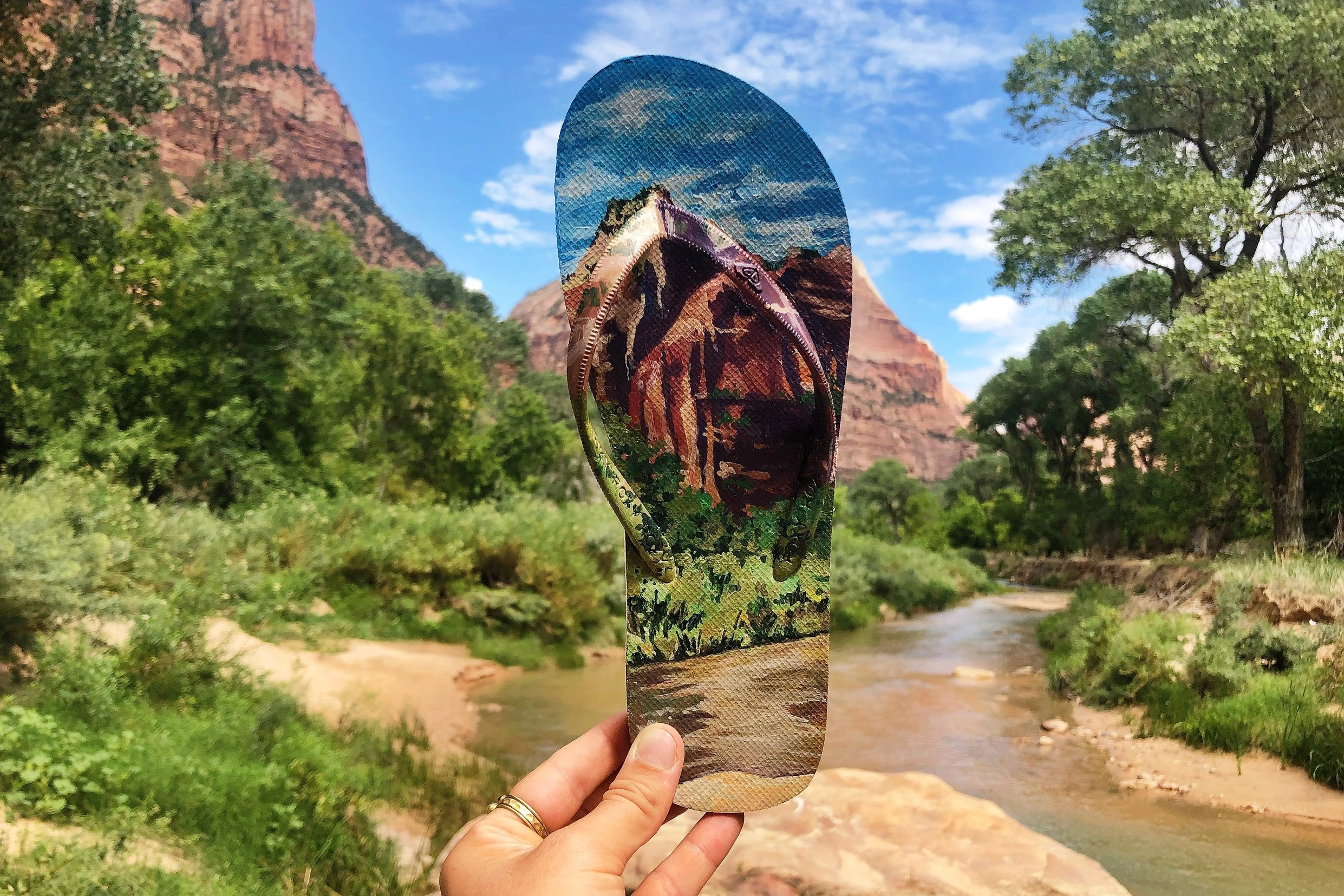
Our human footprint on national parks is undeniable: a crushed can littering the ground in Denali, a lone flip-flop left behind in Zion. Trash sullies these sights of natural beauty, but eco-artist Mariah Reading has found a way to merge the two and promote mindfulness about our environmental impact.
At public lands across the country, she collects pieces of debris and paints landscapes on them, then photographs the makeshift canvases against their reference settings, creating the illusion that the garbage is part of the scenery. It’s an “approachable way to discuss pollution and climate change,” she told Nice News, “and kind of bring the soul into it.”
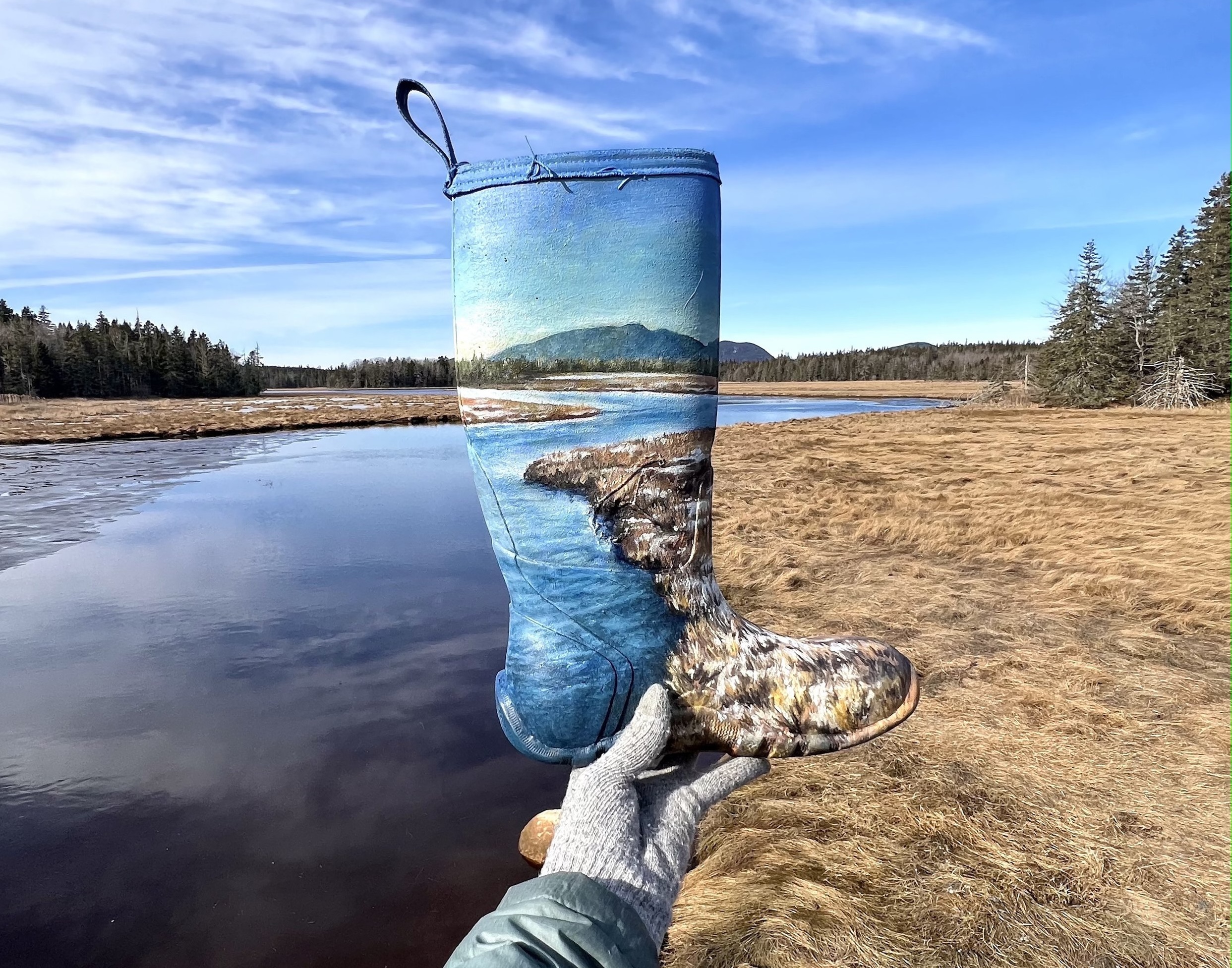
The ongoing series is a reflection of the limited-waste ethos she’s adopted in her larger body of work. “I started to see the amount of trash that I accumulated as an artist, and being so inspired by landscapes and the environment, it just didn’t really make sense or sit well with me that I was contributing to landfills with my art,” said Reading, 32.
She started with her own trash. She’d gather broken paintbrushes and empty paint tubes, arrange them together into a sculpture, and paint it. Her work involving national parks began in 2016, the centennial of the National Park Service. Reading had gotten a job teaching art in California and planned a cross-country road trip from her native Maine to her new locale.
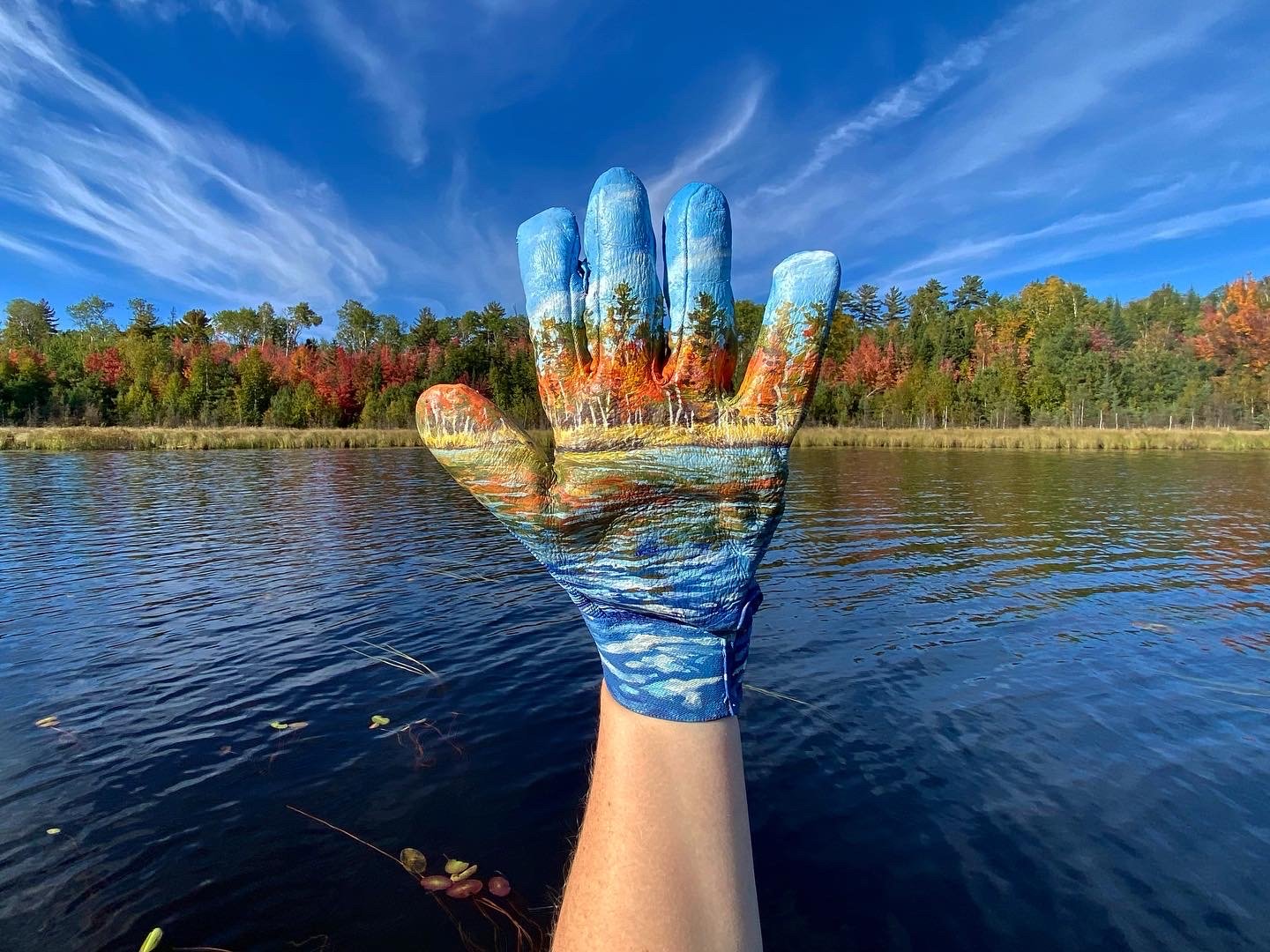
“The ridge of the crack was so similar to the mountain range skyline, I was like, ‘Oh my gosh, this is wild,’” she recalled. “So that was the first piece where [I thought] the item itself could kind of speak for the larger landscape around it.”
She’s now visited nearly 40 national parks (not including state and community parks), has completed artist-in-residence-programs at Zion, Acadia, Glacier, and Denali, and also worked as a park ranger.
Reading said she hopes people who engage with her work walk away with a deeper understanding of our impact on the natural world, something she believes art is uniquely positioned to deliver.
“Art is such a powerful tool. It really shows passion,” she said, adding: “We are so bombarded with change and disruption, and it’s just kind of chaotic right now. It’s hard to latch onto the news or stay up to date with scientific findings. … So I feel like art has a lot of power in allowing people to grasp onto those concepts in tangible ways and maybe more approachable ways.”
Her intention isn’t to highlight the negative effect we can have but rather the positive. “Many hands make light work, and small changes in our everyday lives can make the world more beautiful,” she said, sharing that one of her favorite books as a kid was Miss Rumphius by Barbara Cooney. The illustrated story is about a woman whose artist grandfather had told her when she was a child that she must find a way to make the world more beautiful.
—
‘in all things of nature there is something of the marvelous.’
-aristotle
Discover more from I didn't have my glasses on....
Subscribe to get the latest posts sent to your email.
 I didn't have my glasses on....
This is great, Beth. What a wonderful project by Mariah.
Best wishes, Pete.
LikeLiked by 1 person
What an awesome idea !
LikeLike
A beautiful soul, She.
And I love the book mentioned. She is indeed making the world more beautiful. Love this. Thanks Beth.
LikeLike
These are wonderful. What a great way to make a statement.
LikeLiked by 1 person
Art is indeed a powerful tool to convey important messages in visceral impactful ways. What an ingenious idea to use waste to create meaning.
I too am angered by people who litter in natural parks. The worst I’ve encountered so far is when people graffiti beautiful rock formations and that nuisance is there for generations, ruining it for so many others.
Glad there are people who are countering this in impactful ways. Happy Earth Day!
LikeLike