Category Archives: compassion

still standing.

Standard

The lighter penguin is an elderly female whose partner died this year. The darker one is a younger male who lost his partner two years ago. Biologists have followed them as they meet every night to comfort each other. They stand for hours together watching the lights in Melbourne. Photographer Tobias Baumgaertner captured this image of two widowed fairy penguins looking over the Melbourne skyline. It has won an award in Oceanographic magazine’s Ocean Photography Awards 2020.

“at the end of the day, the ones who really matter

will be the ones standing next to you watching the sun set

and assuring you that it will rise again in the morning.”

-ash sweeney


story credit: natureblowsmymind

wait.

Standard

on a tired evening after a long day at school

i arrived for my hair appointment

already ready to be home

 a stylist new to me

was running late

quite a patient person by nature

i felt myself becoming impatient

really wanting to be done and home

and on and on about me

finally she was ready

 we took the elevator and headed upstairs

 thinking about waking up at 4:30 the next am.

   i sat down in her chair

sensing she had been through something

while she worked we began to talk about our lives

she shared things with me:

she can only work 3 days at a time and then needs 2 days off

due to a chronic illness that has affected her leg

(ah, the elevator)

she is one of eight children raised by a single mother

she was a very young mother years ago

she loves her daughter, granddaughter, and mother dearly

she is sharing rides with a co-worker as her car is not working

she doesn’t always have dinner or time for it

this was her last week at the salon

she needed some down time to recover

she would love to have her own little salon one day

she spoke of other joys and challenges in her life

determined not to give up and make the best of things

such a strong soul

 i felt ashamed for my impatience

happy i had waited and not expressed it

i had nothing to complain about

 she was an incredible person

still kind and happy

 still in the midst of overcoming hard things

i tried to offer encouraging words

wished her well

gave her a restaurant card i had in my wallet

 as we parted ways

i was reminded to always consider the other person

wait before reacting or rushing to judgement

we really have no idea what someone’s life is like

i thanked her

so very grateful for the lesson.

“let the first impulse pass, wait for the second.”

-baltasar gracian


simple kindness.

Standard

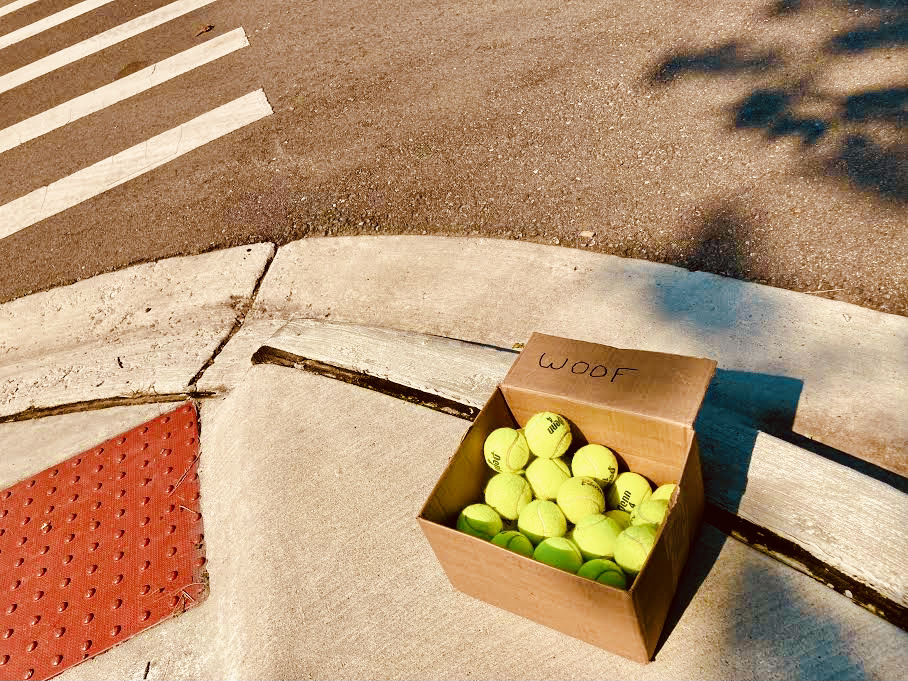
a surprise gift to the neighborhood dogs

“the simplest acts of kindness are by far more powerful than a thousand heads bowing in prayer.”

-mahatma gandhi

how to be.

Standard

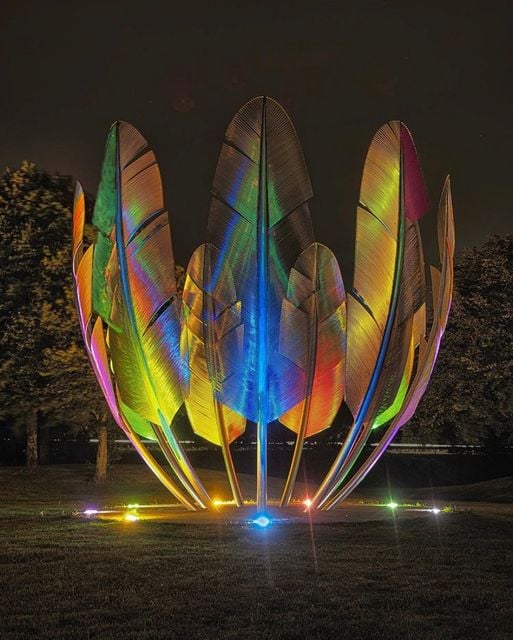
 This sculpture was built by the Irish people in their own country to honor the American Choctaw Indian tribe.

They were grateful because the Choctaw people sent money to Ireland

when they learned that Irish people were starving due to the potato famine.

And that is a lesson in how to be a person in this world.


“Generosity is not giving me that which I need more than you do,

but it is giving me that which you need more than I do.”

-Khalil Gibran


==

source: open homes, open hearts u.s., karen waters

frozen journey, warm heart.

Standard

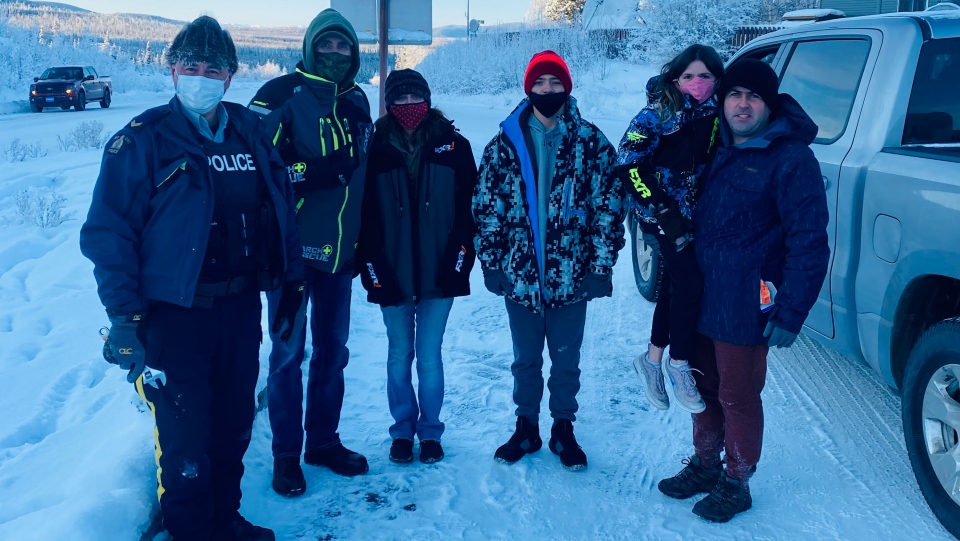
RCMP Cpl. Robert Drapeau stands next to Ranger Gary Bath,

Lynn Marchessault, Payton Marchessault, Rebecca Marchessault

and Tim Marchessault near the U.S.-Canadian border crossing. (CNN)

CNN reports a story that’s sure to warm your heart:

There’s nice, and then there’s Canadian-nice, which sometimes involves driving a total stranger, her two kids, a pair of elderly dogs and a cat named “Midnight” more than a thousand miles through a snowstorm to another country.

It all started because Lynn Marchessault and her family needed to get from Georgia to Alaska, where her husband is stationed at the U.S. Army base – Fort Wainwright in Fairbanks.

So Marchessault packed up all their belongings, bought a truck that could handle Alaska winters, rented a U-Haul, and made plans for a cross-country family adventure during the balmy days of early fall. But, 2020 happened.

Marchessault waited months for the travel documents that would allow her to drive from Georgia, through Canada and up to Alaska. Due to the coronavirus, Canada had instituted strict guidelines for Americans traveling through the country, en route to Alaska. By the time she got things in order, her September road trip was pushed to November. Besides the restrictions placed on her by the Canadian government, she knew she’d have to keep up a good driving pace to avoid the worst of winter weather.

The first 3,000 miles of the trip went well. They entered Canada through Saskatchewan. Border authorities checked Marchessault’s paperwork and warned her to keep to the main roads and stop only when necessary for food or gas.The family would have to order any food to-go, even at motels they stayed in along the way. She was allotted five days to drive through Canada and get to the U.S. border in Alaska.

The farther north they traveled, the worse the weather got. Marchessault, who was raised in the South, encountered her first winter white-out conditions. Then she ran out of windshield wiping fluid, slush covered her windows, she couldn’t see to drive, and her tires seemed to be losing traction.

Gary Bath, a Canadian ranger from British Columbia, whose job includes training members of the Canadian military to survive the Arctic, was at home when he saw his friend’s Facebook post about the stranded American family. “A lot of people were wanting to donate money or saying they wish they could help but no one was able to get off work or be close enough to go do it,” Bath told CTV News Channel on Friday. “So, I talked to my wife and we decided that I would drive all the way from Pink Mountain to the border.” Bath says he stepped in to offer the family a helping hand because “it was the right thing to do.”

“It took us two and half days, but for me it wasn’t a big deal,” he said. “I love driving so what a great way to see parts of the country that I haven’t seen in a few minutes.” Marchessault says that she and her family are very grateful for Bath’s help and says that they intended to be lifelong friends. “We’re hoping that when we do leave Alaska some of the COVID restrictions will be lifted by then because we would stop to see Gary and his wife on the way through and just thank them again for what they did to help us,” Marchessault added.

credits: CNN, Martha Shade – CDV News, Den Lourenco

“unexpected kindness is the most powerful, least costly, and most underrated agent of human change.”

-bob kerry

open society.

Standard

 powerful messages found everywhere


“in an open society, no idea can be above scrutiny, just as no people should be beneath dignity.”

-maajid nawaz


grand trunk pub, detroit, michigan, usa -2020

printing money.

Standard

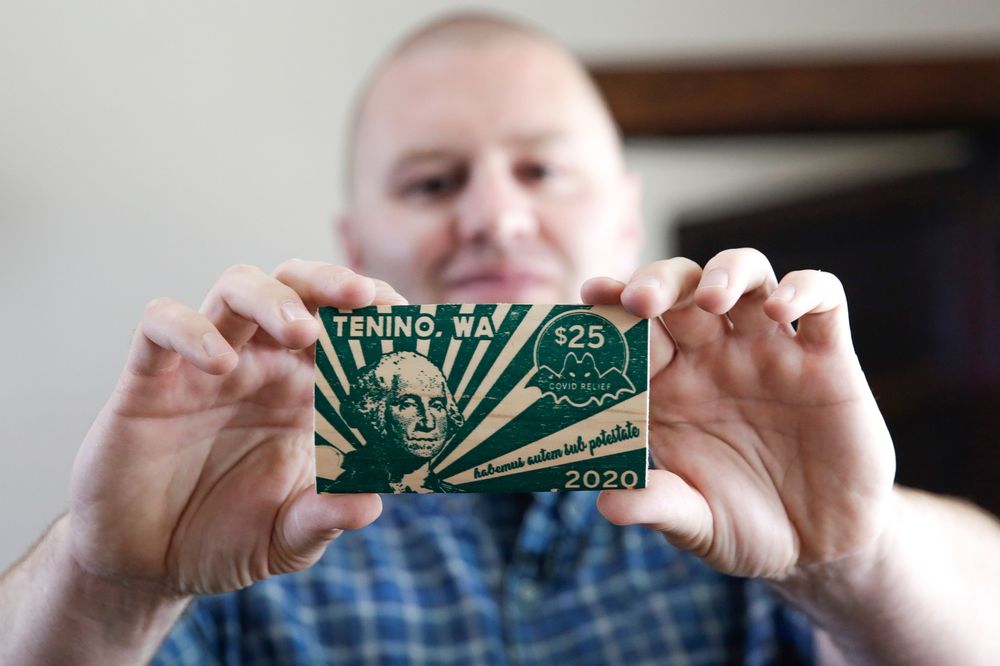
Take the Wooden Money

During the darkest days of the Great Depression, the logging city of Tenino, Washington, created a complimentary wooden currency to help locals survive the economic crisis. Now, almost 90 years later, the town is once again “printing money” on postcard-sized sheets of maple to help locals suffering from financial hardship. Pegged at the rate of real U.S. dollars, the currency can be spent everywhere from grocery stores to gas stations and child care centers, whose owners can later exchange them.

“It worked perfectly,” says Tenino’s mayor Wayne Fournier, who offers residents who demonstrate they are experiencing economic difficulties caused by the pandemic a stipend of up to $300 a month in wooden dollars. These currencies aren’t actual replacements of real money. They are complementary currencies — a broad term for a galaxy of local alternatives to national currencies.

According to research published in Papers in Political Economy in 2018, 3,500 – 4,500 such systems have been recorded in more than 50 countries across the world. Typically they are a localized currency that can only be exchanged among people and businesses within a region, town, or even a single neighborhood. Many are membership programs limited to those who have signed up; they typically work in conjunction with, rather than replacing, the official national currency.

They take many different forms. Relatively few are based on paper money; many are purely digital or exchanged via smart cards. Their goals can span multiple economic, social, and environmental objectives. Some aim to protect local independent businesses. Some promote more equal and sustainable visions of society. Others have been founded in response to economic crises when traditional financial systems have ground to a halt. As the coronavirus pandemic brings on a wave of social and economic tumult, all three challenges appear to be in play at once.

In Tenino, which has a population of less than 2,000, the wooden money is printed using an antique 1890 Chandler & Price letterpress. Since the launch in May, cities from Arizona to Montana and California have been in contact with Tenino for advice about starting their own local currencies.

“We have no idea what is going to happen next in 2020,” adds Fournier. “But cities like ours need to come up with niche ways to be sustainable without relying on the larger world.”

“sharing money is what gives it its value.”

-elvis presley


credits: story – Bloomberg City Lab, Peter Young. photo – Jason Redmons, AFP

get on the bus.

Standard

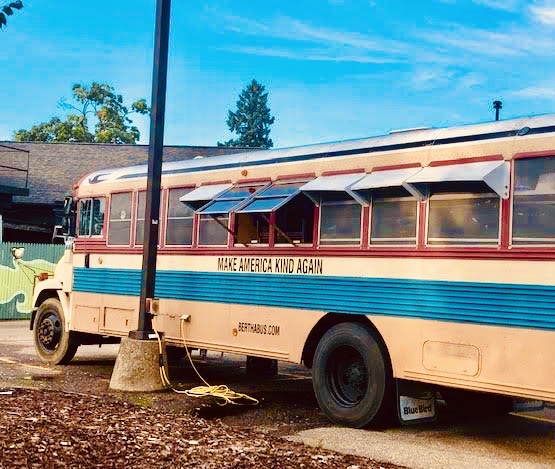
what an adventure it would be to travel on the ‘make america kind again’ bus


“human kindness has never weakened the stamina or softened the figure of a free people.

a nation does not have to be cruel to be tough.”

-Franklin D. Roosevelt, 32nd President of the United States

just be kind.

Standard

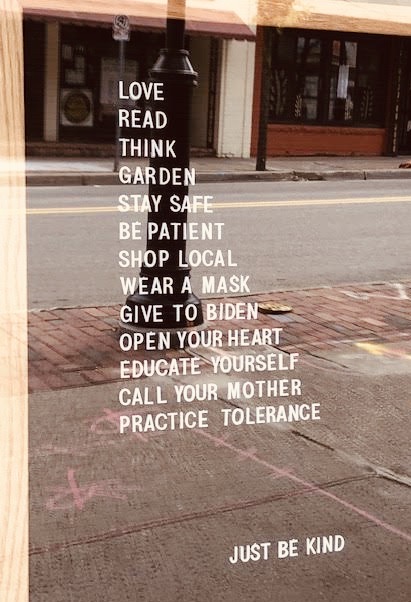
looking in the shop window

on a walk into a quiet downtown

i am reminded. 

walk like a dinosaur.

Standard

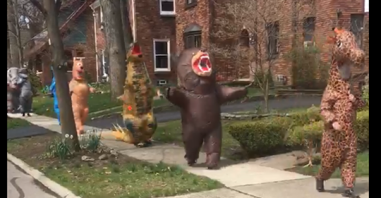
The T-Rex Walking Club parades in Ferndale,MI

The T-Rex Walking Club takes a stroll to bring joy during the coronavirus pandemic.  A silly and secret club formed during the pandemic is on a quest to bring smiles to the faces of kids, and a few adults, while under Michigan’s stay home order.

On Friday, when Governor Gretchen Whitmer extended Michigan’s order, there was parade of a pink unicorn, followed by a gentle giraffe, a ferocious bear, a swinging stegosaurus, Scooby-Doo and a shark too, a tall pterodactyl, a trotting triceratops, a black-and-white penguin, the Stay Puft Marshmallow Man, a friendly T-Rex, another penguin, and a one-eyed Minion.

This motley crew, which calls itself the Ferndale T-Rex Walking Club, takes its unannounced strolls through neighborhoods. There are other characters, too, and a few members have costumes on order. On their next walks, you might see an additional unicorn, more sharks, a polar bear, a gorilla, a Godzilla, an alligator, a hippo, a flamingo, a zebra, and an upside-down clown.

Most members of the club are also members of the Benevolent and Protective Order of Elks.The point of the parade, is to cheer up the community during otherwise gloomy times and get children and adults to smile, said Oscar Renautt, who heads the Elks public relations committee.

The T-Rex club has its own set of rules. You must be invited; have an enclosed, inflatable costume; wear a face mask; and you can never, ever tell anyone where — or when — the group is going to go walking.

The founder, Ms. Ignash, received her pink unicorn costume one Christmas, has had it for years, and she’d occasionally show up somewhere in it for a laugh. Then, she posted the article in Facebook for local residents and they thought it was a good idea. Folks asked her to organize an event, so she did. It was right after the stay-at-home order, and within two hours, close to 200 people were interested. 

Ignash decided that it was a totally crazy idea, and irresponsible to create crowds of people during a pandemic, so she canceled the event, and started over. Instead, she created a private group and invited just a couple of friends to join her. They went on a walk in costume, and then another, and another, adding a few friends — and characters — each time. 

The costumes are so big that they naturally require the walkers to space out about six-feet apart, a social distancing requirement of the governor’s order. They also don’t want to spread the virus so they wear masks.Visibility inside isn’t so good either, and it can get hot inside the costume. So they don’t walk for too long. “But, it’s fun because kids really freak out,” Ignash said. “They see us coming, or they hear other people talking about us coming, and kids freak out. Its fun, just so much fun.”

credits: Frank Witsil- Detroit Free Press, Ferndale Elks Club

“a procession is a participants’ journey, while a parade is a performance with an audience.”

 Rebecca Solnit, Wanderlust: A History of Walking