
sweet scents of winter
ginger, nutmeg, cloves, cut pine
full of warmth and spice
—
“An I had but one penny in the world,
thou shouldst have it to buy gingerbread.”
—Love’s Labour’s Lost, William Shakespeare
sweet scents of winter
ginger, nutmeg, cloves, cut pine
full of warmth and spice
—
“An I had but one penny in the world,
thou shouldst have it to buy gingerbread.”
—Love’s Labour’s Lost, William Shakespeare

Behold: The World’s Largest (Three-Ton) Gingerbread Village, GingerBread Lane.
The village becomes larger and more elaborate each year.
The day after Christmas is typically a time for relaxation and reflection after a harried holiday season. But not for Jon Lovitch—December 26 is the day he gets started on next year’s Christmas miracle. Driven by visions of Yuletide glory, he hits up stores’ post-holiday sales and stocks up on the sugar, candy and other sweets he’ll use to build his next GingerBread Lane.
The 39-year-old chef has been building gingerbread houses since he was a teenager. But Lovitch is no run-of-the-mill gingerbread aficionado. GingerBread Lane, which is on display through January 10 at the New York Hall of Science in Queens, New York, recently broke the Guinness World Record for world’s largest gingerbread village. For the last three years, he’s won the title annually, beating out villages in Norway and other countries.
Made using 682 pounds of homemade gingerbread dough, 775 pounds of candy sourced from more than 11 countries and 3,900 pounds of icing, GingerBread Lane weighs in at around three tons and takes up 500 square feet of space. Between buying supplies, making dough and icing from scratch and decorating each of the 1,102 buildings right down to their gumdrop-speckled rooftops, the completely edible village took about 1,500 hours to construct over the course of an entire year.
“I’m a chef by trade and a food purist, so I don’t believe in using ingredients that are inedible,” Lovitch tells Smithsonian.com. “Sure, it would be much easier to build if I used Styrofoam and glue, but Guinness mandates it’s built in such a way, and that’s the same way I’ve always done it.”
When Lovitch isn’t hunched over his oven in his cramped Bronx apartment, he serves as executive chef at the historic Algonquin Hotel in Times Square in New York City. Because of space restraints in his home kitchen, he can only work in batches on nights and weekends. He makes about three pounds of icing at a time and stores his creations in a spare bedroom. As a result, his entire home smells like a Christmas bakery year-round.“By the end of summer I can’t even smell it anymore,” he says, “but whenever I have friends over, they always comment on it.”
Lovitch’s schedule increases in intensity once July rolls around. He does the bulk of the baking during the summer. It isn’t until fall that he begins work on each structure’s details, from the intricate candy-coated rooftop of the S.C. Kringle & Co. Department Shoppe to the lifelike stonework on the exterior of a row of gingerbread brownstones. Lovitch even uses specially ordered coffee-flavored gum from Japan to simulate brown bricks.
“I try to make my village as lifelike and detailed as possible—it’s a cross between something in a Charles Dickens’ A Christmas Carol and a Tim Burton movie,” says Lovitch. Kids aren’t the only people drawn to the delicious intricacy of his gingerbread creations, he says: “Seniors are also really into it.”
GingerBread Lane’s appeal is widespread, but it can’t last forever. After several weeks delighting kids of all ages, Lovitch must dismantle GingerBread Lane on January 10. Rather than throw his creations in the trash, he invites visitors to come to the New York Hall of Science and take home buildings for free on a first-come, first-served basis. “Taking it apart can be gut-wrenching,” he says. “You realize as you give away each piece that you’ll never see it again. Just like Christmas, it’s an ephemeral thing. A brief, fleeting moment in time.”
—
“and I had but one penny in the world. thou should’st have it to buy gingerbread.”
– william shakespeare, Love’s Labours Lost
—
credits: smithsonianmag.com, jennifer nalewki

once upon a time
a week or so ago
we read a famous old story
out loud
got very excited
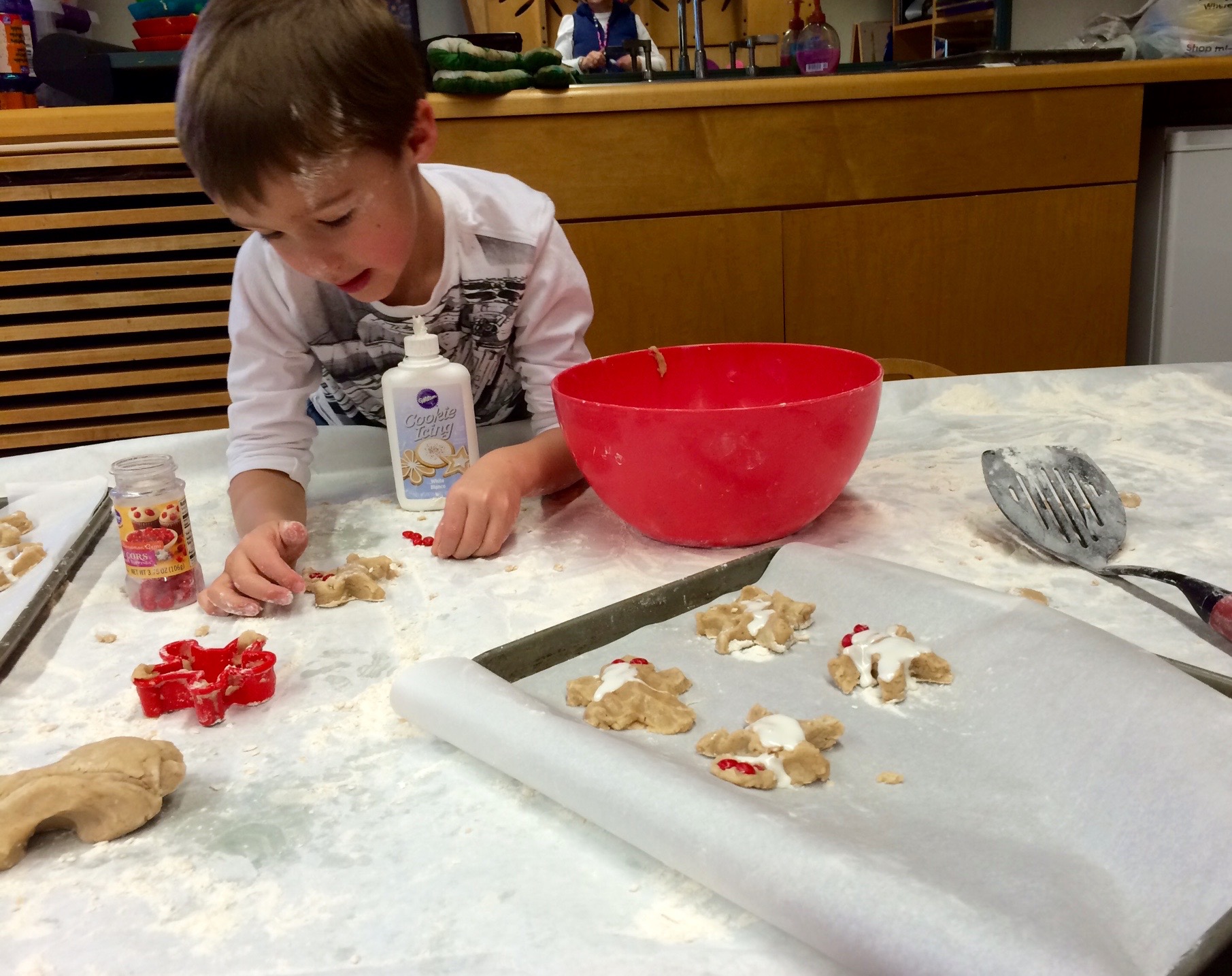
to bake our own gingerbreads
imagined them to look like the pictures
everybody
worked so hard
and
finally
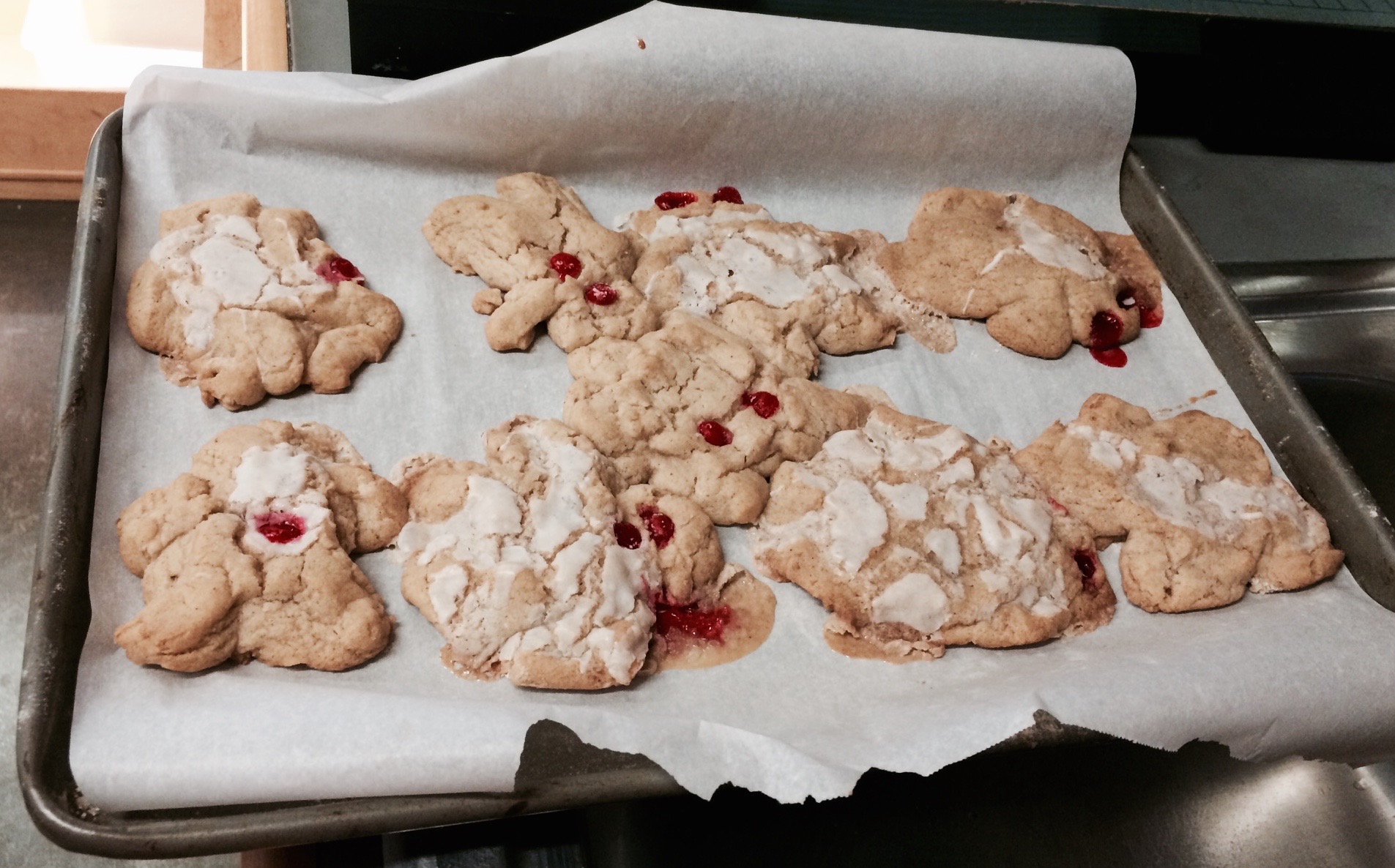
they were ready
and
the gingerbreads
were
really something special
even better
than we imagined
none of them
ran away
and
we all ate
happily ever after.
—
there is a peculiar burning odor in the room,
like explosives. the kitchen fills with smoke
and the hot, sweet, ashy smell of scorched cookies.
the war has begun.
– alison lurie
—
image credit: toriavery.com
 the first bite you take of a gingerbread cookie says a lot about your personality,
according to dr. alan hirsch, the neurological director of
‘the smell and taste treatment and research foundation. ‘
if you start with the head: you are a natural born leader
if you prefer the legs: you are sensitive
if you begin with the left arm: you’re likely creative
if you begin with the right arm: you tend to be pessimistic
if you don’t want to be judged for how you eat the thing,
you might just want to tear off everything at once when no one is looking.
 I didn't have my glasses on....