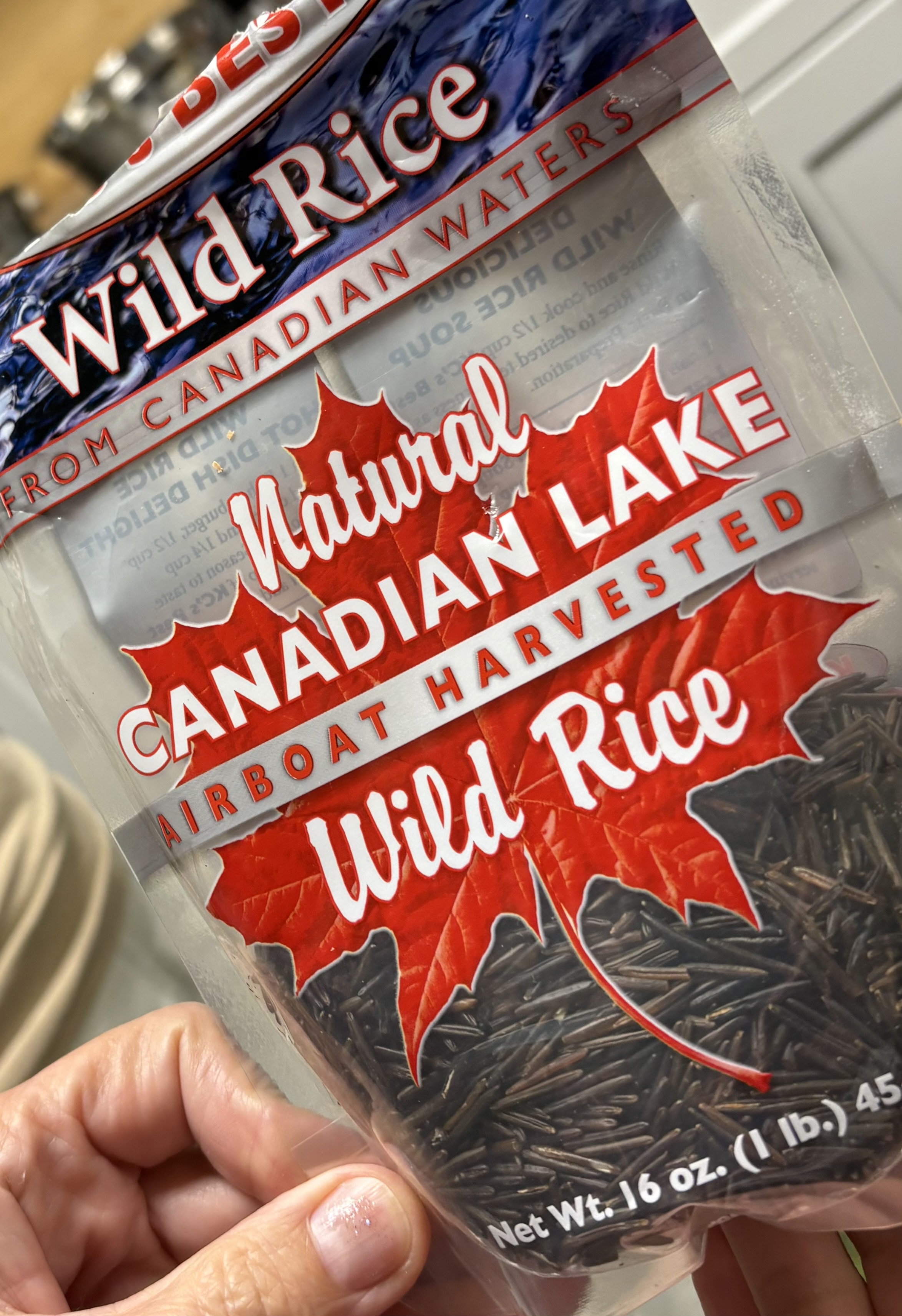
last week i joined a small group taking a seasonal cooking lesson
learning to make wild rice soup with fresh veggies, herbs and spices
along with a savory focaccia with herbs, garlic, and olive oil
(some ingredients grown in the park’s gardens)
we began with a lesson on wild rice (manoomin)
which isn’t a rice at all, it’s a grass
from the waters of northern Mnnesota
where the Ojibwe live
where our instructor grew up
very close to the Canadian border
along with a lesson about the traditional harvesting and processing of it:
*(see below)
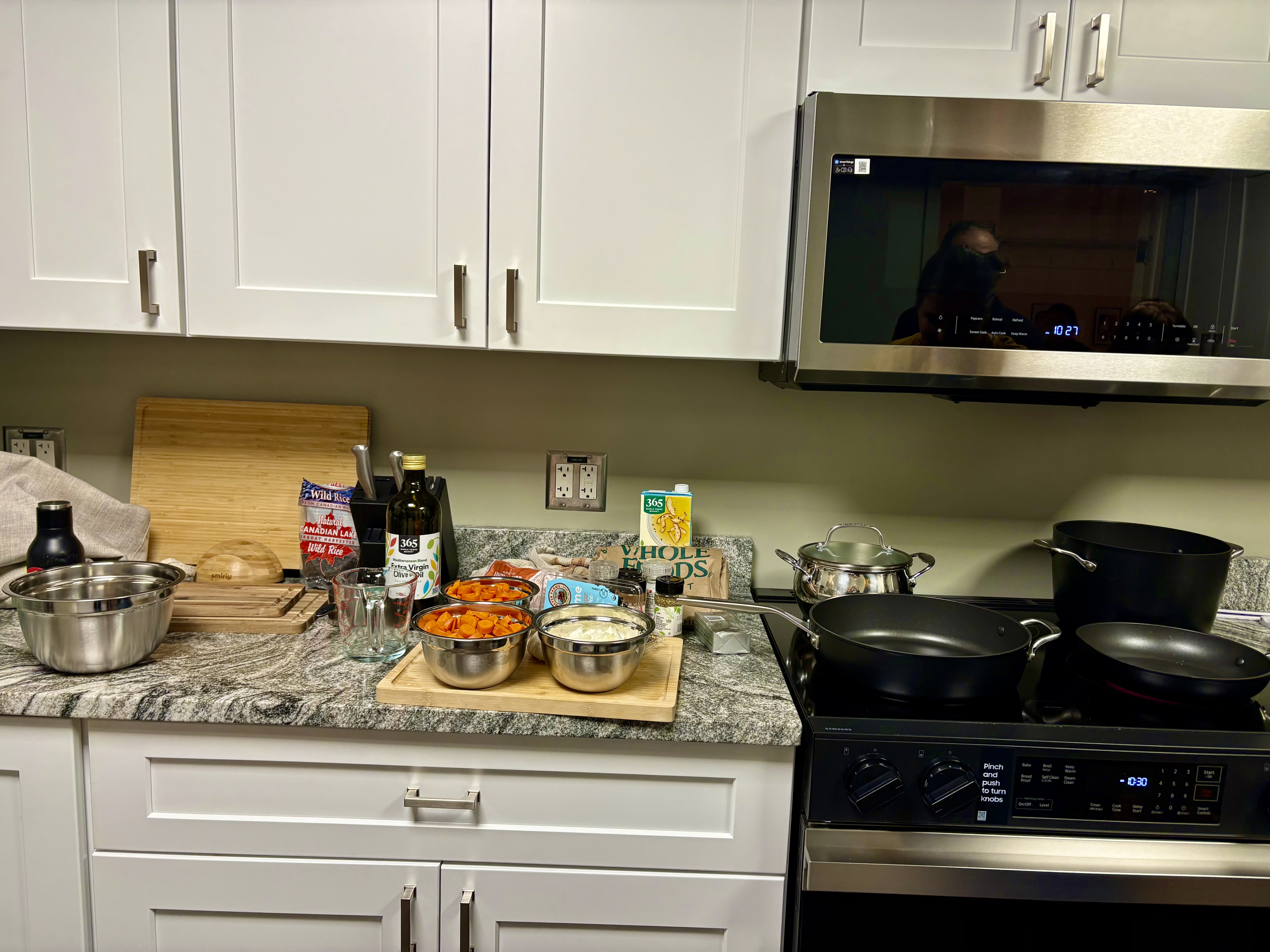
lots of dicing, slicing, measuring, mixing, stirring, tasting, timing,
laughing, questions, comments, coffee
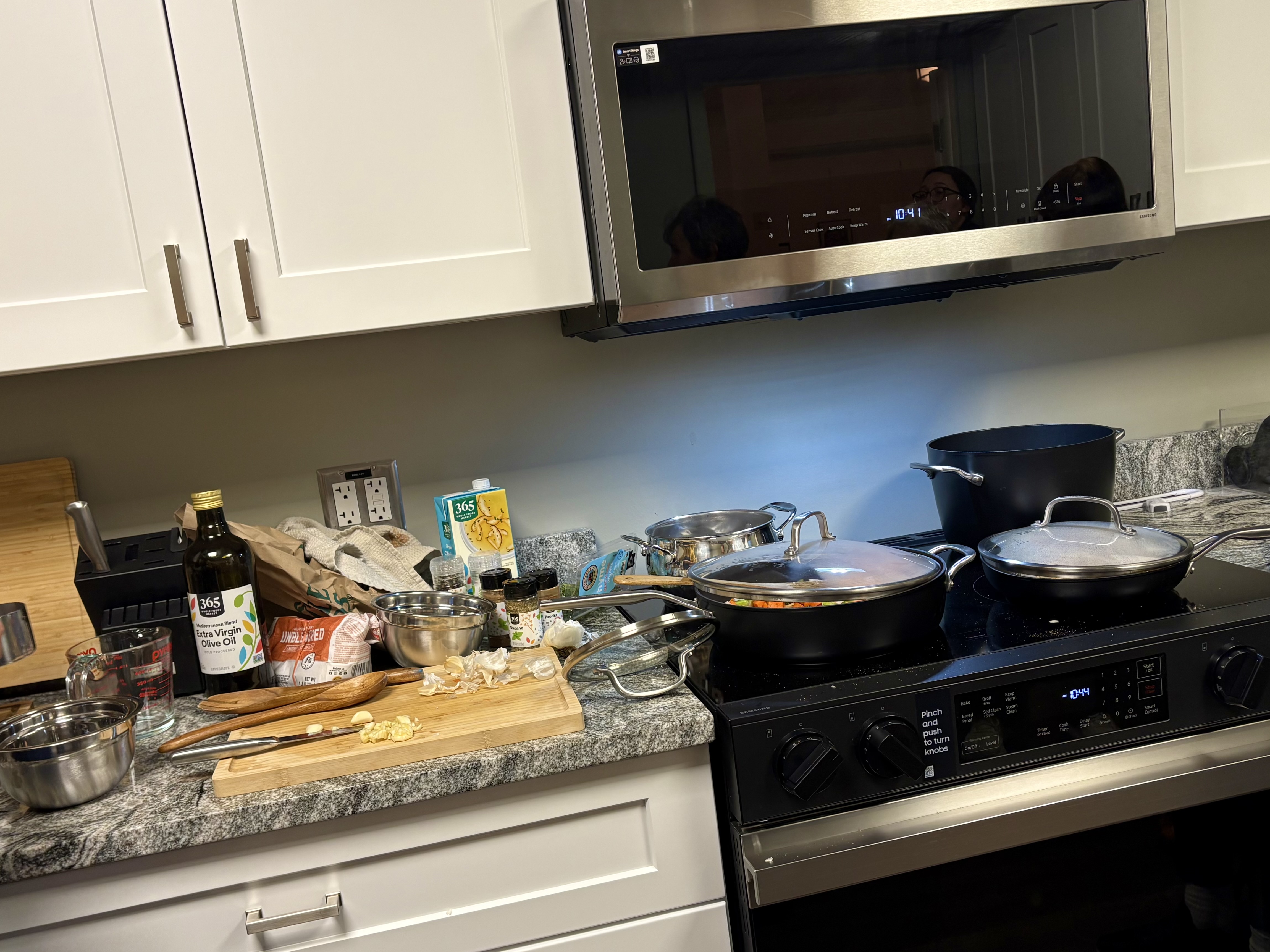
some people chose to be hands on, some to observe
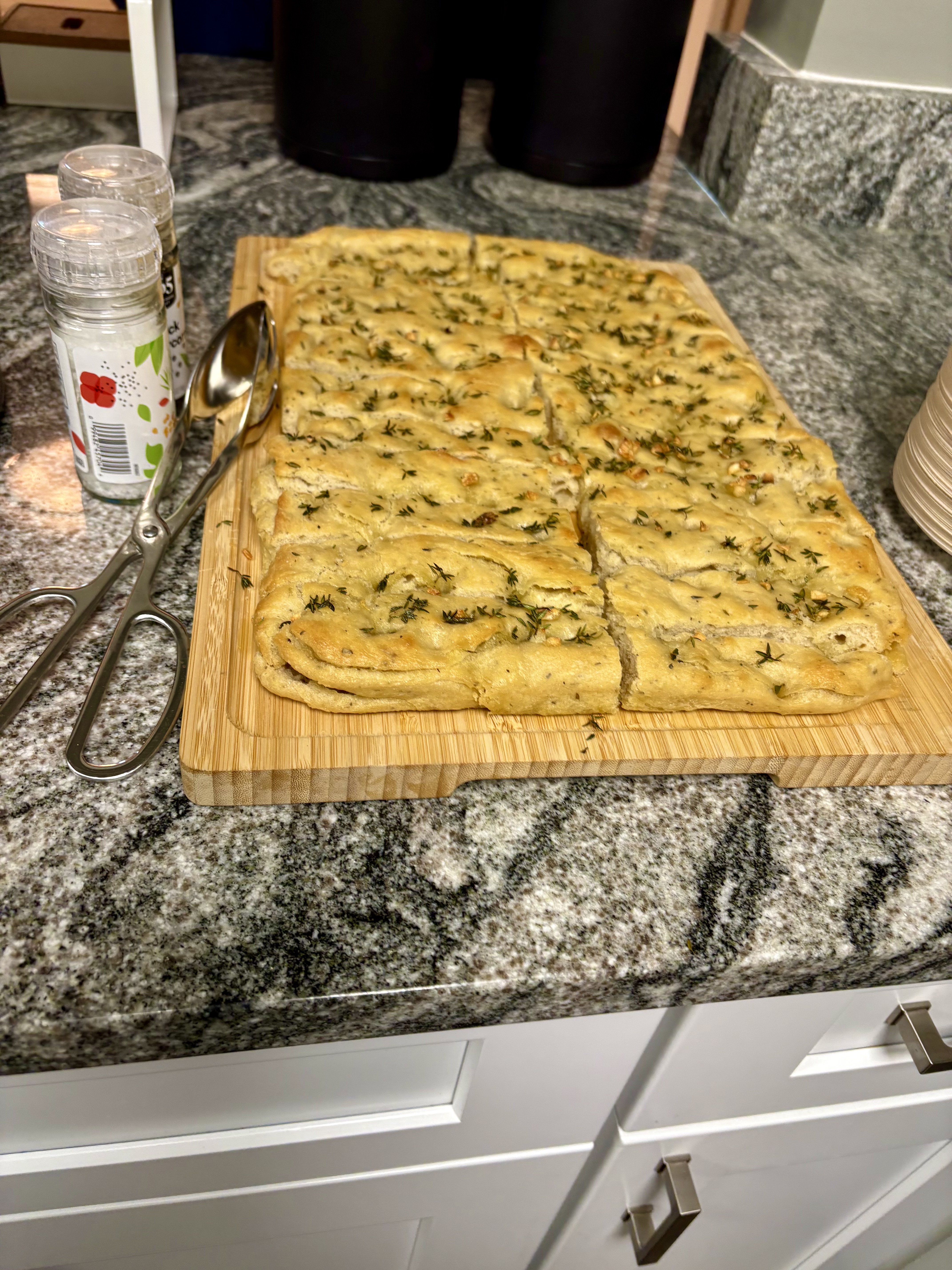
after a couple of hours
the soup bubbled
the bread was golden
we shared our meal
at a long table
where our last lesson
was learning about each other.
—
‘the joy of cooking is that you get to touch it and play with the ingredients and play with them. it’s a craft.’
-stanley tucci, american actor
—
*Traditional Harvesting Steps
- The Team: Two people ride in a canoe. One sits in the stern and gently pushes or steers the boat through the shallow water with a long pole. The other kneels or sits in the bow with two smooth cedar sticks (called knockers or bawa’iganaakoog).
- The Tapping: One stick gently pulls a cluster of stalks over the canoe, while the other stick taps the stalks twice like a heartbeat to dislodge only the ripe kernels.
- The Reseeding: Unripe grains stay on the plant, and many mature seeds fall into the water to replant the next season’s crop.
- Drying (Curing): Spread the freshly harvested “green” rice out in a thin layer in the sun or shade for a day or two to let surface moisture evaporate and prevent mold.
- Parching: Heat the rice in a large metal or cast-iron kettle over an open wood fire. Stir constantly with a wooden paddle so the grains toast evenly, harden the kernel, and make the outer hull brittle.
- Jigging (Threshing): Place the warm, parched rice into a clean pit lined with clean canvas or a wood-lined tub. A person wearing clean moccasins or soft-soled shoes gently dances or treads on the rice to crush and separate the tight hulls from the grain.
- Winnowing: Pour or toss the threshed rice upward into the breeze using a birch bark basket or shallow tray. The wind blows away the lightweight chaff and dust, leaving the clean, dark wild rice behind.
Discover more from I didn't have my glasses on....
Subscribe to get the latest posts sent to your email.


That dish sounds very delicious, Beth 👍
LikeLike
Fascinating information on manoomin. I love getting together and cooking.
LikeLike
This sounds like a great thing to learn, and the bread looks delicious.
Best wishes, Pete.
LikeLike
It sounds like a wonderful experience–learning, cooking, eating, and bonding!
LikeLike