Author Archives: beth

Unknown's avatar

About beth

Ann Arbor-ite writes about enjoying life with all of its ironies and surprises.

the ducks in winter.

Standard

‘where do the ducks go in the winter?’

-j.d. salinger (holden caulfield), ‘the catcher in the rye’


some of them are here in a park in ann arbor

‘resist much, obey little.’- walt whitman

Standard

how i spent my sunday afternoon in ann arbor

it was snowy but full of fired up people

‘i need to be able to tell my grandchildren i did not stay silent.’

I throw wishes.

Standard

As 2026 began, thousands of handwritten wishes expressing hopes for kindness, peace, health, love, and personal growth were released over Times Square as part of the annual New Year’s Eve celebration, mixed into more than 3,000 pounds of confetti dropped at midnight. Collected throughout December via the Times Square Wishing Wall-both in person and online-the messages reflected voices from around the world and symbolized a shared moment of optimism as revelers welcomed the new year beneath a literal shower of collective dreams.


‘i throw wishes into the night and wait for the stars to catch them.’

-c.a. martine


source credits: a. parnas, photo credit: msn

paix.

Standard

*Art credit: Armaan A, Brunaby, Canada, Age 7

‘peace and not war is the father of all things.’

-ludwig von mises

*PAIX is the French word for peace, coming from the Latin word pax, and is used in names, art, and as a symbol for harmony and the absence of conflict. It signifies tranquility, agreement, and the cessation of war, appearing in French culture in names and artistic expressions.

*Armann’s painting above was part of the following project:

Art For Peace

International Art Contest for Young People

United Nations Office for Disarmament Affairs

Harmony for Peace Foundation


wolf moon.

Standard

it’s january and the “wolf moon” kicked off a natural light show as the first full moon (and supermoon) of 2026.

it officially reached its peak illumination at 5:03 a.m. EST on jan. 3, though it will appear practically full on the surrounding nights, appearing just before dusk on jan. 2 and 4. local moonrise and moonset times depends on your location.

january’s full moon is known as the wolf moon, in reference to the hungry predators that have been known to howl during the long winter nights. it’s also sometimes known by its anglo-saxon name, the “moon after yule”, and as the “severe moon” by north america’s indigenous Dakota people to reflect the bitter cold of the month.


‘we are all wolves howling to the same moon.’

 – atticus poetry

(universal connection and shared spirit)


ann arbor, michigan, usa, january 2026

piling up.

Standard

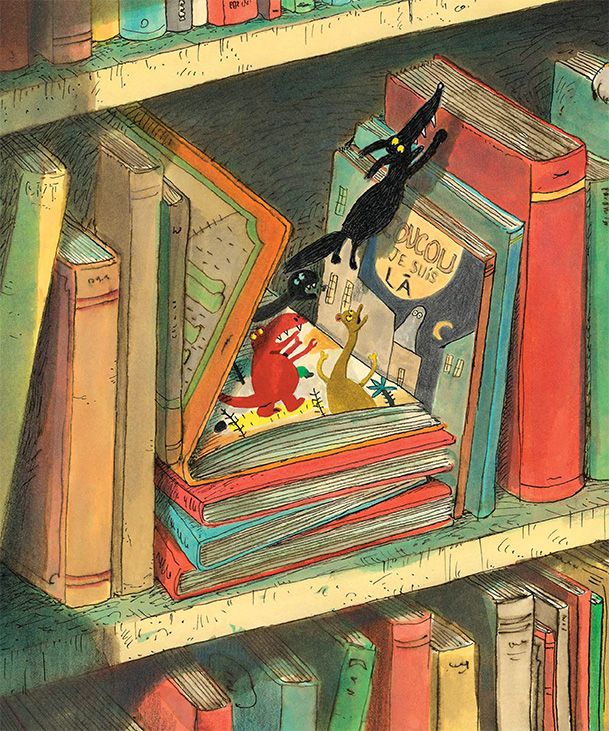
getting new and used books of all kinds for my birthday and christmas gifts in the last couple of months has added to my stacks, and i couldn’t be happier about seeing them grow. these thoughtful gift givers know me so well. 

‘What an astonishing thing a book is. It’s a flat object made from a tree with flexible parts on which are imprinted lots of funny dark squiggles. But one glance at it and you’re inside the mind of another person, maybe somebody dead for thousands of years. Across the millennia, an author is speaking clearly and silently inside your head, directly to you. Writing is perhaps the greatest of human inventions, binding together people who never knew each other, citizens of distant epochs. Books break the shackles of time. A book is proof that humans are capable of working magic.”

– Carl Sagan – Cosmos, Part II: The Persistence of Memory, 1980

image credit: book riot

heading toward 2026.

Standard

heading toward 2026

on the frozen lake

on the last day of the year

on a very cold and swirly windy day

“what the new year brings to you

will depend a great deal on what you bring to the new year.”

-vern mclellan

walking into the new year with peace.

Standard

Why a quiet walk across America

is becoming a collective call to practice peace

The Walk for Peace began with a simple, radical question: what would happen if a small group of Buddhist monks crossed an entire country on foot, carrying nothing but presence, prayer, and a willingness to suffer just enough to remind the rest of us what peace feels like?

This year, about twenty monks set out from the Huong Dao temple in Fort Worth, Texas, beginning a 2,300-mile pilgrimage to Washington, D.C. that will take roughly 120 days and carry them through ten states. As the monks moved steadily forward, their arrival in Georgia drew quiet attention not because of spectacle, but because of stillness. They walk in sandals. They often eat one meal a day. They sleep wherever kindness allows. They rely entirely on strangers.

Wherever they pass, people respond in the same way. In LaGrange, Georgia, hundreds gathered at a local church after word spread that the monks had arrived. A community organizer described the visit as “inspiring hope” in a divided time. The monks didn’t argue. They didn’t persuade. They walked, bowed, and listened. That was enough.

In Peachtree City, residents, business owners, and city leaders turned out on a gray morning to greet a quiet line of orange robes moving slowly down an ordinary road. A city doesn’t always get to choose its symbols. In that moment, the symbol wasn’t a flag or a slogan. It was patience, made visible.

The impact shows up most clearly in small, intimate encounters. One widely shared video shows a venerable monk kneeling to hug and bless a little boy by the roadside, a moment the child’s family described as unforgettable. Another clip captures the steady rhythm of the walk itself, robes moving forward as people pause and watch, something that feels like a living meditation. Those who spend time alongside the monks often describe leaving calmer and more grounded, calling the experience “soul-touching” and deeply human, as reflected in one such account. And if you’ve seen the long, silent line advancing down the road, you understand why that image continues to travel, quietly stopping people mid-scroll.

Community leaders hosting the walk have been clear about its purpose. Messages shared along the route insist the pilgrimage “is not political. It is not divisive. It is a walk for peace, for healing, for unity, and for hope,” a sentiment echoed as towns across Georgia opened churches, sidewalks, and streets to welcome the monks, as seen in this moment of arrival. The organizers themselves describe each step as a living prayer meant to awaken the peace already inside the people they meet, a message they continue to share through videos from the road.

Watching from afar, many people sound surprised by their own emotions. Some admit they are crying as they watch the monks walk from Texas toward D.C., saying the crowds lining the roads prove people do not want hate, reflections shared among supporters in posts like these. Others keep sharing clips and reactions as the journey unfolds, part of a growing stream of responses now filling feeds and timelines, including this broader collection.

The monks are not asking us to walk 2,300 miles. They are asking something harder: to put one peaceful step in front of another in our own lives. To choose kindness when indifference feels easier. To treat our commutes, our feeds, and our neighborhoods the way they treat the open road, as places to practice compassion.

As the New Year begins, their message feels less symbolic and more practical. Peace is not a destination. It’s a daily practice. Their pilgrimage will end in Washington, but the Walk for Peace continues every time we decide, in the midst of chaos, to let our next step be a living prayer for the world.

And as they keep walking, they will keep sharing the videos and moments from their journey, not as a religious message, but as a shared human experience we can learn from, pass along, and carry into the year ahead.

As we head into a new year it feels like an offering, not a sermon. You don’t have to be religious or spiritual to connect with what’s happening here. This walk isn’t about belief. It’s about how we treat one another when no one’s keeping score.

You can continue to follow the monks’ journey as they continue walking, and think of them as small pauses in the day — reminders of what patience, kindness, and shared humanity can look like in real life.

In a loud and divided moment, this walk offers something quietly radical: people choosing presence over performance and care over contempt, one careful step at a time.

“Choose your mind every morning.

 Forgive yourself every night.

 Replace your worn-out habits with higher ones.

 And declare,

“Today will be my peaceful day.”

-the Huong Dao monks


Source/story credits: DEMCAST USA AND JENNIFER CANTER

(they will continue to follow and share the journey on their substack,

click on the link above to follow them)

(and to follow on Facebook options, click on the links below)

Walk For Peace Facebook links:

Official Facebook Pages of Walk for Peace, the 120-day, 2,300-mile journey by Buddhist monks — with loyal dog, Aloka — walking from Fort Worth, Texas, to Washington, D.C. to raise awareness of peace, loving kindness, and compassion across America and the world.

https://www.facebook.com/walkforpeaceusa

street art utopia.

Standard

 What happens when male statues become fathers for a day? A creative campaign in Sweden is challenging traditional norms about parenting roles.

Imagine a bronze statue of a stoic leader, now wearing a baby sling with a doll nestled inside.

In November, on International Men’s Day, male statues across Sweden were adorned with baby slings and carriers as part of a unique campaign to spotlight unequal parenting responsibilities.

Traditionally representing power, labor, or other masculine attributes, these statues were reimagined to symbolize fathers as caregivers. The campaign, organized by the think tank Arena Idé, is part of an initiative aimed at encouraging fathers to spend more time with their children and urging employers to play a larger role in enabling this.

Despite Sweden’s globally recognized parental leave policies, significant disparities remain. Swedish fathers take only 30.9% of parental leave days and 38% of sick leave to care for children.

A recent Novus survey, conducted in collaboration with Make Equal, further reveals that expectations around parental leave remain unequal in Swedish workplaces. Through this campaign, Arena Idé hopes to challenge these norms and has proposed an employer bonus for workplaces that encourage an equal division of parental leave.

The statues involved in the campaign were decorated with dolls in baby slings and carriers.This created a contrast between the statues’ traditional symbolism and the modern role of engaged fathers.

Vilgot Österlund, a statistician at Arena Idé, emphasizes the importance of changing workplace norms: “When discussing gender equality in workplaces, the focus is often on women and the negative consequences of inequality for them. But here, we see that men are also losing out on something invaluable – time with their children. Through the statue campaign, the new statistics, and our proposals, we hope to make this clearer!”

‘it is a wise man who knows his child.’

-william shakespeare

Source credits: Creative Street Art on Equal Parenting, Arena Ide

three friends, two seasons, one day.

Standard

 warm and rainy early evening in town

pleasant ending 

to a relaxed day with friends

between the holidays

good balm for the soul

feels almost like spring

later tonight

once we’re all home again

 temperature drops

snow squalls and winds arrive

reminding us that winter is here.

‘happiness is a collection of joyful experiences shared with soul friends.’

-amy leigh mercree

ann arbor, michigan, usa, december 2025