Category Archives: art

’tis the season.

Standard

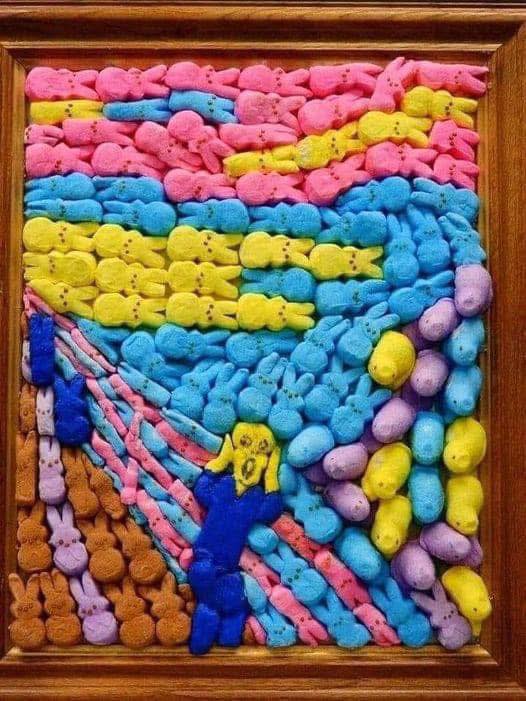
perfect time to scream and make peeps easter candy into art. 

‘i always saw candy as art.’

*dylan lauren


*Dylan Lauren is an American businesswoman.

She is the daughter of American fashion designer Ralph Lauren,

and the owner of New York City’s Dylan’s Candy Bar,

which claims to be the “largest candy store in the world”.


art credit: lisa johnson


grilled cheese and a gifted artist.

Standard
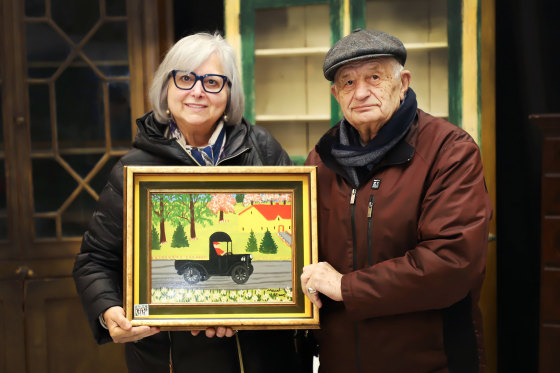
Irene and John Demas came into possession of a Maud Lewis painting through a good friend John Kinnear, a patron of their restaurant in Ontario. "John Kinnear, he only ordered grilled cheese sandwiches,” Demas explained. "I was a young chef and the culinary world was just coming up. I was doing a lot of new recipes and I wanted him to try my daily specials, but he never would — he just loved the grilled cheese sandwich.”

Irene and John Demas came into possession of a Maud Lewis painting through a good friend John Kinnear, a patron of their restaurant in Ontario. “John Kinnear, he only ordered grilled cheese sandwiches,” Demas explained. “I was a young chef and the culinary world was just coming up. I was doing a lot of new recipes and I wanted him to try my daily specials, but he never would — he just loved the grilled cheese sandwich.”

The couple’s story of acquiring a rare Maud Lewis  painting thanks to a grilled cheese made headlines, but in an interview with TODAY, Demas explained that her story is more about how food fosters social exchange and community.

According to Demas,  the story starts in London, Ontario, decades ago, in the early ’70s. Demas was a 19-year-old newlywed whose husband worked in real estate and had a good eye for potential. After a discovering a building that had once housed a restaurant, Tony pitched his wife on opening their own restaurant, and together, the two established an eatery called The Villa.

Before then, Demas had zero culinary experience and had never envisioned herself working in a restaurant kitchen. But as she tells it, on The Villa’s opening day, the restaurant’s chef had one too many beers, and Tony asked his wife to step in. “I knew nothing honestly about food,” she explained. “But I did know how to make a grilled cheese, so I thought, ‘OK, our special’s just going to be grilled cheese sandwiches. That’s it.’ That’s the only thing I knew how to (make) … and maybe boil water.”

The sandwiches were a hit, and the restaurant managed to stay afloat. Sometime around 1973, it was there that the couple came to meet future regulars, Audrey and John Kinnear. After a while, the couples became friendly, and⁠ — because it was the ’70s⁠ — they decided to start making some trades.

“After a while, he started bringing in some of his art and asked my husband if we could trade for their lunches for his art,” Demas explained. “We happened to really love his art. He did some very beautiful watercolors … he did a lot of European kind of stuff, English countrysides and beautiful animals.”

“We never really kept tabs, to say, ‘OK, well, you were in, and you spent $15. Now, you know, you’re gonna give us $15 credit,'” she continued. “There was such a wonderful relationship with the Kinnears.”

Nothing was a tit for tat. They simply offered and took and, eventually, one day, Kinnear came in with a set of paintings that weren’t his own to trade. Demas remembers that Kinnear told the story of the artist he’d met who had limited mobility (Maud Lewis had rheumatoid arthritis) and was of simple means. He set up six artworks from different artists around chairs and against glassware and presented them to Demas and her husband.

“(Kinnear) came in with this very strange-looking art. It was on board, unframed, a very childlike, very primitive art that I’d never seen before,” she explained. “I’m not an art expert, and we weren’t art collectors. We just knew what we liked.”

But one of the paintings stopped Demas in her tracks. “There was one special painting that really jumped out at me that was very bright, and it was a little black truck. All the other ones I didn’t care for had about two or three different versions of cats … I was pregnant at that time. And (I thought), ‘Well, if it’s a boy, we can hang it in in his room’ … it turns out I picked the right one.”

Demas did have a boy, and after placing it in a frame with a few letters Lewis sent to Kinnear, she hung the painting in her newborn’s room. Decades passed, and so, too, did the Kinnears. Then came a shift in the art world.

Lewis, a folk artist from Nova Scotia who’d never achieved any financial success for her art, became a topic of interest in the early aughts.

“There was an article written about her in one of the newspapers,” Demas explained, remarking that it wasn’t until around 2000 that she began to hear the familiar name Kinnear had mentioned to her decades before. “More and more people were collecting and buying her art … Things started popping up. I started seeing her art at auction sales. You know, and they were bringing $2,000, $3,000 at that time.”

Then, as Demas recalls, someone found a Lewis painting at a Goodwill store that went up for auction and sold for $45,000.

“But I wasn’t really looking into it because, like I said, we loved the piece,” Demas explained. “We didn’t buy it as an investment or didn’t think that it was a great piece of art even.”

Still, Demas had the foresight to have the piece insured. At the time, Lewis’ art was on the rise but not yet a hot commodity, and the insurers Demas spoke to didn’t recognize the artist’s name. Their ignorance set Demas on a path of appraisal; after talking to auctioneers, she discovered that the black truck was unique. Demas found out that Lewis often incorporated the same images in her art — cats, barns, cows — but the black truck was special. To this day, no one else has reported finding a black truck in a Lewis painting.

Various auctioneers pursued Demas, but two brothers from Miller and Miller were determined. Leaning on the trope that a way to a person’s heart is through their stomach, the two auctioneers drove through sleet and snow to meet Demas and her husband face-to-face and to present them with a box of butter tarts. Not long after their visit, after encouragement from her children, Demas put the piece up for auction.

At a viral auction on May 14, the hammer struck at $272, 548. The letters sold for about $55,000.

Demas recalled the bittersweet sentiment of parting with the painting after decades, but also noted how her earnings will be put to good use. She and her husband Tony are now retired. She works on and off as a private chef, and her husband, who is now 90, has been traveling. Currently, he’s waiting for her to come to join him at the home they own in Athens, Greece.

“He’s over in Greece, and he’s climbing mountains and chasing goats,” Demas said with a smile. “Gathering fresh herbs and waiting for me to come over.”Demas’s relationship with her husband is just one of the many reasons she feels an appreciation for Lewis and her art.

“I think she put so much of herself in these paintings and she just painted happy things because she had such a such a sad life that she wanted to she put everything in her art. She was abused, all her life,” Demas explained, noting her gratitude for her husband, who she says has treated her well in their 50 years together, and whom she’s still very much in love with.

And to think that this story of love, friendship and art all started with a simple sandwich.

“If it weren’t for the grilled cheese, it just would have been another Maud Lewis painting coming up for auction,” Demas said. “I know it would have gone it would have broken all records because it is such a special and unique painting and with the letters, but I think it was the grilled cheese story that really let everybody in the world know was there.”

I share this story on National Grilled Cheese Day and out of love for Maud Lewis and her work.

I first learned about Maud Lewis after seeing a movie about her,

‘Maudie,’ the true story of one of Canada’s greatest folk artists.

She had a very hard life, was an incredible natural artist, and I love her art.

‘the heart is poured like water through the workings of the hand’

-Laura Jaworcki

Source credit: Alex Portée,  TODAY Digital
raindrops.

Standard

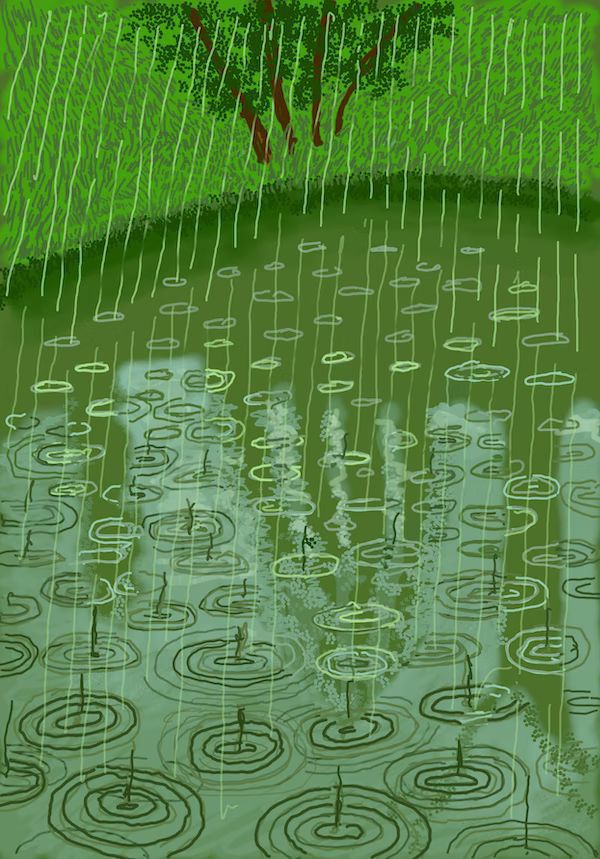
‘There are a finite number of times we get to do anything and after the first time it’s a count. We only get to look at the sky so many times in a life. There are a finite number of rainstorms and seasons that we’ll witness, and the number seems so big until it doesn’t. We never know when will be the last time we taste something or see someone or do anything at all. And for all the money in the world, time is not for sale no matter what the doctors say when we beg for more of it toward the end, finally seeing that we forgot to count the raindrops.’

-Cory Richards, The Color of Everything: A Journey to Quiet the Chaos Within

(Random House)

Art credit: David Hockney: The Arrival of Spring, Normandy, 2020

 at the Art Institute of Chicago

little steamed pockets of joy.

Standard

 artist Tatsuya Tanaka uses everyday objects and food items to create amazing mini worlds.  his latest creation: ‘Shaun the Sauna’! was inspired by Shaun the Sheep, one of my favorite cartoons’ and made into dumplings, one of my favorite foods. what’s not to love?


‘dumplings – little pockets of joy waiting to be savored.’

-author unknown

stepping on fresh snow.

Standard


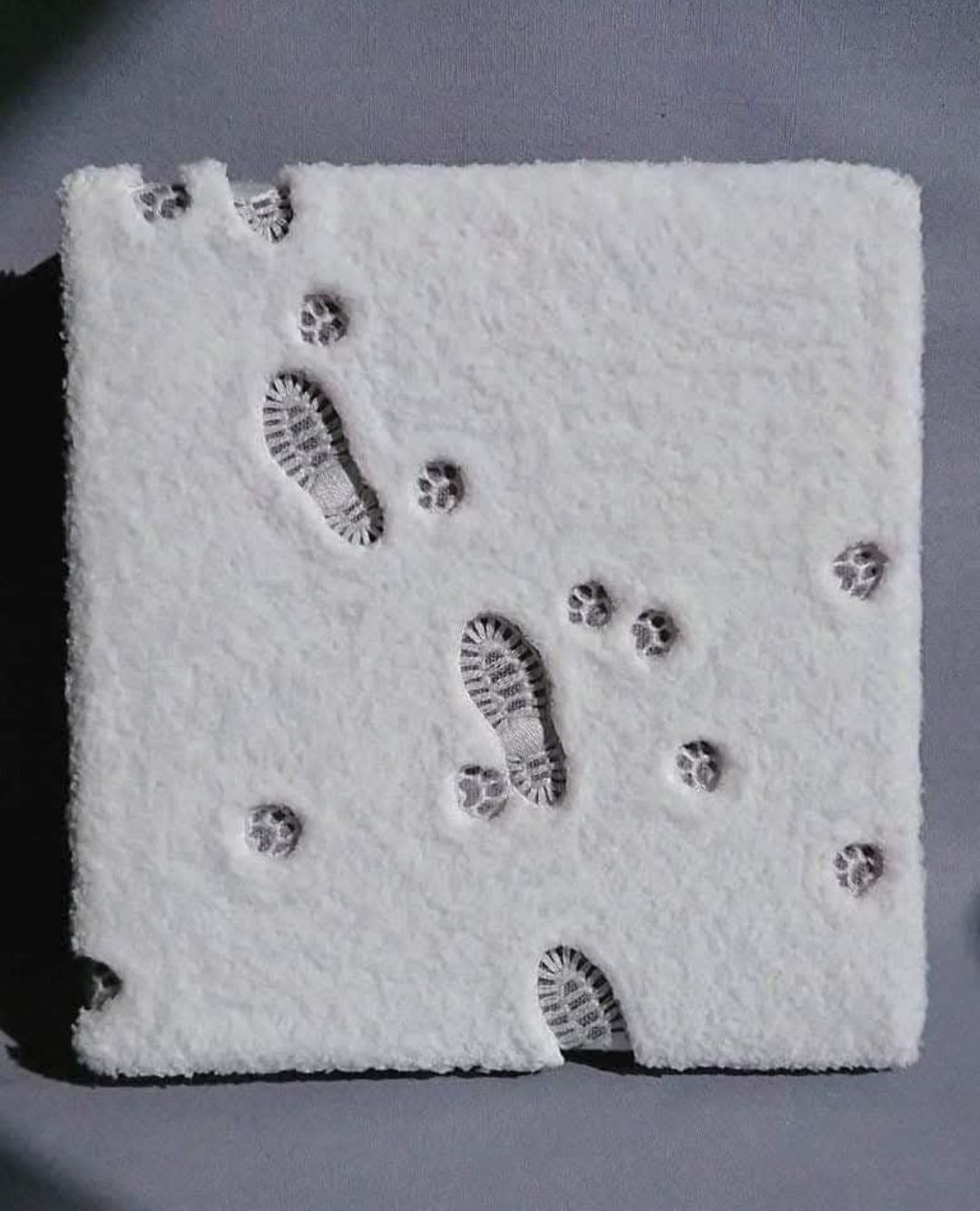
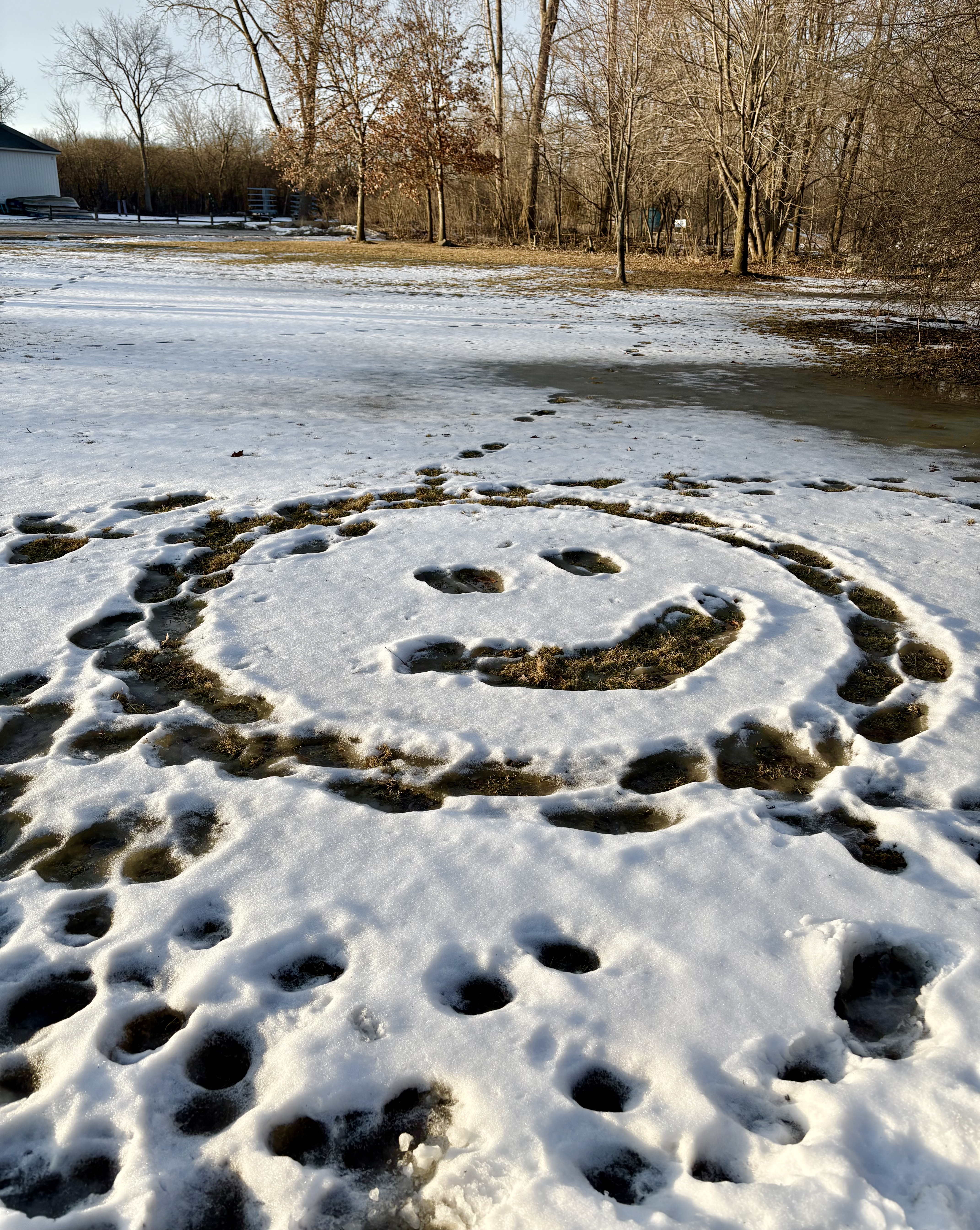
‘Stepping on fresh snow’,  embroidery by Japanese artist, Narumi 

‘stepping on fresh snow’  found in park near my house

-human and dog artists unknown

‘there’s just something beautiful about walking on snow that nobody else has walked on.’

-carol rifka brunt

ink.

Standard

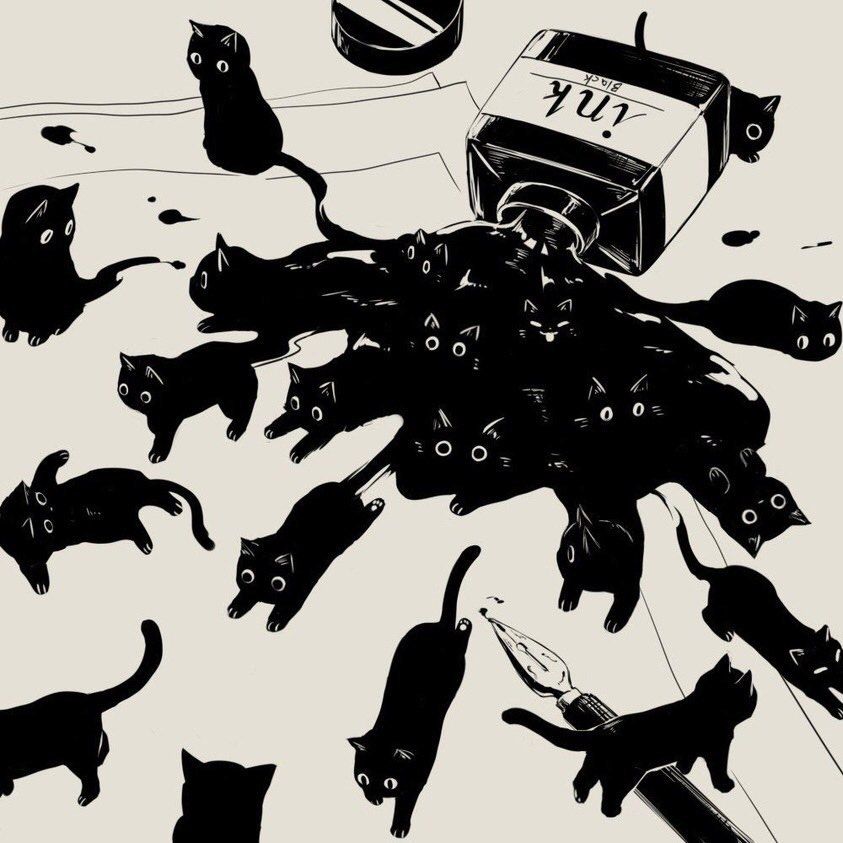
‘Ink, by Japanese artist under the nickname Avogado6

‘there is something magical in seeing what you can do,

what texture and tone and colour you can produce

merely with a pen point and a bottle of ink.’

*-ida rentoul outhwaite

*Ida Rentoul Outhwaite, was an Australian illustrator of children’s books.

Her work mostly depicted magical creatures, such as elves and fairies.

all things become possible.

Standard

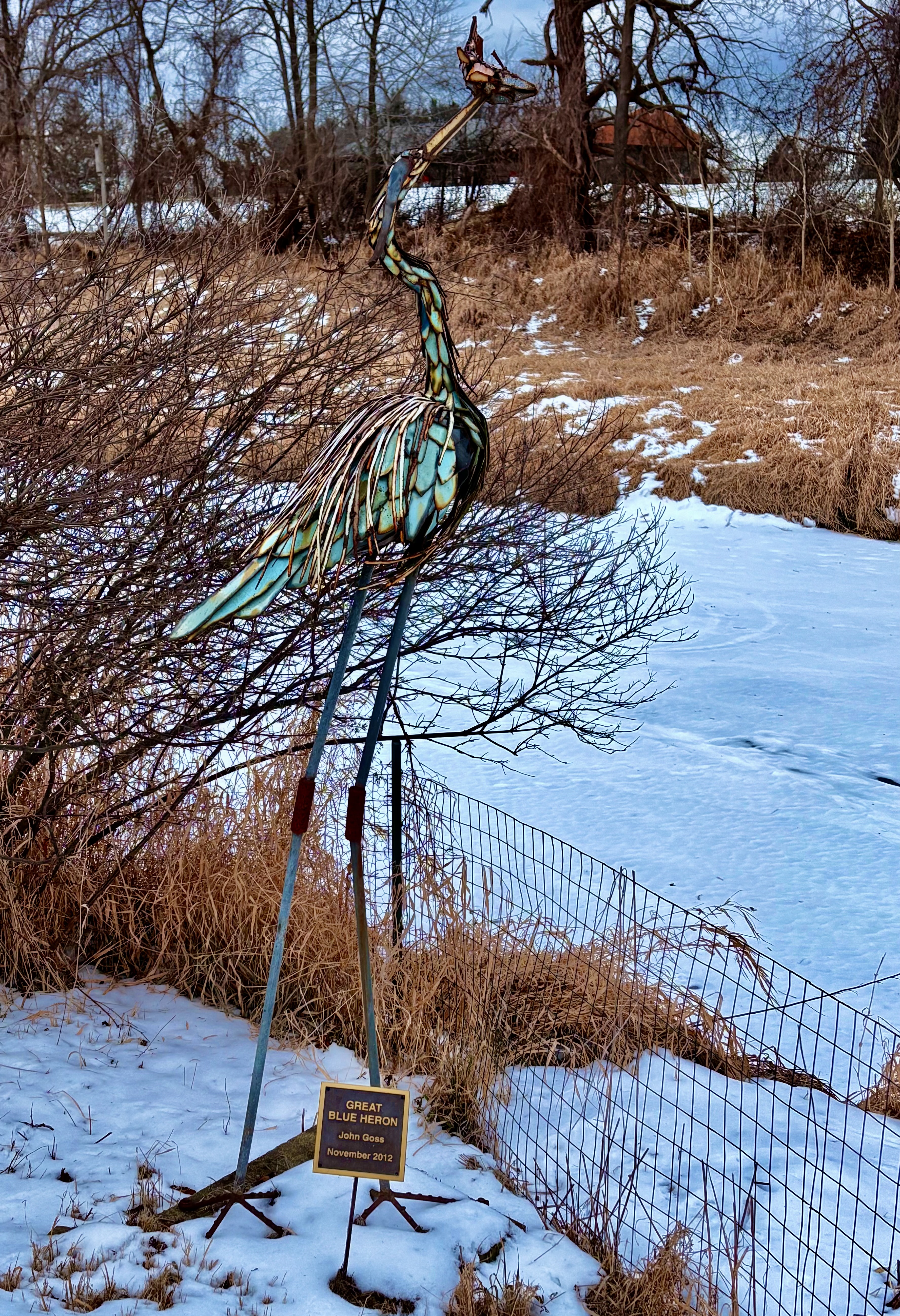
on a crisp and bright morning walk, we find a great blue heron waiting

‘creativity is the blue heron within us waiting to fly;

through her imagination, all things become possible.’

-nadia janice brown

art credit: john goss, great blue heron

mill creek park north, huron river, dexter, mi, usa

winter 2025

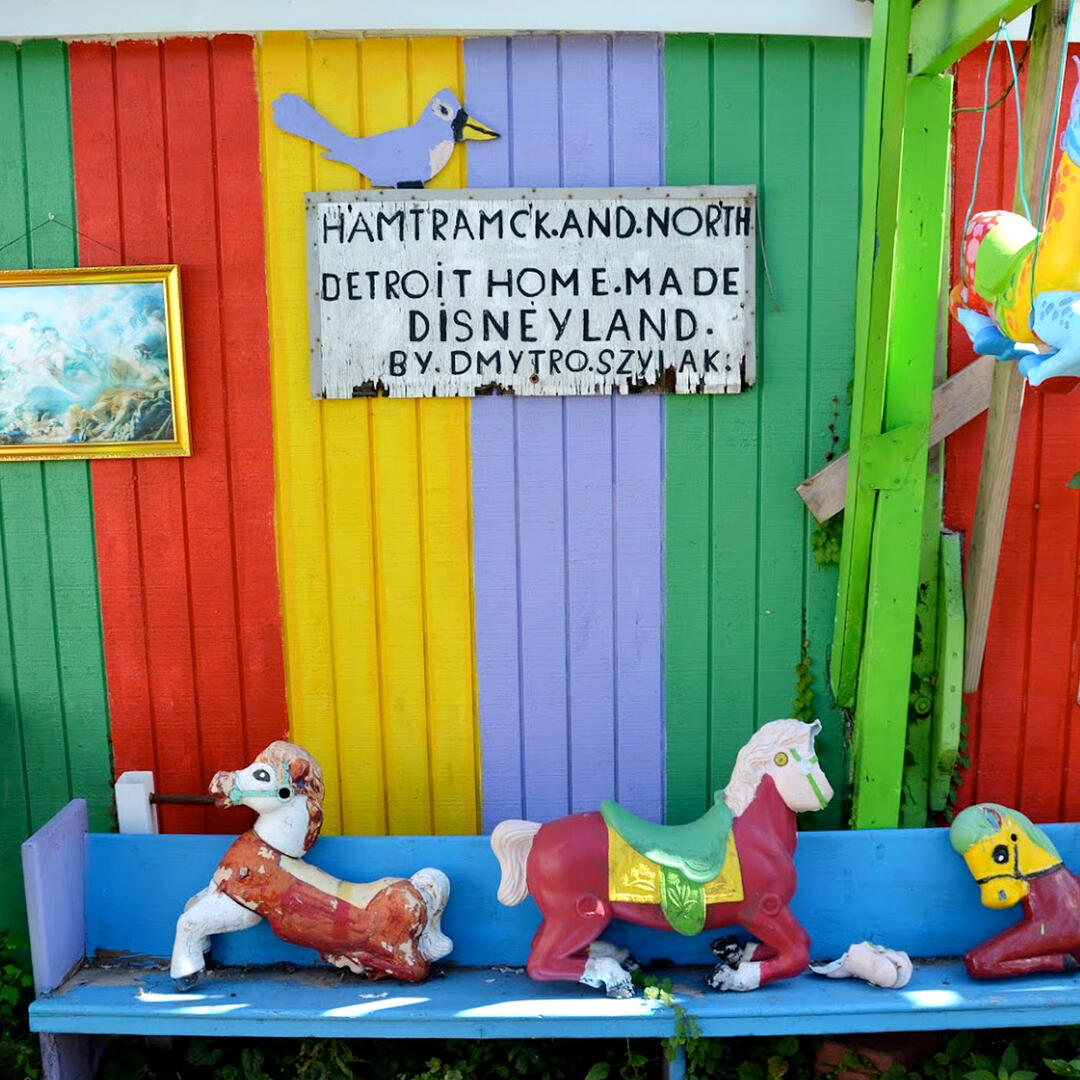
hamtramck disneyland.

Standard


after a wonderful lunch with friends at the polish village restaurant

a bakery visit, and trip to the local grocery

in hamtramck, michigan

(a small city on the edge or detroit

now filled with a mix of polish and yemini people)

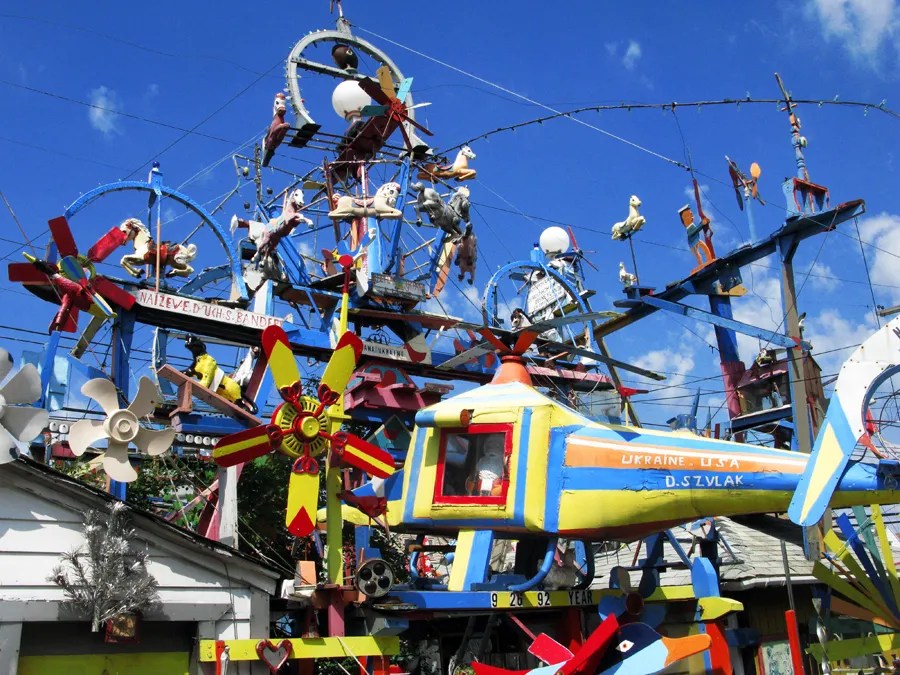
we stopped to visit the famous

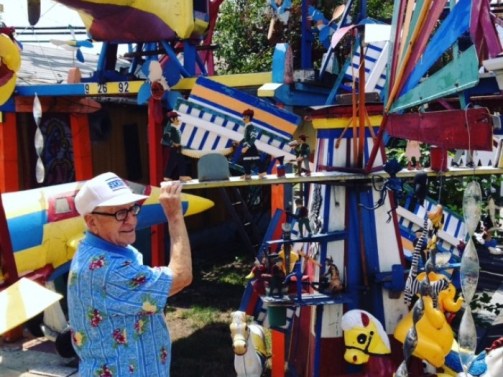
hamtramck disneyland

located in the middle of an old neighborhood

a one-man folk art display

created over 30 years

in his backyard

 it’s really a lot to take in

ao incredibly creative and wonderful

see the story below:

Hamtramck Disneyland Is A Site-Specific Folk Art Installation Created By Artist Dmytro Szylak

Dmytro Szylak grew up in Ukraine and immigrated to the United States with his wife in the 1950s. Mr. Szylak worked for General Motors for 30 years; after retiring in the mid-1980s, he began building Hamtramck Disneyland atop the two garages on the properties he owned. The project took nearly 30 years to construct, and was constantly being updated and modified by Mr. Szylak until his death in 2015, at the age of 92.

In its heyday, the installation filled the air with whimsical kinetic structures that rattled and whirred as they spun in the wind. The garages were painted in bright stripes, and the space in between was filled with found photographs, posters, and classic Americana images mixed with those of the Europe of Mr. Szylak’s past. It is one of Michigan’s most significant works of folk art; thousands of visitors from all over the world have made Hamtramck Disneyland one of their stops.

After Mr. Szylak passed away, his estate was in limbo, with no plan to protect or keep the art. Driven by the energy and support of the community, a group of residents and artists formed to save this great local treasure. Hatch Art, which operates an art gallery and studios in the former Hamtramck police station, took ownership of Hamtramck Disneyland in May of 2016.

Hatch Art repairs and maintains the installation, preserving the core components of the artwork while proceeding with gradual updates as materials succumb to the elements. The intention is to honor Dmytro Szylak’s work by keeping the future of the installation as lively as he did in the past.

“Hamtramck Disneyland” has been the subject of two documentaries and is one of the top tourist attractions to Hamtramck, a city located within the boundaries of Detroit. It is one of Michigan’s most significant artist-built environments, along with the Heidelberg Project and MBAD African Bead Museum, among others.  Thousands of visitors a year from all over the world have made “Hamtramck Disneyland” one of their stops. In 2006, famed photographer Bruce Weber did a photo shoot with Kate Moss at this location.

‘art is life seeking itself. It is our intractable expressions of love

for the beauties, ideas, and epiphanies we regularly find.’

— vincent van gogh


text source credit: hatch art, detroit


holy toledo!

Standard

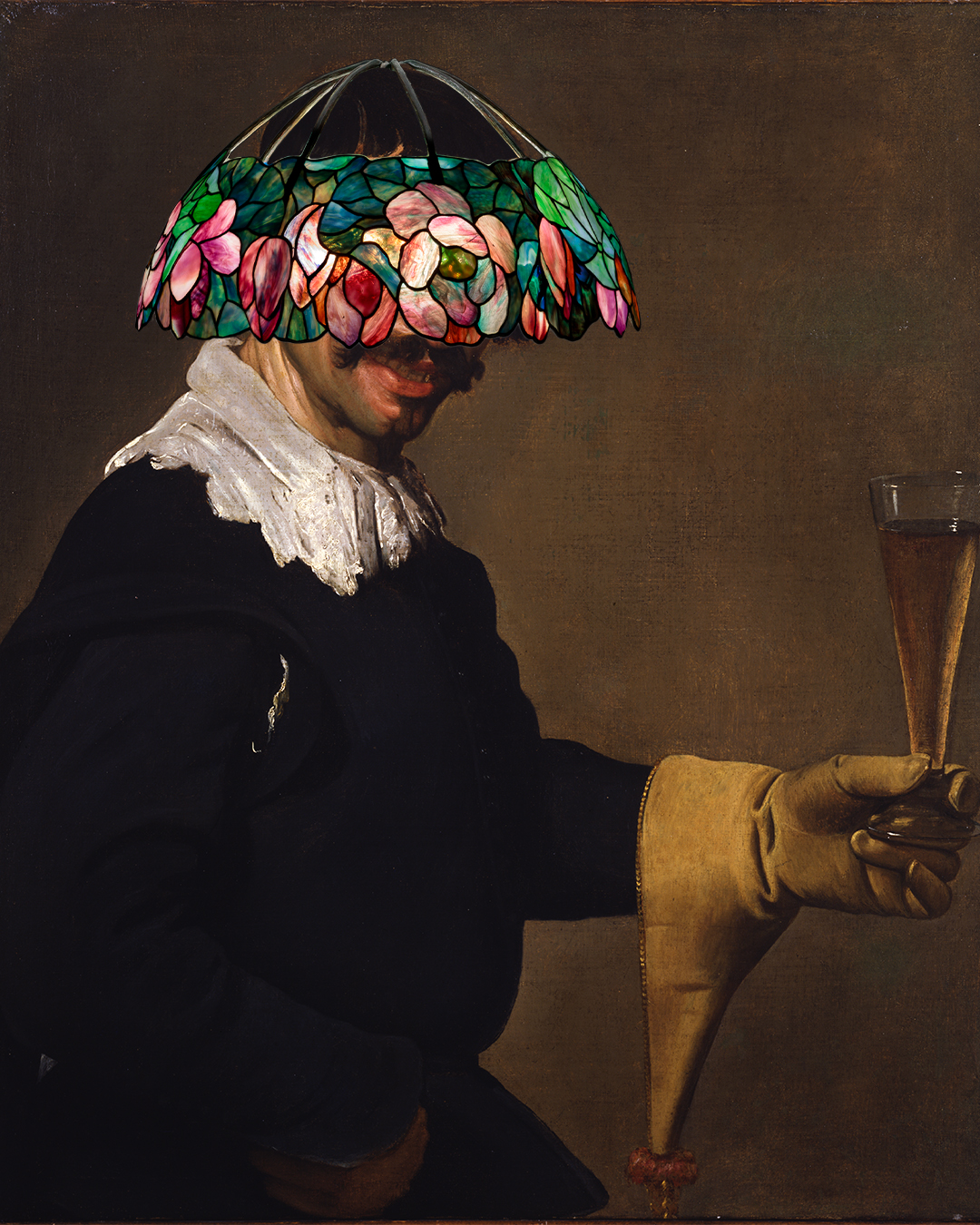
i absolutely love

the toledo (ohio, usa) museum of art’s

creative announcement of their good news:

Cheers to the new year—and free parking!

Parking at TMA is now completely free.

Plan your next visit today: https://toledomuseum.org/visit

Man with a Wine Glass, Velázquez (Spanish, 1599–1660). c. 1630. Oil on canvas.

Lotus Lamp (shade), Tiffany Studios (American, 1902-1932). about 1905. Glass, and bronze. 

‘creativity is contagious. pass it on.’

-albert einstein

pere noel.

Standard

pere noel/father christmas,  by jan pashely

it’s not long now, santa….

==

“not believe in santa claus! you might as well not believe in fairies!”

* francis p. church

* Francis Pharcellus Church was an American publisher and editor.

In 1897, Church wrote the editorial “Yes, Virginia, there is a Santa Claus”.