
-frederick beuchner
-frederick beuchner

in recent days
i have seen and read about
many gestures of hospitality
one reaching out to another
with each act
i find a renewed sense of hope.
—
“hospitality is always an act that benefits the host even more than the guest. the concept of hospitality arose in ancient times when the reciprocity was easier to see: in nomadic cultures, the food and shelter one gave to a stranger yesterday is the food and shelter one hopes to receive from a stranger tomorrow. by offering hospitality, one participates in the endless reweaving of a social fabric on which all can depend – thus the gift of sustenance for the guest becomes a gift of hope for the host.”
-parker j. palmer

may you each find your own piece of luck today.
—
“you gotta try your luck at least once a day,
because you could be going around lucky all day and not even know it.”
-jimmy dean
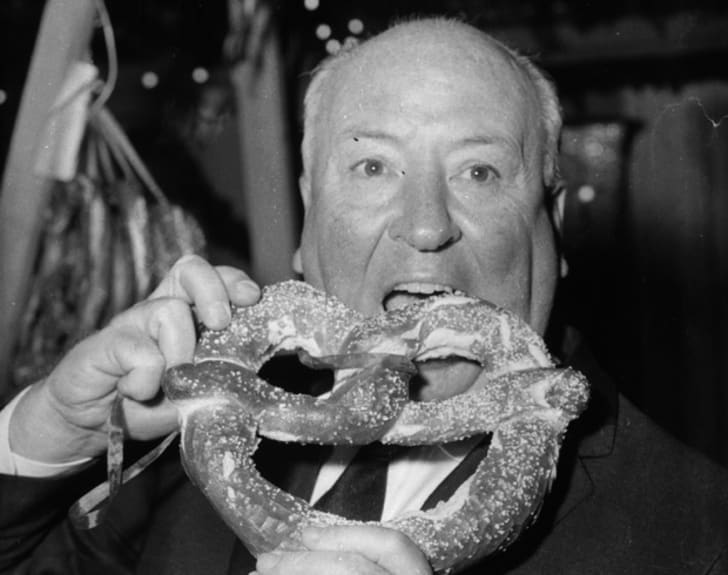
on the occasion of one of my favorite director’s birthday
happy alfred hitchcock day
—
“ideas come from everything.”
-alfred hitchcock
—
image credit: afi

my spirit animal.
—
“today is an ephemeral ghost…
a strange amazing day that comes only once every four years. For the rest of the time it does not “exist.”
in mundane terms, it marks a “leap” in time, when the calendar is adjusted to make up for extra seconds accumulated over the preceding three years due to the rotation of the earth. A day of temporal tune up!
but this day holds another secret—it contains one of those truly rare moments of delightful transience and light uncertainty that only exist on the razor edge of things, along a buzzing plane of quantum probability…
a day of unlocked potential.
will you or won’t you? should you or shouldn’t you?
use this day to do something daring, extraordinary and unlike yourself.
take a chance and shape a different pattern in your personal cloud of probability!”
—
credits: vera nazarian, the perpetual calendar of inspiration, photo: livescience.com

yesterday was heavy.
put it down.
—
image credit: diego rivera, untitled (a heavy load) 1948
back in the day
when my girls were little
if there was a power outage
I would tell them
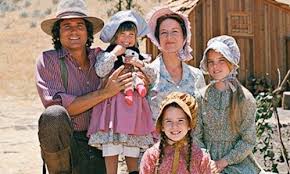
we were just like the family
in ‘the little house on the prairie’
we could pretend we were them
have lots of fun
it was okay for a while
until it got old
the novelty wore off
when there was
no pa playin’ the fiddle
no butter to churn
no humming and singing
no stitchin’ to be done
no cows to milk
then we just had to wait it out
and it was not fun.
—
“where a light can’t live, i know i can’t.”
-Laura Ingalls Wilder, Little House on the Prairie
—
image credit: nbc tv

kinder understand that it’s all about the cut
and leaving only the most important part remaining.
—
“i believe more in the scissors than I do in the pencil.”
-truman capote

this one is sure to make a comeback.

yes, most of the leaves have dropped off, but I see a hint of color.

ignore the brown, there is still a flower.
—
these are a few of the thoughts that cross my mind
as I try to nurture and revive
some of my indoor plants
that have chosen to be
“on a break from thriving right now”
for some reason I will not give up
as long as there is one stick left in a pot
my optimism refuses surrender
and still i wait for my green thumb to appear.
the fact is
that I love to garden
I love flowers, I love plants, I love trees
I am a nurturer by nature
but it is all a trial and error process for me
my middle daughter once stood in the middle of my yard and said,
“if you had everything you ever planted,
we would be standing in a botanical garden right now.”
I really loved that.
what an excellent point.
—
“gardening is not a rational act.”
-margaret atwood
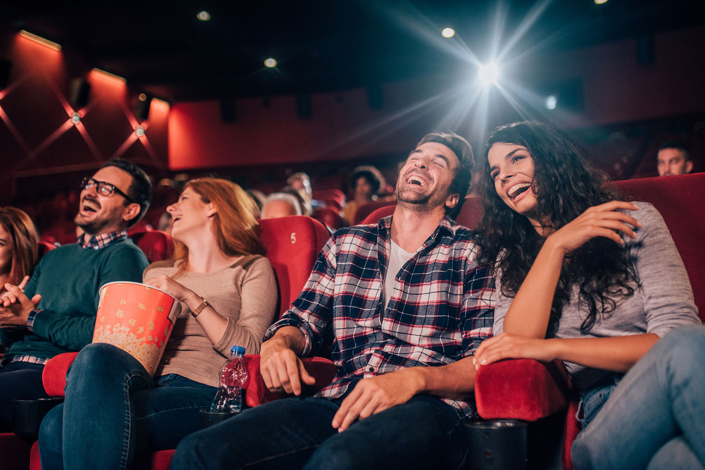
going to a movie theater counts as a light workout.
count me in.
—
If your New Year’s resolution is to exercise more, your goal just got a lot easier.
Sitting through a film at the cinema could be considered light exercise, according to researchers at the University College London (UCL), who found that movie-goers often experienced heart rate increases equal to about 40 minutes of low-impact cardio.
The trip to the movie theater makes all the difference, scientists believe. Whereas film fans are easily distracted while watching at home, the unbroken concentration involved in seeing a movie at the cinema is the key to their finding.
“Cultural experiences like going to the cinema provide opportunities to devote our undivided attention for sustained periods of time,” writes UCL neuroscientist Joseph Devlin in the report. “In the cinema, however, there is nothing else you can do except immerse yourself.”
This means a movie night could be good for our minds, too.
“Our ability to work through problems without distraction makes us better able to solve problems and be productive,” he says.
The study, paid for by UK-based Vue Cinemas, observed 51 participants as they watched the 2019 live-action remake of “Aladdin,” with sensors tracking their heart rates and skin reactions during the film. Their results were compared to a group of 26 others who spent that same amount of time reading.
A normal resting heart rate is between 60 and 100 beats per minute. The results showed that those who spent 40 minutes in a movie theater reached a “healthy heart zone,” with rates landing somewhere between 40% to 80% of its maximum rate — about 95 and 160 beats per minute for an average middle-aged adult. This level of heart activity could be compared to brisk walking or gardening, researchers say.
Study authors also noted that moviegoers’ heart beats began to synchronize during the film, which may contribute to “a positive effect on our overall social connectedness.”
“A shared social focus not only has a proven link to greater bonding and empathy with others,” they write, “but also has been proven to reduce symptoms of loneliness and depression.”
According to Devlin, this sort of prolonged concentration could be a boon to anyone, especially those who feel constantly distracted by smartphones, tablets and social media.
“In a world where it is increasingly difficult to step away from our devices, this level of sustained focus is good for us,” he writes.
—
‘cinema is a great binding force for a nation.’
-judith kumar
—
credits: hannah sparks, ny post
 I didn't have my glasses on....