You can mail potatoes and coconuts without a box through the U.S. Postal Service
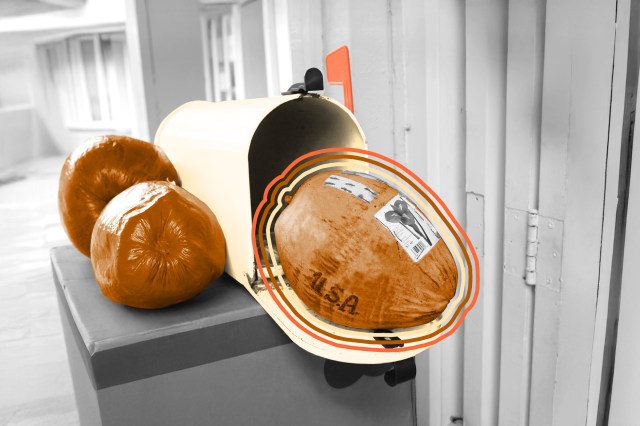
While almost all other objects are required to be boxed up before being mailed, the U.S. Postal Service makes a specific exception for potatoes and coconuts. Both foods can be mailed unwrapped, as long as you write the destination and return address either directly on the product or on a label affixed to the skin or husk. Simply take the item to the post office, where it’ll be weighed to determine appropriate postage, stamped, and sent off to be delivered just like any other package.
The U.S. Postal Service doesn’t explicitly say why this is permitted, but there is some precedent for sending strange items through the mail, as long as they’re paid for and don’t endanger the carrier. In an experiment conducted for a 2000 edition of Annals of Improbable Research, researchers successfully mailed a ski, a deer tibia, a rose with a card tied to the stem, and other unusual objects.
Mailing coconuts is especially popular on the Hawaiian island of Molokaʻi, where the Hoʻolehua post office established the Post A Nut service in 1991, allowing people to mail coconuts to the mainland U.S. and around the world – no box required. Post-a-Nut ships roughly 3,000 coconuts annually (around 700 of which are sent to international locations), generating 40% of that post office’s total revenue. Dedicated businesses for mailing potatoes also exist, including Mail A Spud – a service that ships out russet potatoes adorned with personalized messages.
THE QUILTERS, an award-winning short documentary, now showing on Netflix, follows the daily lives of several men, spending most of its screen time inside the sewing room at South Central Correctional Center, a Level 5 maximum security prison in a small town near St. Louis.
As they follow several quilts from design to completion, audiences will come to know these men, witnessing their struggles, triumphs, and sense of pride as they create something beautiful in this windowless, sacred space, deep within the prison walls.
The camera follows the quilters up close as they work individually on their creations and also captures the power of this group as a collective, a well-oiled, collaborative machine that hums along like the sewing machines in front of which each man sits.
The craft of quilting has been carefully and beautifully shot, with tight focus on the men’s hands, the sewing machines, the textures and colors of the fabrics, and the creative design of each quilt which is personalized for a foster child and gifted to them for their birthday.
This short film will move your soul.
—
‘people find meaning and redemption in the most unusual human connections.’
-Khaled Hosseini
*Khaled Hosseini was born in Afghanistan, moved to the United States in 1980, and is the author of the New York Times bestsellers, The Kite Runner, A Thousand Splendid Suns, and, And the Mountains Echoed.
(not me, or my people, and I wasn’t invited to the tea party)
“In Ireland, you go to someone’s house, and she asks you if you want a cup of tea. You say no, thank you, you’re really just fine. She asks if you’re sure. You say of course you’re sure, really, you don’t need a thing. Except they pronounce it ting. You don’t need a ting. Well, she says then, I was going to get myself some anyway, so it would be no trouble. Ah, you say, well, if you were going to get yourself some, I wouldn’t mind a spot of tea, at that, so long as it’s no trouble and I can give you a hand in the kitchen. Then you go through the whole thing all over again until you both end up in the kitchen drinking tea and chatting.
In America, someone asks you if you want a cup of tea, you say no, and then you don’t get any damned tea. I liked the Irish way better.”
― C.E. Murphy
—
International Tea Day is an opportunity to celebrate the cultural heritage, health benefits and economic importance of tea, while working to make its production sustainable “from field to cup” ensuring its benefits for people, cultures and the environment continue for generations.
—
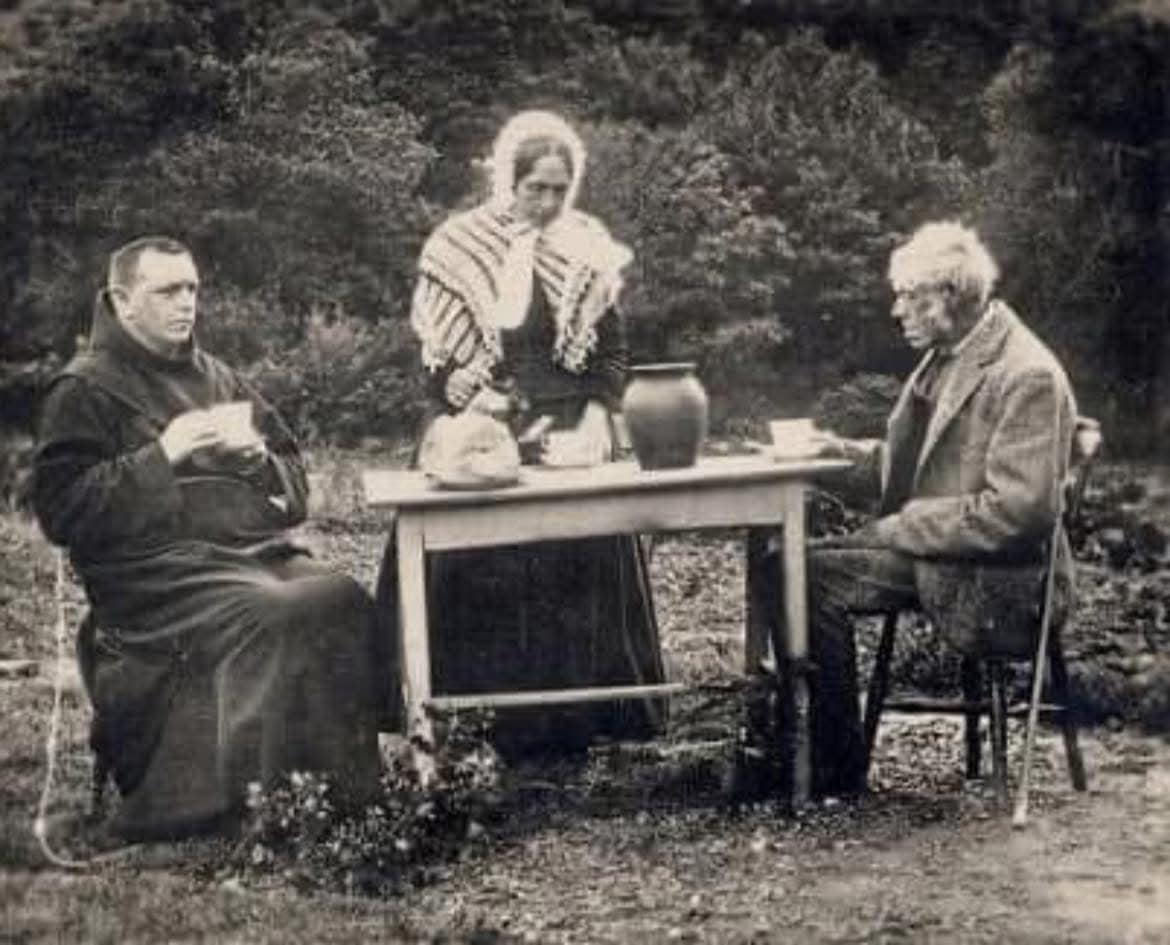
photo credit: Irish Tea Party early 1900s, Valentine’s of Dundee, Scotland