
i’m the house/menagerie sitter
for my daughter and her family
waiting for me at her house
two cats, kind of twin-ish
not always sure which is in or out or both?
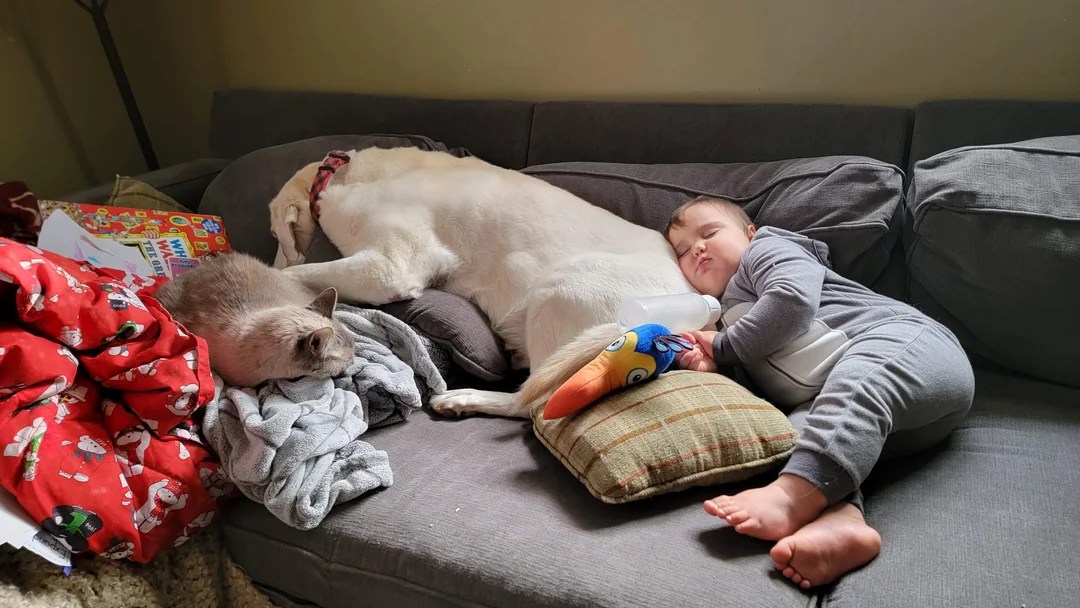
also one of the sweetest dogs ever
cocoa, like the chocolate
the pets must think me to be a monster
quickly found out the invisible fence isn’t working
when I let cocoa out
two different kind neighbors brought her home
the snow melted
on the day they left
she immediately has spring fever
have to put cocoa on a long lead in the yard
she feels restricted refuses to walk around or sit down
just stares in the window sadly
can’t find her leash, have one delivered
we go on long walks
like steering an excitable pony
finally calming
at about the forty minute mark
we are home again
now she is sad
when I eat and don’t share my food with her
when i
work on a puzzle or write or watch a movie or read
or do anything else
she stands by me or lays by me and stares
have to hide my eating, keep it a secret, open things silently
feeling guilty
she has lots of food and water and a treat when she comes back inside
still feel guilty somehow
all three sleep with me
i carve out a spot in the middle
one cat gets up at 4;30 am
wakes up the whole menagerie
i try to play dead
none of them is buying it
boom
the new day officially begins
put cocoa on the long lead outside
still dark and too early to walk
sad again and staring in the window
all she wants
is to take off or come in and stare at me
one of the cat twins is yelling to go out
the other is circling me
everyone gets treats
let sweet cocoa back in
started raining in the ten minutes she was out
now muddy and wet
wipe her down with a towel
cover the couch with beach towels
blow dry her whole body
wrap her in a blanket
she stares at me sadly from the couch
so dramatic
norma desmond in sunset boulevard
as I eat early breakfast silently
sip quiet giant coffee
one or two cats are somewhere
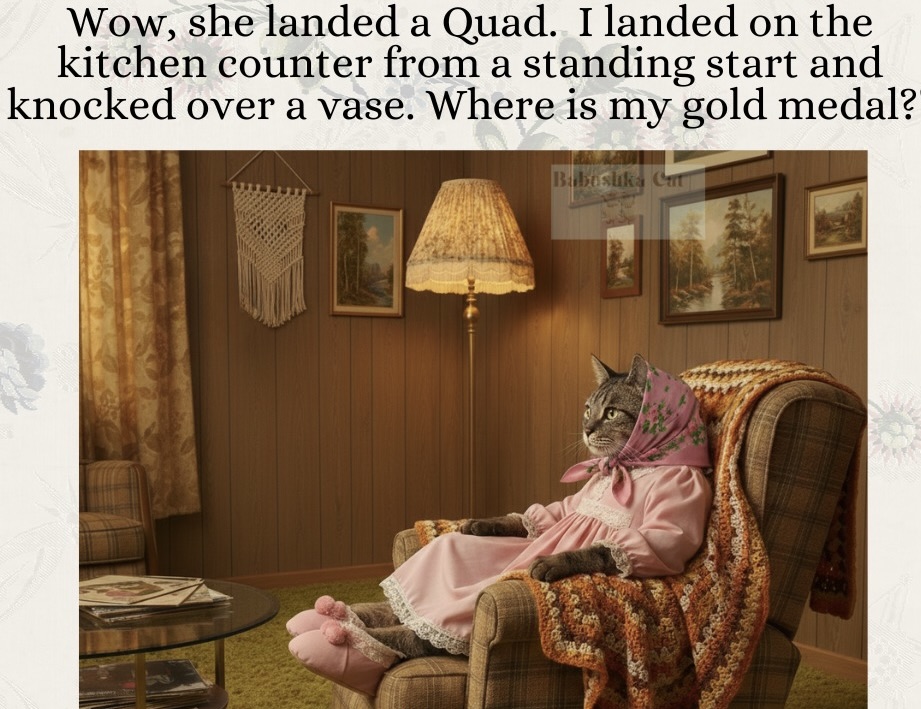
turn on the olympics
cocoa and i sit side by side touching on the sofa
staring
we have found our happy routine.
—
“humor is perhaps a sense of intellectual perspective: an awareness that some things are really important, others not; and that the two kinds are most oddly jumbled in everyday affairs.”
-christopher morley







 I didn't have my glasses on....