Monthly Archives: December 2020

latke.

Standard

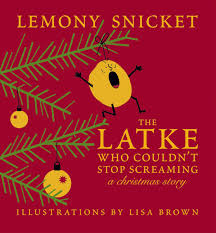
“It is very frus­trat­ing not to be under­stood in this world. If you say one thing and keep being told that you mean some­thing else, it can make you want to scream. But some­where in the world there is a place for all of us, whether you are an elec­tric form of dec­o­ra­tion, pep­per­mint-scent­ed sweet, a source of tim­ber, or a pota­to pan­cake. On a cold, snowy night, every­one and every­thing should be wel­comed some­where, and the latke was wel­comed into a home full of peo­ple who under­stood what a latke is, and how it fits into its par­tic­u­lar holiday.”

And then they ate it. AAAHHHH!!

-Lemony Snicket, The Latke Who Couldn’t Stop Screaming

Happy Hanukah to all who celebrate 


credits: Daniel Handler, Lisa Brown, McSweeney’s Publishing

sudden.

Standard

a quick exit.

why so sudden?

had goldilocks been there and heard the bears coming home?


“the first bowl of chocolate pudding was too hot, but goldilocks ate it all anyway because, hey, it’s chocolate pudding, right?”

-Mo Willems (author)

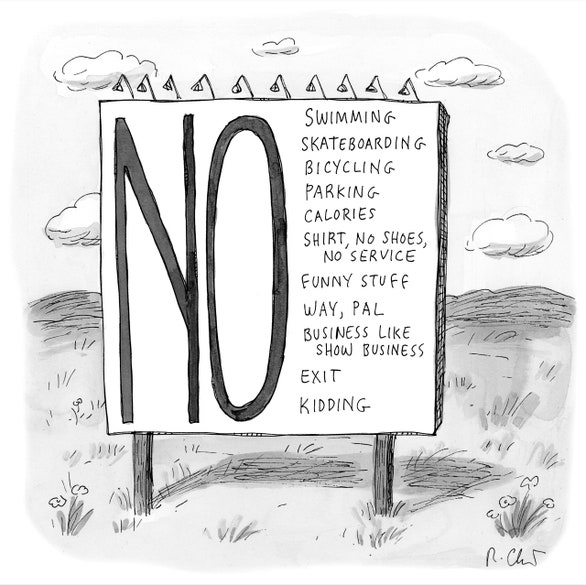
no.

Standard

“the oldest, shortest words – ‘yes’ and ‘no’ – are those which require the most thought.”

-Pythagoras


image credit: roz chast, new york times, 2020

open society.

Standard

 powerful messages found everywhere


“in an open society, no idea can be above scrutiny, just as no people should be beneath dignity.”

-maajid nawaz


grand trunk pub, detroit, michigan, usa -2020

log home.

Standard

wondering who in the woods calls this fallen log, ‘home’ 


“there is something in the trees awaiting discovery.”

– steven magee

am i missing anything?

Standard

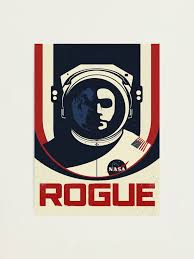
  from rogueNASA – “Ok, so far we’ve had a pandemic, race wars, a global economic collapse, a presidential impeachment, Brexit, murder hornets, and a contested election. Am I missing anything?”


credits: rogueNASA


“life is an improvisation. you have no idea what’s going to happen next

and you are mostly making things up as you go along.”

stephen colbert


glitter soup.

Standard

‘glitter soup’ from art candy

years ago, when visiting my daughter in australia, i met her friend jenni gray, (the artist behind art candy), and she has remained a friend to both of us ever since. while visiting, we had tea, a tour of the space where her art happens, and she even let me peek into a drawer filled with glitter. as a lifelong fan of glitter, it was like magic, and what could be better?

over the years, i’ve followed her work, and have become the lucky owner of some of her art. jenni works with mixed media creating beautiful whimsical art and cards. when she told me that her recent piece, named ‘glitter soup’ reminded her of me, i was honored.


jenni’s origin story is this: “Art Candy began at art school inspired by a love of language, especially slang, colour and the sheer exuberence of enjoying life !” she has certainly lived up to that and more. take a peek at her work in the link below, it’s sure to put a smile on your face.

Sweetness with soul.

https://www.etsy.com/shop/artcandyaustralia


“from soup, comes stars”

what the glitter soup turned into


“if art doesn’t make us better, then what on earth is it for?”

-alice walker

cookie, cookie, cookie.

Standard

“happiness isn’t a fortune in a cookie. it’s deeper, wider, funnier, and more transporting than that.”

-elvis costello

 NATIONAL COOKIE DAY – December 4

The English word “cookie” is derived from the Dutch word koekie, meaning “little cake.”

Hard cookie-like wafers have existed for as long as baking has been documented. Not surprisingly, they traveled well, too, though were usually not sweet enough to be considered cookies by modern-day standards.

The origin of the cookie appears to begin in Persia in the 7th century, soon after the use of sugar became common in the region. They then spread to Europe through the Muslim conquest of Spain. Cookies were common at all levels of society throughout Europe by the 14th century, from the royal cuisine to the street vendors.

Cookies arrived in America in the 17th century. Macaroons and gingerbread cookies were among the popular early American cookies. In most English-speaking countries outside of North America, the most common word for cookie is “biscuit.”  In some regions, both terms, cookies, and biscuits are used.

HOW TO OBSERVE NationalCookieDay

Pick up some cookies at your local bakery and remember to share them with family and friends. Or – make a list of your favorite cookies to bake and enjoy. Organize your baking tools and start your assembly line. Taste as you go.

NATIONAL COOKIE DAY HISTORY

In 1976, Sesame Street included National Cookie Day on its calendar for the first time. Cookie Monster also proclaimed his own National Cookie Day in the 1980 book The Sesame Street Dictionary. Then in 1987, Matt Nader of the Blue Chip Cookie Company created Cookie Day, celebrating it on December 4th.

more fun.

Standard

mental floss has reached into their incredible research bag of treasures

to share some board games that may have had their time 

but alas, have not remained classics.

below are a few gems and i’m not saying i wouldn’t want to play them,

i am a huge fan of board games of all kinds –


Aside from Parker Brothers, few board game manufacturers have come close to Milton Bradley’s track record: Millions of players across multiple generations have put in serious time playing TwisterYahtzeeThe Game of Life, and Battleship.

But while games like Simon and Connect Four have kept up brand appearances over the decades, it’s possible that founder Milton Bradley might have flinched at some of the other titles that bear his name.

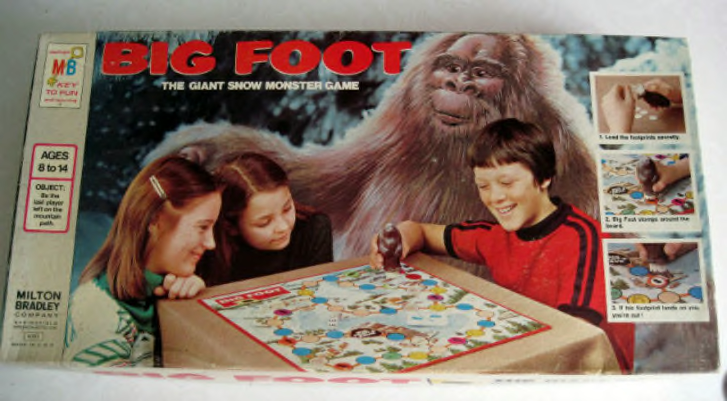
 BIG FOOT (1977)

The mythical woodland creature experienced a considerable amount of attention in the 1970s, including an encounter with Steve Austin on The Six Million-Dollar Man. (Andre the Giant was cast in the fur suit.) A famous and non-copyrightable beast made a perfect premise for a game in which players assumed the roles of Alaskan gold prospectors who roll dice while trying to avoid the “footprints” made by the monster. Although Bigfoot looks affable enough on the game box, his plastic game piece  appears to be anything but.

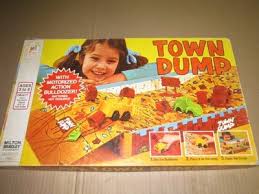
TOWN DUMP (1977)

It’s never too early to get a child used to playing with garbage. In this game, two players take turns winding up a miniature bulldozer that propels itself through pieces of trash and pushes them out of the way. The object appears to be to clear waste out of your dump and into your rival’s property, which imparts a valuable lesson: Let your discarded trash become someone else’s problem.

LOBBY: A CAPITAL GAME (1949)
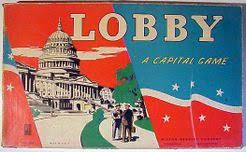
“Here’s your chance to be a congressman! You can pass all your favorite bills and lobby against those you oppose.” Milton Bradley felt confident a game of governmental regulations and lobbying would be a hit with anyone “old enough to read a newspaper.”


“Life is more fun if you play games.”
― Roald Dahl, 


Credits: Jake Rossen-Mental Floss, Milton Bradley Company, Ebay photos
irreplaceable.

Standard

photographic evidence that rudolph was not allowed to play any reindeer games.


“In order to be irreplaceable, one must always be different.”

– Coco Chanel


image credit: google images