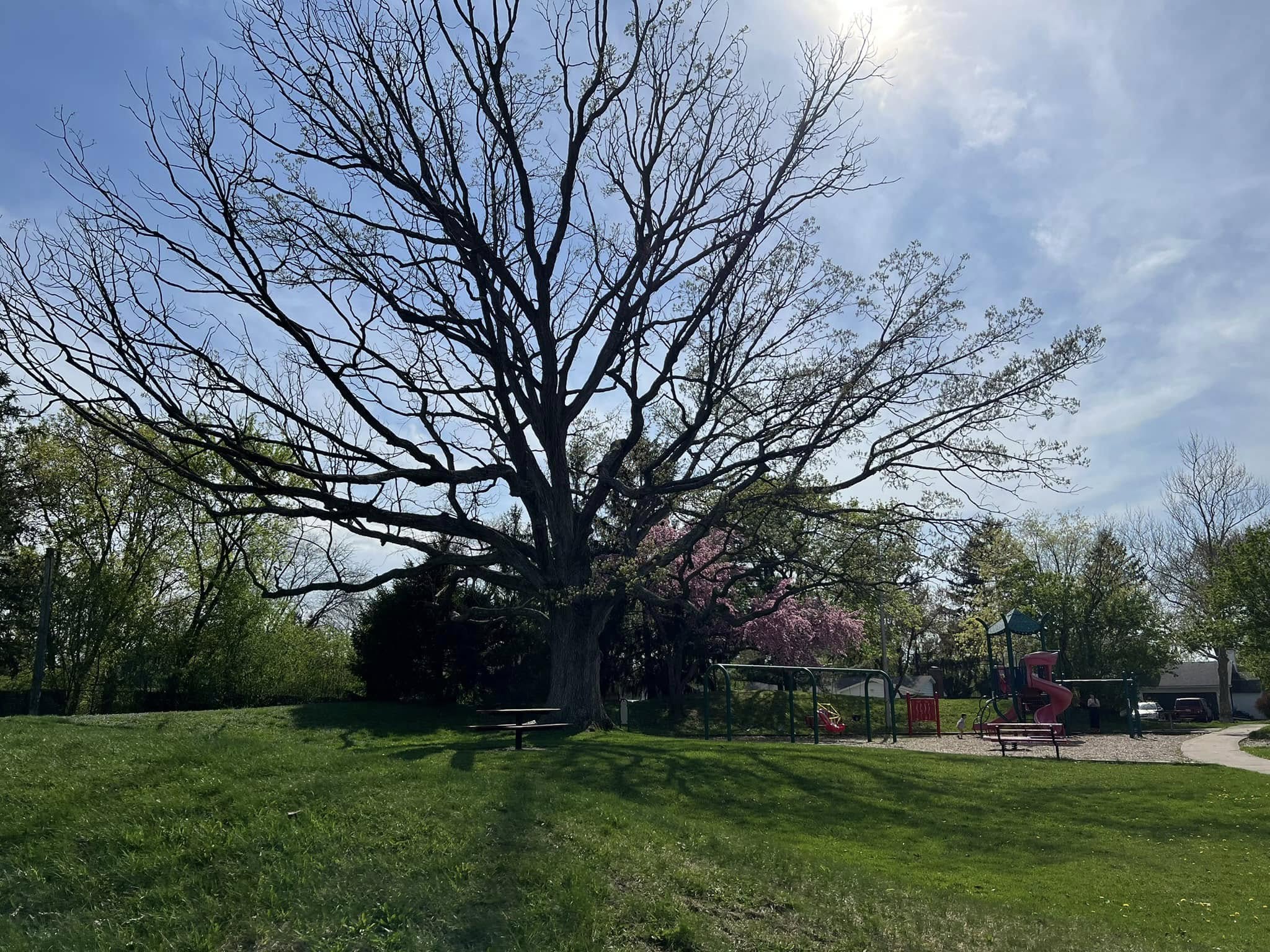
mushroom park and the grand white oak – last year
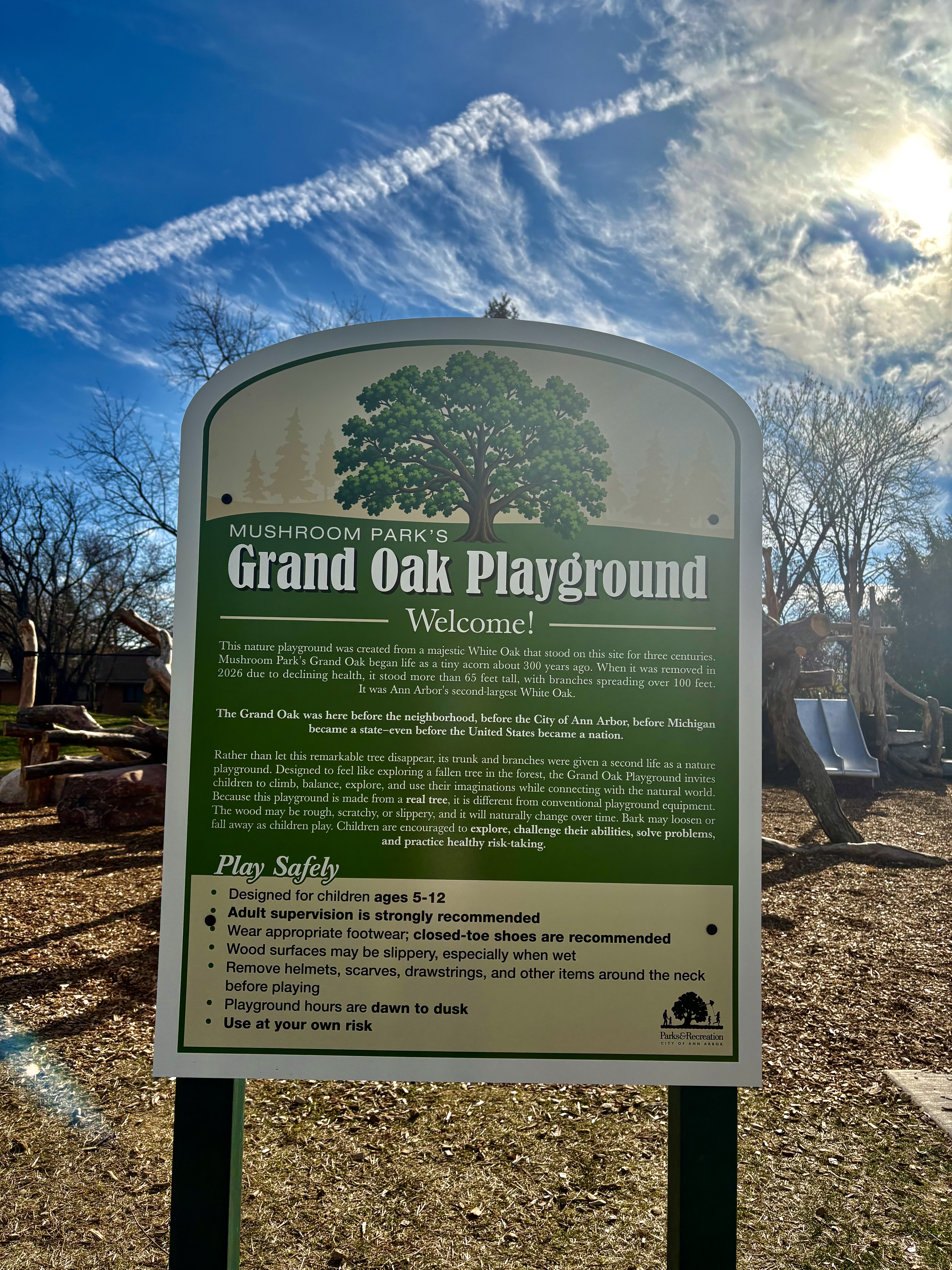
The grand white oak presiding over Mushroom Park, a serene acre-and-a-half located on Ann Arbor’s southwest side, so named for the colorful concrete mushrooms nestled among its hills—was over 65 feet tall. Its branches spread 110 feet wide. Estimated to be over 250 years old, possibly even close to 300, it was a good deal older than the City of Ann Arbor itself, which was founded in 1824.
When the oak first sprouted from its acorn, according to a sign at the park, “instead of houses here, there were forests, meadows, wetlands, and Native American camps—the French had just set up a small fort at Detroit.”
But in 2025, the health of the old oak was declining.
“Ultimately, it was determined that the tree was so far in a state of decline that it posed safety hazards,” said Hillary Hanzel, a landscape architect and capital project manager for Ann Arbor city parks. “Especially given its close proximity to the playground.”
But instead of simply tossing the tree into a woodchipper, the City saw an opportunity to honor its legacy and give it a new life. The City endeavored to reuse the Mushroom Park oak into nature playground, built with organic materials sourced on-site.
“Nature play” is a growing concept in the field of playground design. One goal of the new structure was to allow for relatively open-ended, non-prescriptive play, while still maintaining the safety and accessibility of a conventional playground.”
Another benefit is that nature playgrounds don’t immediately read as “for kids.” Hanzel has observed a range of ages interacting with the playground. Parents may step onto features while watching their kids, while teenagers enjoy hanging out on the hammock-style nets.
“There is a sense of exploration,” says Hanzel. “There’s a sense of challenge—it doesn’t immediately ‘tell’ you how to interact with it.”
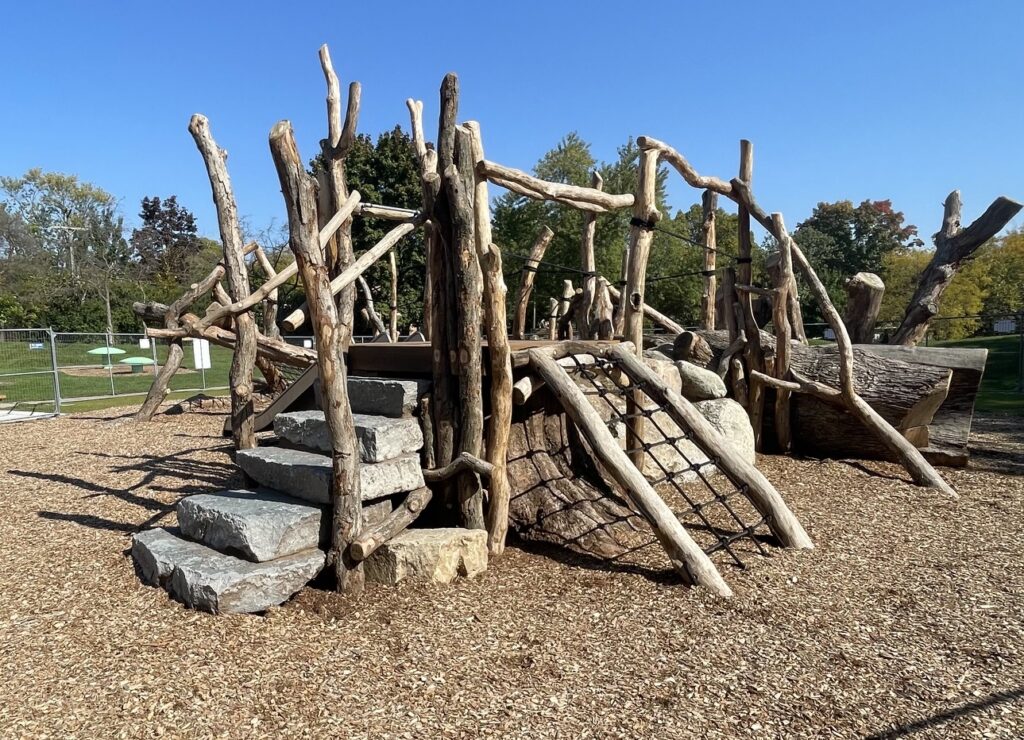
mushroom park and the grand white oak playground now
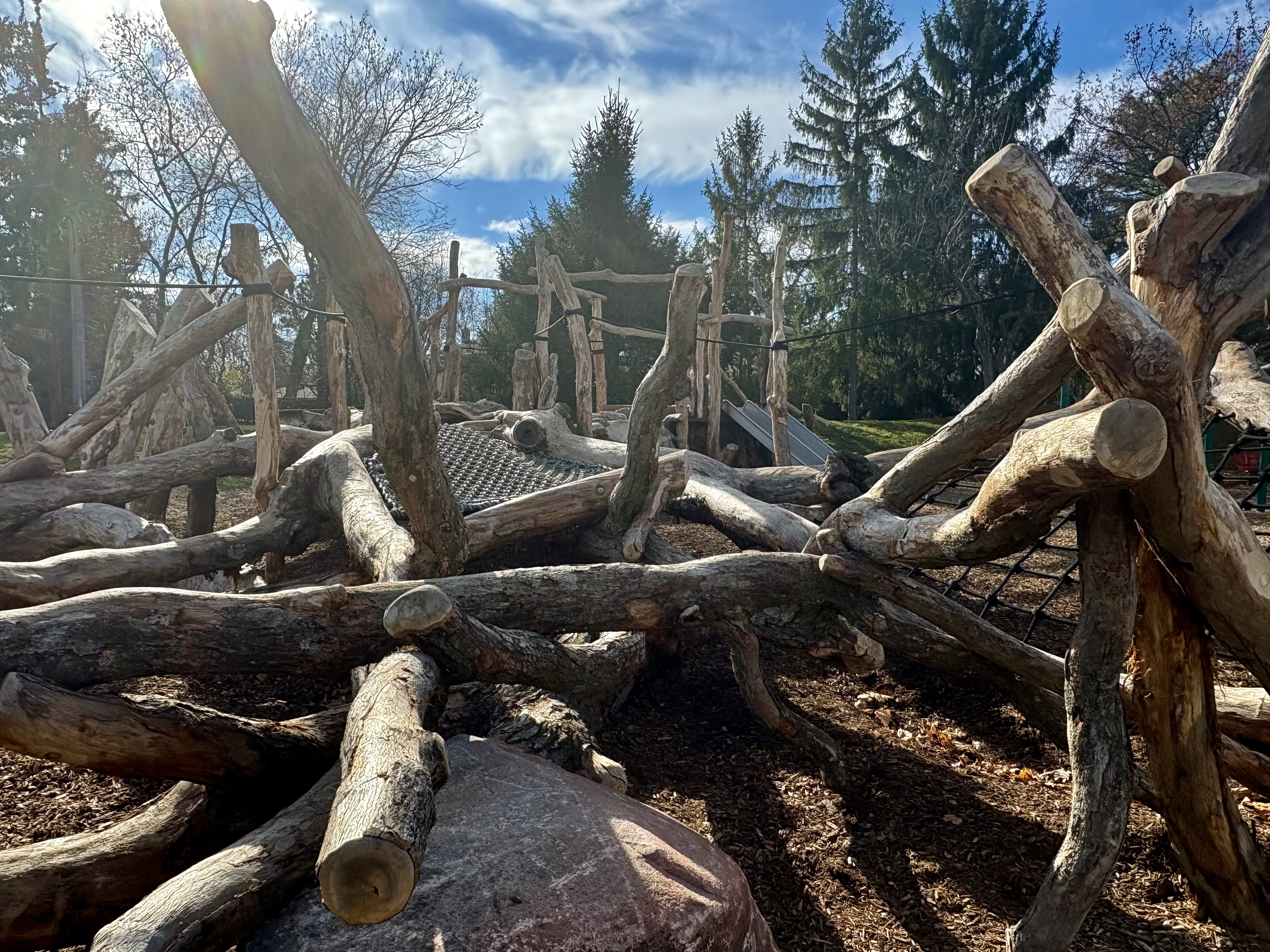
The oak tree was removed just before Christmas 2025. After being delayed due to a damaging tornado in April of this year, construction began in the summer, with three weeks of intense work. In the fall, the playground finally opened to the public.
Given the building materials, the design process was naturally more organic than that of a traditional playground: the City and its playground contractor did not know exactly what they had to work with until the old oak came down. The remaining stump, 13 feet around, became a platform for a treehouse-like play area, with different ways for children to reach it, including a net climber and stone steps that serve as an accessible transfer platform.
Still, says Hanzel, ” Even with wood from the rot-resistant white oak family, the City cannot say how long the Mushroom Park structure will last as bark falls away, fungus grows, and the wood goes through its natural processes. Ann Arbor inspects its playgrounds twice each year for safety compliance and will monitor the structure accordingly. “Each tree is unique; site is unique.”
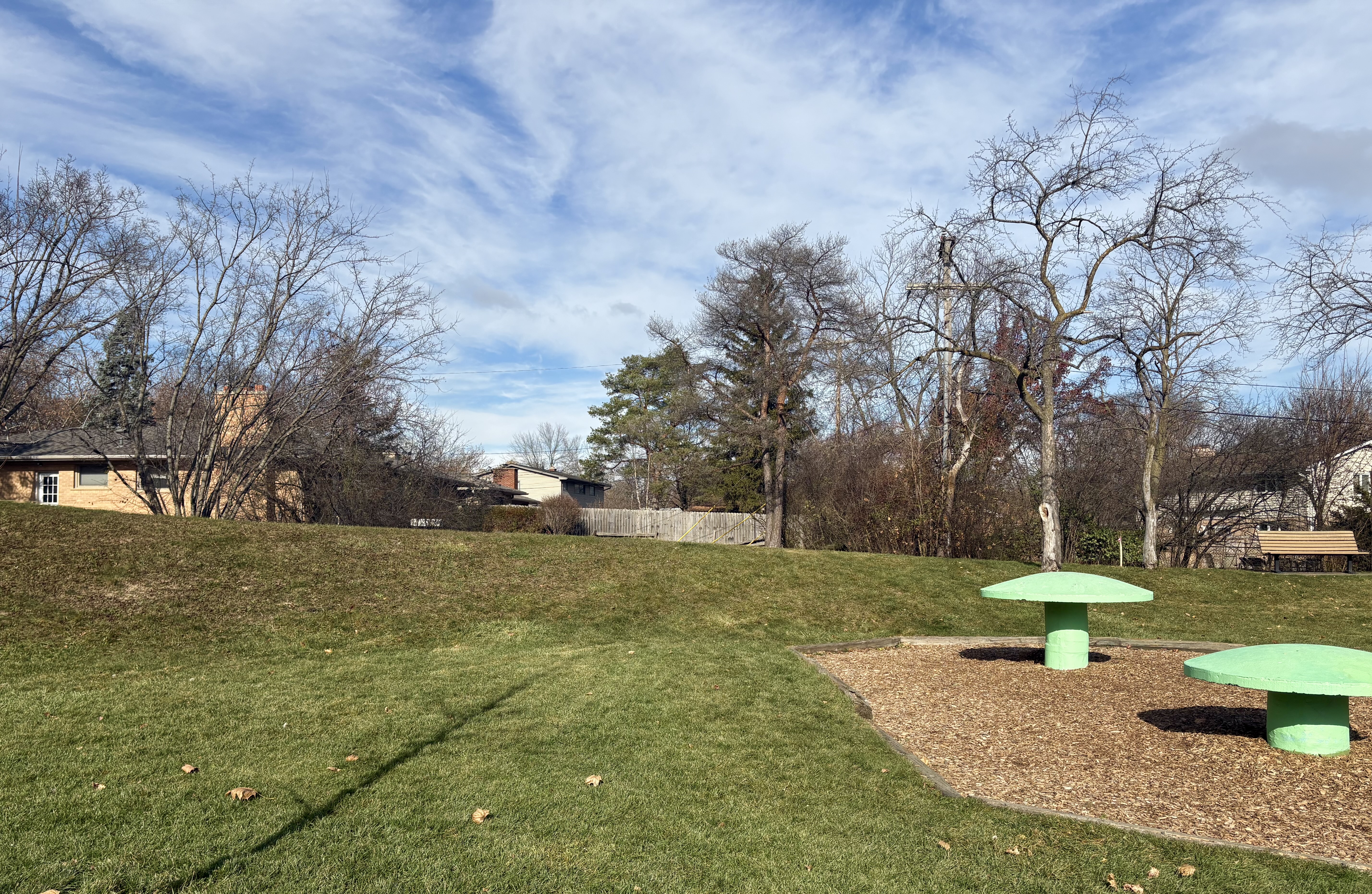
a couple of the remaining ‘mushrooms’ in the park
‘just touching that old tree was truly moving to me
because when you touch these trees,
you have such a sense of the passage of time, of history.
it’s like you’re touching the essence, the very substance of iife.’
-kim novak
—
source credits: emily pinsuan, michigan municipal league, ann arbor parks and recreation department
Discover more from I didn't have my glasses on....
Subscribe to get the latest posts sent to your email.

