
—
APRIL FOOL, n.
The March fool with another month added to his folly.
~Ambrose Bierce, The Cynic’s Word Book, 1906 (entries 1881–1906)
—
photo credit: pinterest vintage french postcard
—
APRIL FOOL, n.
The March fool with another month added to his folly.
~Ambrose Bierce, The Cynic’s Word Book, 1906 (entries 1881–1906)
—
photo credit: pinterest vintage french postcard

Before Professor Plum, Miss Scarlett and Colonel Mustard gathered on a game board to claim their first victim—wielding a revolver, a rope or a lead pipe -British musician Anthony Pratt was watching murder-mystery scenarios unfold in European country mansions, where he played piano. Long before that game board became a global multi-million-seller and was inducted into the Toy Hall of Fame, Pratt was taking mental notes as guests in these elegant homes play-acted dastardly crimes involving skulking, shrieking, and falling ‘dead’ to the floor.
Years later, during World War II, Pratt recreated those murder-mystery parlor games in miniature, as a board game called Murder! (later Clue). The longtime Birmingham resident, who worked in a local munitions factory during the war, invented the suspects and weapons between 1943 and 1945, as a way to pass the long nights stuck indoors during air-raid blackouts. His wife, Elva, assisted, designing it on their dining-room table.
By that time, Pratt had become something of a crime aficionado. HIs daughter Marcia Davies said her father was an avid reader of murder fiction by Raymond Chandler and others. “He was fascinated by the criminal mind,” Davies said of her father. “When I was little he was forever pointing out sites of famous murders to me.”
In 1947, Pratt patented and sold it to a U.K.-based game manufacturer named Waddington’s and its American counterpart, Parker Brothers. But because of post-war shortages the game was not released until 1949—as Cluedo in England and Clue in the United States. In both versions, the object is for players to collect clues to figure out the murder suspect, weapon and location. The game took place in a Victorian mansion. The victim’s name? Mr. Boddy.


“the first wealth is health.”
-ralph waldo emerson
—
image credit: a wellrunlifegear.com

-frederick beuchner

in recent days
i have seen and read about
many gestures of hospitality
one reaching out to another
with each act
i find a renewed sense of hope.
—
“hospitality is always an act that benefits the host even more than the guest. the concept of hospitality arose in ancient times when the reciprocity was easier to see: in nomadic cultures, the food and shelter one gave to a stranger yesterday is the food and shelter one hopes to receive from a stranger tomorrow. by offering hospitality, one participates in the endless reweaving of a social fabric on which all can depend – thus the gift of sustenance for the guest becomes a gift of hope for the host.”
-parker j. palmer

may you each find your own piece of luck today.
—
“you gotta try your luck at least once a day,
because you could be going around lucky all day and not even know it.”
-jimmy dean
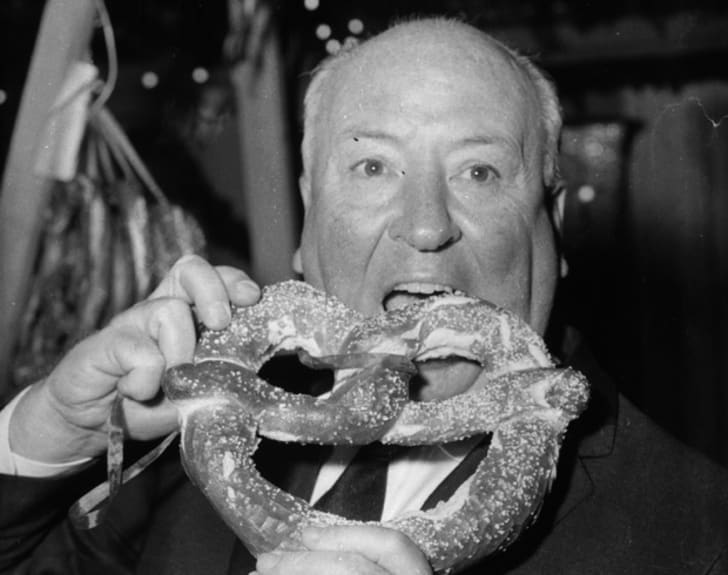
on the occasion of one of my favorite director’s birthday
happy alfred hitchcock day
—
“ideas come from everything.”
-alfred hitchcock
—
image credit: afi

my spirit animal.
—
“today is an ephemeral ghost…
a strange amazing day that comes only once every four years. For the rest of the time it does not “exist.”
in mundane terms, it marks a “leap” in time, when the calendar is adjusted to make up for extra seconds accumulated over the preceding three years due to the rotation of the earth. A day of temporal tune up!
but this day holds another secret—it contains one of those truly rare moments of delightful transience and light uncertainty that only exist on the razor edge of things, along a buzzing plane of quantum probability…
a day of unlocked potential.
will you or won’t you? should you or shouldn’t you?
use this day to do something daring, extraordinary and unlike yourself.
take a chance and shape a different pattern in your personal cloud of probability!”
—
credits: vera nazarian, the perpetual calendar of inspiration, photo: livescience.com
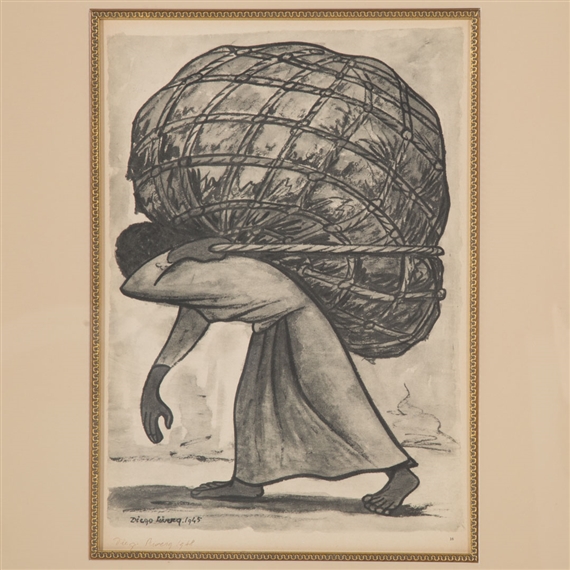
yesterday was heavy.
put it down.
—
image credit: diego rivera, untitled (a heavy load) 1948
back in the day
when my girls were little
if there was a power outage
I would tell them
we were just like the family
in ‘the little house on the prairie’
we could pretend we were them
have lots of fun
it was okay for a while
until it got old
the novelty wore off
when there was
no pa playin’ the fiddle
no butter to churn
no humming and singing
no stitchin’ to be done
no cows to milk
then we just had to wait it out
and it was not fun.
—
“where a light can’t live, i know i can’t.”
-Laura Ingalls Wilder, Little House on the Prairie
—
image credit: nbc tv
 I didn't have my glasses on....