Tag Archives: art

‘what you see before you, my friend, is the result of a lifetime of chocolate. ‘-Katharine Hepburn

Standard

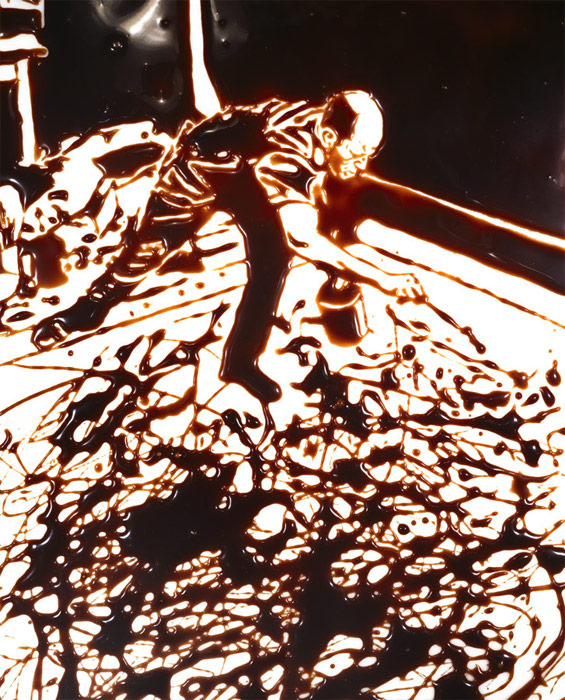
Vik Muniz. Action Photo, after Hans Namuth from Pictures of Chocolate. 1997. Chromogenic color print. The Museum of Modern Art. Gift of Patricia Phelps de Cisneros in honor of Adriana Cisneros de Griffin through the Latin American and Caribbean Fund. © The Estate of Hans Namuth and Vik Muniz/Licensed by VAGA, New York, NY

‘As part of the Artist’s Choice exhibition series at the Museum of Modern Art, Muniz curated a show drawn from the Museum’s collection, and MoMA has recently added to the collection a key picture by Muniz, Action Photo, after Hans Namuth from Pictures of Chocolate, and we hope to continue our exploration and appreciation of this leading artist’s work.’ -MoMa

To make his work, Muniz renders familiar images drawn from pop culture and art history in a variety of materials, and then photographs them. He has fashioned the Mona Lisa from peanut butter and jelly, Elizabeth Taylor from diamonds, Caravaggio’s Narcissus from junk, iconic news images from wet ink, and his self-portrait from dice. Muniz has referred to himself as an “illusionist,” and, with characteristic humor and ingenuity, explores the nature of representation in an image-saturated world.

One of Muniz’s most well-known bodies of work is a series of pictures rendered in chocolate sauce. Action Photo, after Hans Namuth (1997) is made after a 1950 photograph taken by Hans Namuth of Jackson Pollock frozen in mid-dance as he was making one of his paintings, Autumn Rhythm.  Muniz’s subsequent appropriation and translation of this image into chocolate is a perfect marriage of subject and material. The viscous chocolate syrup (incidentally, he used the brand Bosco) is a perfect stand-in for Pollock’s wet, shiny paint drips. This new acquisition not only strengthens the Museum’s Muniz holdings, but is a welcome complement to MoMA’s rich Pollock collection .

Vik Muniz is a Brazilian artist and photographer. His work has been met with both commercial success and critical acclaim, and has been exhibited worldwide. In 1998, he participated in the 24th International Biennale in São Paulo, and in 2001, he represented Brazil at the 49th Biennale in Venice, Italy. He currently works in New York City and Rio de Janerio.

 while this is not me,

this is my exact style of painting with chocolate

while not quite as celebrated as vic’s

they are not as in demand 

and have not yet been exhibited in public.

on world chocolate day

‘i’las cosas claras y el chocolate espeso.’

(ideas should be clear and chocolate thick.)

-spanish proverb


source credits:MoMa, Inside/Out
an instant out of time.

Standard

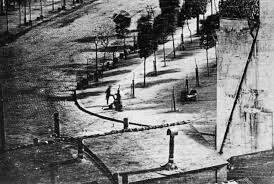
The first candid photograph of a person was taken in 1838.

Before the 19th century, photography did not exist, so people who wanted a lasting image of their home, their family, or themselves had to have one painted, sculpted, or drawn. In the early 1800s, inventors in France and England were at the center of the effort to create photographic representations of objects and people. In France, Joseph Nicéphore Niépce stunned the world in 1827 when he released what is believed to be the first photograph ever taken, titled “View from the Window at Le Gras.” Niépce rendered the image using a camera obscura combined with a light-sensitive metal plate, a process he called heliography. Despite its success, the heliograph required several days of exposure to capture the scene, eliminating the opportunity to photograph any people who may have been on the street

In 1829, Niépce met artist and printmaker Louis-Jacques-Mandé Daguerre. Each man was familiar with the other’s work. Niépce admired Daguerre’s rotating diorama that had captivated Parisian audiences in 1822. Daguerre, like Niépce, saw the potential of improving upon the camera obscura to create clear and permanent images. They entered into a business partnership that resulted in the creation of the daguerreotype, an innovative photographic process that required only four to five minutes of exposure.  The quicker shutter speed allowed Daguerre’s camera to capture an image never seen before: a photo of a human being. In 1838, he debuted a daguerreotype of a street scene on the Boulevard du Temple in Paris. In the lower left corner of the photo we can see a man having his shoes shined; remaining stationary allowed him to be included in the photo, something that would have been impossible using the multiple-day exposure that heliographs required. This anonymous stranger on Boulevard du Temple was not simply the subject of the world’s first candid photograph— he’s also believed to be the first human being ever photographed.

“photography takes an instant out of time, altering life by holding it still.”
– dorothea lange


source credit: historyfacts


expression and nourishing.

Standard

“man needs spiritual expression and nourishing….

even in the prehistoric era, people would scrawl pictures of bison on the walls of caves.”

*-fernando botero

*Fernando Botero Angulo was a Colombian figurative artist and sculptor. His signature style, also known as “Boterismo”, depicts people and figures in large, exaggerated volume, which can represent political criticism or humor, depending on the piece.


like a holiday.

Standard

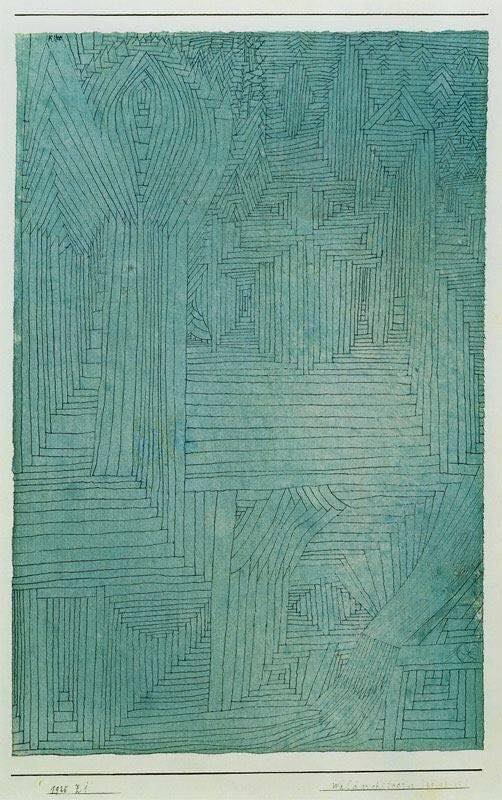
Paul Klee, Forest Architecture, 1925, pen and watercolour on paper mounted on card

swiss painter, draftsman, and printmaker 1879-1940


“art should be like a holiday;

something to give a man the opportunity to see things differently, 

and to change his point of view.”

-paul klee

a noble thing.

Standard

the dandelions have returned, and i couldn’t be happier.

“Every year,” said Grandfather. “They run amuck; I let them.

Pride of lions in the yard. Stare, and they burn a hole in your retina.

A common flower, a weed that no one sees, yes.

But for us, a noble thing, the dandelion.”

-Ray Bradbury, Dandelion Wine


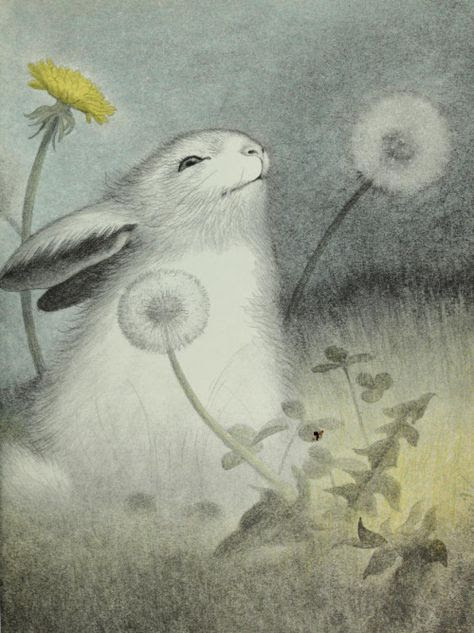
art credit: garth williams, (the rabbit’s wedding) –  rabbit basking in the moonlight

rock piles or cathedrals?

Standard

visiting this beautiful sacred space

stories within each brick, step, piece of wood, marble, and work of art

moving and powerful

 st. cecelia cathedral

 named for

the patron saint of musicians, composers, instrument makers, and poets in the middle ages.

“a rock pile ceases to be a rock pile the moment a single man contemplates it,

bearing within him the image of a cathedral.”

-antoine de saint-exupery, author of the little price

To find the extraordinary within the ordinary, you have to see it. And to see it, you have to look for it. And to look for it, you have to have your eyes open. You have to be open.  You have to believe that within every rock pile there is a cathedral. Or, at least, the possibility of one. Are you someone who sees rock piles, or do you see cathedrals?

Begun in 1905 and consecrated in 1959, St. Cecelia was designed by architect Thomas Rogers Kimball and is ranked among the ten largest cathedrals in the United States when it was completed. It is now ranked in the National Registry. The architectural style of the building is Spanish Renaissance Revival, rather than the European Gothic architecture popular in the early 20th century. Kimball justified his choice because of the early influence of Spain and Mexico on the region. (located in Omaha, Nebraska, USA)

‘trash has given us an appetite for art.’- pauline kael

Standard

A New York garbage depot holds a secret collection of weird and wonderful refuse.

The Treasures in the Trash Collection

On the second floor of a nondescript warehouse owned by New York City’s Sanitation Department in East Harlem is a treasure trove—filled with other people’s trash.

Titanic. The Exhibition

– DMV

Titanic. The Exhibition

Most of the building is used as a depot for garbage trucks, but there’s a secret collection that takes over an entire floor. The space is populated by a mind-bogglingly wide array of items: a bestiary of Tamagotchis, Furbies; dozens of Pez dispensers; female weight lifting trophies; 8-track tapes; plates, paintings, sporting equipment and much more.

The Treasures in the Trash collection, was created entirely out of objects found by Nelson Molina, a now-retired sanitation worker, who began by decorating his locker. Collected over 30 years, it is a visual explosion, organized by type, color, and size. Atlas Obscura had the chance to visit the collection with the New York Adventure Club, take some photos, and revel in the vast creative possibilities of trash. Unfortunately, this isn’t a collection that keeps regular hours; drop-ins are not allowed. For more information on the occasional organized tours, email tours@dsny.nyc.gov. Sanitation workers are welcome anytime.

“uncommon thinkers reuse what common thinkers refuse.”

-j.r.d. tata


source credits: atlas obscura, dylan thuras, new york adventure club

collection location: 343 East 99th St., New York, New York, 10029 usa


the language of hands.

Standard

“look, i made a map! and it goes right to my house!”


‘the most expressive part of the body when it comes to art. 

for a child, their hands often become their voice.’

-the art of creativity

white on white.

Standard

the kinder painted

using play feathers and real fingers

and colors they mixed and made

 one

chose to paint

only white on white paper

 to see what it would look like

 it was a beautiful painting

all nuance and shade and texture.

“renoir said once that nothing was so difficult, and at the same time so exciting, to paint, as white on white.”
– ambroise vollard

hot pizza.

Standard

Pics: Archaeological Park of Pompeii

The image is believed to be a pizza predecessor; a focaccia-style bread covered with fruit such as a pomegranate and dates, and a type of pesto.  – Courtesy Archaeological Park of Pompeii


A 2,000-year-old painting uncovered in Pompeii could show a “distant ancestor” to the modern pizza, archaeologists have said.

The art was discovered on the wall of an ancient house during an excavation – but the food it depicts looks slightly different from your Friday night takeaway.

Iconic ingredients such as tomato and mozzarella are nowhere to be seen, and it appears the flat focaccia bread has been seasoned with spices instead.

And while a goblet of wine placed on the silver tray might be more familiar to 21st-century pizza lovers, most of us would choose a side of garlic bread over dried fruit.

The painting was discovered just 14 miles (23km) from Naples, where the traditional art of pizza making has been granted UNESCO protection.

Pompeii was destroyed by an eruption of Mount Vesuvius almost 2,000 years ago, but the site was not discovered until the 16th century.

Since January, there has been a burst of archaeological activity that is designed to halt years of decay and neglect.

The painting was discovered in the hall of a house that had a bakery attached to it.

“Pompeii never ceases to amaze, it is a casket that always reveals new treasures,” Italian culture minister Gennaro Sangiuliano said.

Gabriel Zuchtriegel, the director of Pompeii’s archaeological park, believes the artwork reminds us of how far the humble pizza has come.

“How can we fail to think, in this regard, of pizza, also born as a ‘poor’ dish in southern Italy, which has now conquered the world and is also served in starred restaurants,” he said.

Almost a third of Pompeii remains buried under ash – meaning there will be countless other hidden gems that are worth quite a lot of dough.


“pizza makes me think that anything is possible.”

-henry rollins

in honor of national pizza week


credits: sky news, connor sephton