Tag Archives: competition

pedestrianism.

Standard

Walking was a competitive sport in the 19th Century

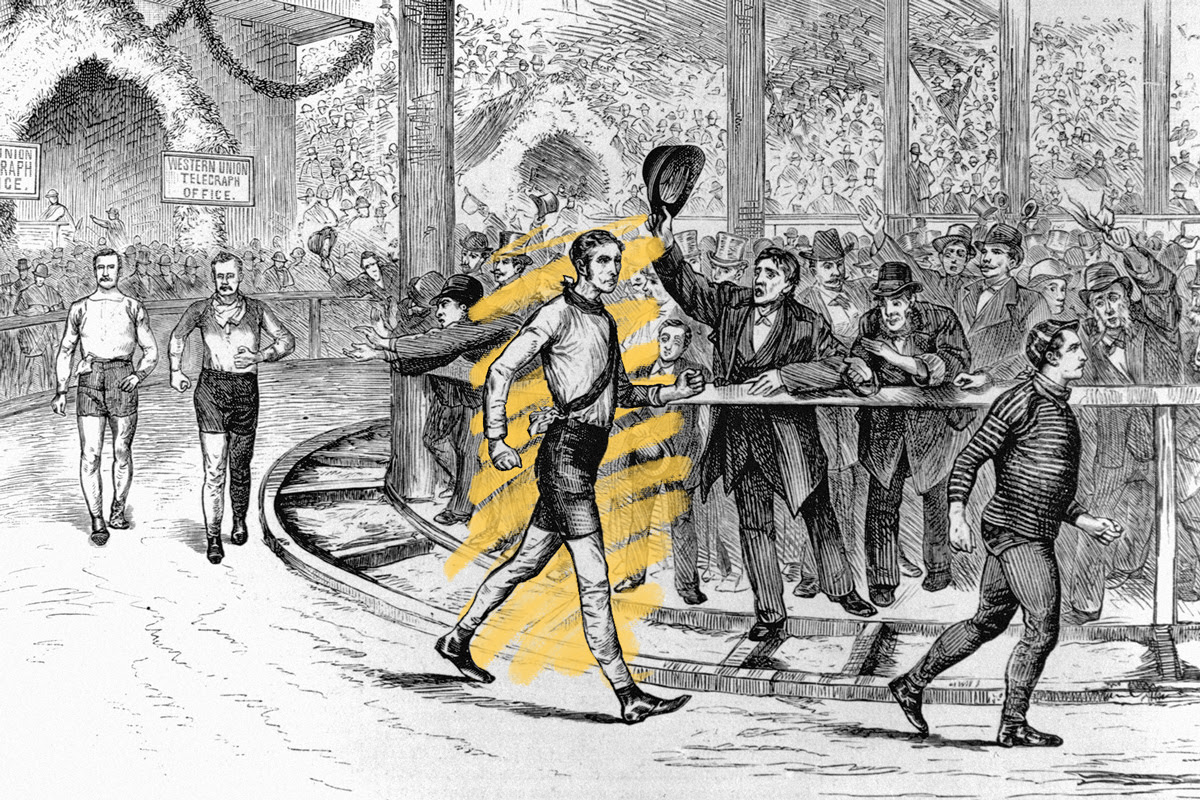
On March 10, 1879, the arena at Gilmore’s Garden in New York City (later, Madison Square Garden) was absolutely packed with screaming fans of America’s latest sports craze: pedestrianism. That’s right, competitive walking. At the venue, fans outside tried to shove themselves in, breaking windows and scaling the roof. It was no less chaotic inside, where ticketholders scrambled on top of tables, chairs, and each other’s shoulders to get a better view. That day marked the start of the Astley Belt, essentially the Super Bowl of walking. Contestants had to circle the 1/8-mile track for six days straight and reach a distance of at least 450 miles, and whoever traveled farthest was declared the winner. Athletes were not permitted to leave the track, and instead had tents or cottages where they were allowed to get a little rest or medical attention.

Americans’ fascination with pedestrianism can be traced back to one man, a New York Herald employee named Edward Payson Weston who had a penchant for long-distance walking. Recognizing his gift for endurance, he made a bet with a friend on the 1860 presidential race, in which the loser had to walk all the way from Boston to Washington, D.C., for the inauguration. Because Weston bet against Abraham Lincoln, he found himself on a 10-day trek through ice and snow that made him a media darling. He started organizing endurance walks against other people, which grew into pedestrianism.

The sport reached the peak of its popularity in the 1870s and 1880s, at which time it was far more than a novelty. Pedestrianism spawned America’s first celebrity athletes, complete with trading cards and brand endorsement deals. Weston was the first; he was so famous that scientists published studies on his urine. Many later superstars were immigrants and people of color: One of the last great pedestrian celebrities was Frank Hart, a Haitian immigrant with a record-breaking career that included a 565-mile, six-day walk. Plenty of women participated in the sport, too — as the March 1879 Astley Cup marched on in midtown Manhattan, five women were competing in their own six-day walk up in Harlem.

at first

I thought I might be a contender,

as an expert level pedestrian

but then I read on

 saw how far and how fast they went

 this was not to be

I will continue on my quest

to find my sport. 

(so far I’m leaning in the direction of ‘ yard sports’

in the realm of badminton and croquet, but not jarts)

‘i’m in competition with myself and i’m losing.’

-Roger Waters, Pink Floyd, bassist and co-founder


source credit history facts.com

piecing it together.

Standard

as a person who loves puzzles

since i learned

team puzzle competitions were a thing

i’ve wanted to compete in one

 finally the opportunity arose

the night of the event arrived

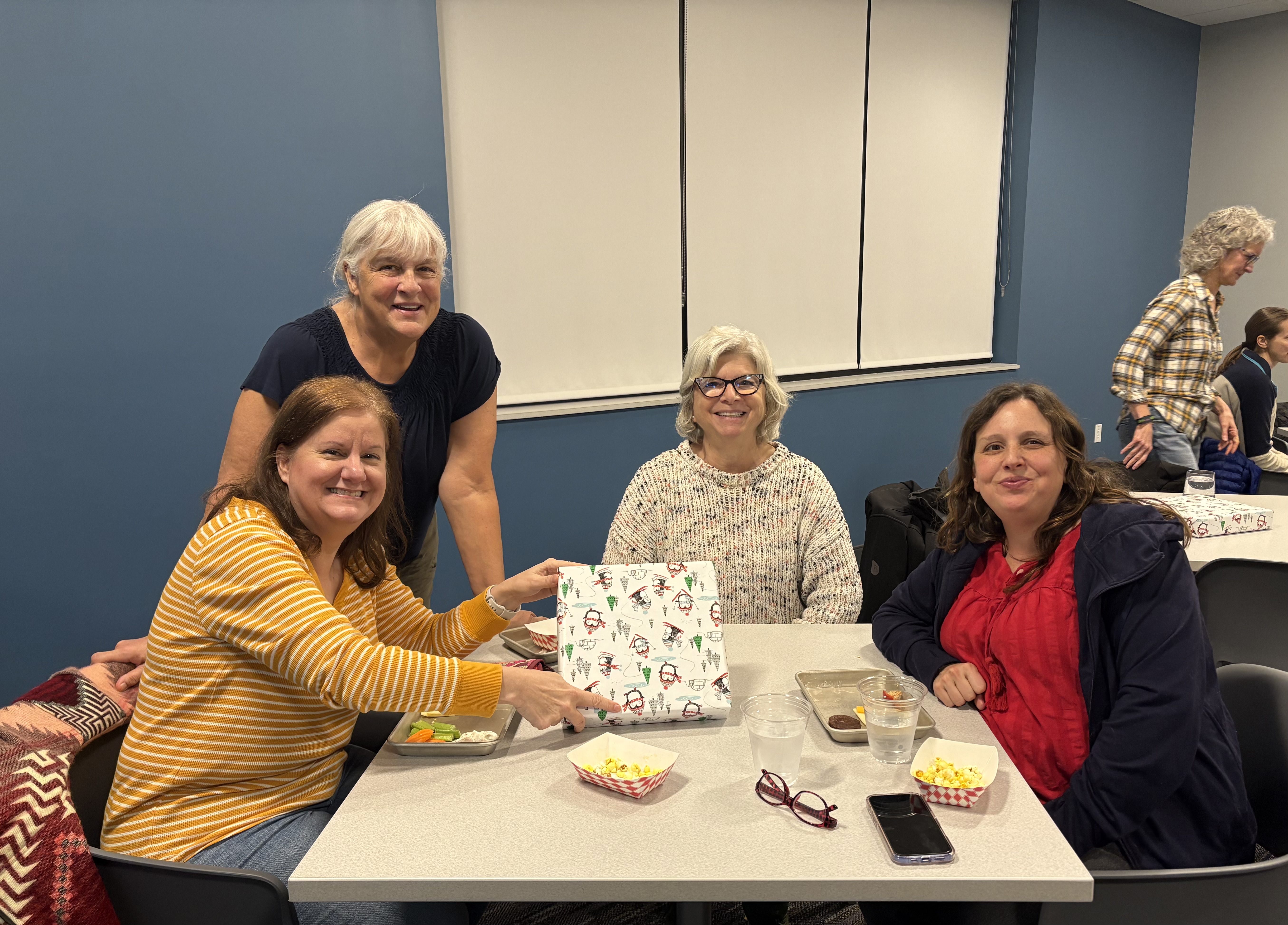
people in teams of four

would compete to finish the same unknown puzzle

in the shortest period of time

my team’s name was 

‘the last piece is under the table’

there were 12 competing teams

beverages and snacks and rules

a little friendly trash-talking

  giant timer on a screen counting the seconds, minutes, hours

each team had their own strategies, methods, plans

part of the challenge is working in a team itself

each person has their own way of solving puzzles

 with different levels of competitive spirit and ingenuity

but i consider that part of the puzzle too

trying to solve how to work together as one

to complete the puzzle on the table  

the judge started the clock

the buzzer went off

when we opened the wrapping

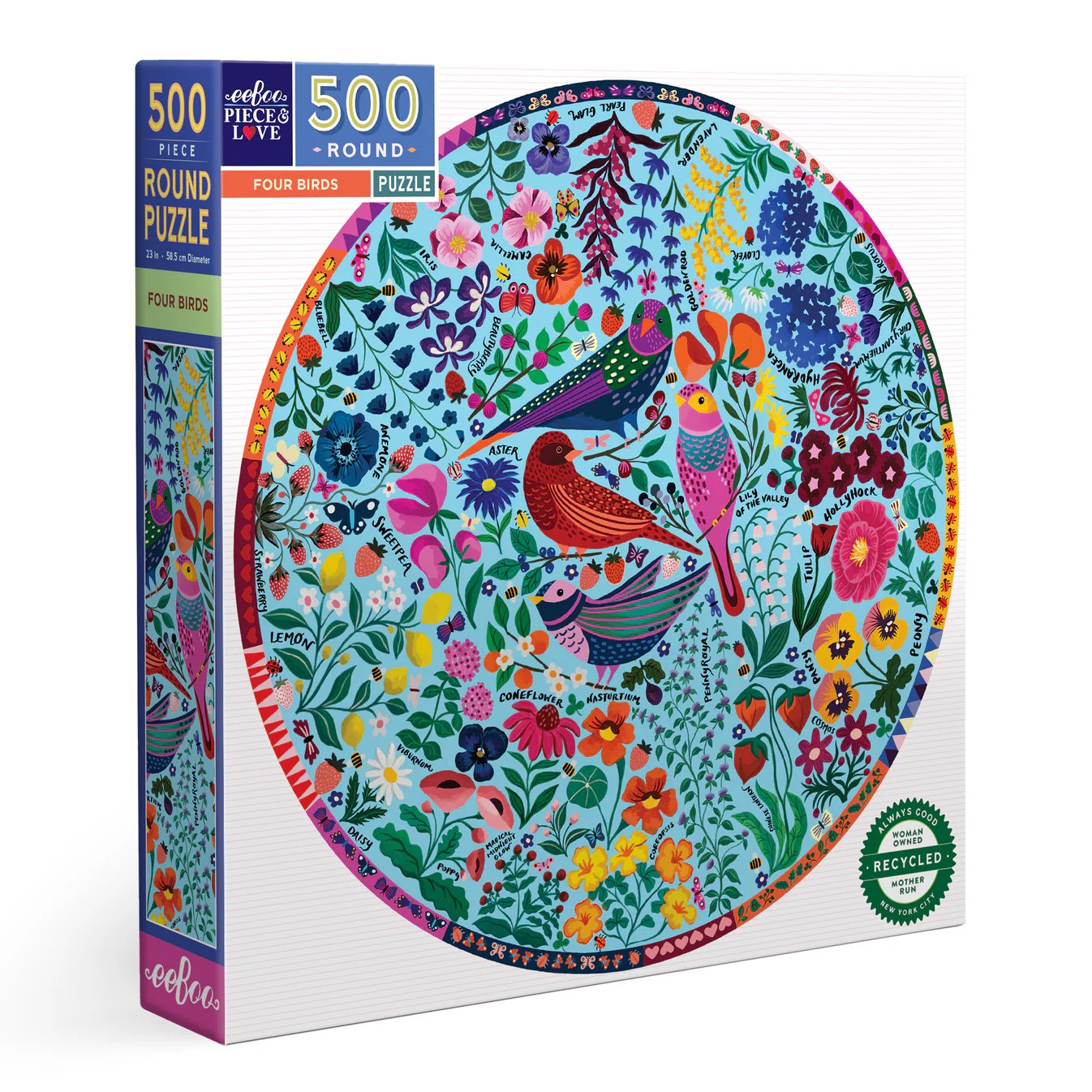
it was a circular, colorful, 500 piece

we threw everything on the floor 

dumped the pieces on the table

and were off

as expected, we all had different strengths and strategies

adapting as we went, changing spots, some stood, some sat

communication was key

‘who has the pink dots, is that a bird’s beak, what does that word say, look for purple…’

personalities were revealed

in an ebb and flow of emotions

we worked as fast as we could

 suddenly 

the team behind us

who all stayed seated and worked silently 

announced they were finished just 40 minutes in

mind blown

only motivated us more

i was literally sweating 

quite a workout

we kept working as fast as we could

while one team after another

completed their puzzles 

we did not stop

at one point it was clear we would be the last team

we had a good laugh

exhausted

but refused to give up

i asked how late they would be open

finally

at 1 hour and 50 minutes

we did it!

and it was fun!

i was just happy to finish 

i’ll be back to try again

when talking to the judge after 

he said the silent sitting team that won so quickly

go to the world championships each year

(what?! world championships?!)

they have not yet won at that level

but enter these competitions

to stay sharp and practice

makes good sense

now i feel

it’s may be only a matter of time 

 i’ll be writing about a puzzle competition from italy one day

but in the meantime

i had a blast

 we had no pieces under the table

and that’s something.

‘a group is a bunch of people in an elevator.

a team is a bunch of people in an elevator, but the elevator is broken.’ 

-bonnie edelstein, parade magazine

anything can happen.

Standard

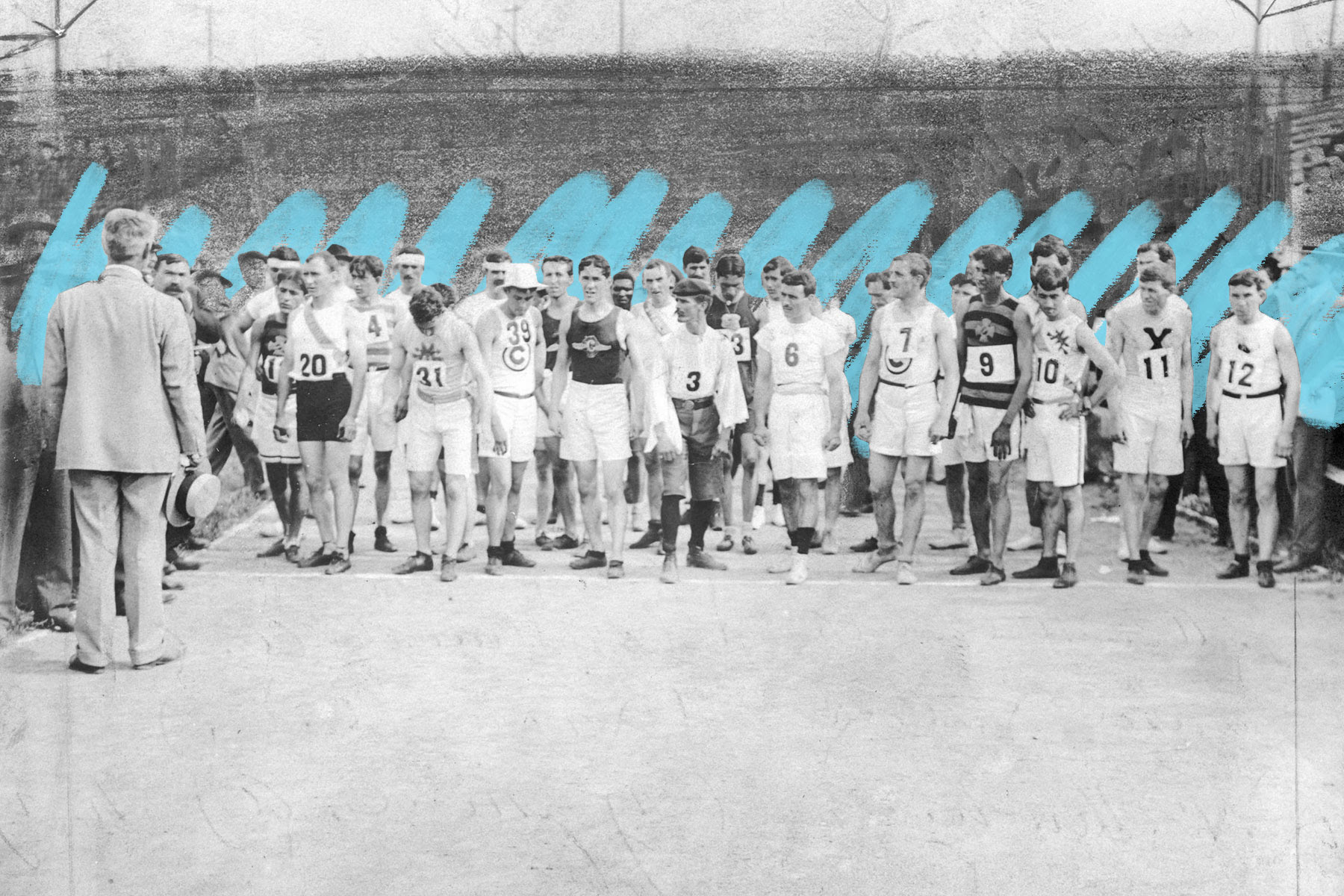
The marathon at the 1904 St. Louis Games is one of the most unusual events in Olympic history, in no small part because it was initially won by an athlete who rode in a car for most of the race. It was American Fred Lorz, who led the field of 32 runners right out of the gate. At the 9-mile mark, however, Lorz began suffering from terrible cramping, as the combination of sweltering heat and dirt being kicked up from the unpaved route made it difficult to breathe. It was then that Lorz opted to hitch a ride with a passing vehicle, which he rode in for 11 miles before hopping out to complete the race on foot in just under three hours

Just as President Theodore Roosevelt’s daughter Alice was set to award Lorz his medal, a spectator accused him of cheating. Lorz admitted to riding in a car, claimed it was just a joke, and stated that he didn’t actually plan to accept the trophy.

With Lorz disqualified, American Thomas Hicks emerged as the new winner, though he too ran an unconventional race. At various points throughout the marathon, Hicks was helped by his trainers, who fed the athlete a combination of poisonous strychnine, egg whites, and brandy in hopes of stimulating his body. The result was that Hicks began to hallucinate around the 20-mile mark, and he was eventually carried over the finish line by trainers with a time of 3:28:53 — still taking home the gold.

“at every olympic games, anything can happen that nobody can predict, so i did my best to win.”

*-lin dan

*lin dan is a chinese former professional badminton player. he is a two-time olympic champion, five-time world champion, as well as a six-time all england champion, and considered to the world’s greatest badminton player.


where and when will the next olympics be held?

Paris, France, from 26 July to 11 August 2024.

Milan and Cortina d’Ampezzo, Italy, from 6 to 22 February 2026.

 Los Angeles, USA, from 14 to 30 July 2028.

 Brisbane, Australia, in 2032.

i can’t wait for all the crazy backstories, anything can happen.


source credit: history facts, art and culture


games.

Standard

let the games begin!


“a lifetime of training for just ten seconds.”

-jesse owens


olympic art credit: rachel whiteread

tokyo.

Standard

meanwhile in tokyo…


“the only victory that counts is the one over yourself”

-jesse owens


Credits to whom appropriate


olympic effort.

Standard

one of the classic olympic sports


image credit: pinterest

olympics.

Standard

let the games begin!


“olympics for me is love, peace, united. “

-jackie chan

where brains met brawn.

Standard

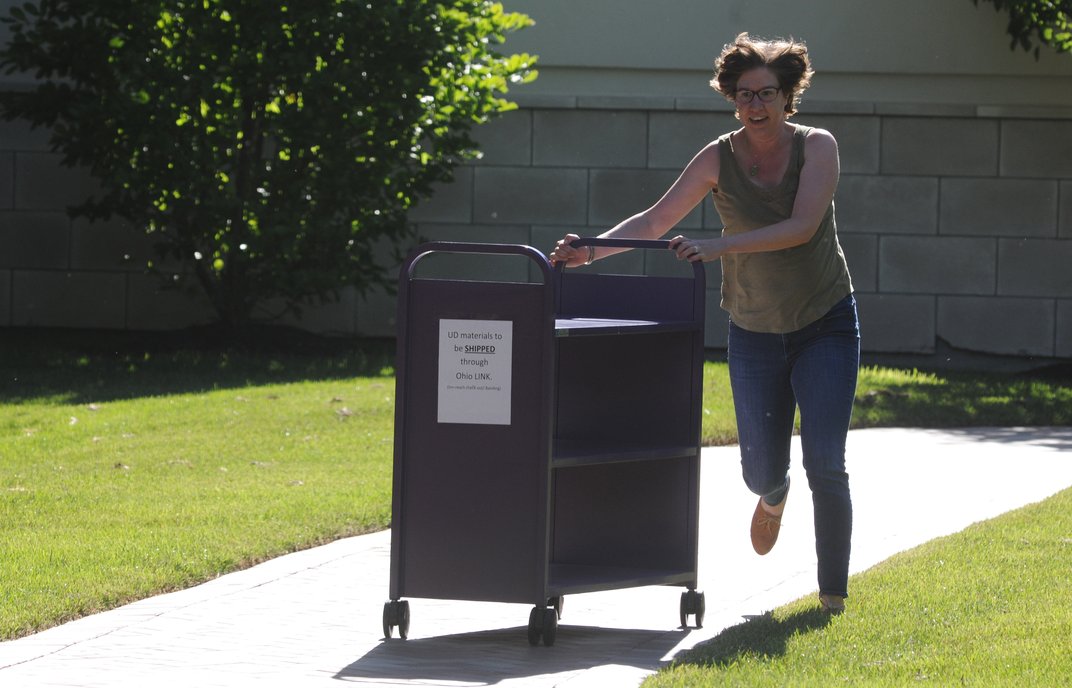
katy_kelly_-_library-olympics-book-cart.jpg__1072x0_q85_upscale

librarians have an olympics, too
brains met brawn in a bookish competition for the ages

think the athletic action is all in rio this year? you’d be wrong—dead wrong. though you might not think so, librarians perform feats of near-olympian prowess every day as they lug books back and forth, tame tortuous piles of information and sustain long hours and complicated reference requests. and as librarian katy kelly writes, they proved it in the university of dayton’s first-ever library olympics last week.

the “olympic” event showcased the prowess of librarians by turning the mental into the physical. it’s an olympics year tradition in many libraries that aims to get people more engaged with their local library. some libraries invite the public into the library to compete in fun, bookish games, but in this case librarians themselves faced off in what may be the ultimate game of reference skill and cataloging competence.

katy_kelly_-_library-olympics-jenga.jpg__1072x0_q85_upscale

librarians competed in a vigorous game of “journal jenga” (stacking bound periodicals as high as possible and jumping out of the way when they collapsed. then they faced off in a circuit of different events, including balancing bound journals on their heads, running a book cart through a twisty course, and tossing journals toward a target. (all of those thrown journals were slated for recycling in a process librarians call “weeding.”)

katy_kelly_-_library-olympics-toss.jpg__1072x0_q85_upscale

brains had a place next to all that brawn, too, as librarians participated in a tricky speed sorting event in which they had to put books in order by their library of congress call number. to top it all off, they ran around campus finding objects that corresponded to different lo  call numbers. the winning team made off with the medal by a single point.
all of these antics sound silly, but librarian m. schlangen, who participated in the event, found deeper meaning in the exercise. “as I raced to put a cart full of books in order by the library of congress call numbers on their spine labels,” she wrote, “the very genius of this system occurred to me: without orderly cataloging of the world’s knowledge, even in this age of search engines and high-speed networks, information could easily be rendered obscure in an ocean of data, accessed by mere chance rather than intention.”


there’s another purpose for the games: as the university of dayton’s m. scheffler and a. black note, these olympics-like competitions don’t just test librarians’ knowledge, but highlight areas in which they might need more training. and the best librarians know that, like the most competitive athletes in the world, it never hurts to brush up on the basics.

credits: smithsonianmag.com, erin blakemore, katy kelly


“i’m the king of the gourd!”

Standard

pumpkin2

last weekend, the residents of tualatin, oregon held its annual west coast giant pumpkin regatta—a quirky annual october event in which participants dress in costumes, hollow giant gourds into makeshift vessels, and paddle them across a local lake.

the oversized squash are generously provided by the pacific giant vegetable growers, a regional group of gardeners who promote the cultivation of “obscenely large, healthy vegetables.” (this year, one of their offerings tipped the scale at 1,794.5 pounds.)

after the pumpkins are measured in a “terminator weigh off,” they’re cut open, scooped out, and transformed into tiny watercrafts.

contestants climb into them, take to the water, and engage in a series of races—that is, if their boats don’t start leaking, which happened to at least one contestant.

twenty-one individuals attempted the 2015 regatta—a physical feat that, despite its whimsical nature, one frustrated rower described to as “brutal” and “exhausting.” now in its 12th incarnation, the regatta drew thousands of onlookers, who enjoyed pie-eating contests, costume competitions, and live entertainment while they weren’t watching others flail around in the water.

“i would rather sit on a pumpkin, and have it all to myself,

than be crowded on a velvet cushion.”

― henry david thoreau

credits: mental floss magazine, oregon live


Sometimes, a winner is a dreamer who never gave up. – Unknown

Standard

cameracrewgermany.com

while much of the globe is preoccupied with the world cup from june 12-july 13,

here is an alternative championship that could give fifa a run for its money.

the world toe-wrestling championships.

article-2017341-0D17310100000578-503_468x340

in 1976, when pubgoers in derbyshire, england grew bored with arm wrestling,

they began locking big toes and trying to pin their opponent’s foot to the ground.

rules state that competitors must yell out ‘toe much!’ if they want to throw in the towel.

competition is serious.

world champion, alan ‘nasty’ nash

has come home with broken toes nine times!

just play. have fun. enjoy the game.

michael jordan

credits: cameracrewgermany.com, bbc news, mental floss magazine