
following the kinders
as they walk out
of one open blue door
and step into the space
that lies in between
and toward another.
—
“there are things known and things unknown and in between are the doors.”
-jim morrison
following the kinders
as they walk out
of one open blue door
and step into the space
that lies in between
and toward another.
—
“there are things known and things unknown and in between are the doors.”
-jim morrison
Back in the 1970s, the Denver Museum of Nature and Science hired artist Kent Pendleton to paint the backdrops for many of the museum’s wildlife dioramas. Little did it know that Pendleton’s penchant for hiding tiny mythical creatures in these paintings would add a whole new dimension to the museum experience.
It all began with eight elves—or gnomes, or leprechauns, depending who you ask—hidden in Pendleton’s wildlife dioramas. An elf hiding in the lowland river. An elf riding a dinosaur along a cretaceous creekbed. Another elf sat on a rock in the Great Smoky Mountains. And others, hard to spot but definitely there, in various backdrops throughout the museum.
When these eagle-eyed volunteers began to spot the museum’s incongruous and thoroughly unscientific inhabitants, the whole thing began to snowball. The staff decided to go along with the game, adding more elves and gnomes to the museum. A ceramic elf, for example, found his way onto the Candor Chasma of Mars. And now a digital elf exists in the entrance video, cleverly concealed within a cluster of stars.
The fantasy easter eggs diversified, too; there are angels, unicorns, even a Millennium Falcon and a tiny Yoda hidden in the museum. Precisely how many creatures are hidden around the museum is an open question. The museum’s official elf scavenger-hunt guide currently lists nine. But Maura O’Neal, the museum’s communications and media relations manager, says there are about double that amount.
So even if you do go on the scavenger hunt, guide in hand, you’ll never quite know when you might spot an undocumented elf lurking somewhere, surreptitiously, in the Denver museum…

two of my grandies at the detroit zoo
experiencing the butterfly house
firsthand
and finding
just who exactly
is patiently sitting with them
waiting for his identity to be discovered. 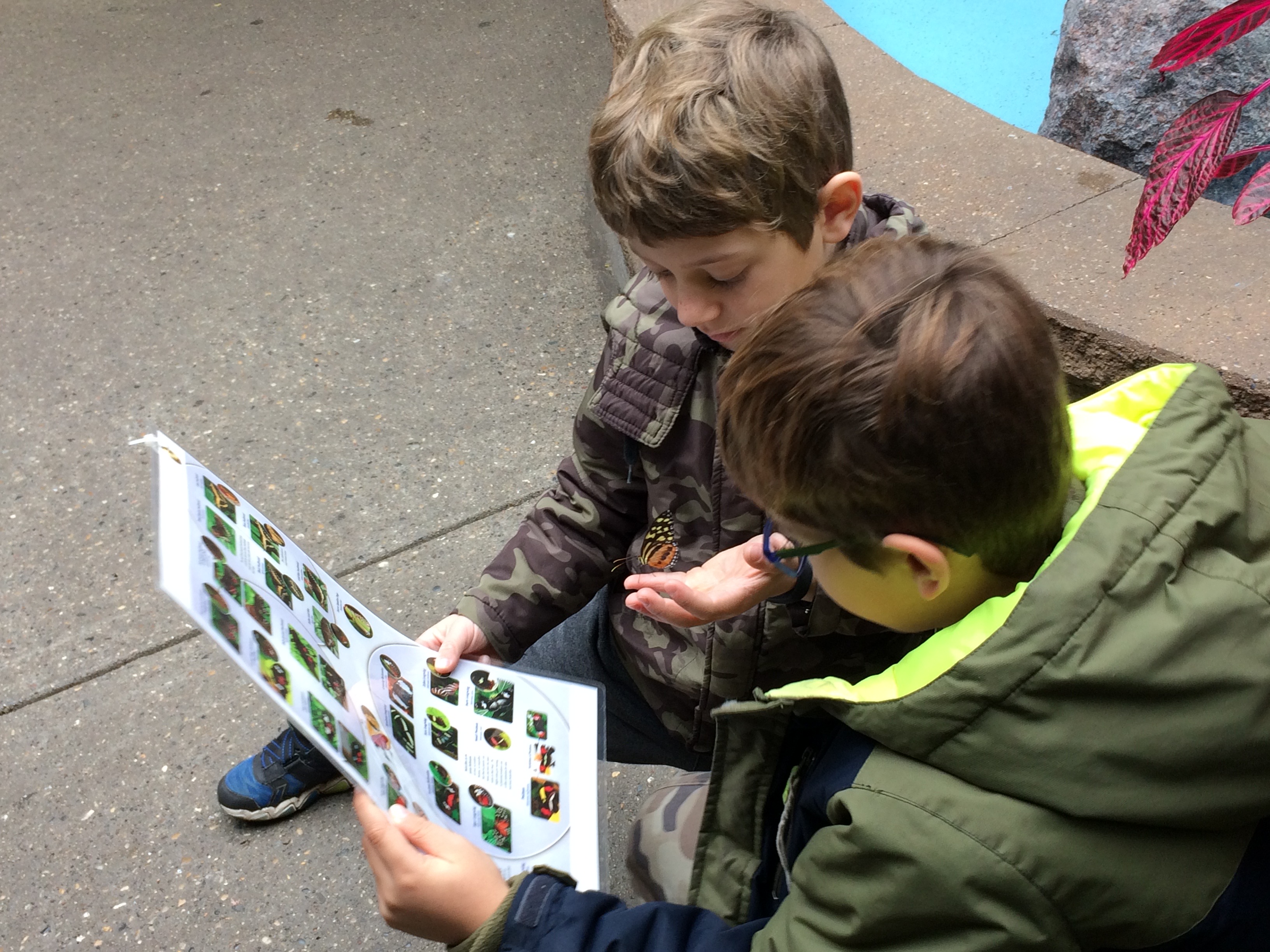
“wonder is the heaviest element on the periodic table.
even a tiny fleck of it stops time.”
― Diane Ackerman

treasure discovered during this week’s adventures in the parks.
—
“you can either be a victim of the world
or an adventurer in search of treasure.
it all depends on how you view your life.”
― paulo coelho

when we set out on our hike
to see what spring animals
were out there
we thought maybe
we’d see a bear
awakening from a long winter’s nap
though we most likely
scared any creature
who happened to be in our oncoming path
or most anywhere in the vicinity
with our marching and laughing and yelling and jumping
and then
we looked closer
and at last
found an animal
passed over by many
who was not afraid of us
just waiting to to be discovered
a single ant.
—
“life is denied by lack of attention, whether it be to cleaning windows or trying to write a masterpiece.”
-nadia boulanger


—
credit: earthobservatory.nasa.gov
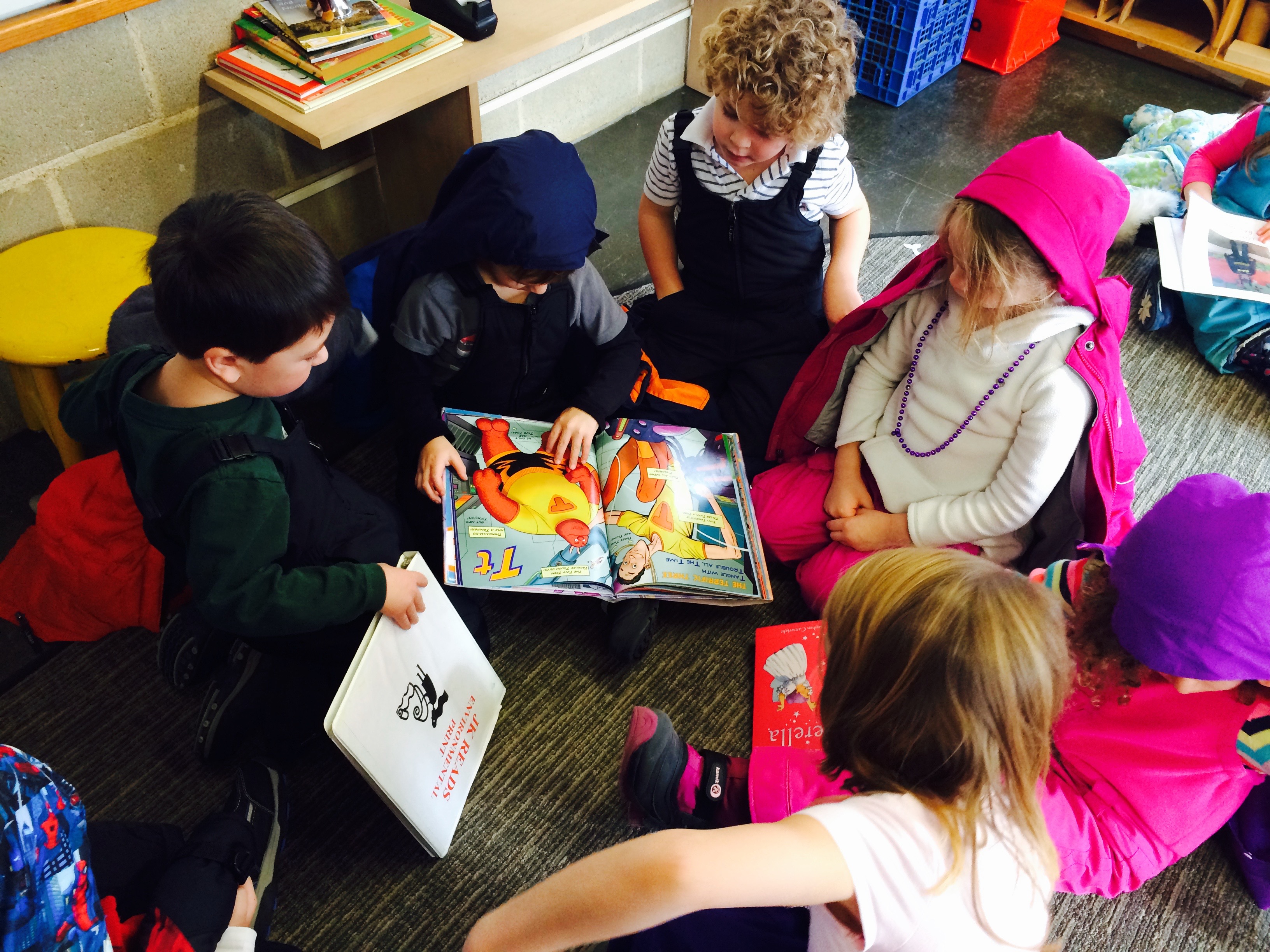
book club happens
while waiting to go outside
and discovers something.
letters.
—
there is more treasure in books
than in all the pirate’s loot on treasure island.
– walt disney
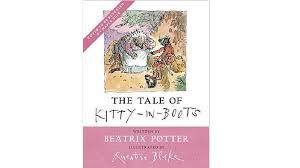
100 Years Later,
Beatrix Potter’s Tale Of A Fanciful Feline To Be Published
At long-lost Beatrix Potter book, The Tale of Kitty-in-Boots, is set to be released this fall, 150 years after the beloved author’s birth.
The tale about a sharply dressed feline has “all the hallmarks of Potter’s best works,” editor Jo Hanks, who stumbled upon the story, says in an interview with Penguin U.K., which will publish the book.
At the time Potter was writing Kitty-in-Boots in 1914, she told her publisher that the story was centered on “a well-behaved prime black Kitty cat, who leads rather a double life.”
Hanks says she “stumbled on an out-of-print collection of her writings” and saw that reference to the story in a letter from Potter to her publisher.
This led her to the publisher’s archive, where she says she found “three manuscripts, two handwritten in children’s school notebooks and one typeset and laid out in a dummy book; one rough colour sketch of Kitty-in-Boots and
a pencil rough of our favourite arch-villain, Mr Tod.”
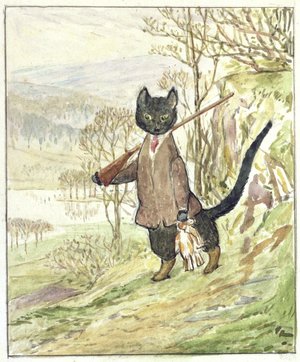 The original Kitty in Boots,
which Beatrix Potter illustrated herself.
The tale features a favorite Potter character — Peter Rabbit — “albeit older, slower and portlier,” Hanks says. Potter told her publisher in letters that the story went unfinished because of “interruptions” — including the start of World War I and her marriage.
And because Potter finished only one drawing for the book, it will be illustrated by Quentin Blake, who is best-known for his art in many of Roald Dahl’s books.
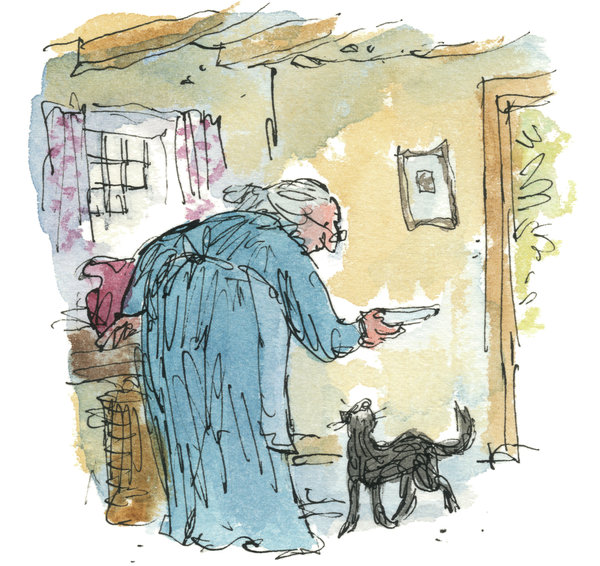
Quentin Blake’s Kitty in Boots.
“Quentin revels in rebellious characters and humorous stories with spiky edge to them; he’s brought anarchic energy to the character of Kitty and embellished her already endearingly flawed character with his trademark wit and charm,” Hanks says. The news about Blake’s illustration has delighted many Potter fans. Others are more skeptical about the pairing.
Here’s an excerpt from the story released by Penguin, with a cliffhanger ending:
“Once upon a time there was a serious, well-behaved young black cat.
“It belonged to a kind old lady who assured me that no other cat could compare with Kitty.“She lived in constant fear that Kitty might be stolen — ‘I hear there is a shocking fashion for black cat-skin muffs; wherever is Kitty gone to? Kitty! Kitty!’
“She called it ‘Kitty’, but Kitty called herself ‘Miss Catherine St. Quintin’
“Cheesebox called her ‘Q’, and Winkiepeeps called her ‘Squintums’. They were very common cats. The old lady would have been shocked had she known of the acquaintance.
“And she would have been painfully surprised had she ever seen Miss Kitty in a gentleman’s Norfolk jacket, and little fur-lined boots. “Now most cats love the moonlight and staying out at nights; it was curious how willingly Miss Kitty went to bed. And although the wash-house where she slept — locked in — was always very clean, upon some mornings Kitty was let out with a black chin. And on other mornings her tail seemed thicker, and she scratched.
“It puzzled me. It was a long time before I guessed there were in fact two black cats!”
You’ll have to wait until the book is published in September to find out what happens next.
—
credits: quentin blake, beatrix potter, penguin press, express newspapers, getty images, npr


 I didn't have my glasses on....