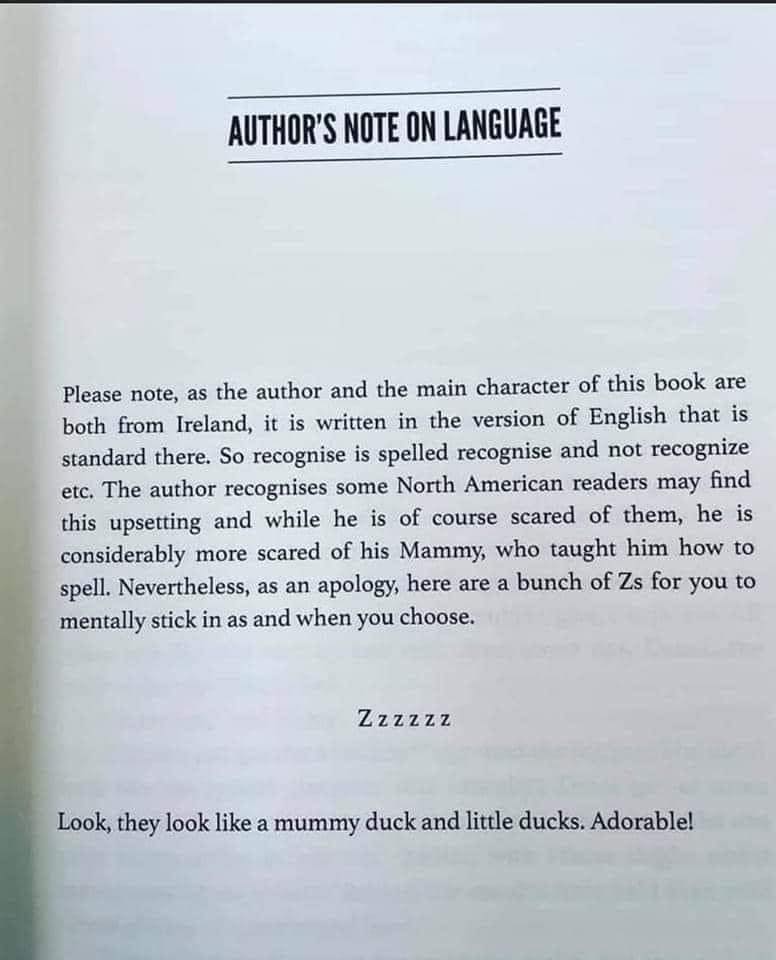
“drawing on my fine command of the English language, i said nothing.”
-robert benchley
—
book source credit: Disaster Inc. by Caimh McDonnell
“drawing on my fine command of the English language, i said nothing.”
-robert benchley
—
book source credit: Disaster Inc. by Caimh McDonnell

Probably too recently, say the faculty of Lake Superior State University, the Michigan college that releases an annual list of words that they say deserve to be “banished” from our vocabularies over “misuse, overuse and uselessness.”
“Our nominators insisted, and our Arts and Letters faculty judges concurred, that to decree the Banished Words List 2023 as the GOAT is tantamount to gaslighting. Does that make sense?” said Rodney S. Hanley, the university’s president. “Irregardless, moving forward, it is what it is: an absolutely amazing inflection point of purposeless and ineptitude that overtakes so many mouths and fingers,” Hanley added.
Here’s the full list of the school’s banished words for this year:
Out of over 1,500 nominations — from people across the U.S. and as far afield as New Zealand and Namibia — judges declared that this year’s top offender was “GOAT,” the acronym for “greatest of all time.”
Nominators and faculty alike found the term objectionable due both to its impossibility – how can anyone declare a single best of all time when another may come along in the future – and the liberal way the title is dispensed these days.
“The singularity of ‘greatest of all time’ cannot happen, no way, no how. And instead of being selectively administered, it’s readily conferred,” said Peter Szatmary, a spokesperson for Lake State.
Lake State’s faculty judges would likely argue that was too many people (and non-people) described as “the greatest of all time.” “Words and terms matter. Or at least they should,” Szatmary said.
Joining “GOAT” in banishment are nine other words and phrases that nominators and judges complained were used so often that they had become disconnected from their literal meanings – like “amazing,” which nominators fretted no longer meant “dazzling” or “awe-inspiring.”
“Not everything is amazing; and when you think about it, very little is,” one nominator noted.
Frequently targeted are of-the-moment phrases like “in these uncertain times” (as so many COVID-related messages began in 2020), “information superhighway” (banished in 1995) and “filmed before a live studio audience” (such a vice it was banished twice, first in 1987 then again in 1990).
—
“the flowery style is not unsuitable to public speeches or addresses, which amount only to compliment.
the lighter beauties are in their place when there is nothing more solid to say;
but the flowery style ought to be banished from a pleading, a sermon, or a didactic work.
-voltaire
—
credits: npr, becky sullivan, image, christopher furlong, getty images

Word choices: lay vs. lie
when looking up the eternal lay vs. lie question, (similar to the chicken vs. egg conundrum), this is what i found. i started out strong, but as i kept reading, it really only served to confuse me more, and my level of understanding dropped with each new sentence of explanation and i had to lay or lie down. warning: do not try to read this when lying or laying down.
Imagine your friends are over for a movie night, and they’ve brought a tray of brownies to share. You take the platter from them — but do you tell them you’re going to “lie” it down or “lay” it down? And will you all “lie” down to watch the movie, or “lay” down? It’s an age-old question: What is the actual difference between “lay” and “lie”? When do you use one over the other?
Why are “lay” and “lie” confusing?
To clarify: We’re not talking about the kind of lie you might tell when you call out of work or don’t finish your homework on time. We’re talking only about the setting/reclining meaning of the verb.
“Lay” and “lie” are often confused because both words are about people or objects positioned horizontally on a surface. But they are used to refer to different scenarios.
It can be quite simple — if you’re in the present tense. The past tense is when things really get confusing, since the past tense of “lie” is “lay” (sorry). But don’t worry, we’ll give you a few easy tips to help you along.
When to use “lay” vs. “lie”
“Lay” is a transitive verb. Transitive means that you have an object that is being acted upon. So “lay” means to set down or place something — an object — in a horizontal position. Here’s an example in the present tense: “I lay the book on the nightstand.” In this instance, the book is the object that is having something done to it.
“Lie” is an intransitive verb, meaning the object doesn’t need something else to put it down. Instead, the person or subject is doing the action. “Lie” means to stay at rest in a horizontal position, or to recline. An example of “lie” in present tense would be, “I feel the wind as I lie in my backyard on the grass.” In this example, the person is performing the action rather than having the action done to them.
So, in the present tense, the simplest way to determine which word to use is by looking at what is actually being reclined. If the reclining object is inanimate and/or requires someone to put it down, use “lay.” If the object is self-sufficient, such as a person, use “lie.” Quick memory tip: Only a person can lie on a bed and tell a lie.
“Lay” and “lie” in other tenses
Let’s tackle the past tense of each, since that’s where there’s the most opportunity to pick the wrong word.
I ____ my clothes out last night before I went to bed.
Which one is it — “lay” or “lie”? Here’s how to tell: Is something happening to an object? Yep! The clothes are being set out. That tells us that we need the verb “lay,” past tense “laid.”
I laid my clothes out last night before I went to bed.
Now, what about the past tense of “lie”?
I heard a noise coming from the basement as I ____ on the sofa watching a horror movie.
In this example, there is not a specific action being performed upon an object. Rather, the speaker (the subject) is doing the action. This means we need the past tense of “lie,” which (confusingly) is “lay.”
I heard a noise coming from the basement as I lay on the sofa watching a horror movie.
Still confused? Don’t worry. You won’t get reprimanded too much if you mix these up in verbal conversation. But for written communication, it helps to practice with examples so you can be confident in your word choice.

(not me, but i was doing this after trying to figure this explanation out)
“the greater part of the world’s troubles are due to questions of grammar.”
―
—
source credits: wordgenius, grammarly

not me, but very similar.
—
at times,
(sometimes at the most inappropriate of times),
i have been known to cachinnate.
—
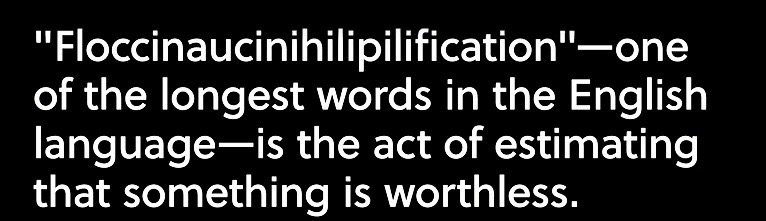
credits: google images, merriam-webster dictionary

—
credits: google images, mental floss
grandie b
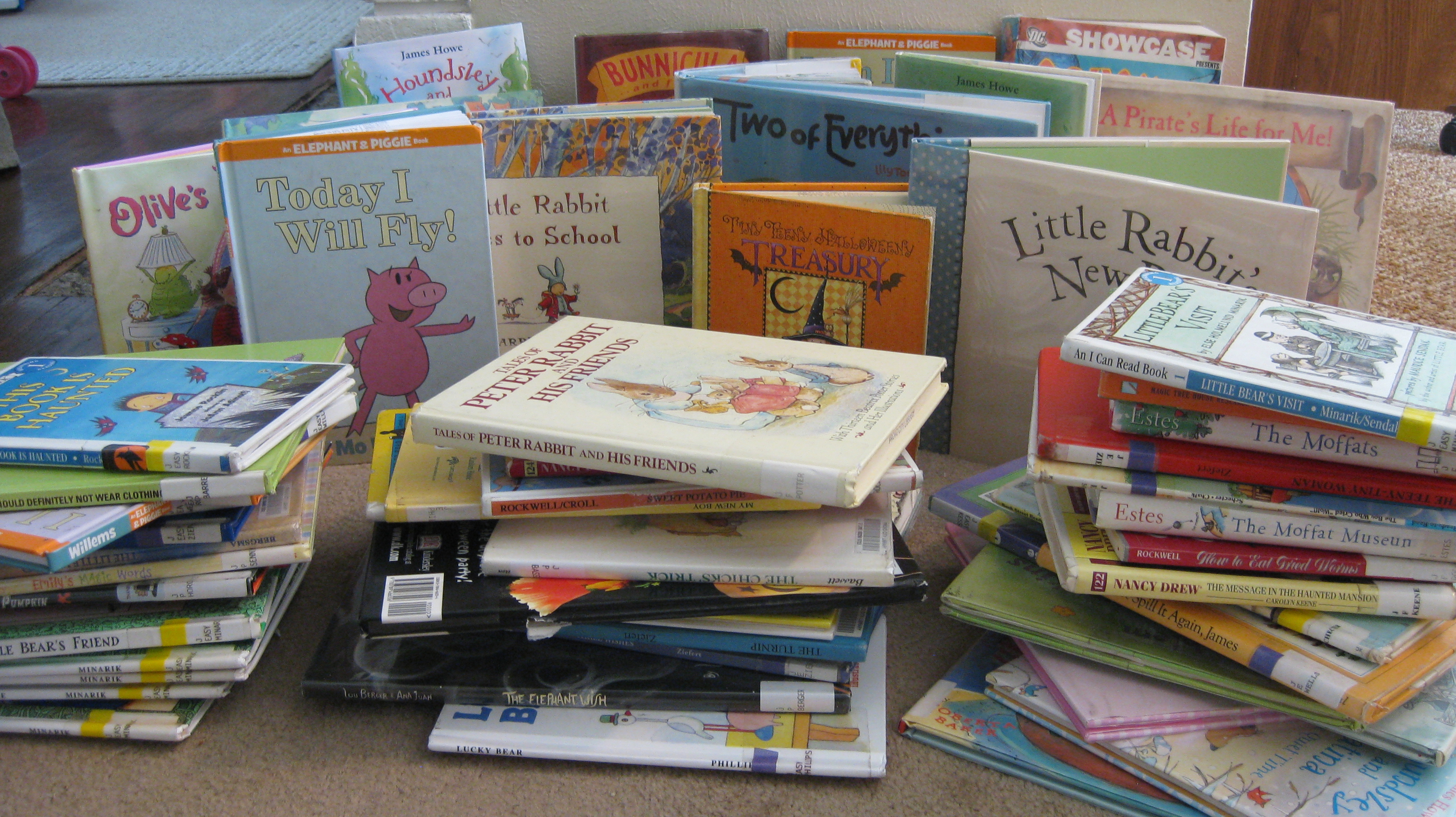
read her book to us
out loud
proud and confident
while
younger grandie j
watched and listened
and
when she was done
he said
he was happy she could read the words
but he seemed
a
little bit
envious
and
sad
because he wasn’t sure how to read yet
until
suddenly
he had an idea
and
i saw
the lightbulb go on
just before
he announced
that he would
‘read his book to us in spanish’.
and
he proceeded to
show us the cover
as he
read us the title
and then
patiently
read
each and every page
in his version of spanish
taking his time
nodding and facing the book towards us
turning the pages
at appropriate times
pointing out the pictures
all while
happily smiling
confidently
chattering away
in a his brand new version of spanish
that was so very, very advanced
that we
the listeners
didn’t even
know the translations
but we understood
that he was proud
and
he was reading
and
when he was finished
he snapped his book shut
and said
in english
“that’s all.”
brilliant.
muy bien, and gagglesmithjong kipisanlomita paskajonti to you!!
—
“if you want to talk about something new,
you have to make up a new kind of language.”
-haruki murakami
 I didn't have my glasses on....