Tag Archives: japan

empty orchestra.

Standard

Negishi, whose 1967 “Sparko Box” prototype is among several devices credited with ushering in Japan’s karaoke craze, died from natural causes in January at age 100.

Negishi founded and ran a company that assembled car stereos for automobile manufacturers in northern Tokyo. A regular listener to a singalong radio show broadcast in Japan at the time, he hooked a spare tape deck up to a microphone and mixing circuit so he could hear himself singing over music.

“When I asked the factory engineer, he said, ‘It’s easy,’” Negishi recalled in an account published by the All-Japan Karaoke Industrialist Association, an industry body for Japan’s karaoke operators. “So, I attached a microphone input terminal to the car stereo and created something like the prototype of a jukebox.”
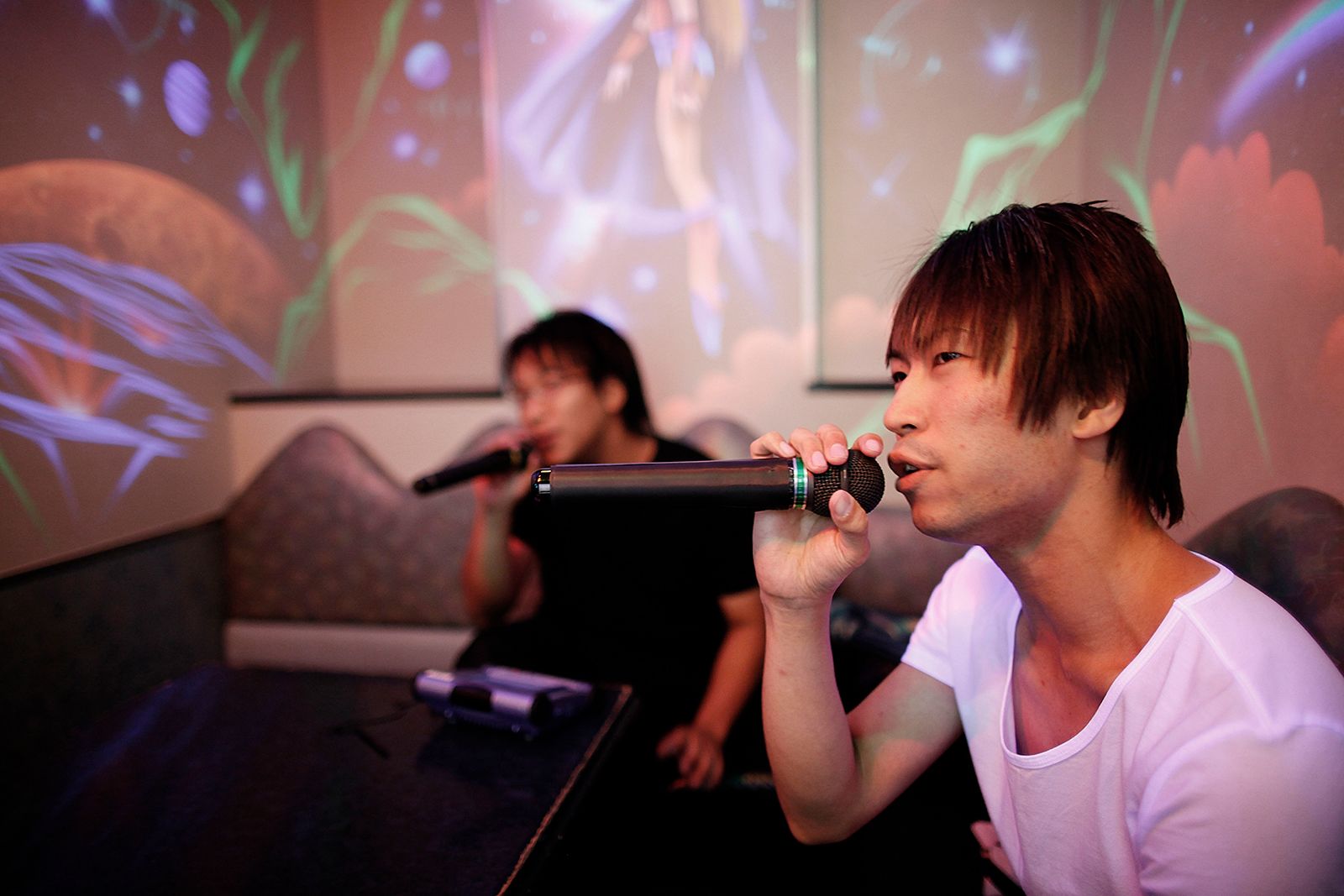
Today, Japan is home to more than 8,000 dedicated "karaoke box" venues, while 131,500 bars are equipped with karaoke machines, according to the All-Japan Karaoke Industrialist Association.

“It works!” he told Alt, recalling the moment he heard his voice coming through the speakers alongside the music. “That’s all I was thinking. Most of all, it was fun. I knew right away I’d discovered something new.”

Marketing the device as a Sparko Box, he sold them alongside lyrics cards and reportedly produced and installed around 8,000 around Japan, mainly at bars and restaurants. By the time Negishi stopped selling the products in the 1970s, several rival machines had been invented and taken to market.

“At that time, it was not customary to sing in stores, so it may have been inevitable that (the Sparko Boxes were) sold as background music,” reads Negishi’s entry on the All-Japan Karaoke Industrialist Association’s website. “Now that I think about it, it’s a bit of a shame.”

The industry body does not credit a single person with inventing karaoke (which literally translates as “empty orchestra”), but instead recognizes several people who independently created machines in the late 1960s and early 1970s.

 Negishi did not patent his invention, and electronics manufacturers soon began producing and marketing their own versions. By the 1980s, “karaoke boxes” had swept Japan, with private rooms overtaking bars and restaurants as the main venues for Japan’s amateur singers. Subsequent developments, including the introduction of video karaoke and networked karaoke systems, helped the phenomenon spread across Asia and the world in the following decades.

Today, Japan is home to more than 8,000 dedicated karaoke box venues, while 131,500 bars are equipped with karaoke machines — a market worth a combined 387.9 billion yen ($2.6 billion) in 2022, according to estimates from the All-Japan Karaoke Industrialist Association.

i wonder if they used a karaoke machine at his wake, and if so, what songs did they choose?


“i was arrested for lip-syncing karaoke.”

-steven wright


source credits: cnn, oscar holland, mai nishiyama, hiroki  yoda
mistaken orders.

Standard

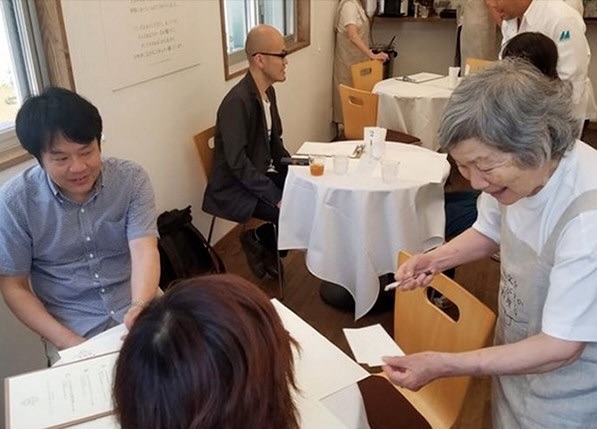
the restaurant of mistaken orders employs waitstaff with dementia

and you can never be exactly sure what you will be getting.

below is a statement from the restaurant to potential patrons and to the world.

you may think it’s crazy,

a restaurant that can’t even get your order right,

all of our servers are people living with dementia,

they may, or may not, get your order right.

however, rest assured,

that even if your order is mistaken

everything on our menu is delicious and one of a kind.

this we guarantee.

“it’s okay if my order was wrong, it tastes so good anyway.”

we hope this feeling of openness and understanding

will spread across japan, and through the world.

We ask for your continued support of The Restaurant of Mistaken Orders in Tokyo, Japan.

Our mission is to spread dementia awareness and to make society a little bit more open-minded and relaxed.


“gratitude is when memory is stored in the heart and not in the mind.”

-lionel hampton


source credits: https://www.japan.go.jp/tomodachi/2019/winter2019/restaurant_of_mistaken_orders.html

   the government of japan


why not fry a year-old leaf?

Standard


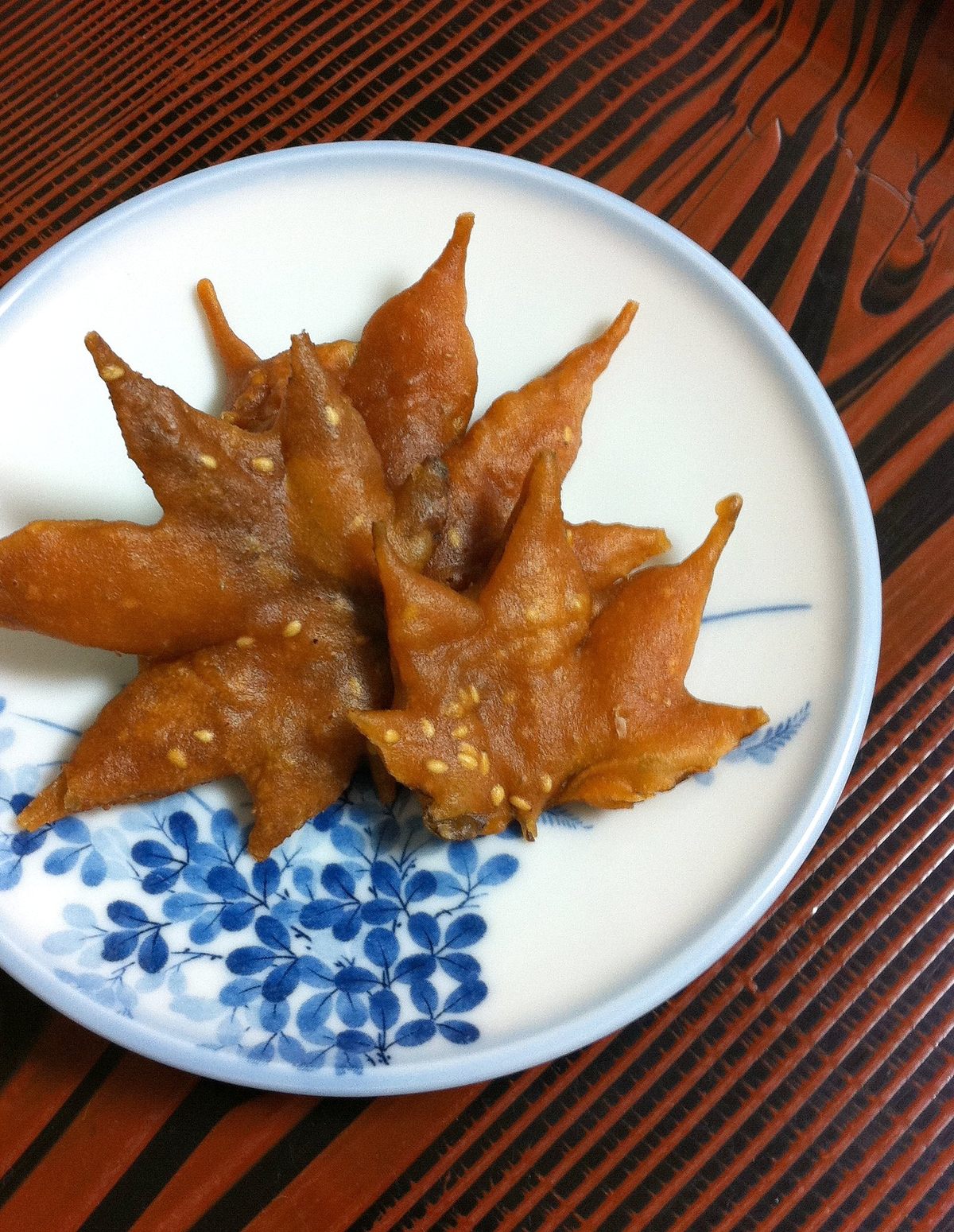
What does a year-old, salted maple leaf taste like? Nothing much, apparently. Instead, merchants use the leaf as an attractive frame for the sweet coating, which is drier and crispier than the tempura surrounding, say, a shrimp. Some cooks also add sesame seeds for an extra pop of flavor.

Vendors first commercialized tempura-fried leaves after a train station opened near Minoh’s most notable waterfall in 1910. Outdoorsy tourists visiting the Osaka prefecture flocked to the site, taking the tasty, iconically-shaped souvenir with them when they left. (The salt preserves the young maple leaves, making them a year-round snack.) The novel delicacy became a symbol of the region, and it remains difficult to find in other parts of the country.

You’ll hear locals refer to maples as momiji, which means “becomes crimson-leaved.” The word also translates literally to “baby’s hands,” but don’t be alarmed: No human babies were harmed in the making of this unusual snack. Baby maple leaves, on the other hand, were not so lucky.


“my first semester i had only nine students.

hoping they might view me as professional and well prepared,

i arrived bearing name tags fashioned in the shape of maple leaves.”

-david sedaris


credits: bert kimura, gastro obscura

yamabushi.

Standard

A Beautiful Documentary About the Yamabushi Monks in Japan Who Immerse Themselves In Nature

In the short documentary “Mountain Monks”, filmmaker Fritz Schumann has captured the quiet beauty of the ancient religion and the monks who climb mountains and traverse waterfalls in northern Japan, often without shoes on their feet in a meaningful ritual that symbolizes death and rebirth.

This once-forbidden ancient faith they follow is a combination of Shinto, Buddhism, Animism, Taoism, and mountain religions, and its mission is to help others strip away the excesses of modern life and regain their strength in nature. Schumann reveals the rarely seen side of the Yamabushi through personal interviews and gorgeous footage. While their tradition is at risk of disappearing, it offers a way for those seeking a different path in Japan‘s society.

“my imagination is a monastery and I am its monk.”

-john keats


credits: lori dorn, laughing squid, fritz schumann, youtube


holy flume ride.

Standard

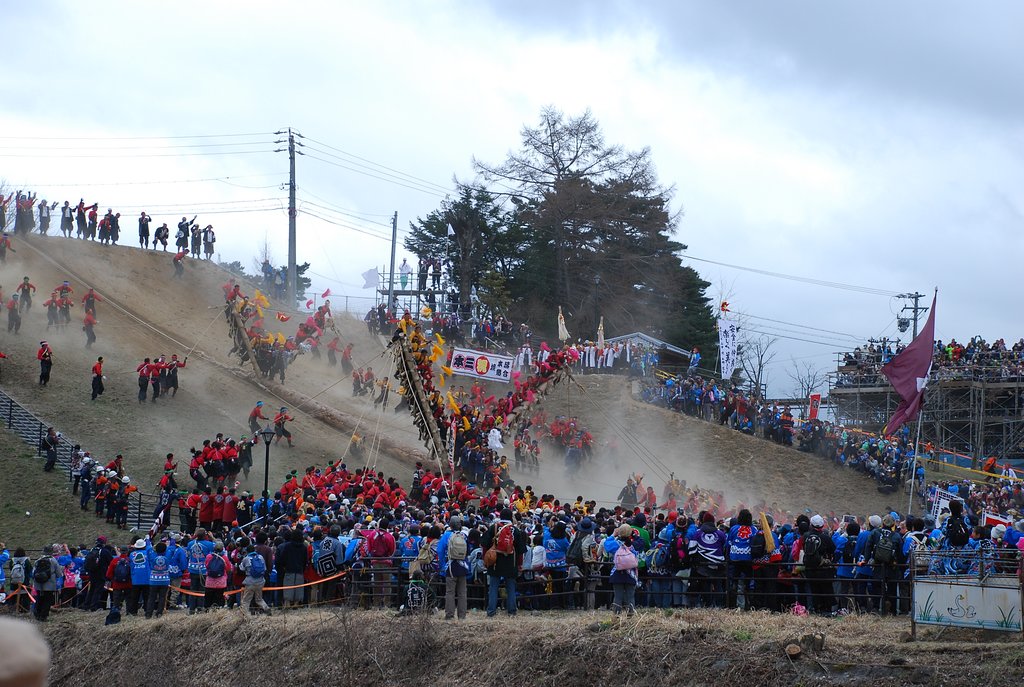
The Onbashira festival is held only once every six years, (next one will be in April 2022), to metaphorically revitalize the Suwa shrines. The historic and lengthy event has been performed for over 1,200 years in Japan, and consists of two month-long components. The Yamadashi takes place in April, during which four very large tree trunks are felled by hand axes in the cemetery of a shinto shrine. They are wrapped and adorned in red and white, and then dragged by teams of men towards the Shinto shrines, who test their courage during the trial by performing “kiotoshi”: dangerously riding the logs downhill on rough inclines. The Satokibi, in May, sees these logs used as symbolic support structures. They are raised in the shrines by hand, while one man straddles the top, singing. When it is fully raised, and the man on top balanced many feet in the air, success is declared. A remarkable spectacle.

“to celebrate a festival means; to live out,

for some special occasion and in an uncommon manner,

the universal assent to the world as a whole.”

-joseph pieper


source credits: mental floss magazine

eel good.

Standard
"Don't let me be lon-eel-y tonight."

An Aquarium in Japan Wants You to FaceTime With Its Shy Eels

“Many people have turned to video chat as a way to continue socializing while in quarantine, and the Sumida Aquarium in Tokyo, Japan, is asking you to help its eels do the same.

After the aquarium closed its doors to the public on March 1, its population of 300-odd spotted garden eels became increasingly bashful, burrowing into the sand whenever staff members were around. Although that isn’t abnormal behavior for wild garden eels, the ones in captivity at Sumida had adapted to the consistent, non-threatening presence of human visitors, and no longer tried to hide whenever someone approached.

This return to reticence is making it hard for employees to monitor their health, so they’ve devised a plan to reacclimate the tiny creatures to the existence of people: a three-day “face-showing festival” from Sunday, May 3, to Tuesday, May 5. During that time, the aquarium is requesting that people FaceTime the eels, waving or calmly calling out to them for up to 5 minutes before disconnecting.

Since they’ll be using FaceTime, you’ll need an iPhone, iPad, or other iOS device to call in. Staff members will be accepting calls on five tablets around the tanks, so there are five different email addresses you can try if you’d like to chat with the eels:

helpchin001@gmail.com
helpchin002@gmail.com
helpchin003@gmail.com
helpchin004@gmail.com
helpchin005@gmail.com

The lines will be open each day from 10:30 a.m. to 2 p.m JST, and because Tokyo is 13 hours ahead of EST, participants in the U.S. will technically need to call in the night before; i.e. from Saturday, May 2, to Monday, May 4, between the hours of 9:30 p.m. and 1 a.m EST.In other words, it’s the perfect time to read a very short bedtime story to a very small eel.


“i don’t mind eels. except as meals.”

-ogden nash


credits: ellen gutosky, mental floss

because i am a dog.

Standard

An adorable Shiba Inu named Ken-kun in Hokkaido, Japan remarkably runs his own sweet potato stand. 

The watchful dog politely tends to whatever the customer needs, however, he is not able to accept payment. That situation is solved with a slot in which to put the money.

Customers need to have the exact amount (or be willing to leave the rest), as a sign on the front of the stand reads:

“Because I am a dog, I can’t give you change.”

“the dog lives for the day, the hour, even the moment.”

-robert falcon scott


sources: Lori Dorn, laughing squid

early.

Standard
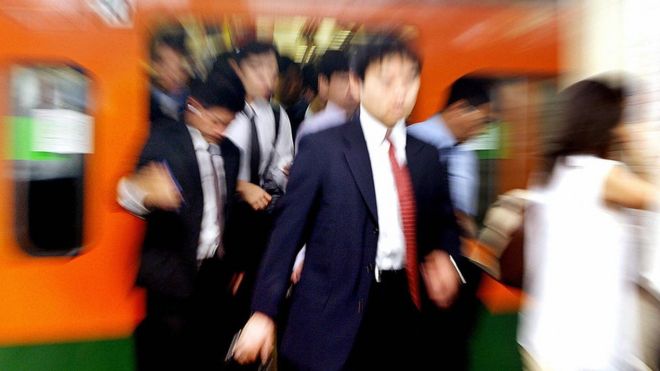
Japanese commuters

Japanese train departs

25 seconds early – again!

A Japanese rail company has apologised after a train left a station 25 seconds early, the second such case in months.The operator said the “great inconvenience we placed upon our customers was truly inexcusable”.

If the details are anything to go by, customers are faced with slipping standards: a train last November left 20 seconds early while this time it was a full 25 seconds premature.


Japanese trains have a reputation for extreme punctuality, and it turned out that there were indeed still people hoping to get onboard. Left on the platform, they complained to the rail operator and an official apology was issued shortly afterwards.

In the case last November, management on the Tsukuba Express line between Tokyo and the city of Tsukuba said they “sincerely apologise for the inconvenience” caused. Back then the mishap was also caused by the conductor mixing up departure times – though no passenger was left behind.

“it’s too early to go, but it’s never too late to leave.”

-anthony t. hincks
credits: bbc news/asia, japan today
Presentational grey line

how to wash ‘n roll away your winter blues.

Standard

jet-set-japenese-spa-rollercoaster_0
Japan’s Hot Tub Rollercoaster Takes Water Parks to a New Level

A city in Japan is teasing plans of the world’s first spa-themed amusement park.

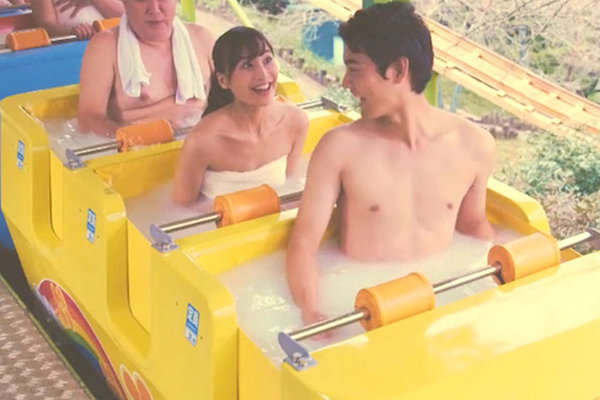
In a concept video, Beppu City on Japan’s Kyushu island showed off an idea for a new “spamusement park.” The video featured visitors at typical amusement park attractions—a carousel, ferris wheel and roller coaster—but instead of seats for each ride, there were hot tubs.

In the video, visitors entered the rides wearing only a towel—which begs the question: Are visitors to the potential site supposed to walk around in wet towels all day? Also: How does the water stay inside the ride and off electrical equipment? And how are we keeping all these rides clean?

Despite many logistical questions, the spamusement park could become reality.

The mayor of Beppu declared that once the video reached 1 million views (a somewhat low bar in 2016 for a video of people in towels riding roller coasters), the city would begin working on the onsen (hot spring) amusement park. The video has been viewed more than 2 million times since it was uploaded last week and the mayor announced in a statement that work has begun. However, it’s entirely possible that the rides shown in the video will not actually happen.

“We are still discussing safety issues, for example, whether we could actually run hot water inside a roller coaster,” a spokesperson for Beppu’s tourist department told The Japan Times. “But the rides will be something fun.”

Beppu is already an onsen tourist destination—there are more than 2,000 hot springs for visitors to choose from. However the city recently launched an initiative to become the “spa city of the world.” Last year, Beppu welcomed 437,764 foreign tourists.

No completion date for the project has yet been announced.

credits: travel and leisure magazine, cailey rizzo, bravo

whole lotta’ love.

Standard

sumo-makes-baby-cry

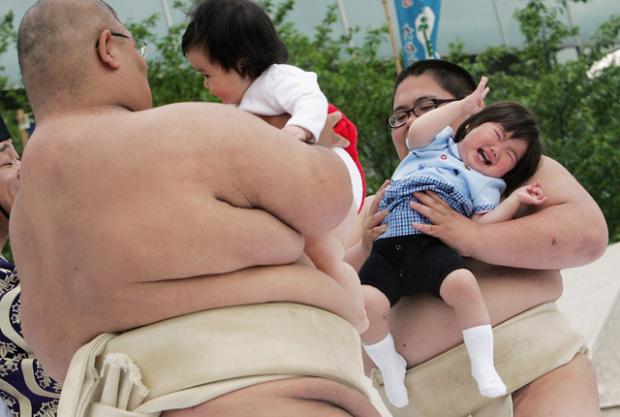
in japan,

letting a sumo wrestler

make your baby cry 

is considered good luck.

big love + big tears = big luck.

sumo math.