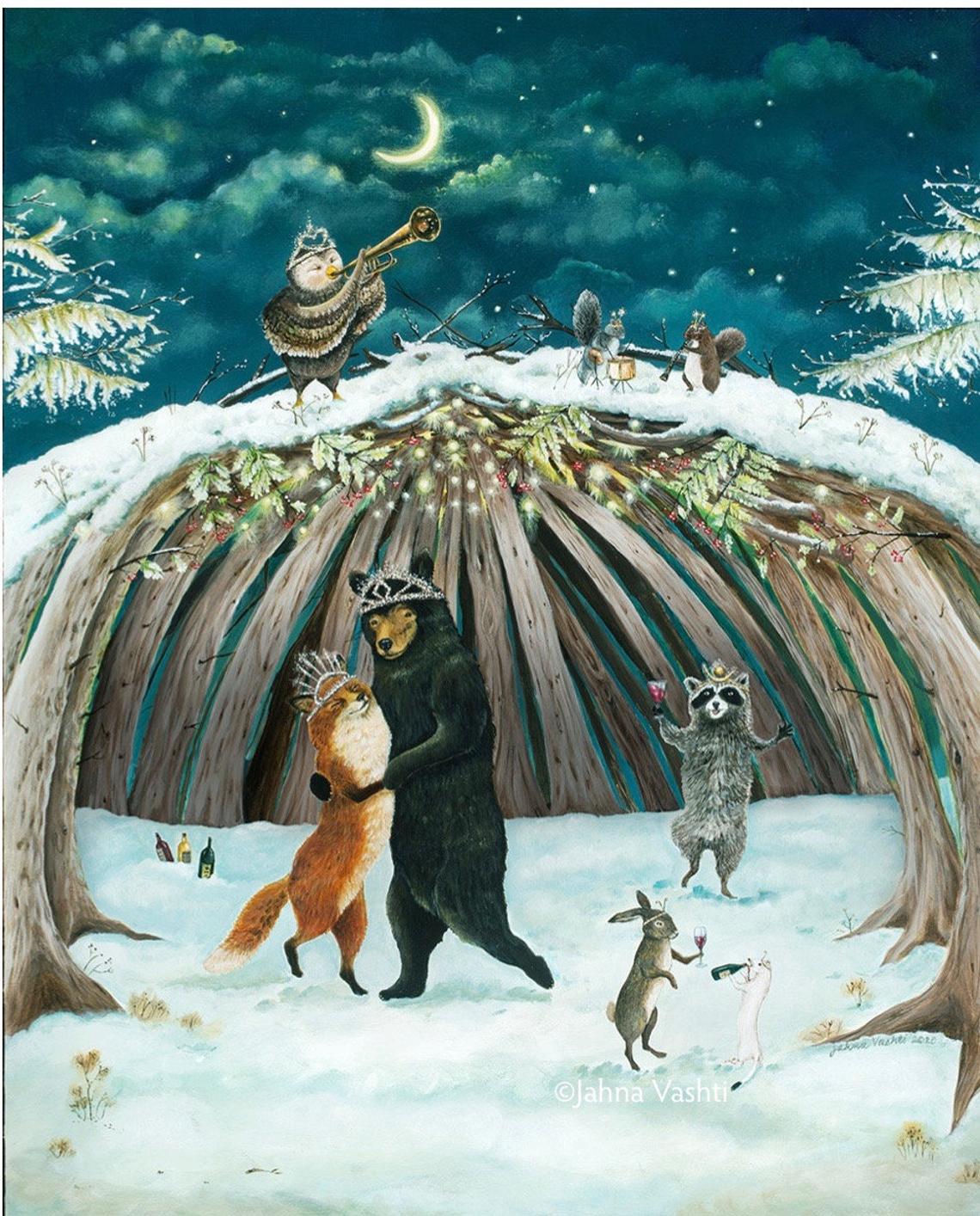
“they who sing through the summer must dance in the winter.”
-italian proverb
here’s to the winter solstice
—
image credit: Jana Vashti
“they who sing through the summer must dance in the winter.”
-italian proverb
here’s to the winter solstice
—
image credit: Jana Vashti

today while out shopping for christmas
i unexpectedly ran into my old friend,
valentine’s day.
—
“i had that curious feeling that i was living on several planes simultaneously;
the overlapping of these planes was confusing.”
-anna kavan

‘Fauci Effect’ Drives Record Number Of Medical School Applications
Npr reports that even as college and university enrollment overall has dropped this fall, there has been a record number of applicants to medical school. The number is up 18% this year over last year, according to the Association of American Medical Colleges, driven by the example of medical workers and public health figures such as Dr. Anthony Fauci, director of the National Institute of Allergy and Infectious Diseases.
“It’s unprecedented,” said Geoffrey Young, the AAMC’s senior director, who compares it to another response to a traumatic moment in American history: the terrorist attacks of Sept. 11, 2001. “After [Sept. 11], there was a huge increase in the number of men and women that were entering into the military,” Young said. “So far in my lifetime, at least, and for as long as I’ve been in medical education, that’s the only comparison that I could make.”
Stanford University School of Medicine reports a 50% jump in the number of applications, or 11,000 applications for 90 seats. Boston University School of Medicine says applications are up 27%, to 12,024 for about 110 seats.
“That, I think, may have a lot to do with the fact that people look at Anthony Fauci, look at the doctors in their community and say, ‘You know, that is amazing. This is a way for me to make a difference,'” said Kristen Goodell, associate dean of admissions at the school of medicine at BU. Medical school admissions officers have started calling this the Fauci Effect.
It’s “very flattering,” Fauci said. “Probably a more realistic assessment is that, rather than the Fauci Effect, it’s the effect of a physician who is trying to and hopefully succeeding in having an important impact on an individual’s health, as well as on global health. So if it works to get more young individuals into medical school, go ahead and use my name. Be my guest.”
Among other reasons admissions officials cite for the increase in prospective medical students is that the pandemic has given people more free time to complete the arduous application process. “A lot of the plans they made postgrad honestly fell through,” said Sahil Mehta, a practicing radiologist and founder of MedSchoolCoach, which prepares students for the Medical College Admission Test, or MCAT.
The deluge of applications comes as the nation faces a projected shortage of physicians. The United States will be short 54,000-139,000 physicians by 2023. More than two out of every five doctors now practicing will reach retirement age over the next 10 years.
This year’s many medical school applicants appear undeterred by debt or other challenges traditionally associated with medical school. “Everyone feels some sort of responsibility,” Kelley said. “There’s definitely a call to arms thinking that, if there’s another pandemic, it’ll be up to us.”
Fauci said he sees the flood of medical school applicants as a sign that people are thinking about social justice — “that you have responsibility not only to yourself, but as an integral part of society.” He said he hopes the trend will counterbalance and “maybe would even overcome the other side of the coin, which is the really somewhat stunning and disturbing fact that people have no regard at all for society, only just focusing very selfishly on themselves.”
—
“a role model in the flesh provides more than inspiration;
his or her very existence is confirmation of possibilities one may have every reason to doubt, saying,
‘yes, someone like me can do this.”
-sonia sotomayor
—
credits: photo/nbcdfw.com,npr/the Hechinger Report in collaboration with GBH Boston, Kirk Carapezza, Jon Marcus
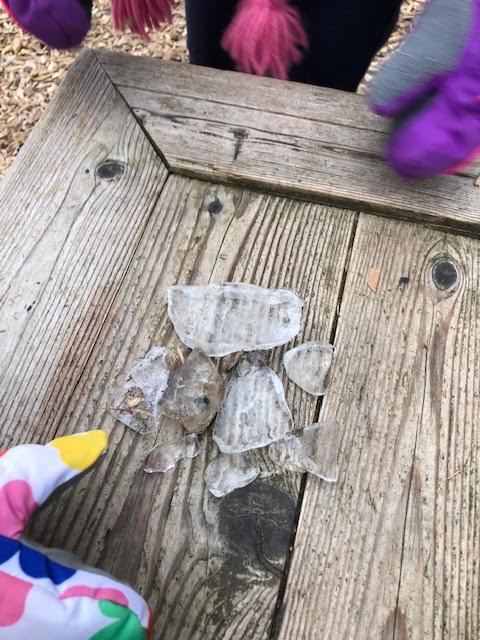
a collection of treasured magic crystals found a frosty playground
—
“every particular in nature, a leaf, a drop, a crystal,
a moment of time is related to the whole,
and partakes of the perfection of the whole.”
-ralph waldo emerson

why, you might ask, is this large ceramic cat sitting in the water?
while visiting my friend’s house
i asked.
years ago
someone in the family took a ceramics class
made several large animals
gifted them to his children
who gifted them to each other
left them at each others’ houses
used them in a variety of ways
including an outdoor towel holder
somehow over time
this one went to live in the water
looking back at the family on the shore
probably thinking the family was unusual
wondering their story
there is always a story.
—
“we are not interested in the unusual, but in the usual seen unusually.”
-beaumont newhall

the pinto wagon
pea-soupy green
wood-ish sides
bare bones edition
shared with sibs
junk food
single shoes
lost school papers
hand crank windows
no air
sometimes heat
as many friends as we could jam in
rockin’ our fm-converter
a drag-racing ticket
but it had wheels
took us places
this was our flivver.
had a number of flivvers
over the years
but none
carried the memories
like this one.
—
do you remember your flivver?
—
FLIVVER:
Part of Speech- Noun
Origin – Unknown, early 20th century
Definition – A cheap car or aircraft, especially one in bad condition.
—
“a car for every purse and purpose.”
-alfred p. sloan
—
credits: google image, wordgenius.com

“what difference does it make if you live in a picturesque little outhouse
surrounded by 300 feeble minded goats and your faithful dog?
the question is: can you write?”
– Ernest Hemingway
—
early winter hiking in MacCready Nature Reserve, Irish Hills, MI, USA 2020
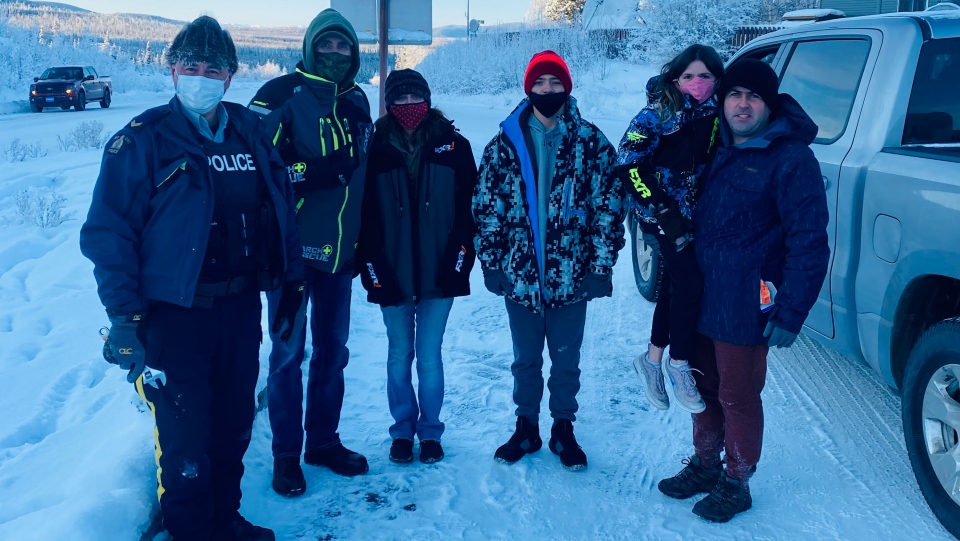
RCMP Cpl. Robert Drapeau stands next to Ranger Gary Bath,
Lynn Marchessault, Payton Marchessault, Rebecca Marchessault
and Tim Marchessault near the U.S.-Canadian border crossing. (CNN)
CNN reports a story that’s sure to warm your heart:
There’s nice, and then there’s Canadian-nice, which sometimes involves driving a total stranger, her two kids, a pair of elderly dogs and a cat named “Midnight” more than a thousand miles through a snowstorm to another country.
It all started because Lynn Marchessault and her family needed to get from Georgia to Alaska, where her husband is stationed at the U.S. Army base – Fort Wainwright in Fairbanks.
So Marchessault packed up all their belongings, bought a truck that could handle Alaska winters, rented a U-Haul, and made plans for a cross-country family adventure during the balmy days of early fall. But, 2020 happened.
Marchessault waited months for the travel documents that would allow her to drive from Georgia, through Canada and up to Alaska. Due to the coronavirus, Canada had instituted strict guidelines for Americans traveling through the country, en route to Alaska. By the time she got things in order, her September road trip was pushed to November. Besides the restrictions placed on her by the Canadian government, she knew she’d have to keep up a good driving pace to avoid the worst of winter weather.
The first 3,000 miles of the trip went well. They entered Canada through Saskatchewan. Border authorities checked Marchessault’s paperwork and warned her to keep to the main roads and stop only when necessary for food or gas.The family would have to order any food to-go, even at motels they stayed in along the way. She was allotted five days to drive through Canada and get to the U.S. border in Alaska.
The farther north they traveled, the worse the weather got. Marchessault, who was raised in the South, encountered her first winter white-out conditions. Then she ran out of windshield wiping fluid, slush covered her windows, she couldn’t see to drive, and her tires seemed to be losing traction.
Gary Bath, a Canadian ranger from British Columbia, whose job includes training members of the Canadian military to survive the Arctic, was at home when he saw his friend’s Facebook post about the stranded American family. “A lot of people were wanting to donate money or saying they wish they could help but no one was able to get off work or be close enough to go do it,” Bath told CTV News Channel on Friday. “So, I talked to my wife and we decided that I would drive all the way from Pink Mountain to the border.” Bath says he stepped in to offer the family a helping hand because “it was the right thing to do.”
“It took us two and half days, but for me it wasn’t a big deal,” he said. “I love driving so what a great way to see parts of the country that I haven’t seen in a few minutes.” Marchessault says that she and her family are very grateful for Bath’s help and says that they intended to be lifelong friends. “We’re hoping that when we do leave Alaska some of the COVID restrictions will be lifted by then because we would stop to see Gary and his wife on the way through and just thank them again for what they did to help us,” Marchessault added.
credits: CNN, Martha Shade – CDV News, Den Lourenco
—
“unexpected kindness is the most powerful, least costly, and most underrated agent of human change.”
-bob kerry

“simplicity is the most difficult thing to secure in this world; it is the last limit of experience and the last effort of genius.”
-george sand
 I didn't have my glasses on....