Tag Archives: books

through my fingers.

Standard

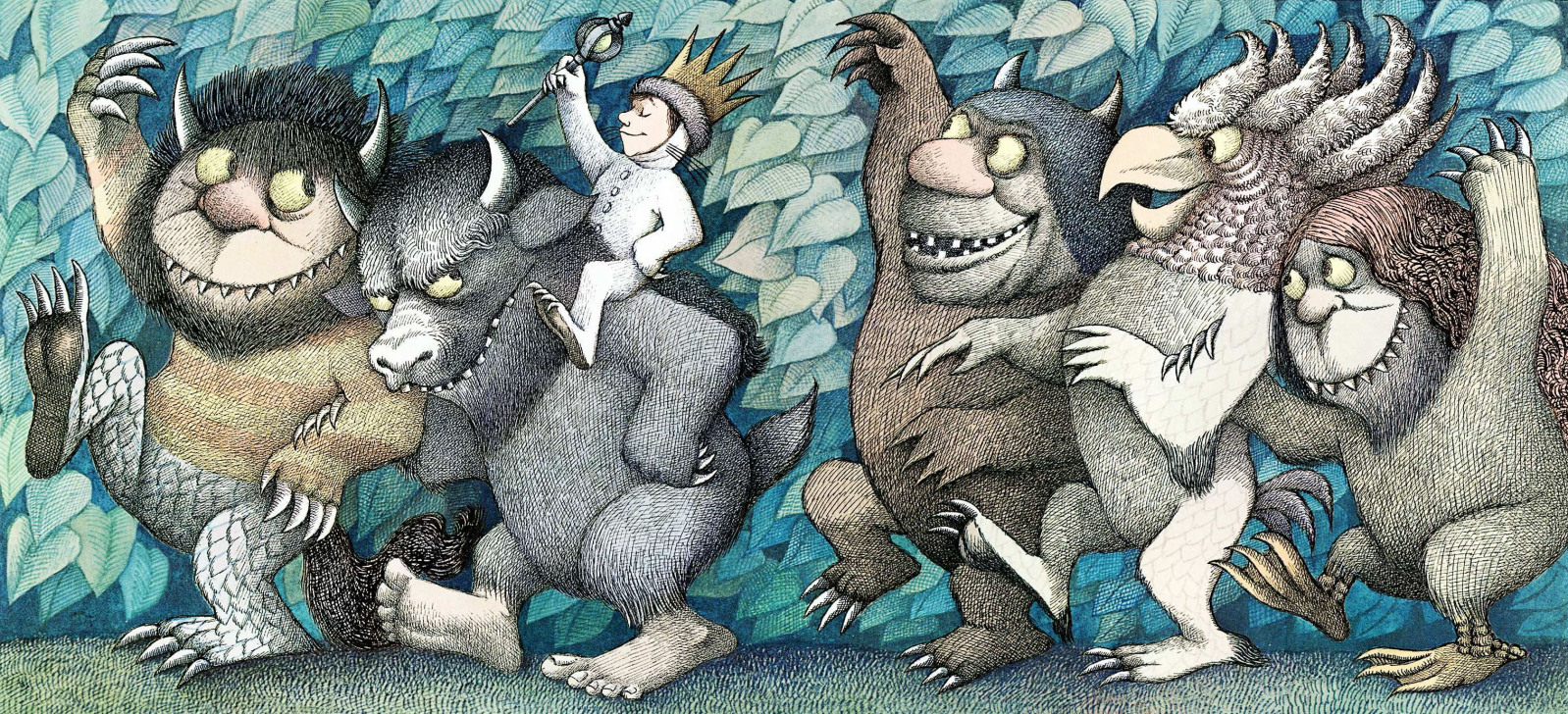
maurice sendak’s

“where the wild things are”

was initially pitched as

 “where the wild horses are”

his editor loved the pitch but

sendak could not draw horses

so the wild things he drew

ended up being

caricatures of his relatives.

“writing, to me, is simply thinking through my fingers.”
-isaac asimov

credits: maurice sendak, “where the wild things are” – 1963, harper and collins


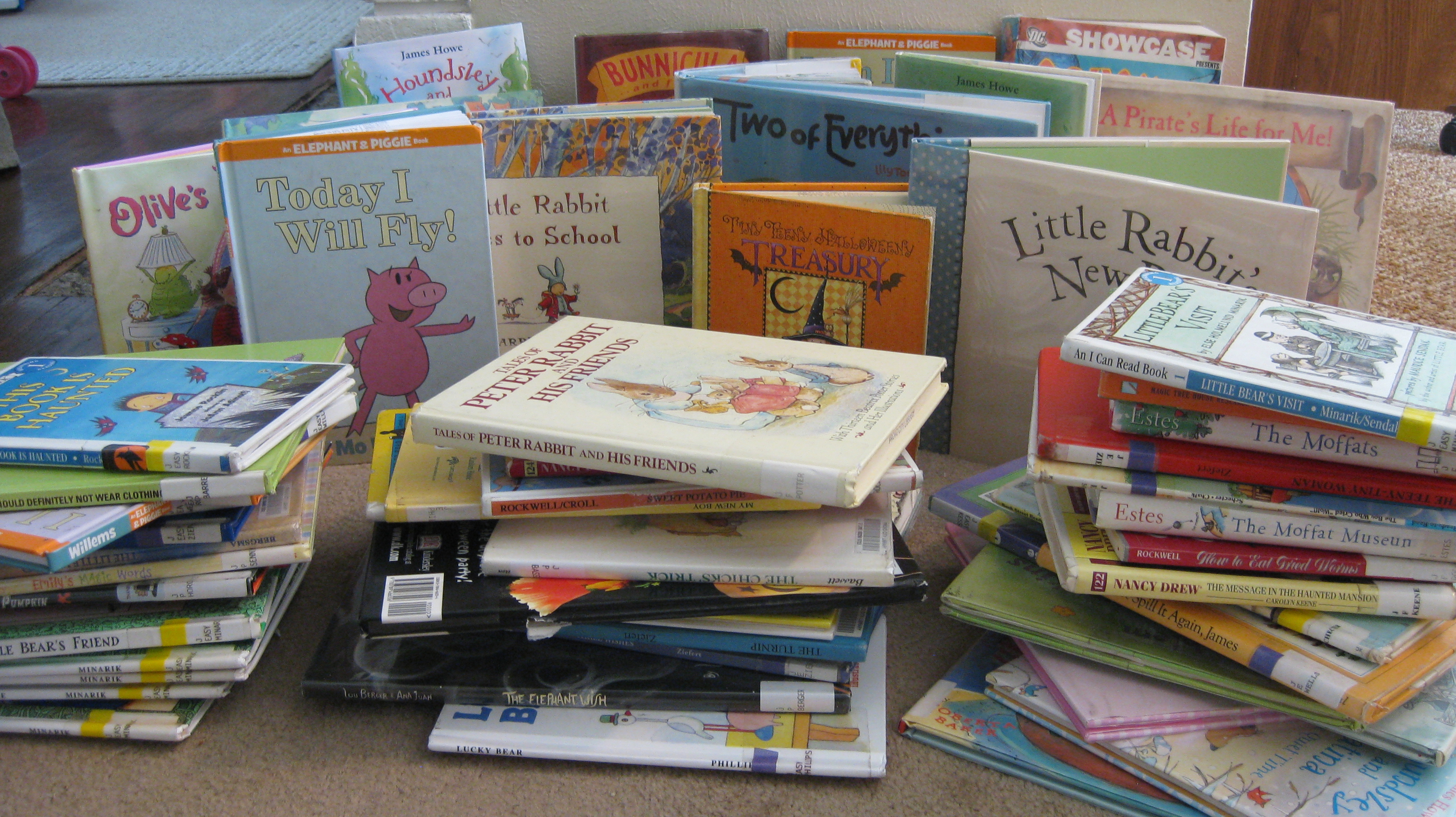
bookstock.

Standard

spent a late afternoon 

browsing through this collection of

used books of all sorts

went home with unexpected treasures

and things to look forward to

kind of like woodstock

but without

the mud, tie dye, or music

just lots of good words.

The Bookstock Fund was created from the revenue of each year’s Bookstock sale and donations. Focused on enhancing literacy throughout Detroit and the metropolitan area, each year the Fund looks for community partners doing inspiring and life-changing work on the individual, family, and organizational level.

“it is what you read when you don’t have to that determines what you will be when you can’t help it.”
― oscar wilde

conversation.

Standard

img_7923

“reading is a conversation. all books talk. but a good book listens as well.”

– mark haddon

tumbleweeds.

Standard

shakespeare-book-shop

The Historic Parisian Bookshop Where Aspiring Writers Can Spend the Night for Free

Shakespeare and Company opened its doors back in 1951, and ever since then, it’s hosted aspiring writers for free. And it’s not always just for a night, sometimes, guests stay for months, and they don’t have to pay a penny. The Parisian literary hub may be the only bookshop in the world of its kind.

More than 30,000 guests have stayed at the bookshop since American expat George Whitman opened it over six decades ago, and many of them have even gone on to become international best sellers.

Molly Dektar, who lived at Shakespeare and Company in January and June 2013, wrote about the experience: “I aimed to read a book a day but it wasn’t entirely possible. Still, the goal is spiritually important and should be taken seriously. One minute I was a visitor just like any other,” she added, “and the next minute I was welcomed in to this huge, historic community of writers and expatriates.”

molly-bookshop

Now, 65 years after the bookshop opened, the owner, Whitman’s daughter Sylvia, has released a memoir documenting its long history. Whitman was inspired by American expat Sylvia Beach, who owned a bookshop by the same name at another location, which existed between 1919 and 1941.

Beach’s bookshop had been a popular and frequent gathering place for legendary writers like Ernest Hemingway, F Scott Fitzgerald and T S Eliot. She had also been the first to publish James Joyce’s Ulysses in 1922.

Whitman had called his version of the bookshop a “spiritual successor” and it quick became the center of expat life in Paris for the book writing crowd. As he’d been the recipient of the generosity of strangers while traveling the world, he decided that he wanted to do the same for other travelers. Since the start, his store has hosted overnight guests he refers to as “Tumbleweeds.” Instead of paying for their stay, the “Tumbleweeds” are just required to help out in the shop for a few hours, write a one-page autobiography for the archives and “read a book a day.” Quite the deal!

While Whitman passed away five years ago, his daughter Sylvia is continuing to carry on the tradition and runs the bookshop with her partner, David Delannet.

Today, as many as six Tumbleweeds can sleep in the bookshop each night, but it now also hosts an adjoining cafe, a literary festival and a publishing arm of Shakespeare and Company, which just released a book on the history of the company.

Of the book, Delannet said, “This history offers readers a unique perspective on Paris, as well as an insight into the life of the literary traveler in the second half of the 20th century and a feel for a bookshop whose motto is ‘Be not inhospitable to strangers lest they be angels in disguise.'”

credits: earthables, molly dektar, buzzfeed
 

“the limits of my language means the limits of my world.” -ludwig wittgenstein

Standard

library-and-garreth-006

grandie b

read her book to us

out loud

proud and confident

while

younger grandie j

watched and listened

and

when she was done

he said

 he was happy she could read the words

but he seemed 

a

little bit

envious 

and

sad

because he wasn’t sure how to read yet

until

suddenly

he had an idea

and

i saw

the lightbulb go on

just before

he announced 

that he would 

‘read his book to us in spanish’.

and

he proceeded to 

show us the cover

as he

read us the title

and then

patiently

read

each and every page 

in his version of spanish

taking his time

nodding and facing the book towards us 

turning the pages

at appropriate times

pointing out the pictures

all while 

happily smiling

 confidently

 chattering away

in a his brand new version of spanish

that was so very, very advanced 

that we

the listeners

didn’t even 

know the translations

but we understood

that he was proud

and

he was reading

and

when he was finished

he snapped his book shut

and said

in english

“that’s all.”

brilliant.

muy bien, and gagglesmithjong kipisanlomita paskajonti to you!!


“if you want to talk about something new,

you have to make up a new kind of language.”

-haruki murakami


crossover.

Standard

img_6717

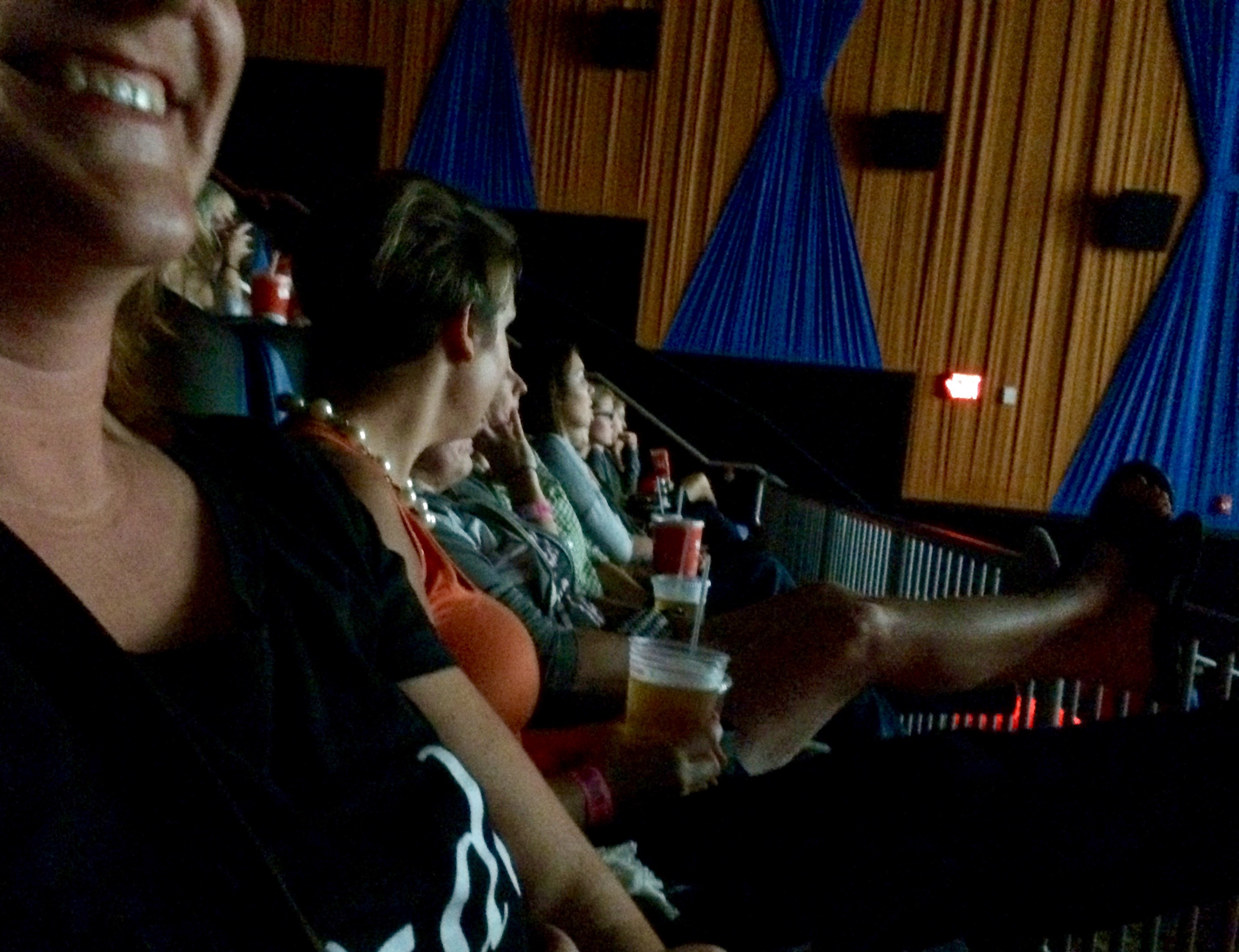
book club goes to the movies.

“eat ice cream. read books. be happy.”
― carew papritz

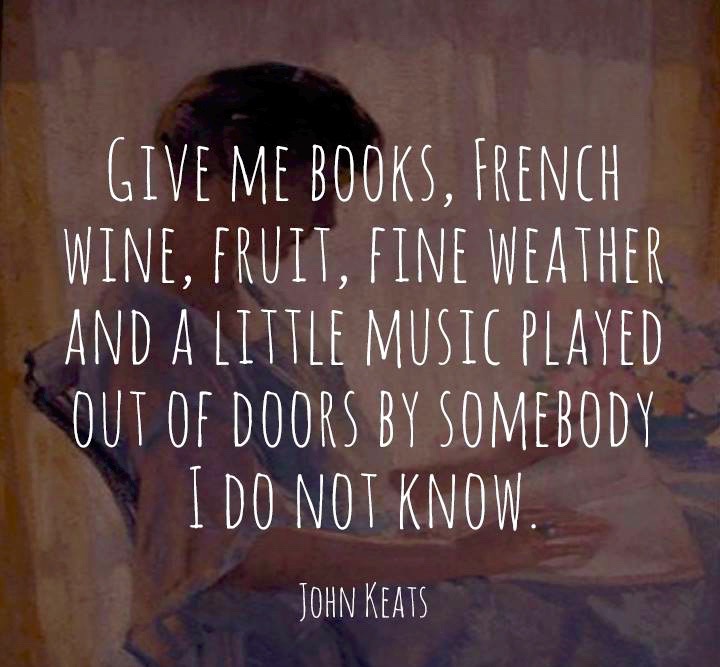
out of doors.

Image

14370399_1763146280591728_2766605206234863782_n-1

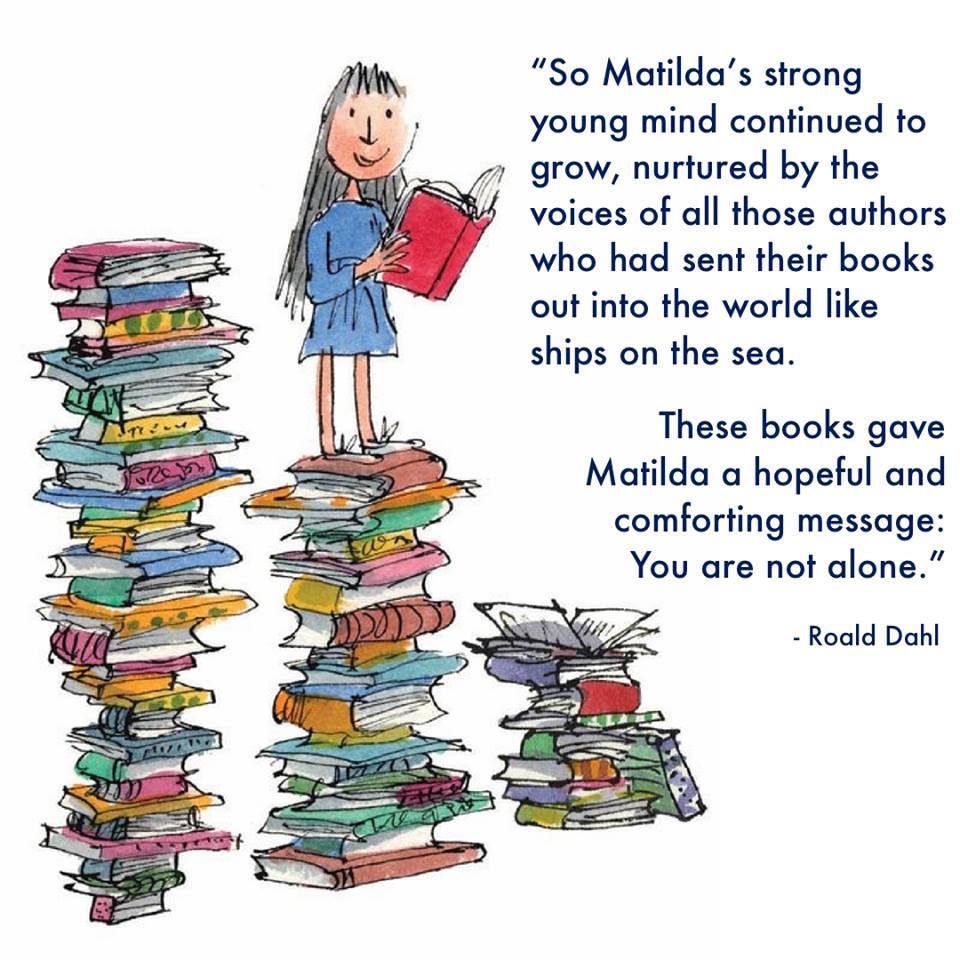
you are not alone.

Image

14358866_1287046354640329_2361762436591746356_n

where brains met brawn.

Standard

katy_kelly_-_library-olympics-book-cart.jpg__1072x0_q85_upscale

librarians have an olympics, too
brains met brawn in a bookish competition for the ages

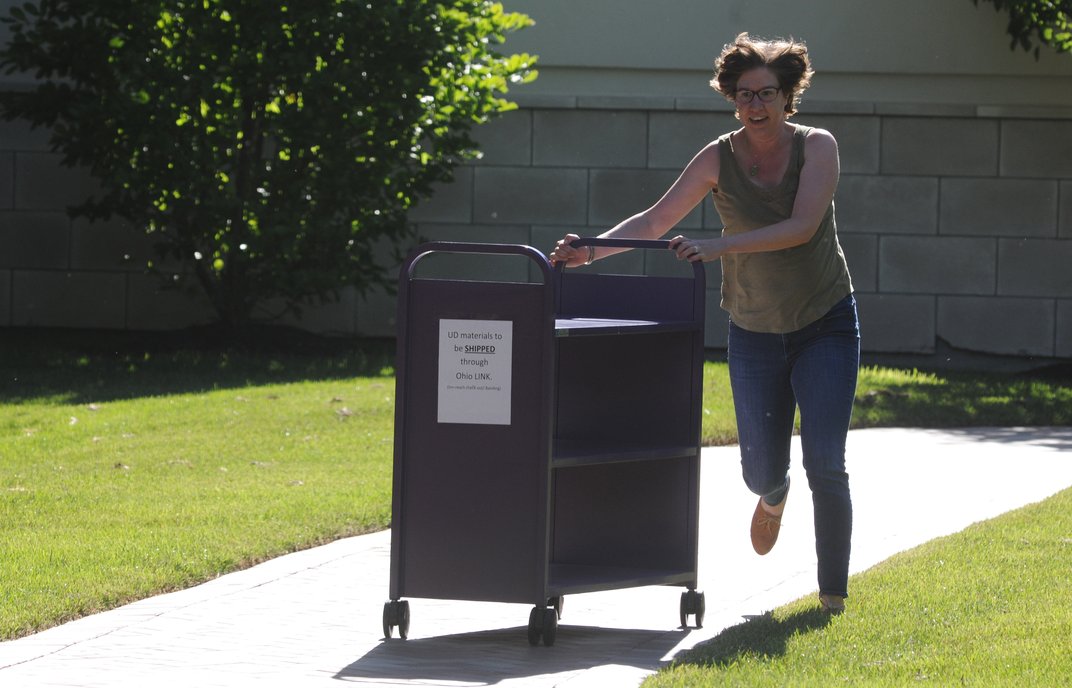
think the athletic action is all in rio this year? you’d be wrong—dead wrong. though you might not think so, librarians perform feats of near-olympian prowess every day as they lug books back and forth, tame tortuous piles of information and sustain long hours and complicated reference requests. and as librarian katy kelly writes, they proved it in the university of dayton’s first-ever library olympics last week.

the “olympic” event showcased the prowess of librarians by turning the mental into the physical. it’s an olympics year tradition in many libraries that aims to get people more engaged with their local library. some libraries invite the public into the library to compete in fun, bookish games, but in this case librarians themselves faced off in what may be the ultimate game of reference skill and cataloging competence.

katy_kelly_-_library-olympics-jenga.jpg__1072x0_q85_upscale

librarians competed in a vigorous game of “journal jenga” (stacking bound periodicals as high as possible and jumping out of the way when they collapsed. then they faced off in a circuit of different events, including balancing bound journals on their heads, running a book cart through a twisty course, and tossing journals toward a target. (all of those thrown journals were slated for recycling in a process librarians call “weeding.”)

katy_kelly_-_library-olympics-toss.jpg__1072x0_q85_upscale

brains had a place next to all that brawn, too, as librarians participated in a tricky speed sorting event in which they had to put books in order by their library of congress call number. to top it all off, they ran around campus finding objects that corresponded to different lo  call numbers. the winning team made off with the medal by a single point.
all of these antics sound silly, but librarian m. schlangen, who participated in the event, found deeper meaning in the exercise. “as I raced to put a cart full of books in order by the library of congress call numbers on their spine labels,” she wrote, “the very genius of this system occurred to me: without orderly cataloging of the world’s knowledge, even in this age of search engines and high-speed networks, information could easily be rendered obscure in an ocean of data, accessed by mere chance rather than intention.”


there’s another purpose for the games: as the university of dayton’s m. scheffler and a. black note, these olympics-like competitions don’t just test librarians’ knowledge, but highlight areas in which they might need more training. and the best librarians know that, like the most competitive athletes in the world, it never hurts to brush up on the basics.

credits: smithsonianmag.com, erin blakemore, katy kelly


eat your words.

Standard

13392107_10154227288812365_1721544627241471710_o (1)

credits: getty images, mentalfloss.com