librarians have an olympics, too
brains met brawn in a bookish competition for the ages
think the athletic action is all in rio this year? you’d be wrong—dead wrong. though you might not think so, librarians perform feats of near-olympian prowess every day as they lug books back and forth, tame tortuous piles of information and sustain long hours and complicated reference requests. and as librarian katy kelly writes, they proved it in the university of dayton’s first-ever library olympics last week.
the “olympic” event showcased the prowess of librarians by turning the mental into the physical. it’s an olympics year tradition in many libraries that aims to get people more engaged with their local library. some libraries invite the public into the library to compete in fun, bookish games, but in this case librarians themselves faced off in what may be the ultimate game of reference skill and cataloging competence.

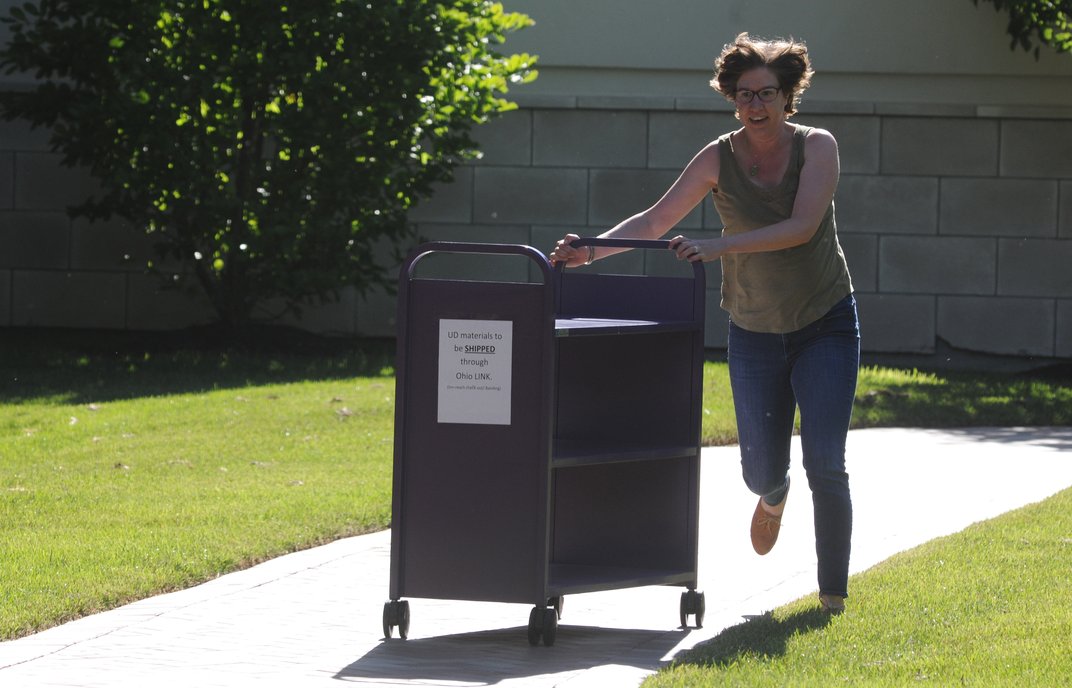
librarians competed in a vigorous game of “journal jenga” (stacking bound periodicals as high as possible and jumping out of the way when they collapsed. then they faced off in a circuit of different events, including balancing bound journals on their heads, running a book cart through a twisty course, and tossing journals toward a target. (all of those thrown journals were slated for recycling in a process librarians call “weeding.”)

brains had a place next to all that brawn, too, as librarians participated in a tricky speed sorting event in which they had to put books in order by their library of congress call number. to top it all off, they ran around campus finding objects that corresponded to different lo call numbers. the winning team made off with the medal by a single point.
all of these antics sound silly, but librarian m. schlangen, who participated in the event, found deeper meaning in the exercise. “as I raced to put a cart full of books in order by the library of congress call numbers on their spine labels,” she wrote, “the very genius of this system occurred to me: without orderly cataloging of the world’s knowledge, even in this age of search engines and high-speed networks, information could easily be rendered obscure in an ocean of data, accessed by mere chance rather than intention.”
there’s another purpose for the games: as the university of dayton’s m. scheffler and a. black note, these olympics-like competitions don’t just test librarians’ knowledge, but highlight areas in which they might need more training. and the best librarians know that, like the most competitive athletes in the world, it never hurts to brush up on the basics.
—
credits: smithsonianmag.com, erin blakemore, katy kelly
—
credits: getty images, mentalfloss.com

“books give a soul to the universe, wings to the mind,
flight to the imagination, and life to everything.”
-plato
—
i stopped over to surprise
little grandie b
on her birthday
brought my gift
gave her a flower
shared a hug
then
she asked
if she could read to me
i had ‘read’ with her
just months before
when she pretended to read
a chapter book
imitating readers
she had seen and heard
excited to be like one of them
but today
she opened a book
read me every word
her little brother
said
“i don’t know how it happened.
but she can just read now.”
i told him
” it is magic.”
i was in awe of her
and
this surprise gift of magic
that she gave to me on her sixth birthday.
—
“once you learn to read, you will be forever free.”
– frederick douglass
and
so it begins
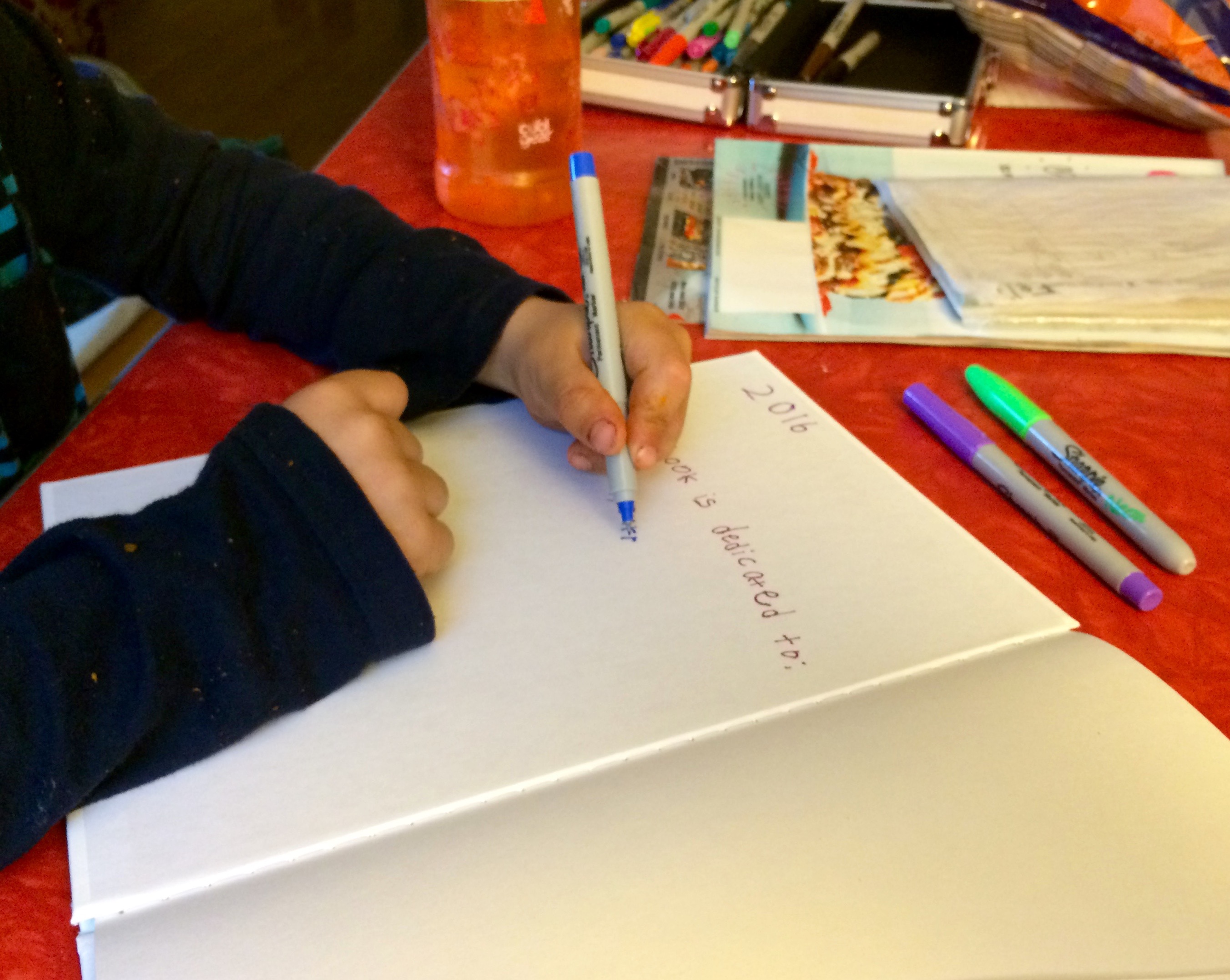
writing a book with two of the grandies
we
have a story
and
have no idea
where it will go
the possibilities are endless
and
that is what makes it so exciting.
—
“writing is an exploration.
you start from nothing and learn as you go.”
-e. l. doctorow
—
image credit: grammarly
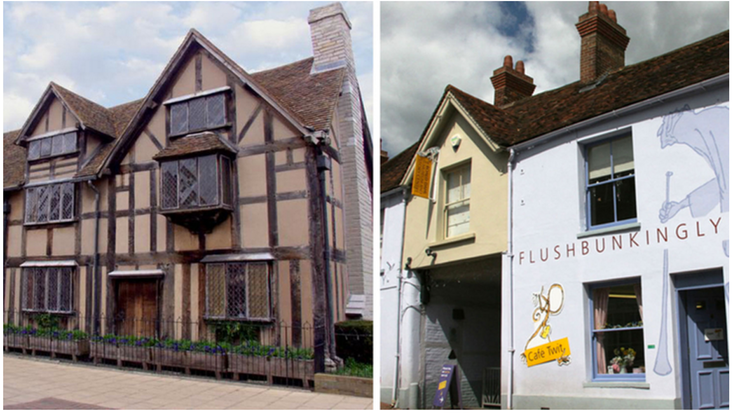
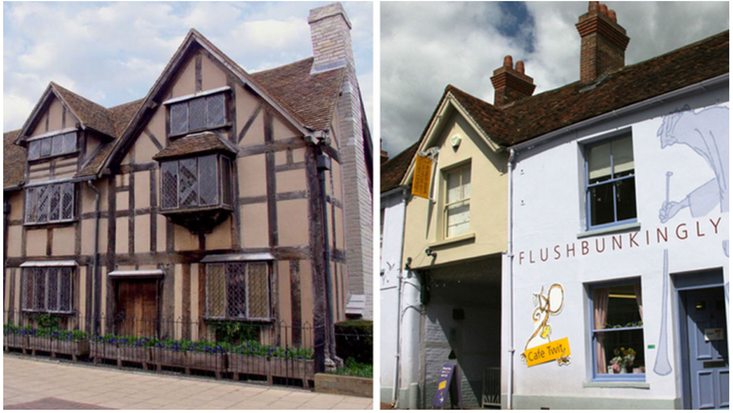
Shakespeare’s birthplace and The Roald Dahl Museum
You might think there’s nothing to link Roald Dahl and William Shakespeare, but there are a few things they have in common…
They’ve both got big anniversaries this year:
2016 marks 100 years since Roald Dahl’s birth, and 400 years since Shakespeare’s death. That means 2016 is a pretty great year for celebrating the lives and works of these two world-famous writers.
They both made up some crackling words:
Shakespeare coined countless new words and phrases, many of which have found their way into common usage, including ‘wild goose chase’, ‘laughing stock’, and ‘heart of gold’. Roald Dahl invented quite a few words of his own, especially while writing The BFG – who can forget snozzcumber, gigglehouse and exunkly?
Both authors have their very own dictionaries, both published by Oxford University Press. The Oxford Illustrated Shakespeare Dictionary and The Gobblefunk Dictionary (coming in June).
Quick quiz:
Can you tell which of the following 5 words are Roald Dahl words, and which 5 are Shakespeare words?
Babblement, Smilets, Bubukles, Crumpscoddle, Pulsidge,
Vizaments, Squizzled, Twangling, Bootboggler, Sossel.
(Answers at the bottom of the page!)
They both have links to the Royal Shakespeare Company:
Set up in 1875 the Royal Shakespeare Company was established to inspire a lifelong love of William Shakespeare and to produce new plays and productions. In 2010 the RSC’s production of Matilda the Musical based on Roald Dahl’s Matilda, premiered at The Courtyard Theatre in Stratford-upon-Avon, before moving to the West End in 2011. This record-breaking, award-winning musical is still going strong, made its way to Broadway in 2013 and toured Australia in 2015.
They are both loved worldwide:
Shakespeare is well and truly international. According to The British Council his works have been translated into over 100 languages (including Klingon), and performed worldwide – Romeo and Juliet has been performed in 24 countries in the last 10 years alone!
Roald Dahl books have been translated into 58 languages including Norwegian, Welsh and Japanese, but not Klingon… yet. During his lifetime Roald Dahl stuck a pin in a world map every time he received fan mail from a new place. Far flung destinations included Sao Paulo, Beijing, Addis Ababa and Windhoek.
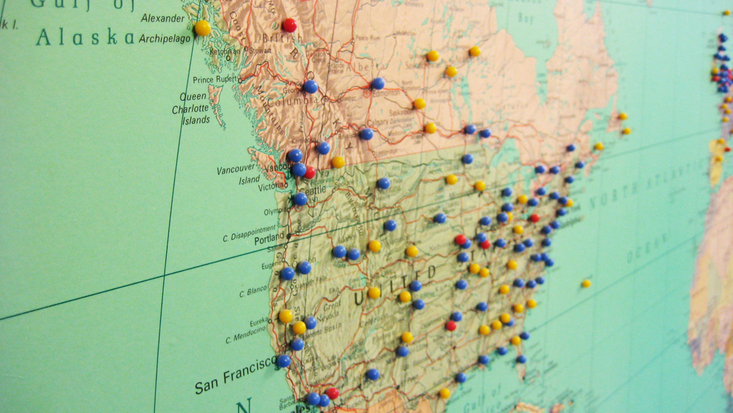
Roald’s Fan Map
They are both top ten borrowed authors:
Both Roald Dahl and Shakespeare are very popular with library goers it would seem. The Public Lending Right lists Roald Dahl as the number 1 most borrowed classic author in 2015, with Shakespeare taking tenth place. Not bad!
They’re big on the big screen:
Many of Shakespeare’s plays have been made into movies. According to the BFI the first Shakespeare film was made in 1899. Since then there have been countless film versions and adaptations including William Shakespeare’s Romeo + Juliet (1996), West Side Story (1961), and 10 Things I Hate About You (1999).
There have been some great film adaptations of Roald Dahl’s books too, Including Matilda, Fantastic Mr Fox, and Willy Wonka and the Chocolate Factory. The BFG is coming to cinemas this July.
You can visit their home towns:
Two places you must definitely visit are The Roald Dahl Museum and Story Centre in Great Missenden, Buckinghamshire and Shakespeare’s Birthplace in Stratford-Upon-Avon.
Roald Dahl lived in the village of Great Missenden for 36 years and wrote all of his children’s books in his Writing Hut in the bottom of his garden. The Museum is housed in an old coaching inn on the High Street, you can’t miss it – look for the painted BFG on the front.
William Shakespeare lived in Henley Street in Stratford from the time of his birth until he was old enough to marry. Visitors can tread in his footsteps in the house he lived in, for millions of enthusiasts worldwide this house is a shrine.
Some of their stories are rooted in folklore:
Witches, magic, sprites and mysterious creatures appear in work by Roald Dahl and Shakespeare, and almost certainly rooted in folklore. Roald Dahl’s Norwegian heritage may have influenced his stories about jumbly giants and witches. His first story for children The Gremlins was inspired by RAF folklore which held that little creatures were responsible for the various mechanical failures on aeroplanes.
Shakespeare plays feature similar characters: Titania in Midsummer Night’s Dream, the sorcere Prospero, and the witches in Macbeth. Even Hamlet is borrowed from an old Scandinavian tale.
Quiz answers:
Roald Dahl = Babblement, Crumpscoddle, Squizzled, Bootboggler, Sossel.
William Shakespeare = Smilets, Bubukles, Pulsidge, Vizaments, Twangling.
—
credits: roald dahl museum
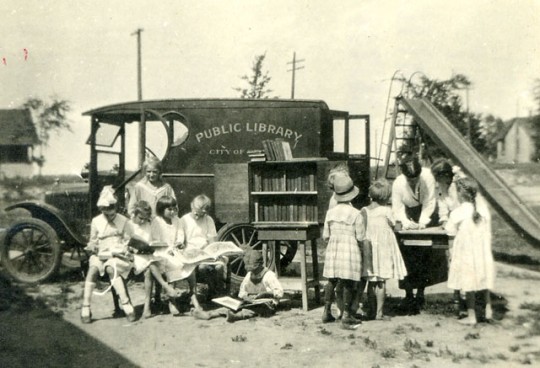
in front of the first saint paul public library bookmobile, 1917.
—
“i’m of a fearsome mind to throw my arms around
every living librarian who crosses my path,
on behalf of the souls they never knew they saved.”
– barbara kingsolver
—
photo credit: st.paul public library
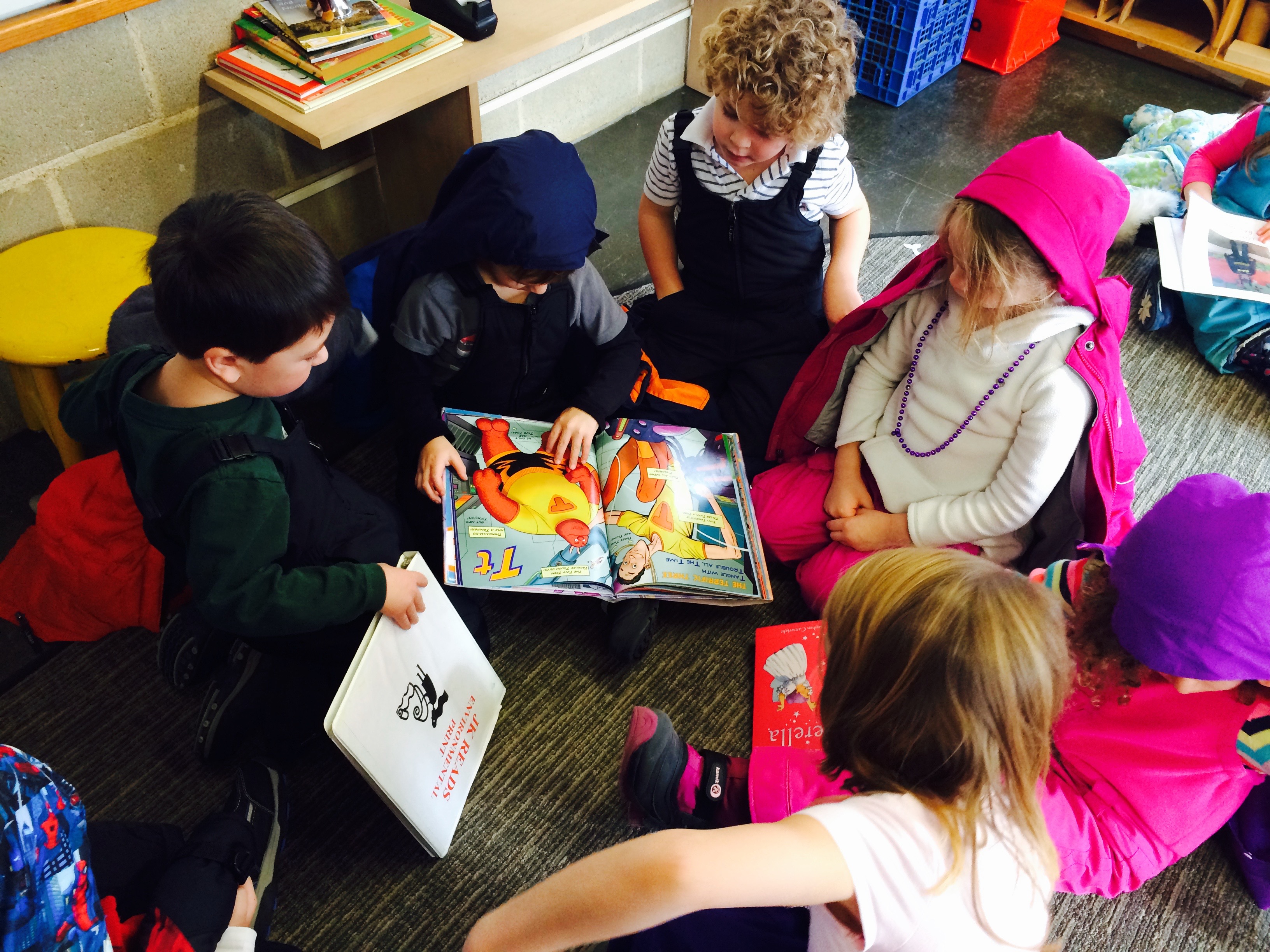
book club happens
while waiting to go outside
and discovers something.
letters.
—
there is more treasure in books
than in all the pirate’s loot on treasure island.
– walt disney
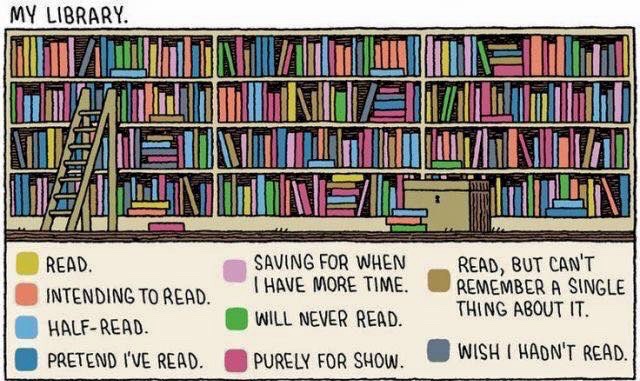
one way to organize.
—
image credit: reading rainbow