Tag Archives: children’s literature

‘great children’s books are wisdom dipped in words and art.’ – Peter H. Reynolds

Standard

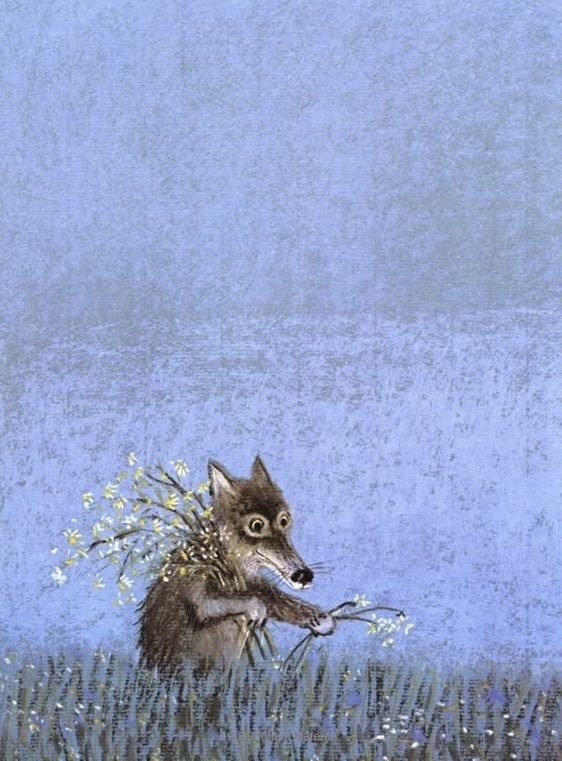
The Kind Wolf, by Jozef Wilson

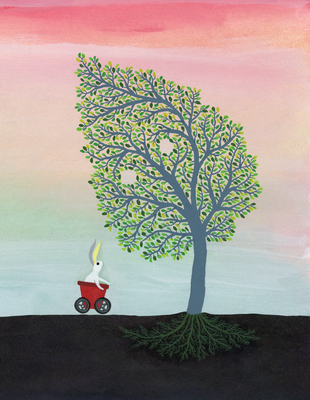
Bunny and Tree, by Balaint Zsako

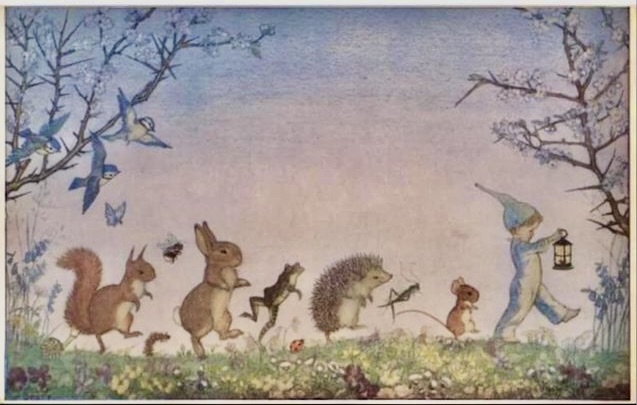
And So To Bed, by Molly Brett

in celebration of children’s literature on world book day and every day

‘children’s books remind us in uncertain times that there is still much we do know.

kindness matters.

laughter is essential.

caring for each other is everything.’ 

-The Eric Carle Museum of Picture Book Art

dipped in words and art.

Standard

a beautiful, beautiful book

 what is a poem, really, and what exactly is its use?

Every once in a while, you stumble upon something so lovely, so unpretentiously beautiful and quietly profound, that you feel like the lungs of your soul have been pumped with a mighty gasp of Alpine air. This is a Poem That Heals Fish  is one such vitalizing gasp of loveliness — a lyrical picture-book that offers a playful and penetrating answer to the question of what a poem is and what it does. And as it does that, it shines a sidewise gleam on the larger question of what we most hunger for in life and how we give shape to those deepest longings.

Written by the French poet, novelist, and dramatist Jean-Pierre Simeón, translated into English by Enchabnted Lion Books founder Claudia Zoe Bedrick (the feat of translation which the Nobel-winning Polish poet Wislawa Syymborska had in mind when she spoke of “that rare miracle when a translation stops being a translation and becomes … a second original”), and illustrated by the inimitable Olivier Tallec, this poetic and philosophical tale follows young Arthur as he tries to salve his beloved red fish Leon’s affliction of boredom.

i read the above review by maria popova, and simply had to find it

i read it three times and looked closely at the details

i so agree with her.

in honor of national poetry month

and every day of every month

read a poem. 

“great children’s books are wisdom dipped in words and art.”

-peter h. reynolds


credits: maria popova, marginalian, enchanted lion books

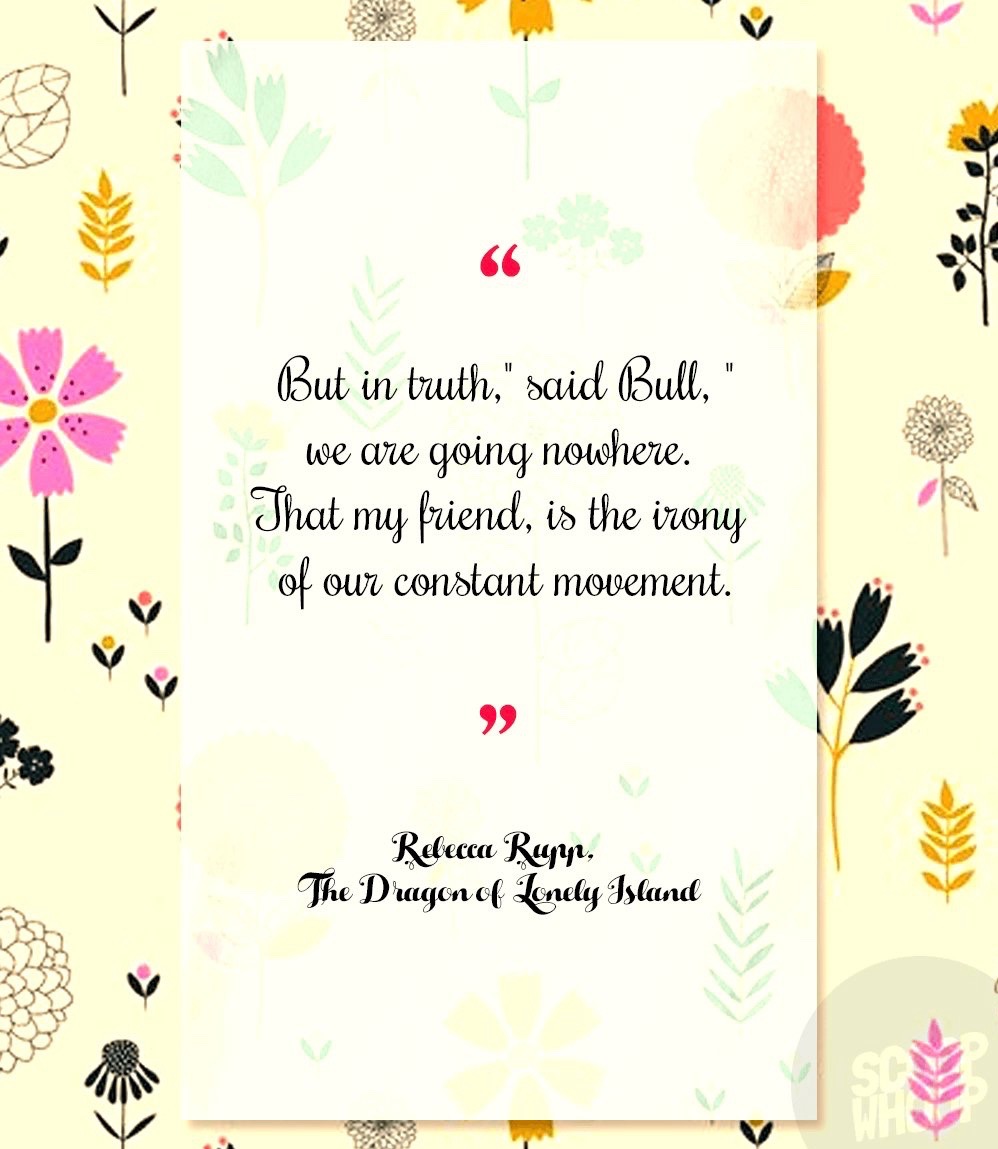
going nowhere.

Standard


credits: Rebecca Rupp, author – the dragon of lonely island , candlewick press

so old and wise.

Standard

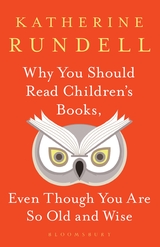
About Why You Should Read Children’s Books, Even Though You Are So Old and Wise

Katherine Rundell – Fellow of All Souls College, Oxford, and prize-winning author of five novels for children – explores how children’s books ignite, and can re-ignite, the imagination; how children’s fiction, with its unabashed emotion and playfulness, can awaken old hungers and create new perspectives on the world. This delightful and persuasive essay is for adult readers. – Bloomsbury Press

Katherine Rundell says – “There’s something particular about children’s fiction, that can open up new perspectives for adults. The best children’s fiction “helps us refind things we may not even know we have lost”, taking us back to a time when “new discoveries came daily and when the world was colossal, before the imagination was trimmed and neatened…” There’s also something instructive in reading books that, as Rundell points out, are “specifically written to be read by a section of society without political or economic power”. In an age whose political ructions are the result of widespread frustration at the powerlessness of the many in the face of the few, this recognition of how emboldening and subversive children’s books can be feels important.” – Book Riot -Jamie Canaves

Yes to always making time to read children’s books, no matter how old or wise we may get – or think we are.

portable magic.

Standard

what an elementary teacher

after-school book meeting looks like

all full of colors, sparkling water, and clever words.


“books are uniquely portable magic.”

– stephen king

magical fathering.

Standard

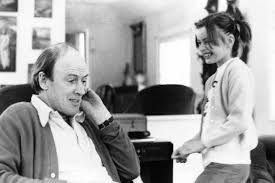
children’s book author roald dahl and his daughter, lucy

What If Willy Wonka Was Your Dad?

Roald Dahl’s Magical Parenting With Food

“food was a huge part of our upbringing,” lucy dahl says. her father delighted his children with fanciful “midnight feasts” in the woods and often used mealtime to test out new characters from stories he was working on.

three-course dinner chewing gum.
fizzy lifting drinks.
everlasting gobstoppers.

these, of course, are the creations of willy wonka, who himself is the creation of author roald dahl.  food is a huge part of his work, and as it turns out, dahl’s creative and sometimes twisted approach to food wasn’t confined to his books.

“food was a huge part of our upbringing,” says dahl’s daughter lucy.
tn this week’s episode of the sporkful podcast, ahead of father’s day, lucy shares stories of the witch’s potions that accompanied bedtime, the cabbage her father said came straight from the queen’s garden, and being woken up in the middle of the night to eat chocolate.

“everything about our childhood was eccentric,” she says, “although we didn’t realize it at the time because it was just normal to us.” lucy dahl is 51 now, but she still bursts with childlike glee when she recalls her father’s “midnight feasts.”

he’d wake the kids up in the middle of the night and pile them into the car – which was full of hot chocolate and cookies – and drive them up the road in the english countryside where they lived.
then they’d walk in to the woods in their pajamas to look for badgers.

“you couldn’t talk, and he’d say, ‘nobody move! and if you’ve got an itch, blow on it. try and hold your breath, try not to breathe!’ ” lucy recalls. “and sure enough, mr. badger would come prowling out and walk right past us. it was incredibly exciting.”only once they had seen an animal could they tuck in to their sweet feast.”and then,” lucy says, “we’d all go home, back to bed, delighted.”

roald dahl kept his kids entertained during normal eating hours, too. he often used mealtime to test out new characters from stories he was working on.”the minpins lived in the woods beyond our house,” lucy remembers, referring to one of her father’s last books, about a tiny people who live inside trees. “the BFG – the big friendly giant – lived underneath our orchard. it all coincided with what we ate. for breakfast were minpins’ eggs and fried bread. but what they actually were were quail eggs.”

just as roald dahl used stories to bring food to life at home, he used food to bring characters to life in his books. willy wonka’s fizzy lifting drinks aren’t just a fun idea – they also tell us something about who he is. in fantastic mr. fox, the three mean farmers who are out to get mr. fox are described only by their body shapes and their diets.

so this father’s day, wake your kids up in the middle of the night, take them into the woods in their pajamas to look for badgers, load them full of chocolate, then put them back to bed.

“even though you’re growing up,

you should never stop having fun. “

– nina dobrev


credits: npr, the spoon, the sporkful, dan pashman, m.haircloth
through my fingers.

Standard

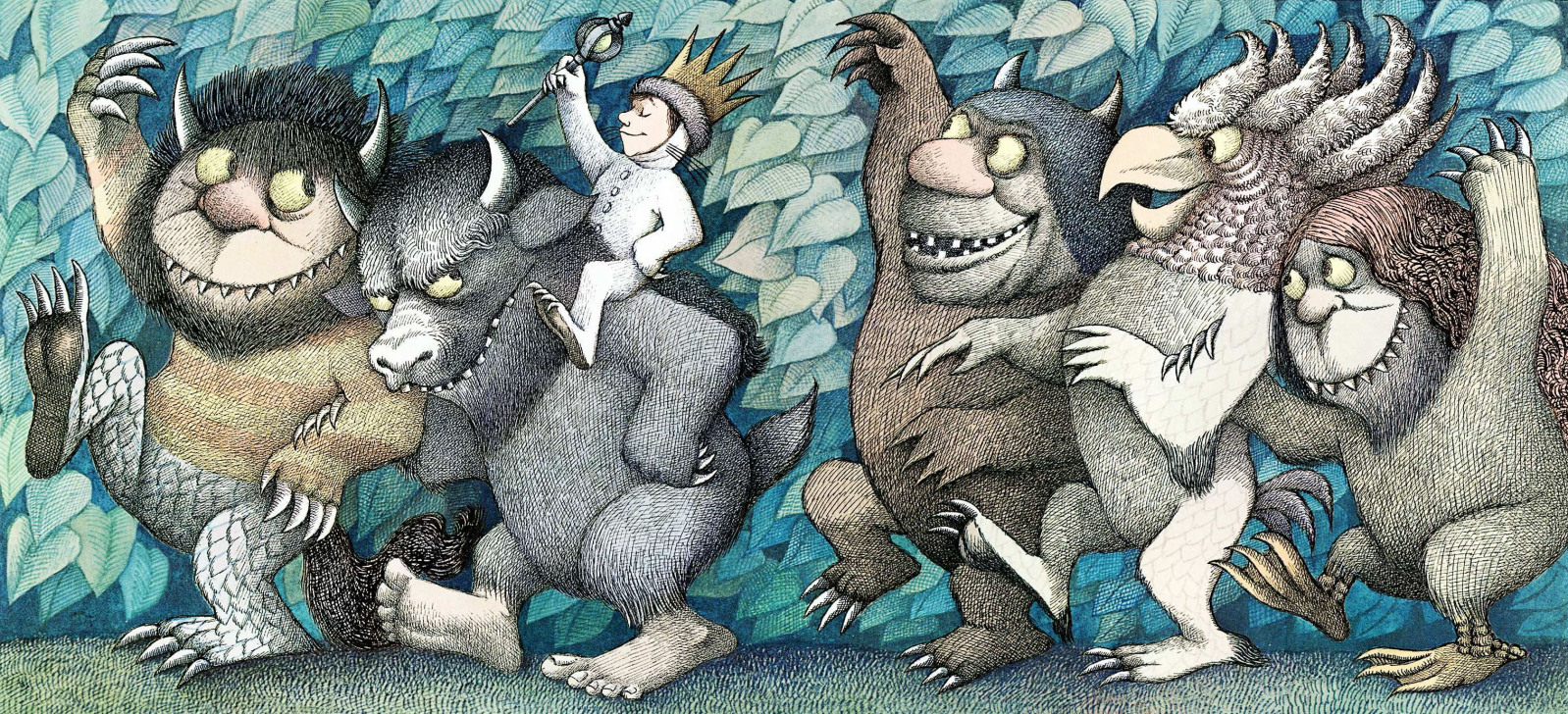
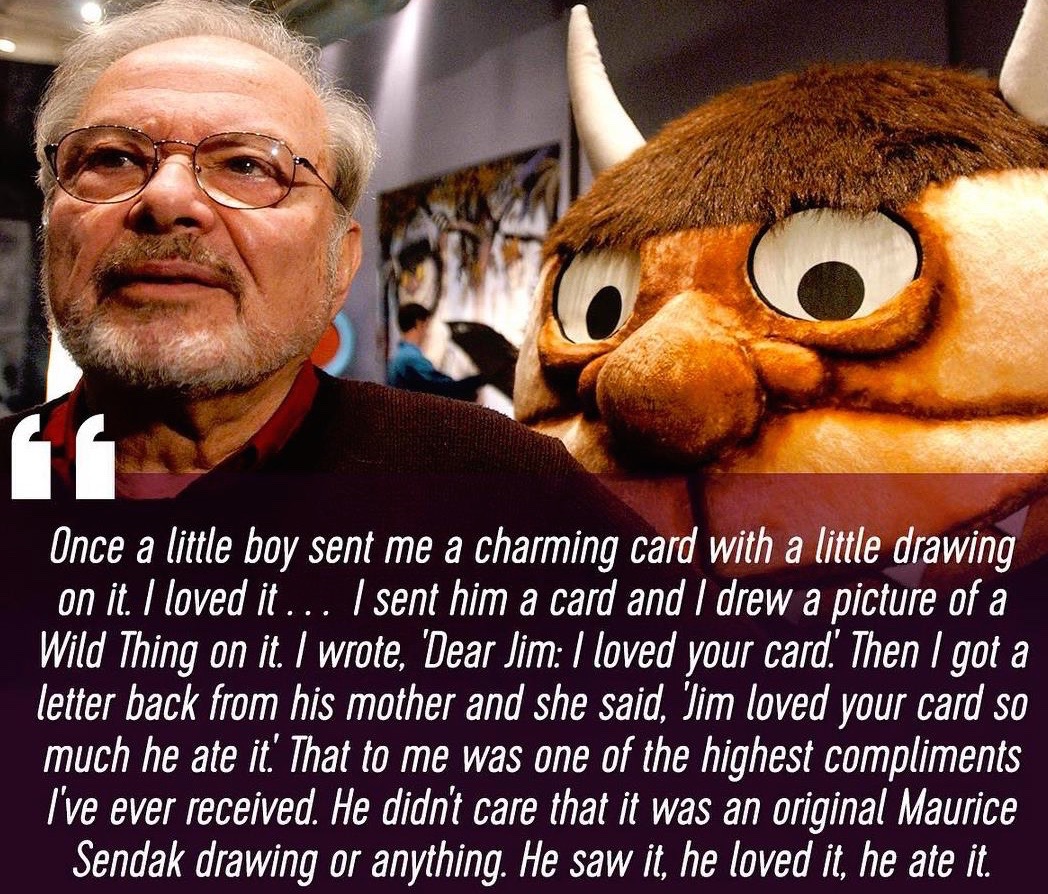
maurice sendak’s

“where the wild things are”

was initially pitched as

 “where the wild horses are”

his editor loved the pitch but

sendak could not draw horses

so the wild things he drew

ended up being

caricatures of his relatives.

“writing, to me, is simply thinking through my fingers.”
-isaac asimov

credits: maurice sendak, “where the wild things are” – 1963, harper and collins


eat your words.

Standard

13392107_10154227288812365_1721544627241471710_o (1)

credits: getty images, mentalfloss.com

story.

Standard

13116432_1245592075459780_7760057525472119811_o (1)


image credit: grammarly

worth the century-long wait.

Standard

Unknown

100 Years Later,

Beatrix Potter’s Tale Of A Fanciful Feline To Be Published

At long-lost Beatrix Potter book, The Tale of Kitty-in-Boots, is set to be released this fall, 150 years after the beloved author’s birth.

The tale about a sharply dressed feline has “all the hallmarks of Potter’s best works,” editor Jo Hanks, who stumbled upon the story, says in an interview with Penguin U.K., which will publish the book.

At the time Potter was writing Kitty-in-Boots in 1914, she told her publisher that the story was centered on “a well-behaved prime black Kitty cat, who leads rather a double life.”

Hanks says she “stumbled on an out-of-print collection of her writings” and saw that reference to the story in a letter from Potter to her publisher.

This led her to the publisher’s archive, where she says she found “three manuscripts, two handwritten in children’s school notebooks and one typeset and laid out in a dummy book; one rough colour sketch of Kitty-in-Boots and
a pencil rough of our favourite arch-villain, Mr Tod.”

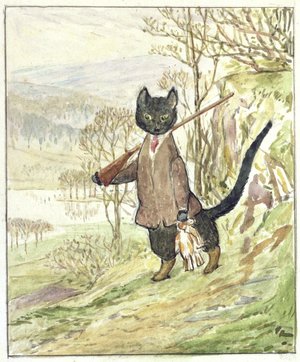
kitty-in-boots---image-courtesy-frederick-warne-co.-the-va-museum_custom-217561af9e9637a7fb21c76892daa54fa452d108-s300-c85The original Kitty in Boots,

which Beatrix Potter illustrated herself.

The tale features a favorite Potter character — Peter Rabbit — “albeit older, slower and portlier,” Hanks says. Potter told her publisher in letters that the story went unfinished because of “interruptions” — including the start of World War I and her marriage.

And because Potter finished only one drawing for the book, it will be illustrated by Quentin Blake, who is best-known for his art in many of Roald Dahl’s books.

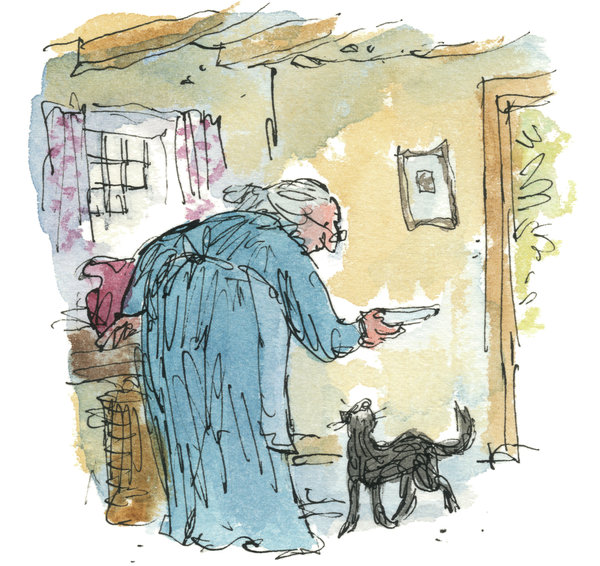
quentin-kitty-in-boots-illustration---copyright-quentin-blake_custom-dececcbf4808fdeb5296797749236a64854429cf-s600-c85

Quentin Blake’s Kitty in Boots.

“Quentin revels in rebellious characters and humorous stories with spiky edge to them; he’s brought anarchic energy to the character of Kitty and embellished her already endearingly flawed character with his trademark wit and charm,” Hanks says. The news about Blake’s illustration has delighted many Potter fans. Others are more skeptical about the pairing.

Here’s an excerpt from the story released by Penguin, with a cliffhanger ending:

“Once upon a time there was a serious, well-behaved young black cat.
“It belonged to a kind old lady who assured me that no other cat could compare with Kitty.“She lived in constant fear that Kitty might be stolen — ‘I hear there is a shocking fashion for black cat-skin muffs; wherever is Kitty gone to? Kitty! Kitty!’
“She called it ‘Kitty’, but Kitty called herself ‘Miss Catherine St. Quintin’
“Cheesebox called her ‘Q’, and Winkiepeeps called her ‘Squintums’. They were very common cats. The old lady would have been shocked had she known of the acquaintance.
“And she would have been painfully surprised had she ever seen Miss Kitty in a gentleman’s Norfolk jacket, and little fur-lined boots. “Now most cats love the moonlight and staying out at nights; it was curious how willingly Miss Kitty went to bed. And although the wash-house where she slept — locked in — was always very clean, upon some mornings Kitty was let out with a black chin. And on other mornings her tail seemed thicker, and she scratched.
“It puzzled me. It was a long time before I guessed there were in fact two black cats!”

You’ll have to wait until the book is published in September to find out what happens next.


credits: quentin blake, beatrix potter, penguin press, express newspapers, getty images, npr