Tag Archives: history

“if you see me, cry.”

Standard

Hunger Stone :

Recent droughts in Europe once again made visible the “Hunger Stones” in some Czech and German rivers.

These stones were used to mark desperately low river levels that would forecast famines.

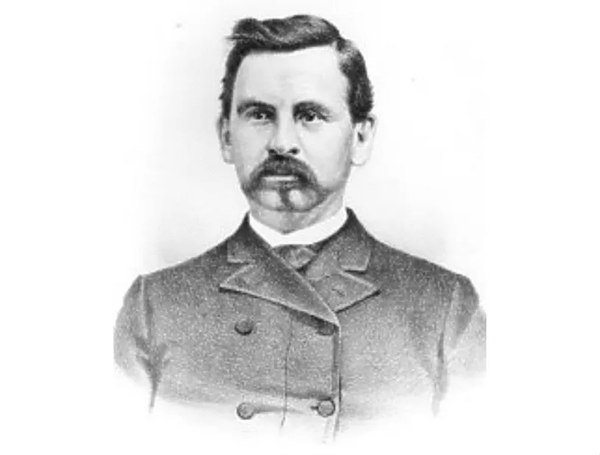
This one, in the Elbe river, is from 1616 and says: “If you see me, cry.”

“when the well is dry, we will know the worth of water.”

-benjamin franklin


credits: history review

the french connection.

Standard

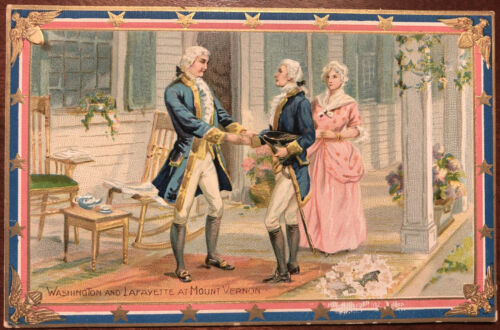
Washington and Lafayette at Mt. Vernon


In honor of the anniversary of Bastille Day-

 The Marquis de Lafayette, 19, arrived in the new world to join America’s revolutionary cause in 1777. Right off the bat, he made a powerful friend: George Washington instantly took a liking to the Frenchman and within a month, Lafayette had effectively become the general’s adopted son. Their affection was mutual; when the younger man had a son of his own in 1779, he named him Georges Washington de Lafayette.

The day after the storming of the Bastille, the Marquis de Lafayette became the commander of the Paris National Guard. In the aftermath of the Bastille siege, he was given the key to the building. As a thank-you—and to symbolize the new revolution—Lafayette sent it to Washington’s Mount Vernon home, where the relic still resides today.

“Rien.”

(nothing)

-Diary entry of Louis XVI on Bastille Day


Bonne fête nationale! 


Source credits: Mark Mancini, Mental Floss, Google Images

finding dabls in detroit.

Standard

i recently went with a group of colleagues/friends

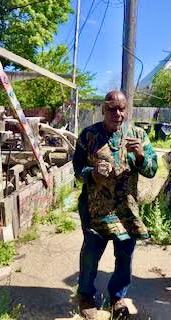
to find the artist, dabls

working on his block in detroit

where we learned so much from him

an experience i’ll never forget

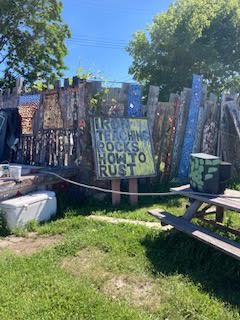
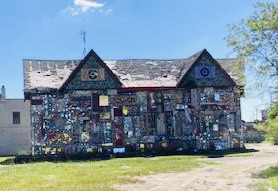
dabls’ installation-‘iron teaching rocks how to rust’ 

artist/storyteller dabls

uses materials as metaphors

to pass on his stories

of african and european art/cultures

open to everyone

he can be found working and sharing stories

on this abandoned block

that he has reclaimed

as his own and the community’s

most every day

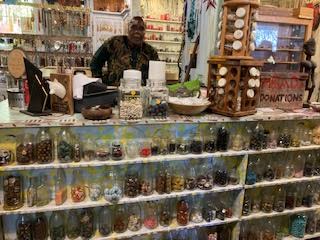
dalbas mbad african bead museum

where each of his beads tells a story

dabls’ art has brought this house to life

 “Stories are able to help us to become more whole, to become Named.

And Naming is one of the impulses behind all art;

to give a name to the cosmos, we see despite all the chaos.”

-Madeleine L’Engle

The Kresge Foundation elected Dabls as “2022 Eminent Artist”

to recognize his accomplishments in the arts as well as his lifelong impact on Detroit’s culture.

to read his full story go to:

http://www.mbad.org/best-friends

or just stop by to see him.

do-nut know how i missed it!

Standard


yesterday was national donut day and somehow i missed it

but i’ll be sure to make up for it today!

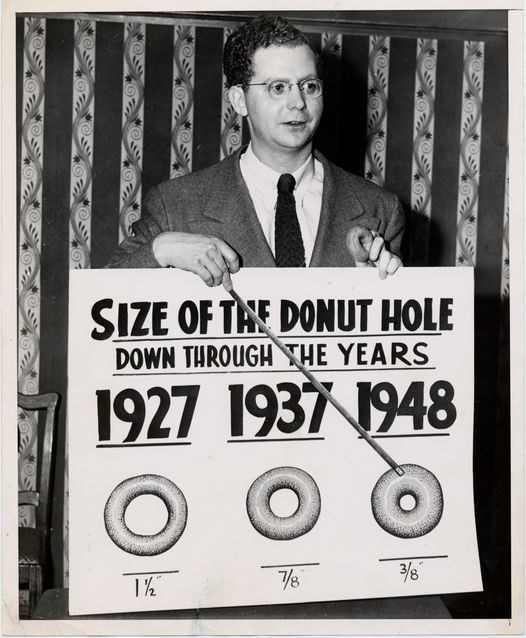
Keeping it highly academic on the day after National Donut Day. The photo above is from the Sally L. Steinberg Collection of Doughnut Ephemera (that’s its real name) in the Smithsonian National Museum of American HIstory’s Archives Center.

Steinberg describes herself as the “doughnut princess”— her grandfather Adolph Levitt was America’s original “doughnut king.” He developed the automatic doughnut-making machine, opened the first retail doughnut chain in the country and founded the modern American doughnut industry.

She gathered this collection while researching a 1987 book on the history of the doughnut, (not surprisingly  called:”The Donut Book.”)

Why, you ask after looking at the decreasing size of the hole trend in the photo, is the hole not totally gone? Somewhere in the 80’s, the trend of the hole shrinking stopped and the outer rim began collapsing inwards, getting sweeter as it diminished. This became known as the “supernova” era of donuts and continues today.


Sources: Smithsonian Museums, Sally Levitt Steinberg, The Donut Book , Storey Publishing

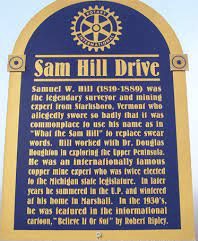
what in the sam hill?

Standard

sam hill had a way with words

and is famous for more than one reason

sam hill drive is located in marshall, michigan


“being famous has its benefits, but fame isn’t one of them.”

-larry wall

happy accidental birthday, bumpy cake.

Standard

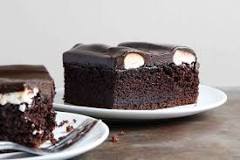
A Beloved Treat, Born from a Happy Accident

German confectioner Fred Sanders Schmidt first opened up his confectionary in Chicago, but that venture was short-lived, as it was a casualty of the Great Fire in 1871. Sanders and his wife, Rosa landed in Detroit, where he reopened for business in 1875. Sanders Confectionery has been a Detroit institution ever since.

For its first few decades in business, the store was simply a good old-fashioned chocolate and candy shop, with most of the products handcrafted by Fred and Rosa. In 1912, Fred decided to begin selling baked goods to honor the passing of his father, who had been a prominent baker and business owner in Illinois. One of those items was a rich chocolate cake, first frosted with vanilla buttercream and finished with a glossy chocolate fudge ganache, a nod to Fred’s candy-making skills. During one recipe test, Fred began to run out of vanilla buttercream, and instead of frosting the cake in a thick layer as planned, he playfully piped the white frosting in several rails across the top of the cake, which created a bumpy surface under the fudge icing and made for an attractive cross-section. After recognizing that most Sanders customers always asked for “the cake with the bumps,” the name was changed from “Devil’s Food Buttercream Cake” to “Chocolate Bumpy Cake” and a dessert icon was born on April 27, 1913. 

side note: this is one of my favorite cakes and also the nickname given to me by the waiters i worked with years ago, who suggested that i should use the name ‘bumpy teacakes’ should i ever become a dancer, and the entire restaurant crew knew me by this name forever after.

“nothing great was ever achieved without enthusiasm.” 

-ralph waldo emerson


credits: sandersbakery.com

Like many happy culinary accidents, the newly fashioned cake with its unique look took off with customers. Initially called “Devil’s Food Buttercream Cake,” so many people simply asked for “the cake with the bumps” that Sanders changed the name to “Chocolate Bumpy Cake.”

Like many happy culinary accidents, the newly fashioned cake with its unique look took off with customers. Initially called “Devil’s Food Buttercream Cake,” so many people simply asked for “the cake with the bumps” that Sanders changed the name to “Chocolate Bumpy Cake.”

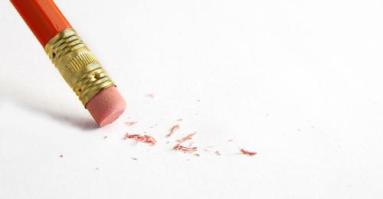
erased.

Standard

Happy Birthday to the Modern Pencil

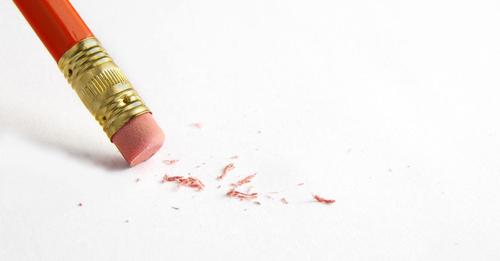
Was sticking an eraser on the back of a pencil common sense, or a new invention? This week in 1868, Philadelphia stationery store owner H.L. Lipman patented something that seems incredibly obvious in hindsight: a regular pencil, with an eraser on the end.

Although Lipman is credited with this innovation, his pencil with eraser looked a little different than its modern descendant. Rather than being glued onto the end, Lipman envisioned a pencil with a chunk of rubber eraser in the core that could be accessed by sharpening it, the same way you would a pencil lead.

Graphite pencils had been around since the 1500s, writes David Green for Haaretz. But until the 1770s, the preferred tool used to erase pencil marks was balled-up bread.

Lipman’s name hasn’t gone down in history, maybe because he didn’t manage to hold on to his patent. After gaining it, he sold it to Joseph Reckendorfer in 1862 for about $2 million in today’s money. Reckendorfer also didn’t get much use out of the patent. He took another company to court over their use of his patent, only for it to be invalidated by the court’s decision, which stated that Lipman merely combined two existing things, but didn’t really produce something new.

Lipman essentially imagined the pencil as having a graphite end and a rubber eraser end.

“It may be more convenient to turn over the different ends of the same stick than to lay down one stick and take up another,” the decision noted. “This, however, is not invention within the patent law.”

Over his career, though, Lipman also made a number of contributions to the 19th-century office:

He was also America’s first envelope manufacturer, and it was he who had the idea of adding adhesive to the back flap, so as to make sealing easier. He devised a methods for binding papers with an eyelet that preceded the stapler by two decades. And Lipman was the first to produce and sell blank postcards in the United States, in 1873.

Pencils aren’t really a notable object, writes Henry Petroski in The Pencil: A History of Design and Circumstance, but they shape how people do their work. Unlike the pen, a more permanent writing instrument, the pencil doesn’t usually get sayings (it’s the pen that’s mightier than the sword, for example) or a lot of credit. But pencil is an essential creative medium, he writes, because it can be erased—as everyone from architects to artists can tell you.

“Ink is the cosmetic that ideas will wear when they go out in public,” he writes. “Graphite is their dirty truth.”

credits: kat eschner, smithsonian.com, smithsonian magazine

out of the box.

Standard

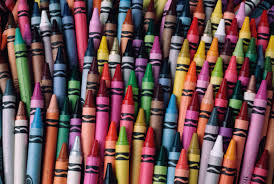
National Crayon Day on March 31  sparks fond memories of childhood creations in full color as we celebrate one of America’s most beloved toys, the crayon! Crayons delight our senses not just with their brilliant colors but also with their distinct smell, the feel of them in our hands, and for some kids, the waxy taste. With over 12 million crayons made daily, one is never far from reach. So, grab your box of 64 crayons, sharpener included, and get ready for some artistic expression and nostalgia.

Crayons have a colorful history. While hued wax molds have existed for centuries, the modern-day crayon got its start in the 1900s. Crayola crayons were introduced in 1903 by Binney & Smith as a safer and cheaper alternative to the art utensils in use at that time.  Binney & Smith premiered their famous eight-pack of crayons with the color line-up: Black, Brown, Orange, Violet, Blue, Green, Red, and Yellow. This color mix, along with their names, remained unchanged for 45 years. Since then, many colors have been added, color names and packaging have changed, and color styles such as neon, metallics, and glitter have emerged. A few colors have even been retired from the color wheel, typically on March 31.

The Crayola crayon has a special place in the hearts of Americans and Americana. It was one of the original inductees into the National Toy Hall of Fame in November 1999. It is estimated the average American will have used 730 crayons by their 10th birthday. Even Mr. Rogers has had his hand in the history of crayons by molding the official 100 billionth crayon in February 1996 at the Crayola plant in Easton. Crayons not only add color to our lives, but they’ve also been held as an analogy for the colorfulness of the human race and our ability to live together in a diverse world. Crayons have been used for creating artwork for years.

Originally used for industrial purposes, their popularity soared when the brand Crayola was introduced.  Crayons are used as a medium for creating artwork by children in schools mostly, but is also popular among adults who use it for creating contemporary art. Many households have a box of crayons stashed away somewhere, and today is the day it is pulled out. Everyone can enjoy crayons for creating vivid drawings. 

BY THE NUMBERS

100 – the number of colors Crayola crayons are available in. 

50 – the number of crayon colors retired by Crayola. 

3 billion – the number of crayons produced by Crayola in a year. 

18th – the ranking in terms of how familiar the crayon scent is to adults. 

1962 – the year when Crayola changed the name of their crayon ‘Flesh’ to ‘Peach.’

15 feet – the length of the world’s biggest crayon. 

223 billion – the number of Crayola crayons produced to date. 

730 – the number of crayons used by the average kid by the age of 10. 

“we could learn a lot from crayons; some are sharp, some are pretty, some are dull, while others bright, some have weird names, but they all have learned to live together in the same box.”

-Robert Fulghum, american author


credits: national days

who are the dinos in your neighborhood?

Standard
is this midtown manhattan?
amazing interactive map shows you would dinosaurs roamed your neighborhood millions of years ago
facebook While most of us know that all sorts of prehistoric creatures once inhabited Earth, you might not realize which ones used to wander around your particular city. Thanks to this interactive map, you can easily find out. Type in your city name, and you’ll see it plotted on the globe, along with a list of species whose fossils have been discovered nearby. If you click on the name of a species, a new webpage will open with details, images, and a map that shows where else that species lived.
Omaha, Nebraska, for example, was once home to the pteranodon, the trinacromerum, and the mosasaurus  Those last two are both marine reptiles, meaning that Nebraska used to be underwater—which the globe will show you, too.

In addition to searching by city, you can also see what Earth looked like during a specific time period by choosing an option from the dropdown menu at the top. Choices range from 750 million years ago—the Cryogenian period, when glaciers abounded—to 0 million years ago, which is Earth as we know it today. Using a different dropdown menu on the right, you can view Earth during its many notable “firsts,” including “first land plants,” “first dinosaurs,” “first primates,” and more.

As CNN reports, the map was created by California-based paleontologist Ian Webster, who added to an existing model that mapped plate tectonics and used additional data from GPlates, another piece of plate tectonics software.

“It is meant to spark fascination and hopefully respect for the scientists that work every day to better understand our world and its past,” Webster told CNN. “It also contains fun surprises. For example: how the U.S. used to be split by a shallow sea, the Appalachians used to be very tall mountains comparable to the Himalayas, and that Florida used to be submerged.”

You can find other fun surprises by exploring the map yourself here. For the best experience, you’ll want to access the site from a desktop computer or tablet versus a smartphone.

 “observation: i can’t see a thing. conclusion: dinosaurs.”

-carl sagan


credits: cnn, mental floss, ellen gutosky, orla, getty images

indigenous people.

Standard

According to the United Nations, there are currently more than 370 million Indigenous people spread across 70 countries worldwide. In total, they belong to some 5,000 different Indigenous groups and speak more than 4,000 languages. Many of these groups have distinct social, economic, and political systems, as well as distinct culture and beliefs. Sadly, they are often marginalized or directly threatened by more dominant powers in society — despite having been the original inhabitants of the land they occupy.

Indigenous peoples often have a strong attachment, understanding, and respect for their native lands, be it the great plains of the United States, the Canadian prairies, or the Amazon rainforest. This connection is frequently apparent in the wise words of Indigenous leaders both past and present. Today, with many Indigenous communities on the frontlines of the battle to protect our natural world, this wisdom is perhaps more important than ever.

“Even though you and I are in different boats,

you in your boat and we in our canoe,

we share the same River of Life.

What befalls me, befalls you.”

-Oren Lyons, Onandaga Nation Chief

and member of the Indigenous Peoples of the Human Rights Commission of the United Nations

Indigenous Peoples’ Day is a holiday that celebrates and honors Native American peoples and commemorates their histories and cultures. On October 8th, 2021 President Joe Biden signed a presidential proclamation declaring October 11th to be a national holiday.


– credits: Penobscot History Museum, United Nations