Tag Archives: history

who are the dinos in your neighborhood?

Standard
is this midtown manhattan?
amazing interactive map shows you would dinosaurs roamed your neighborhood millions of years ago
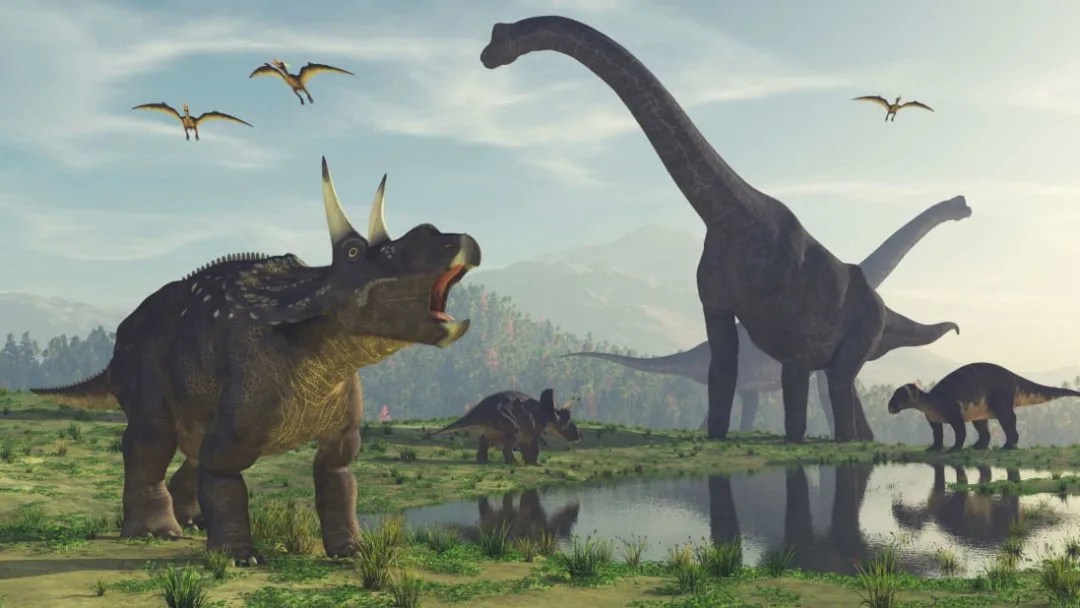
facebook While most of us know that all sorts of prehistoric creatures once inhabited Earth, you might not realize which ones used to wander around your particular city. Thanks to this interactive map, you can easily find out. Type in your city name, and you’ll see it plotted on the globe, along with a list of species whose fossils have been discovered nearby. If you click on the name of a species, a new webpage will open with details, images, and a map that shows where else that species lived.
Omaha, Nebraska, for example, was once home to the pteranodon, the trinacromerum, and the mosasaurus  Those last two are both marine reptiles, meaning that Nebraska used to be underwater—which the globe will show you, too.

In addition to searching by city, you can also see what Earth looked like during a specific time period by choosing an option from the dropdown menu at the top. Choices range from 750 million years ago—the Cryogenian period, when glaciers abounded—to 0 million years ago, which is Earth as we know it today. Using a different dropdown menu on the right, you can view Earth during its many notable “firsts,” including “first land plants,” “first dinosaurs,” “first primates,” and more.

As CNN reports, the map was created by California-based paleontologist Ian Webster, who added to an existing model that mapped plate tectonics and used additional data from GPlates, another piece of plate tectonics software.

“It is meant to spark fascination and hopefully respect for the scientists that work every day to better understand our world and its past,” Webster told CNN. “It also contains fun surprises. For example: how the U.S. used to be split by a shallow sea, the Appalachians used to be very tall mountains comparable to the Himalayas, and that Florida used to be submerged.”

You can find other fun surprises by exploring the map yourself here. For the best experience, you’ll want to access the site from a desktop computer or tablet versus a smartphone.

 “observation: i can’t see a thing. conclusion: dinosaurs.”

-carl sagan


credits: cnn, mental floss, ellen gutosky, orla, getty images
indigenous people.

Standard

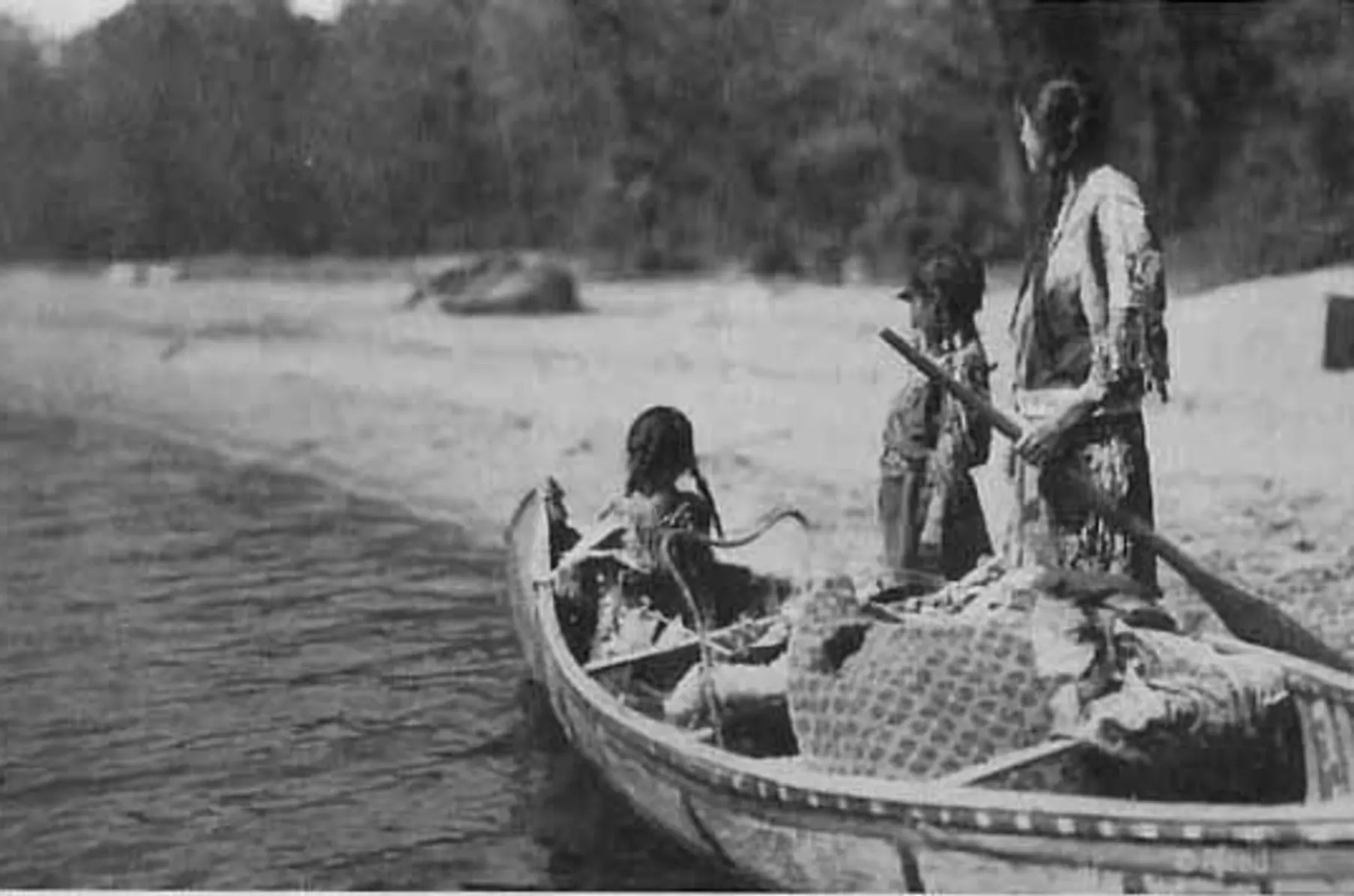
According to the United Nations, there are currently more than 370 million Indigenous people spread across 70 countries worldwide. In total, they belong to some 5,000 different Indigenous groups and speak more than 4,000 languages. Many of these groups have distinct social, economic, and political systems, as well as distinct culture and beliefs. Sadly, they are often marginalized or directly threatened by more dominant powers in society — despite having been the original inhabitants of the land they occupy.

Indigenous peoples often have a strong attachment, understanding, and respect for their native lands, be it the great plains of the United States, the Canadian prairies, or the Amazon rainforest. This connection is frequently apparent in the wise words of Indigenous leaders both past and present. Today, with many Indigenous communities on the frontlines of the battle to protect our natural world, this wisdom is perhaps more important than ever.

“Even though you and I are in different boats,

you in your boat and we in our canoe,

we share the same River of Life.

What befalls me, befalls you.”

-Oren Lyons, Onandaga Nation Chief

and member of the Indigenous Peoples of the Human Rights Commission of the United Nations

Indigenous Peoples’ Day is a holiday that celebrates and honors Native American peoples and commemorates their histories and cultures. On October 8th, 2021 President Joe Biden signed a presidential proclamation declaring October 11th to be a national holiday.


– credits: Penobscot History Museum, United Nations


sing for your dinner.

Standard

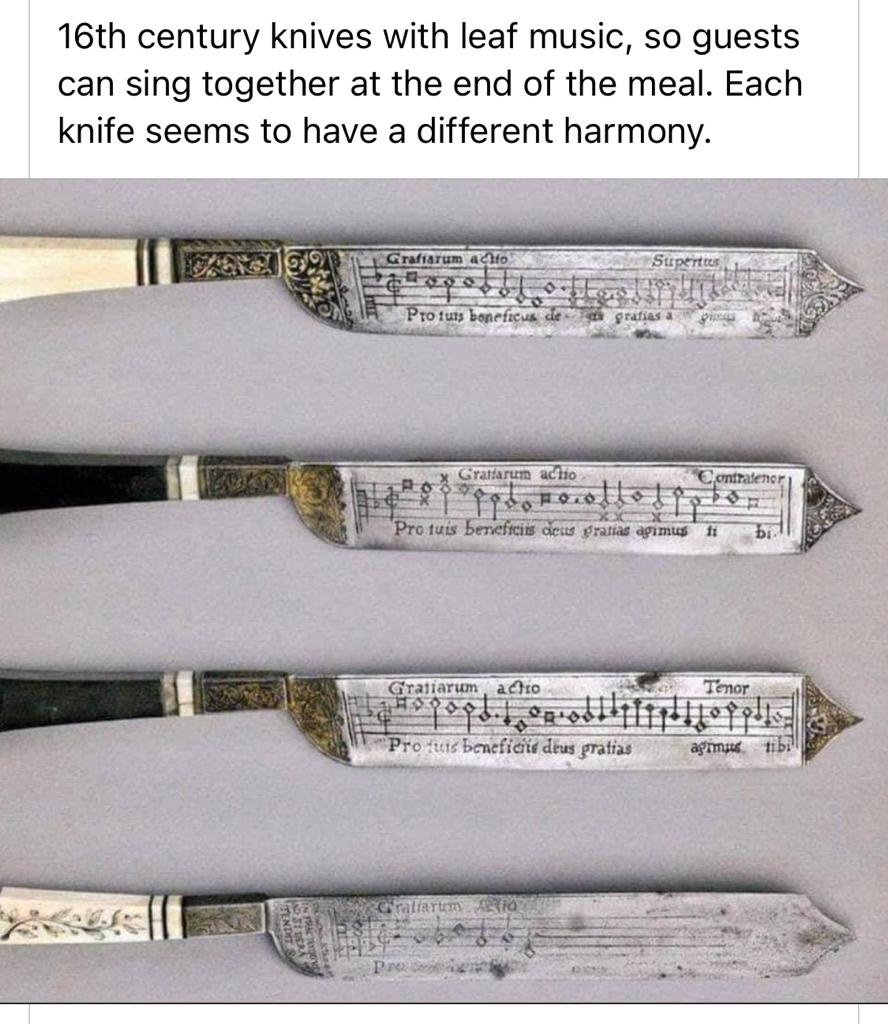
i found this picture of these knives and really wanted to know more. their story is fascinating.

Knives with musical notes on the blades are known as notation knives. A notation is the written version of a physical process, such as the sound of music. Once it is written down it can be preserved and recreated.  Sung at four different levels.They are the four parts Superius (Soprano) Countratenor (Alto), Tenor, and Bassus (Bass) to be sung simultaneously as in a hymn.

These knives are etched with notations expressing gratitude for a meal. On one side of the blade the inscription translates as, ‘The blessing of the table. May the three-in-one bless that which we are about to eat’, to be sung before the meal is taken. On the other side the notation gives thanks after the meal: ‘The saying of grace. We give thanks to you God for your generosity’. The point of the knife allows meat or bread to be skewered and offered to a fellow diner. Notation knives are extremely rare.

The interesting history of notation knives is explained here on YouTube and the music has been gloriously performed toward the end of the video. It’s only 5 minutes long . Well worth the time! https://youtu.be/-mai-7WUbBo


“those who wish to sing, always find a song.”

-swedish proverb


credits: Victoria and Albert Museum, AHRC, Flora Dennis, University of Sussex

can we speak in flowers? it will be easier for me to understand. -author unknown

Standard

what is your favorite flower?

do you know what it’s saying?


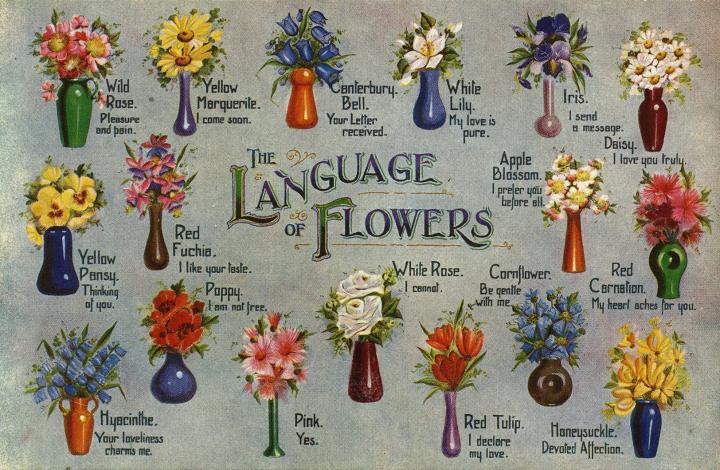
THE HISTORY OF FLOWER MEANINGS – The Language of Flowers

The symbolic language of flowers has been recognized for centuries in many countries throughout Europe and Asia. They even play a large role in William Shakespeare’s works. Mythologies, folklore, sonnets, and plays of the ancient Greeks, Romans, Egyptians, and Chinese are peppered with flower and plant symbolism—and for good reason. Nearly every sentiment imaginable can be expressed with flowers. The orange blossom, for instance, means chastity, purity, and loveliness, while the red chrysanthemum means “I love you.”

FLOWERY LANGUAGE OF THE VICTORIAN ERA

Learning the special symbolism of flowers became a popular pastime during the 1800s. Nearly all Victorian homes had, alongside the Bible, guidebooks for deciphering the “language,” although definitions shifted depending on the source.

In the Victorian era, flowers were primarily used to deliver messages that couldn’t be spoken aloud. In a sort of silent dialogue, flowers could be used to answer “yes” or “no” questions. A “yes” answer came in the form of flowers handed over with the right hand; if the left hand was used, the answer was “no.”

Plants could also express aversive feelings, such as the “conceit” of pomegranate or the “bitterness” of  aloe. Similarly, if given a rose declaring “devotion” or an apple blossom showing “preference,” one might return to the suitor a yellow carnation to express “disdain.”

How flowers were presented and in what condition were important. If the flowers were given upside down, then the idea being conveyed was the opposite of what was traditionally meant. How the ribbon was tied said something, too: Tied to the left, the flowers’ symbolism applied to the giver, whereas tied to the right, the sentiment was in reference to the recipient. And, of course, a wilted bouquet delivered an obvious message!

More examples of plants and their associated human qualities during the Victorian era include bluebells and kindness, peonies and bashfulness, rosemary and remembrance, and tulips and passion. The meanings and traditions associated with flowers have certainly changed over time, and different cultures assign varying ideas to the same species, but the fascination with “perfumed words” persists just the same.

There is a language, little known,
Lovers claim it as their own.
Its symbols smile upon the land,
Wrought by nature’s wondrous hand;
And in their silent beauty speak,
Of life and joy, to those who seek
For Love Divine and sunny hours
In the language of the flowers.

–The Language of Flowers, London, 1875


text credits: Old Farmer’s Almanac, Catherine Boeckmann

art credit: Illustrated postcard. Printed in England/The Regent Publishing Co Ltd.-Dumbarton Oaks Archives

begin again.

Standard

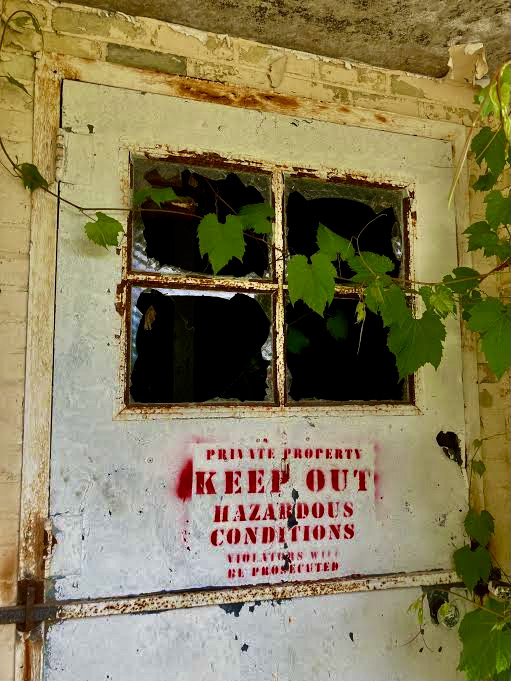
*life finds a way 


“no matter how hard the past is, you can always begin again.”

-buddha


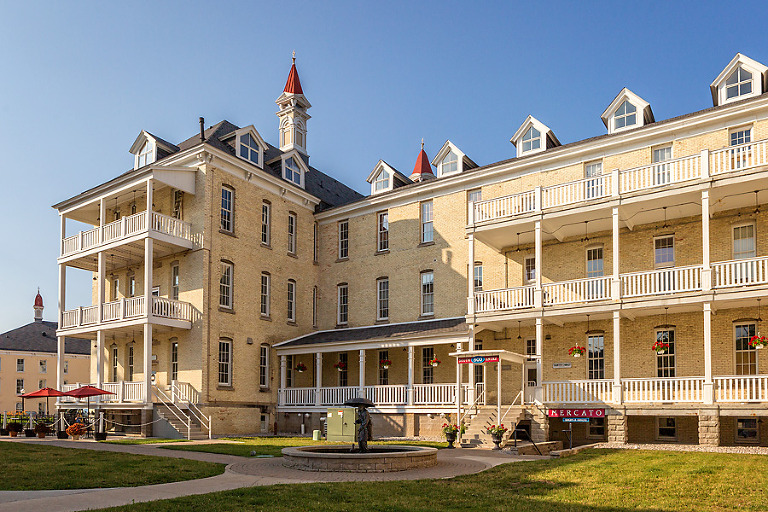
  * the above photo was taken while exploring what was once the traverse city state hospital (1885-1989), and more recently has been restored and given new life as the traverse city village commons. most buildings are now teeming with life and commerce, while other buildings still await their second chance, ghost stories and all.


round the corner.

Standard

i love this gate

left as it was

full of wonder

and

all the stories

of those who passed through it


“still round the corner there may wait, a new road or a secret gate.”

-J. R. R. Tolkien

energy and daring.

Standard

We remember the life and lasting legacy of Robert F. Kennedy
and his commitment to a more just and peaceful world with his words:
“Each time a man stands up for an ideal… he sends forth a tiny ripple of hope,
and crossing each other from a million different centers of energy and daring,
those ripples build a current that can sweep down the mightiest wall of oppression and resistance.”
November 20, 1925 – June 6, 1968
John F. Kennedy Presidential Library and Museum
 SWPC-RFK-025-001

margins.

Standard

throughout your life, you probably never thought much about the purpose of margin lines on your writing paper. they’re obviously there to help keep your writing neat, right? margin lines were originally added to paper not to keep your writing neat, but to protect it from rats. rats love to eat around the edges of paper, apparently. so as long as you keep your writing within the margins, all your hard work will be safe from these little fiends!

i loved to doodle in the margins of my paper when bored in class.

anyone else make use of them?


“i love the broad margin to my life. ” 

-henry thoreau


source credit: historymates.com

industry.

Standard
This week marks the anniversary of the debut of Diego Rivera’s “Detroit Industry Murals” in 1933.
Rivera’s work is a monumental 27-panel mural at the Detroit Institute of Arts
that portrays the geological, technological, and human history of Detroit. 
I have visited these murals since I was a young child and I never fail to be amazed.

Explore what makes “Detroit Industry Murals” a masterpiece in this episode of Bank of America‘s “Masterpiece Moment.”

credits: detroit institute of arts, bank of america

oh, liectenstein reader, who art thou?

Standard

 i have exactly one blog follower

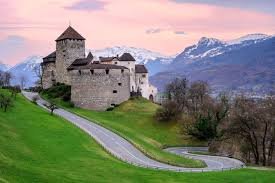
in the micro country of liectenstein

with so many interesting things about this amazing tiny place

here are just a couple of examples:


in 1886 liectenstein had an army of 80 men who fought during the austro-prussian war

they suffered no injuries or deaths

and returned with 81 men because they made a new italian friend from the opposition army.

the army was disbanded soon after and they haven’t had an army since. 


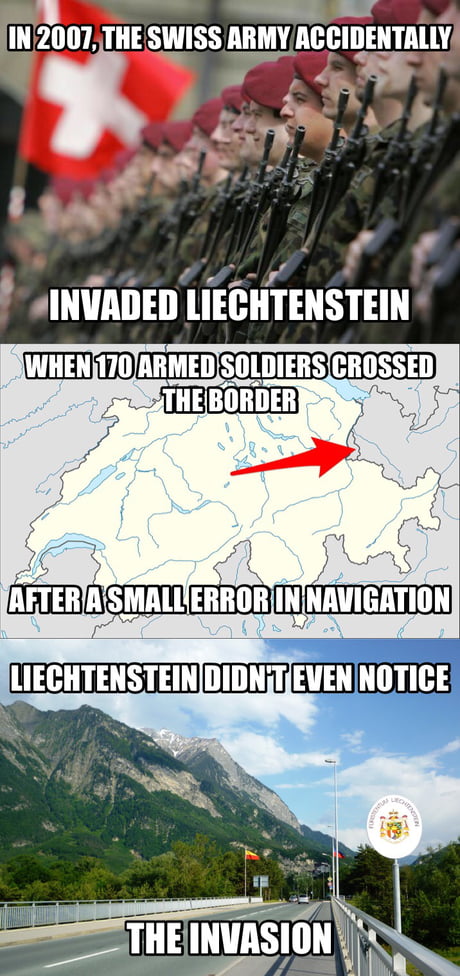
and then there was the accidental invasion which didn’t cause much of a stir:

i really love their approach to life

and i’m guessing my one reader is a pretty laid-back person

and with such a tiny country

perhaps a descendent of that new italian friend they brought back from the war?

here’s to liectenstien!


“be so good they can’t ignore you.”

-steve martin


image credit: expat.com