One hundred years ago this month, the magician P.T. Selbit ushered his assistant into an upright wooden box, sealed it, laid it flat, and got down to business, sawing the box right down the middle. The show, according to magic experts, was the first time a performer ever sawed someone in half. Why has this trick survived, when so many others haven’t? If you ask magicians, NYT writer Alex Marshall spoke with six — they eventually land on one answer. “It’s just the simplicity of it,” said Mike Caveney, a magician who’s writing a history of this trick. “Magicians say a good trick is one that can be described in a few words, and ‘sawing a lady in half’ is very few words,” he added. As for being the assistant, “When you’re doing it you’re not a passive person,” one magician said. “It’s claustrophobic, and quite noisy, but such fun!”
—
” i believe your reality is what you make it, what you choose to see, and what you choose to allow yourself to do.
there are possibilities all around you – magic all around you – no matter what situation you’re in.”
-keke palmer
—
Story credit: Alex Marshall, NYT- Image credit: Nolan Pellitier
mental floss has reached into their incredible research bag of treasures
to share some board games that may have had their time
but alas, have not remained classics.
below are a few gems and i’m not saying i wouldn’t want to play them,
i am a huge fan of board games of all kinds –
Aside from Parker Brothers, few board game manufacturers have come close to Milton Bradley’s track record: Millions of players across multiple generations have put in serious time playing Twister, Yahtzee, The Game of Life, and Battleship.
But while games like Simon and Connect Four have kept up brand appearances over the decades, it’s possible that founder Milton Bradley might have flinched at some of the other titles that bear his name.
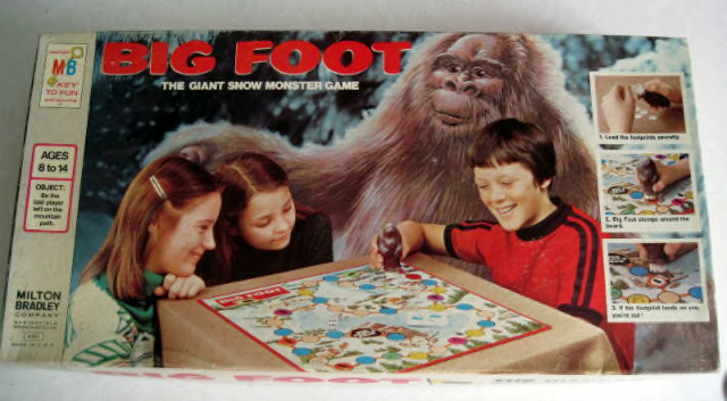
BIG FOOT (1977)
The mythical woodland creature experienced a considerable amount of attention in the 1970s, including an encounter with Steve Austin on The Six Million-Dollar Man. (Andre the Giant was cast in the fur suit.) A famous and non-copyrightable beast made a perfect premise for a game in which players assumed the roles of Alaskan gold prospectors who roll dice while trying to avoid the “footprints” made by the monster. Although Bigfoot looks affable enough on the game box, his plastic game piece appears to be anything but.
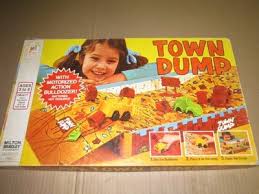
TOWN DUMP (1977)
It’s never too early to get a child used to playing with garbage. In this game, two players take turns winding up a miniature bulldozer that propels itself through pieces of trash and pushes them out of the way. The object appears to be to clear waste out of your dump and into your rival’s property, which imparts a valuable lesson: Let your discarded trash become someone else’s problem.
LOBBY: A CAPITAL GAME (1949)
“Here’s your chance to be a congressman! You can pass all your favorite bills and lobby against those you oppose.” Milton Bradley felt confident a game of governmental regulations and lobbying would be a hit with anyone “old enough to read a newspaper.”
“Life is more fun if you play games.” ― Roald Dahl,
The NYT has traced the first nachos back to Piedras Negras, Mexico, in 1940, with just three ingredients. As the story goes, a group of women walked into the Victory Club in Piedras outside business hours. Aiming to please, Ignacio Anaya, the maître d’hôtel known as Nacho, ran to the kitchen and made a quick appetizer with ingredients he found. Today’s nachos know no end to their variations: They can have a number of seasoned layers or simply be topped with cheese sauce, like those sold at concession stands. But the simplicity of its original, with its barely salted chips, nutty melted cheese and briny pickled jalapenos, is sure to charm true nacho fans.
“we’ve all invested emotionally in nachos.”
-conan o’brien
—
credits: Christoper Simpson(NYT) and Simon Andrews- food stylist (NYT)
whenever I’ve visited my friends’ lake house in the irish hills of michigan, there has never been a shortage of lakes and trees to be enjoyed. on one recent visit they took me on a walk through a very special place that I’d been wanting to see since hearing about it. at first impression it appears to be a beautiful, rolling, wide open natural space, but there is much more to it than first meets the eye.
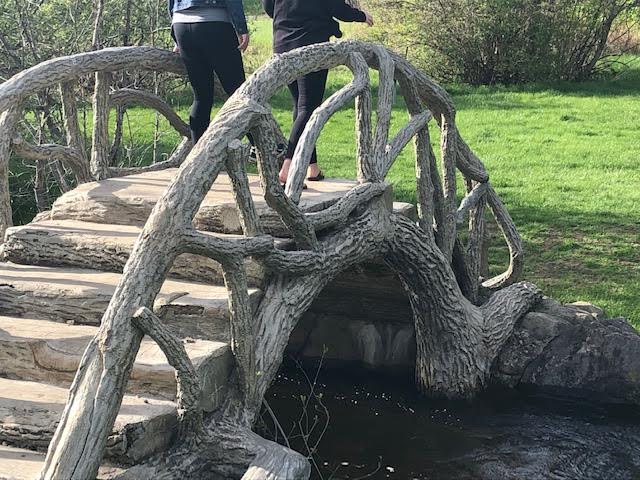
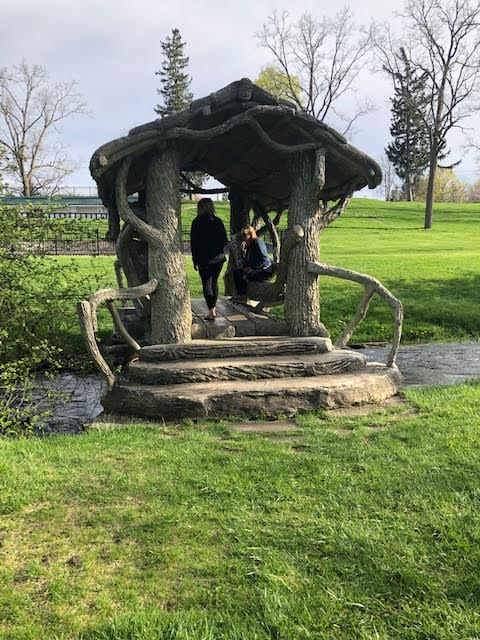
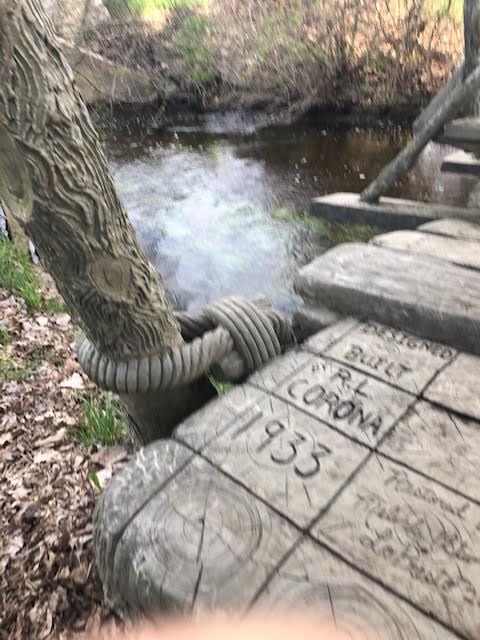
once known as aiden lair, and now known as mccourtie park, it was formerly the 42-acre estate of herb mccourtie, a cement magnate. its trademark is its concrete bridges artistically handcrafted to resemble wooden structures. a visionary who loved architecture for art’s sake, mccourtie showed the versatility and beauty of the product he manufactured in 17 bridges that he commissioned to be created on his property using the 19th-century lost art of “el trabajo rustico” (the rustic work) in faux bois (imitation wood).
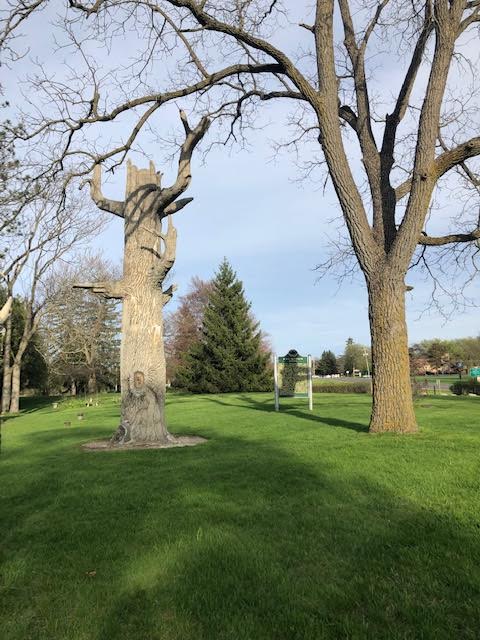
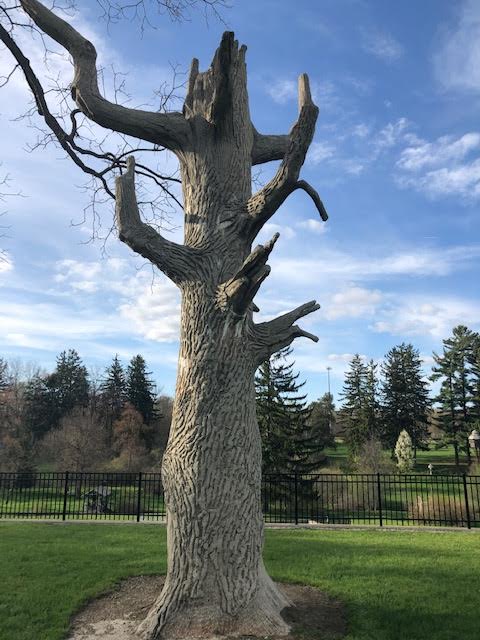
for more than 10 years, two mexican artists, george cardoso and ralph corona, created the bridges that span the creek on the property, as well as two concrete trees that cleverly hide the chimneys to his rathskeller. the bridges were individually created from wet mortar to resemble ropes and logs simulating native trees, such as oak, walnut, cherry, birch and beech. the intricate details include knots, insect holes, saw cuts, wood grain and even moss, lichen and beetle holes. an elaborate system of underground wires provided lights on and under some of the bridges. in addition, he created two huge pools, one for use as a swimming pool and the other as a fishing pond for his guests’ enjoyment.
(stills hidden in the cement ‘trees’ mixed among the natural trees)
known for giving lavish parties, he hosted a homecoming celebration every year that drew thousands of people to aiden lair to witness stunt flyers and enjoy baseball, local musicians, dancing and free refreshments. in the underground garage and rathskeller he created, he threw all-night poker parties that were attended by the likes of detroit auto baron henry ford.
throughout its history, the park has been the subject of rumors and legends. mccourtie’s rathskeller, which features a large bar, fieldstone fireplace, and vault, is rumored to have been a speakeasy during prohibition and a stopping point for al capone and other gangsters who bootlegged whiskey from chicago to detroit on U.S. 12.
it’s also been rumored that there are tunnels under the park property that served as stations for runaway southern slaves on the underground railroad. some people have reported sightings of a ghostly “lady in blue” strolling the grounds in old-fashioned clothing.
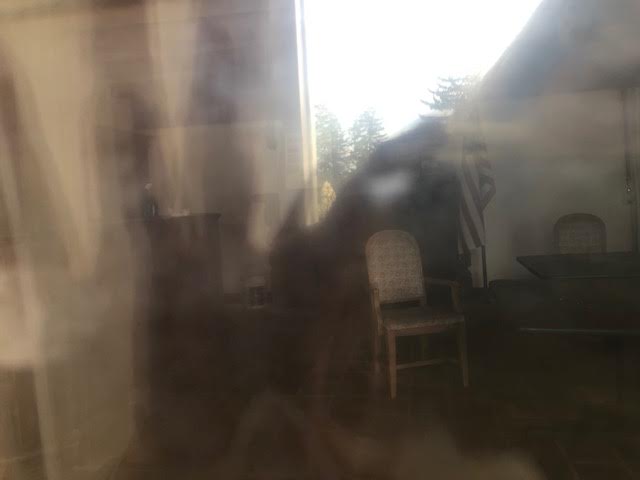
(a peek into the window of what used to be the ‘rathskeller’ – a bit creepy now)
in 1991, mccourtie park was named to the state register of historic sites by the michigan historical commission. the next year, it was added to the national register of historic places by the national park service.
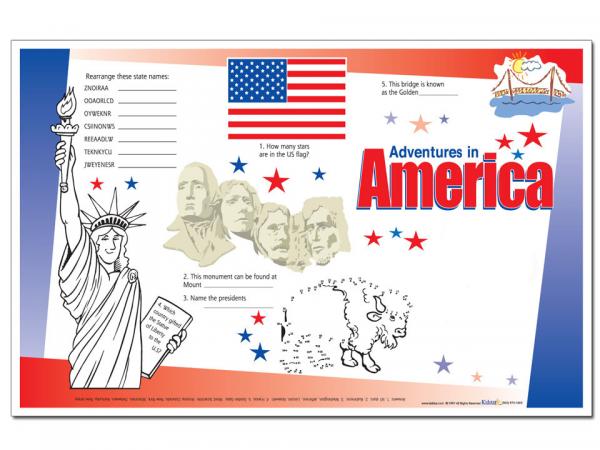 on president’s day