Tag Archives: life

be like star trek.

Standard

cast of the original star trek series

“star trek was an attempt to say that humanity

will reach maturity and wisdom

on the day that it begins not to just tolerate,

but take a special delight

in differences in ideas and differences in life forms.”

-gene roddenberry -star trek creator


image credit: nbc tv

direct reflection.

Standard

reflecting while exploring 


“the way we experience the world around us is a direct reflection of the world within us.”

-gabrielle bernstein


june 2022 – oakland county, michigan, usa

on memorial day.

Standard

“yours has the suffering been, the memory shall be ours.”

-henry wadsworth longfellow


on memorial day


photo credit: marde ross and company

for texas. and everywhere.

Standard

“the world is indeed full of peril and in it there are many dark places.

but there is much that is fair.

and though, in all lands,

love is now mingled with grief,

it still grows, perhaps the greater.”

-j.r.r. tolkien


push and pull.

Standard

my favorite indignant complaint of the month

 straight from our local ‘next door’ site. 

“So half of ann arbor doors are PUSH. But the other half are all PULL. Can’t the CITY make up their minds about anything??? I’m drafting a letter to Governor Whitmer if you want to sign. We can not be expected to remember which is push or which is pull! I am just tired of this. Life is stressful and having to constantly push or, wait, PULL is nonsense at this point.”

“a man will be imprisoned in a room with a door that’s unlocked and opens inwards;

as long as it does not occur to him to pull rather than push.”

ludwig wittgenstein

art credit: gary larson, the far side

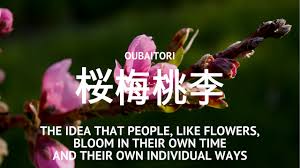
oubaitori.

Standard

oubaitori is a japanese idiom written as a combination of kanji characters,

representing four trees that bloom in spring: cherry, plum, apricot and peach.  

i believe this to be true for everyone

from the youngest child 

to the most elderly.

noetic or poetic?

Standard

NOETIC

no-ED-ik

Part of speech: adjective 

Origin: Greek, mid-17th century

Definition: Relating to mental activity or the intellect.

Examples in a sentence:

“The philosophy department attracts noetic students.”

“Noah was equally athletic and noetic”

Some travel life, 

Shining brightly noetic

But as for me, 

 I’d rather wax poetic. 

-beth


image credit: npr brightside

april returns.

Standard

“the sweet, small, clumsy feet of april came into the ragged meadow of my soul.”

-e.e. cummings


 —

art credit: Salvador Dali ‘Flowers’ 1948

as poetry.

Standard

“some of us don’t want to be tough alpha leaders.
some of us just want to write
and wander
the garden
and breathe in the sky
and nourish and nurture
and quietly create
new pathways
and live our
lives as art.
to know the earth
as poetry.”
-victoria erickson, rhythms and rhymes
in honor of national poetry month
art credit: Edgar Degas | Landscape | The Metropolitan Museum of Art


the art and joy of puttering.

Standard

If waiting for an important telephone call, or stuck in writer’s block with a looming deadline, we’ll inevitably rearrange our record collection or clear up the papers dotted around your office – and it’s sometimes the most relaxed you’ll feel all day.

We’re not alone in this. As we faced pandemic stresses, many people reported finding renewed interest in looking after their homes as a way of coping with the uncertainty. On YouTube, there’s a huge audience for videos of people going about their chores, with millions of views for some of them. Psychologists suggest there are many mechanisms that might explain the perfect pleasure of puttering – and they may well encourage you to engage in it more often.

At the most superficial level, puttering may be useful because it occupies the mind, so that we devote fewer resources to the things that are worrying us. Even if we struggle with structured forms of meditation, for instance, we may find household tasks can anchor us in the here and now. But that will depend on where we place our focus.

In one of the few studies to examine the mental health benefits of washing the dishes, researchers divided 51 participants into two groups. Half read a text that encouraged them to focus their thoughts to the sensations evoked by the activity. “While washing the dishes one should be completely aware of the fact that one is washing the dishes,” they were told. The rest read factual instructions on how to do washing up without explicitly encouraging them to focus their awareness on the sensations it produces.

Afterwards, the participants were asked to take a questionnaire about their feelings. Those who had fully engaged with the sensory experience reported a significantly better mood. This included reduced nervousness and even a sense of “inspiration”, as if the immersion in the simple activity had refreshed their minds.

Unlike other distracting activities – such as playing computer games or watching trashy TV – puttering also has the advantage of being proactive and useful, increasing our “perceived control”.

When we feel anxious, a sense of helplessness can heighten the physiological stress response, increasing levels of cortisol. Over the long term, the sense of helplessness can even harm the function of the immune system. Ideally, we would deal directly with the upsetting situation itself. But research suggests we can gain a perception of control from activities that may have little effect on the situation that’s bothering us.

“It doesn’t necessarily have to align with actual control, as long as we believe, or feel, we have control,” says Stacey Bedwell, a psychologist at the Institute of Psychiatry, Psychology & Neuroscience, King’s College London. Simply being able to change our environment can create a feeling of agency that is beneficial, she says – which may explain why cleaning and organizing our homes can feel so therapeutic.The benefits do not end there. If your puttering takes the form of organizing and decluttering, you may find that the tidier environment is itself a form of solace.

As the University of Michigan psychologist Ethan Kross writes in his book Chatter: The Voice in Our Heads and How to Harness It: “We’re embedded in our physical spaces, and different features of these spaces activate psychological forces inside us, which affect how we think and feel.” If we see order outside, it helps us to feel a bit less chaotic inside, he writes. “[It] is comforting because it makes life easier to navigate and more predictable.”

Brain imaging studies support this view. In general, you see much greater brain activity as you increase the number of distracting objects within a scene – with each object vying for our attention. This may lead your brain to tire so that it struggles to maintain its focus over long periods of concentration.

Importantly, you don’t necessarily have to remove the clutter to prevent this from occurring – simply rearranging it will do. Organizing objects into groups – by color, for example – may provide the brain with more obvious cues for navigating the chaos. This reduces some of that neural confusion – and may improve our focus as a result. By reducing anxiety, soothing stress responses, increasing focus and triggering the release of endorphins, it’s little wonder so many of us take to household chores as soon as we are faced with uncertainty.

Like all activities, the extent of these benefits will be influenced by your personal tastes and the associations that you link with the tasks. If you are housework-averse, and will only pick up a duster under duress, the pleasures of puttering may be forever elusive. But for the homebodies among us, we can now understand why fruitful fidgeting can be such a salve for the restless mind.

“the imagination needs moodling– long, inefficient, happy idling, dawdling, and puttering.”

-brenda ueland

what’s your go-to puttering activity?

BBC, David Robson, science writer, Ethan Cross, author