Category Archives: space

“To exist in this vast universe for a speck of time is the great gift of life.” Author Unknown

Standard

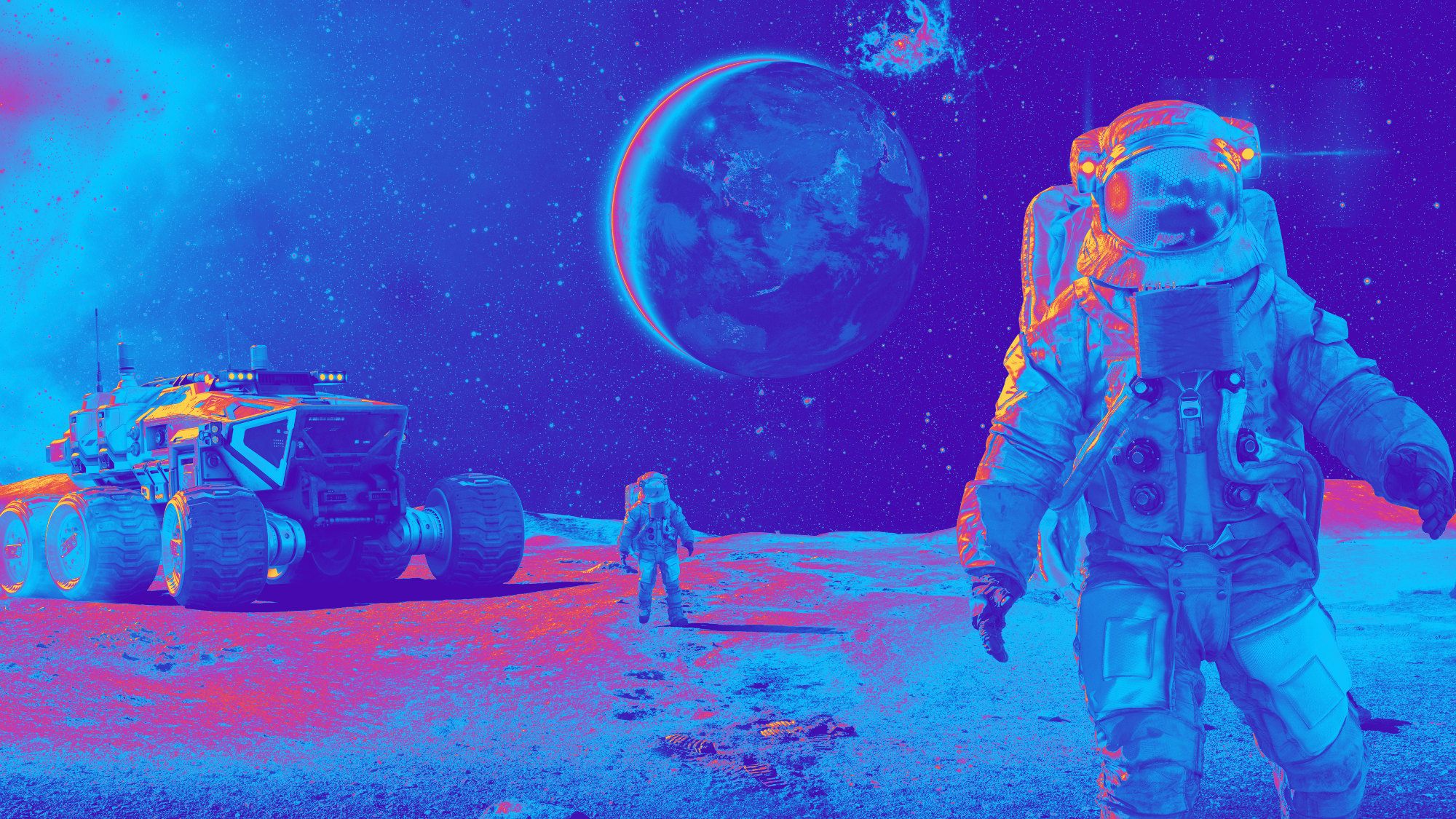
How to send your name to space on NASA’s next moon mission 

———–

NASA loves a public-participation moment,

but this one is pretty cool, especially if you’re a space nerd.

The agency is giving anyone on Earth

a chance to send their name to the Moon on Artemis II,

the first crewed lunar mission in more than fifty years.

It’s free, fast, and takes about as much effort as signing up for yet another streaming trial you’ll forget to cancel. Will anything “special” happen? No. But it is a fun way to be a part of history.

Artemis II is scheduled to launch no later than April 2026 with four astronauts on board: Reid Wiseman, Victor Glover, Christina Koch, and Canadian astronaut Jeremy Hansen. Their ten-day journey will push about 4,600 miles beyond the Moon, loop them back toward Earth, and give NASA a real-time test of its deep-space systems before future missions that aim even farther out.

If you want your name along for the ride, NASA says it only takes three steps.

1. VISIT THE REGISTRATION PAGE

NASA’s Send Your Name with Artemis portal is where the whole thing starts. Click, open, done.

2. ENTER YOUR NAME AND A PIN

You submit your first and last name, then choose a 4- to 7-digit PIN. NASA warns that it cannot recover a lost PIN later, which might be the most on-brand government sentence ever written.

3. DOWNLOAD YOUR DIGITAL BOARDING PASS

Once you hit submit, NASA generates a personalized boarding pass that looks fancier than anything handed out at an actual airport. Save it, screenshot it, cherish it.

Every submitted name will be stored on an SD card mounted inside the Orion spacecraft. As Orion heads into deep space, the crew will spend the first two days testing systems near Earth before firing the service module engine to break out of orbit. The translunar injection burn will send them on a four-day figure-eight path around the far side of the Moon. Along the way, scientists will collect data on radiation, human performance, and communication tech that will support future missions to Mars.

After the lunar swing, the spacecraft will return for a high-speed reentry and splashdown in the Pacific Ocean, where NASA and the Department of Defense will recover the crew and capsule.

Sending your name obviously doesn’t make you part of the mission crew, but it does give you a tiny foothold in a milestone flight humans have been trying to reach again for half a century. As far as free souvenirs from space go, it beats a fridge magnet. And, hey. It’s wholesome fun. We need more of that.

“The cosmos is within us. We are made of star-stuff.

We are a way for the universe to know itself.”

– Carl Sagan

Source credit: Vice Magazine, Ashley Fike
eclipsed.

Standard

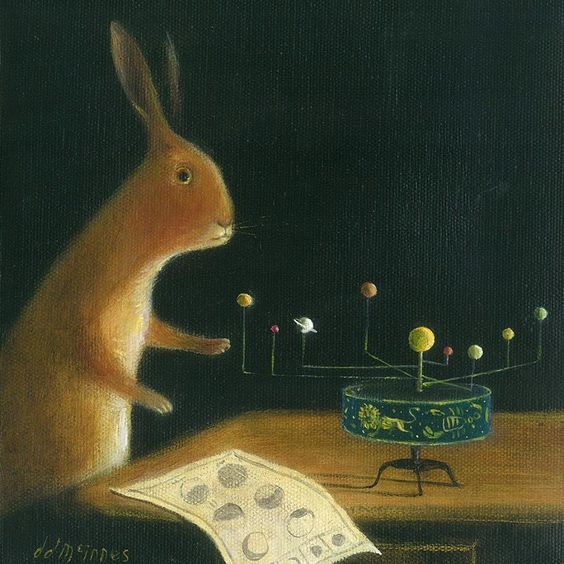
“what’s the sense in having an eclipse if you can’t look at it? somebody in production sure slipped up this time!”
-charles m. schulz, the complete peanuts, volume 7
image credit: d.d. mcinnes, astrolabio and bunny

wall.

Standard

danny and alfred

keep out!

no trespassing!

police tape!

just not sure how effective

the signs will be

with only one wall

but maybe the power of suggestion

is stronger than i think. 

“every wall is a door.”

-ralph waldo emerson

tang.

Standard

Tang! The space-age drink that’s still a worldwide staple

But General Foods, Tang’s original parent company, had contracts with the military for producing rations and other food items, such as instant coffee. Thanks to these connections and the aforementioned shelf-stable, “just add water” capability of Tang, NASA sent the drink mix into space with John Glenn on his famous orbit of Earth in 1962. General Foods’ advertising strategy shifted to capitalize on the popularity of all things outer space, and Tang henceforth became marketed as the astronaut’s drink of choice.

But Tang isn’t just a space age relic. It’s still popular across the globe, from South America to Asia, and produced in a number of flavors – including pineapple, mango, lemon, calamansi and its newest Filipino flavor,  Coco Plus Buko Pandan. Tang is also a popular drink during Ramadan in the Middle East, according to Mondelez International, the food corporation that now owns the brand.

“whoo, what a day! i’m gonna drink tang all day until i forget it all!”

-jhonen vasquez 


Source credits: Casey Barber, CNN, Kraft Foods, General Foods, Monedelez Int., NASA


way out.

Standard
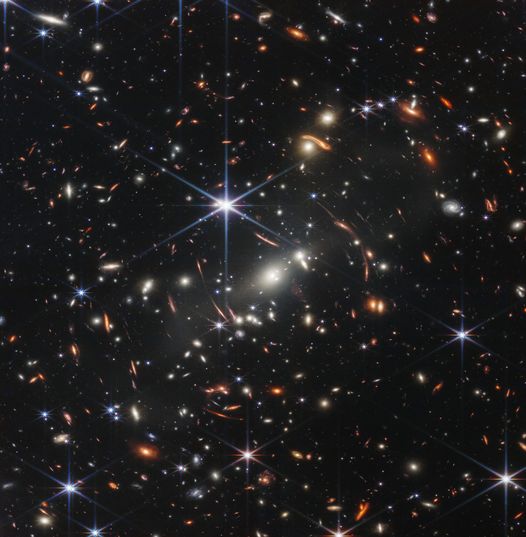
The first publicly released image from the James Webb Space Telescope, showing countless galaxies and multiple arcs where the combined gravity of those galaxies magnifies light from background objects, bringing even more distant galaxies into view.  NASA
NASA Administrator Bill Nelson described the image to President Biden, saying all the stars and galaxies it encompassed were located in an area of space the size of a grain of sand held at arm’s length by someone standing on Earth.

“We’re looking back more than 13 billion years,” he said. “That light that you are seeing has been traveling for over 13 billion years, and by the way, we’re going back farther. This is just the first image. They’re going back about thirteen-and-a-half billion years. And since we know the universe is 13.8 billion years old, we’re going back almost to the beginning.”

NASA plans to release additional “first light” images Tuesday, photos designed to showcase Webb’s ability to chart the details of stellar evolution, from starbirth to death by supernova, to study how galaxies form, merge and evolve and to probe the chemical composition of atmospheres around planets orbiting other stars.

This initial Webb deep field released Monday promises to rewrite the astronomy books yet again, providing the data needed to fill in many of the major gaps in the history of the universe, perhaps even providing the framework to determine when —  and how —  the first massive stars formed, exploded and seeded the cosmos with the heavy elements that make life possible.

“the size and age of the cosmos are beyond ordinary human understanding.
lost somewhere between immensity and eternity is our tiny planetary home.” 
-carl sagan, cosmos
source credit: nasa

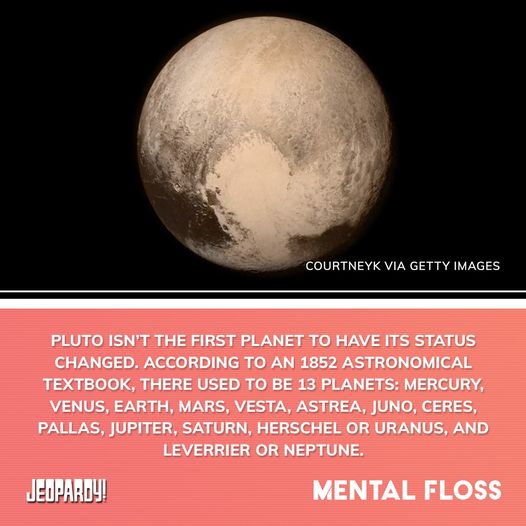
‘i refuse to accept pluto’s resignation as a planet.’- amy lee

Standard

 though not the first to go,

pluto lost its planetary status 15 years ago

 and not everyone agrees.

“as a planetary scientist, I don’t know what else to call Pluto: it’s big and round and thousands of miles wide.’ alan stern


credits: mental floss, jeopardy, getty images, courtney k

11.

Standard

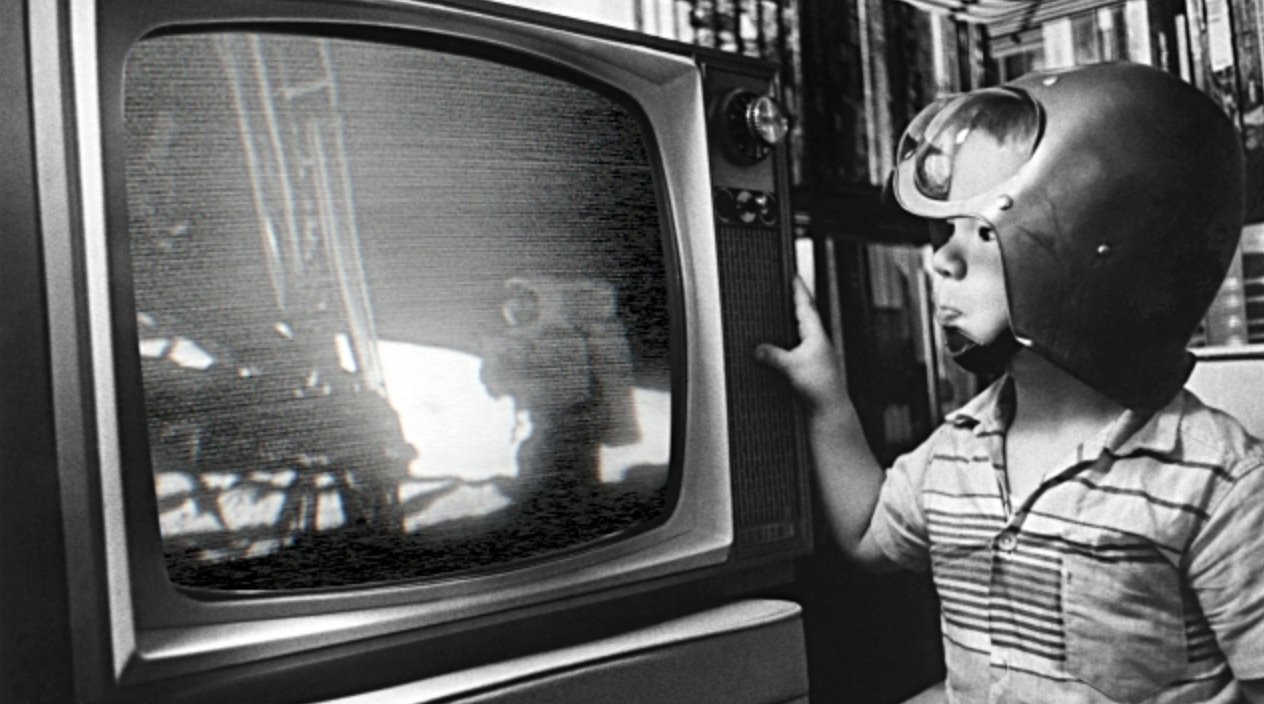
(in honor of all the recent space activity and a soon to arrive full moon – a repost from 2 years ago)

50th anniversary of the week of the Apollo 11 moon landing

I was 11

on the cusp of everything 

we went over

to my parents’ friends’ house

everyone was transfixed

air was electric

all gathered around the tv

watching

silent and awestruck

gobsmacked

as the first man walked on the moon

spoke his first words on the moon

 lots of emotion in the house

I ran to the window to look at the moon 

hoping I would see him up there

right in the middle of all of this

the hostess

left to go to the hospital

to have her baby

she named him neil

after that man on the moon.

“we ran as if to meet the moon.” 

― robert frost

image credit: Ann Arbor district library archives

down to earth.

Standard

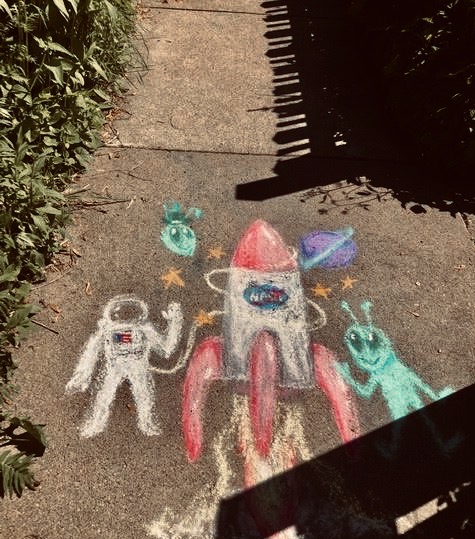
a sidewalk homage to success 

as the first spaceX crew dragon spacecraft “Endeavour” with a human crew

returns american nasa astronauts and best friends, bob and doug, to earth 


“i don’t know what you could say about a day in which you have seen four beautiful sunsets.”

– john glenn,  american astronaut


photo credit: nasa.gov (Robert Behnken and Douglas Hurley- astronauts)

stardust.

Standard


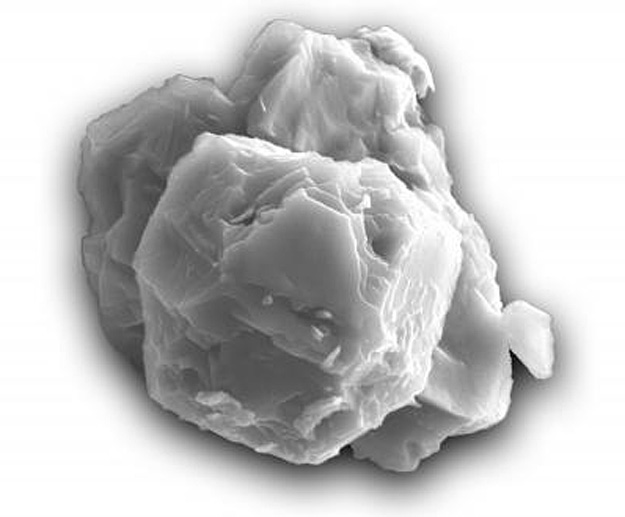
Scanning electron microscope image of one of the clumps of presolar grains, or stardust. Image via Janaína N. Ávila/EurekAlert!


Ancient stardust in meteorite is older than Earth

Grains of stardust – particles left behind by star explosions – in an Australian meteorite are now the oldest known material on Earth. A new study suggests this stardust came to be long before our sun ever existed.

As the saying goes, we are all made of stardust. It’s true. The elements in our bodies – oxygen, carbon, nitrogen, calcium and so on – are made in the thermonuclear furnaces of stars. When scientists speak of stardust, or cosmic dust, they’re speaking of the leftover tiny particles from dead stars that exploded as supernovae. This stardust later goes into forming new stars, planets and moons, including those in our own solar system. It goes into the solar system’s debris, the asteroids and comets, and ultimately meteorites, or rocks from space that find their way to Earth’s surface. Now scientists at the Field Museum in Chicago have found the oldest known samples of stardust in a meteorite that landed in Australia. The meteorite is estimated to be 5 to 7 billion years old. The stardust samples are the oldest material ever discovered on Earth. This dust is even older than our solar system.

The new peer-reviewed study was published in Proceedings of the National Academy of Sciences on January 13, 2020.


credits: SPACE – Paul Scott Anderson, Proceedings of the National Academy of Science, Earth Sky, Chicago Field Museum, Phillip Heck

11.

Standard

50th anniversary of the week of the Apollo 11 moon landing

I was 11

on the cusp of everything 

we went over

to my parents’ friends’ house

everyone was transfixed

air was electric

all gathered around the tv

watching

silent and awestruck

gobsmacked

as the first man walked on the moon

spoke his first words on the moon

 lots of emotion in the house

I ran to the window to look at the moon 

hoping I would see him up there

right in the middle of all of this

the hostess

left to go to the hospital

to have her baby

she named him neil

after that man on the moon.

“we ran as if to meet the moon.” 

― robert frost


image credit: Ann Arbor district library archives