alphabet soup.

Standard

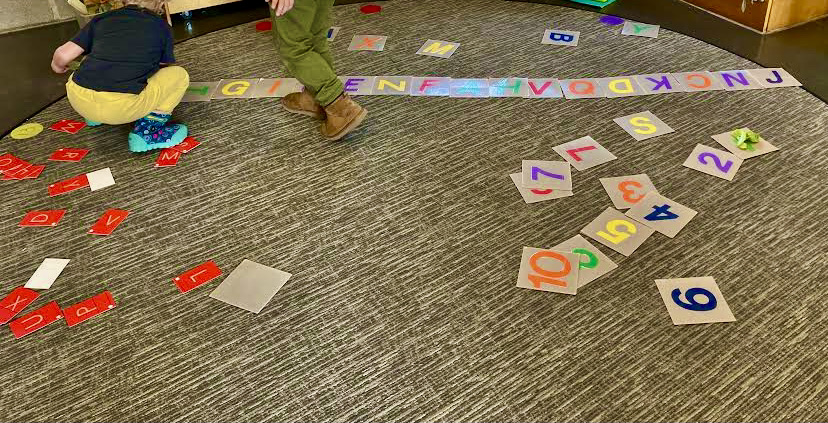
i have always loved alphabets

when i was young

one of my favorite days ever

was when i could finally

decode the letters and read words

i love alphabets created out of every imaginable material, and alpha art and images of all kinds

today i tried to look up the word for someone who loves alphabets

and there was nothing to be found

the closest i could come was for someone who loves words:

What do you call a person who loves words?
A logophile is a person who loves words; a word nerd.
Because it’s not all that commonly known,
logophile is probably most commonly used by logophiles themselves.
(of which i am one)
but alas, ironically, no word for someone who loves the letters that make up every word.

“human society, the world, and the whole of mankind is to be found in the alphabet.”

-victor hugo


village.

Standard

This Haunted, Abandoned Village in Scotland

Can Be Yours for $173,000

The Old Village of Lawers, currently for sale in Scotland, comes with some baggage. In addition to its centuries-old ruins, the property purportedly comes with the ghost of a seer whose famous for her accurate predictions. If this sounds like your dream listing, the historic village can be yours for $173,000, CNBC reports.

The sale of the Old Village of Lawers in Perthshire, Scotland, is being managed by the Goldcrest Land & Forestry Group. The settlement dates back to the 17th century, and it includes the ruins of the Old Lawers Church, a kiln, and mill, and the House of Lawers. The latter site housed the Lady of Lawers in the late 1600s.

The seer put forth various prophecies in her lifetime, including visions of “fire-coaches” and ships powered by smoke. These have since been interpreted as predictions of trains and steamships. She also proclaimed that the ridging stones for the church would never be laid—a prediction that came true when a storm washed them away. Today, the ghost of the Lady of Lawers is said to haunt the village she once called home.

The 3-acre property offers more than dilapidated buildings and supernatural legends. It also comes with a private beach, semi-ancient woodland, and the rights to fish for trout and launch a boat in Loch Tay. The village, which has been unoccupied since the early 20th century, is perfect for someone looking for a truly secluded getaway in central Scotland. The Old Village of Lawers is listed for £125,000, or roughly $172,859 USD.

who’s in?

“the village is coming back, like it or not.”

-david brin


source credits: mental floss, michele debczak, cnbc

mugs.

Standard

met my dear friend at a recently reopened local diner

for breakfast and a long overdue catch-up

mid-breakfast she noticed the variety of cups they used

all from other sources

mine was covered with the logo of an alcoholic beverage

hers bore the name of a blood pressure/heart medication

luck of the draw, kind of like a fortune cookie

can make or break your whole day

we had a great laugh and talked about

how we both choose our morning mugs for coffee depending on our moods and needs

each morning we seek out and grab, without much conscious thought, the mug we need to start that day

do we reach for –

the inspirational-phrased mug, the heavy mug, the ego-boosting mug, the gift mug, sentimental mug, the deep thought mug, the light as a feather delicate china mug with the flora or fauna, art mug, clean mug, favorite place mug, photo mug, travel mug, joke mug, big mug, little mug, ironic mug, two-hands needed mug, favorite color – shape – size, ceramic, plastic, paper, metal, glass, unbreakable mug?

i knew we were friends for a reason.

“i have a mug that actually verifies that i’m the world’s best dad.

that’s a mug. that’s not me talking.

you can’t just buy those.”

-stephen colbert

extraordinary.

Standard

rereading one of my favorite books

well-worn/well-loved

dr. zhivago

  sweeping epic set in russian history

extraordinary characters

extraordinary times

pasternak a poet

i would love for it to have

a different ending

for just one reading

yet know

it would not be

the story it was meant to be.


“literature is the art of discovering something extraordinary about ordinary people,

and saying with ordinary words something extraordinary.”

-boris pasternak

climb it.

Standard

one is a crazy toddler yeti

one is an energetic tween grandie

both are natural climbers

can you guess which is which?


“obstacles don’t have to stop you. if you run into a wall, don’t turn around and give up.

figure out how to climb it, go through it, or work around it.”

Michael Jordan

small arms.

Standard

“seasons pursuing each other,

the indescribable crowd is gathered,

it is the fourth of the seventh-month,

what salutes of cannon and other small arms!”

-walt whitman

happy 4th!

blind date.

Standard

summer meets july


“july is a blind date with summer.”

-hal borland

you say cicada, i say cicado.

Standard

it’s been 17 years and they’re back!

they been sitting around underground

patiently waiting

for a dramatic return

no reason to stress

instead

our library has created a city-wide bingo game in their honor

what could be more fun?

and i’ve already got my free spot filled.


Cicada Summer

Brood X has ARRIV- er, EMERGED from the depths to see YOU!!!! 

But have YOU seen THEM? HEARD them?? READ ABOUT THEM??? FOUND THEIR SHELLS???? 

If you have, you may have one or more boxes checked off on our CICADA SUMMER BINGO!!! 

From your friends at the Ann Arbor Public Libraries

“i work even in the middle of the day, in the full sunshine, and i enjoy it like a cicada.”

-vincent van gogh

source and photo credits: ann arbor district library, cicada@aadl.org

thanks to our neighbors, on canada day.

Standard


things you might not know were invented in canada


1. Peanut Butter -1884 (by a pharmacist as an option for people who couldn’t chew food)

2. The Wonder Bra – 1939 (by Canadian Lady Corset Company)

3.Trivial Pursuit – 1979 (by a sports editor and photo editor who couldn’t find all their Scrabble squares)

 4. Odometer – 1954 (by a nova scotia inventor)

5. Rotary Snowplow – 1869 (by a dentist – a popular train track clearing device)

6. Egg Carton – 1911 (by a newspaper editor who found a new use for paper)

7. Imax – 1967 (by 3 filmmakers and an engineer)

8. McIntosh Apples – 1835 (by a farmer grafting his wild apple trees)

9. Walkie Talkie – 1937 – (by a western canadian inventor)

10. Insulin – 1922 – ( by 3 toronto scientists- not invented but discovered it and its use )

11. Instant Replay – 1955 (by a cbc tv producer)

12. Foghorn – 1854 (by an inventor/civil engineer/artist – who never patented it)

13.  Green currency ink – 1862 (by chemist/mineralogist – ink used to make us dollars green)

14. Baggage tag – 1882 (by a new brunswick railway man)

15. Paint Roller – 1940 (by a canadian inventor – later tweaked and patented by an american)

16. Standard Time- 1883 (by an engineer who brought it to canadian and american railways)

17. Wheelchair – accessible bus – 1945 (by a blind, quadriplegic veteran – took his first ride after his death)

18. Electric Wheelchair – 1952 (by an engineer)

19. Plastic Trash bags – 1950 (by 2 inventors – later sold to union carbide and became glad bags)

“i don’t even know what street canada is on.”

-al capone, american gangster


source credits: amanda green, mental floss, canadian pixel

lay vs. lie.

Standard

Word choices: lay vs. lie 

when looking up the eternal lay vs. lie question, (similar to the chicken vs. egg conundrum), this is what i found. i started out strong, but as i kept reading, it really only served to confuse me more, and my level of understanding dropped with each new sentence of explanation and i had to lay or lie down. warning: do not try to read this when lying or laying down. 

Imagine your friends are over for a movie night, and they’ve brought a tray of brownies to share. You take the platter from them — but do you tell them you’re going to “lie” it down or “lay” it down? And will you all “lie” down to watch the movie, or “lay” down? It’s an age-old question: What is the actual difference between “lay” and “lie”? When do you use one over the other?

Why are “lay” and “lie” confusing?

To clarify: We’re not talking about the kind of lie you might tell when you call out of work or don’t finish your homework on time. We’re talking only about the setting/reclining meaning of the verb.

“Lay” and “lie” are often confused because both words are about people or objects positioned horizontally on a surface. But they are used to refer to different scenarios.

It can be quite simple — if you’re in the present tense. The past tense is when things really get confusing, since the past tense of “lie” is “lay” (sorry). But don’t worry, we’ll give you a few easy tips to help you along.

When to use “lay” vs. “lie”

“Lay” is a transitive verb. Transitive means that you have an object that is being acted upon. So “lay” means to set down or place something — an object — in a horizontal position. Here’s an example in the present tense: “I lay the book on the nightstand.” In this instance, the book is the object that is having something done to it.

“Lie” is an intransitive verb, meaning the object doesn’t need something else to put it down. Instead, the person or subject is doing the action. “Lie” means to stay at rest in a horizontal position, or to recline. An example of “lie” in present tense would be, “I feel the wind as I lie in my backyard on the grass.” In this example, the person is performing the action rather than having the action done to them.

So, in the present tense, the simplest way to determine which word to use is by looking at what is actually being reclined. If the reclining object is inanimate and/or requires someone to put it down, use “lay.” If the object is self-sufficient, such as a person, use “lie.” Quick memory tip: Only a person can lie on a bed and tell a lie.

“Lay” and “lie” in other tenses

 Let’s tackle the past tense of each, since that’s where there’s the most opportunity to pick the wrong word.

I ____ my clothes out last night before I went to bed.

Which one is it — “lay” or “lie”? Here’s how to tell: Is something happening to an object? Yep! The clothes are being set out. That tells us that we need the verb “lay,” past tense “laid.”

I laid my clothes out last night before I went to bed.

Now, what about the past tense of “lie”?

I heard a noise coming from the basement as I ____ on the sofa watching a horror movie.

In this example, there is not a specific action being performed upon an object. Rather, the speaker (the subject) is doing the action. This means we need the past tense of “lie,” which (confusingly) is “lay.”

I heard a noise coming from the basement as I lay on the sofa watching a horror movie.

Still confused? Don’t worry. You won’t get reprimanded too much if you mix these up in verbal conversation. But for written communication, it helps to practice with examples so you can be confident in your word choice.

(not me, but i was doing this after trying to figure this explanation out)

“the greater part of the world’s troubles are due to questions of grammar.”
― Michel de Montaigne, The Complete Essays


source credits: wordgenius, grammarly