Tag Archives: art

on the spring equinox.

Standard

now is this isn’t a sure sign of spring, i don’t know what is…


“spring makes its own statement,

so loud and clear that the gardener seems to be only one of his instruments,

not the composer.”     

-geoffrey charlesworth

Art credit: Margaret Tarrant – The Fairy Troupe / Spring’s Flowery Cloak. Circa 1920s painting. A female sprite with a blue cloak shepherds tiny fairies and elves, each carrying a spring flower, through the undergrowth. Published by the Medici Society. 

a gift.

Standard

when someone in our class

got injured while playing outside

the kinder quickly sprang into action

creating art and cards for their friend

23 pieces of art from 14 children

given to her to know she was cared about

 a quiet smile was her gift back to them. 

 —

“making art is like giving a gift: evidence of your spirit and that you are here.”

– paddy mitchell

rainbow trout.

Standard

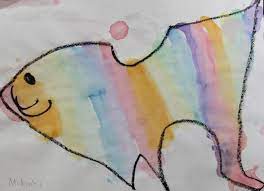
not my trout, but an artist who creates in my style

 a few or five decades back

in my elementary school years

i undertook a project that i loved

an end-of-the-year

comprehensive non-fiction report

covering a wide swath of the animal kingdom

involving research, factual write-ups, and illustrations.

i worked on this tirelessly

gleaning material

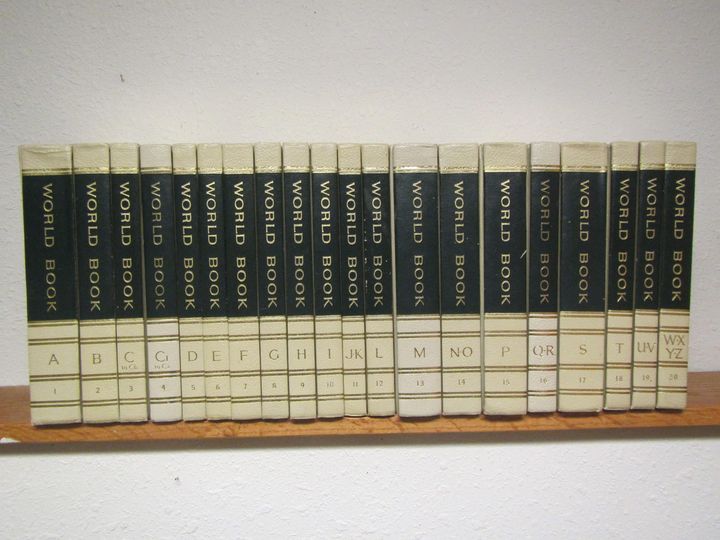
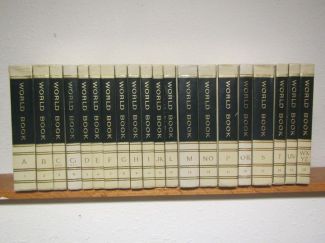
from the only source i used for everything 

our set of encyclopedias

(no google to be found)

all was going well

until i came to the rainbow trout

with no illustration provided

 i used my imagination

creating my own vision

of what a rainbow trout might look like

a beautiful striped fish

with every color of the rainbow

spanning across its shiny and scaly skin

at last

the final piece in my big report complete

rechecked everything

put it all in my new yellow folder

decorated the cover

proudly turning it in

waiting for my teacher’s response

 she perused our reports

while we had silent reading time

 then called me up to her desk

with the hugest of smiles on her face

my report open to the rainbow trout page

telling me that she was going to give me an a+

she said she could see

 i was truly a creative

even more than a scientist

that both were good things to be

and she was right.
“the fish was a twelve inch rainbow trout with a huge hump on its back – a hunchback trout.”

-richard brautigan

yellow.

Standard

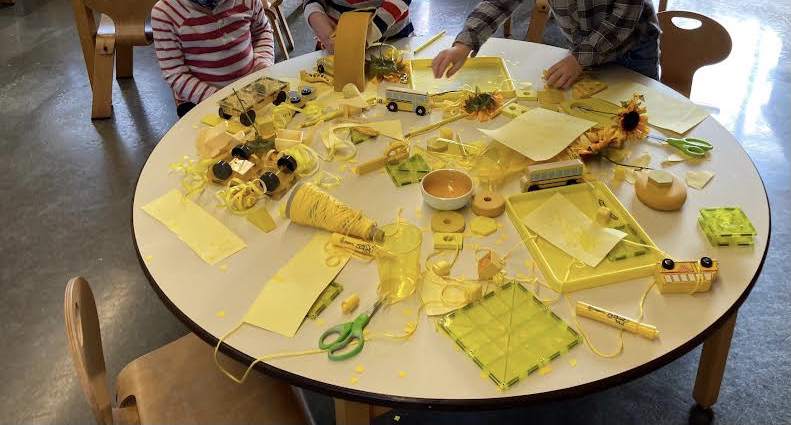
the kinder create with loose parts

dressed all in yellow. 

clearly in their yellow period. 


“yellow is the color which is closest to light.

we associate the rays of the sun and the stars with it.

it is the radiance of the spirit.”

– ueli seiler-hugova

portrait.

Standard

one of the kinder drew this portrait of me in class

and

it is one of my favorite portraits of all time. 


‘every portrait that is painted with feeling is a portrait of the artist, not of the sitter.”

-oscar wilde

art beats.

Standard

the kinder drummed on paint while listening to music

  creating vibrant, splashy, coloring-bursting art

“creativity is intelligence having fun.”
– albert einstein

raining popcorn.

Standard

popcorn is art and one of my favorite snacks

(though it’s no flamin’ hot cheetos!),

something to consider on national popcorn day.

Raining Popcorn (2001) is a piece commissioned by the Faulconer Gallery of the Grinnell College in Iowa. The commission would take artist, Sandy Skoglund many months to complete. In Skoglund’s art practice, the conceptual subject matter works in conjunction with the physical materials she uses, drawing on historical references, and instilling them with psychologically complex meaning.

Produced in 2001, just before the September 11 attacks, Raining Popcorn references the complex roots of American contemporary culture and overconsumption. The unifying subject throughout the piece is popcorn, so pronounced and repetitive it replaces nature. The popcorn becomes an all-encompassing reality, lining the walls, the floors, the subjects, and alas growing from trees. This obsessive environment constructed by Skoglund derives from the artist’s desire to combine sculptures of animals, live humans, and nature into a space that involves thought and play, as part research and part recreation.

The abundance of Popcorn acts as a reflection of the cultural environment, being noisy, excessive, universal, and part of popular culture. Currently, Americans eat 13 billion quarts of Popcorn a year, produced mostly in the heartland of America, from Illinois to Ohio. The piece is a response to memories and experiences Skoglund felt as a graduate student in Iowa.

The painstakingly handcrafted quality of the endless popcorn creates a fantasy landscape, one that raises questions about climate issues and our surrounding environment, as well as fantasy and reality. In Raining Popcorn, Skoglund’s objects and composite staging have a base in truth; they are not a product of photoshop or digital manipulation. It is critical for the artist that the photographs evidence something genuine. The constructions are explicitly staged to be photographed from one unique viewpoint.

“americans love popcorn, and their love doesn’t quit.”

-rosecrans baldwin


Credits: Sandy Skoglund, Raining Popcorn – Holden Luntz Gallery

land art.

Standard

 Every fall in Osijek, Croatia – Nikola Faller, academic sculptor and Osijek land artist, creates this magic.

Her drawings are made by raking leaves.

“every photographed object is merely the trace left behind by the disappearance of all the rest.

it is an almost perfect crime,

and almost total resolution of the world,

which merely leave the illusion of a particular object shining forth,

the image of which then becomes an impenetrable enigma.”

-jean baudrillard


image credits: plava planeta, suzana vida-suz

colors.

Standard

a dream is a wish your heart makes.

Standard

the holy grail for me, as a great admirer of fairy houses, i finally had the chance to see

colleen moore’s dream come true and breathtaking fairy castle 

at the museum of science and industry in chicago

Silent film star Colleen Moore was always fascinated by dolls and doll houses. She owned several elaborate doll houses as a child, but later in life her father, Charles Morrison, suggested that she should pursue her passion for miniatures and doll houses by creating the “doll house” of her dreams. Her position as a popular actress in Hollywood gave her the resources to produce a miniature home of fantastic proportions. Beginning in 1928, Moore enlisted the help of many talented professionals to help her realize her vision.

Creating the Fairy Castle

Horace Jackson, an architect and set designer who worked for First National Studios, created the floor plan and layout of the castle with the basic idea that “the architecture must have no sense of reality. We must invent a structure that is everybody’s conception of an enchanted castle.

Moore also enlisted the help of art director and interior designer Harold Grieve. Grieve had designed the interiors for Moore’s actual mansion, so he was a natural to create the interiors of her fantasy castle.

By 1935, approximately 100 people worked on the Fairy Castle. The price tag for this 8’7″ x 8’2″ x 7’7″ foot palace, containing more than 1,500 miniatures, was nearly $500,000.

On Tour

In 1935 Colleen Moore’s child-like fascination with her Fairy Castle was transformed by the Great Depression into a passion for helping children. She organized a national tour of the Fairy Castle to raise money for children’s charities. The tour stopped in most major cities of the United States and was often exhibited in the toy departments of prominent department stores. A brochure from The Fair in Chicago promotes it: “A museum in itself—it awaits you—starting November 15th in our Eighth Floor Toyland. You will want to see it again and again.” The tour was a huge success and raised more than $650,000 between 1935 and 1939.

Coming “Home” to the Museum

In 1949 Major Lenox Lohr, director of the Museum of Science and Industry, convinced Colleen Moore to have the Fairy Castle make one final journey. She described their encounter as follows: “When I was seated next to Major Lohr at a dinner recently in the directors’ coach at the Chicago Railroad fair, he mentioned the doll house while we were having soup, and by the time dessert was served, he had the doll house!”

 Millions of guests have enjoyed their visit to the castle since it first arrived at the Museum, and it remains a timeless reminder of the imagination, ingenuity and craftsmanship of cultures and artisans all over the world.

“a dream Is a wish your heart makes”

– song written and composed by Mack David, Al Hoffman and Jerry Livingston 

for the Walt Disney film Cinderella (1950).