Monthly Archives: August 2021

out of thin air.

Standard

water from air

Two billion people on earth are without clean drinking water, and this problem will only be exacerbated by the climate crisis.

Fortunately, independent businesses are working on a myriad of differing solutions. One Israeli company, Watergen, has taken advantage of the fact that the Earth’s atmosphere contains 13 billion tonnes of fresh water and developed technology that filters water vapor out of the air.

Michael Mirilashvili, the leader of Watergen, told BBC, “A big advantage of using atmospheric water is that there’s no need to build water transportation, so no worries about heavy metals in pipes for example or cleaning contaminated water from the ground or polluting the planet with plastic bottles.”

The technology works by quickly drawing air into the machine and using condensation to produce fresh water at the low cost of seven to 15 cents per liter. The machine does use electricity, but if this can be supplied via renewable sources, the machine would have a very little environmental impact.

Water gathered from the atmosphere still faces the issue of condensing air pollution. Although lead was banned in 1999, it is still found in UK air in 2021. However, partner researchers from Tel Aviv University proved this to be a small obstacle when they were able to extract the water to a quality set by the World Health Organization.

Watergen’s technology can provide up to 1,585 gallons of water per day and has already been used at hospitals in the Gaza Strip and villages in Central Africa.

“water is the driving force of all nature.”

-leonardo da vinci


source credits: BBC news, Natalie Lisbona, Optimist daily

in the light.

Standard

yeti in the light


“light is therefore color.”

-j.m.w. turner


small batch.

Standard


grandie b whips up a late night batch of her chocolate chip cookies

no recipe

improv as needed 

no fear. 

“cooking with kids is not just about ingredients, recipes, and cooking.

it’s about harnessing imagination, empowerment, and creativity.”

-guy fieri

remotely interested.

Standard

when not at home

i am often reminded

that there is always a learning curve

upon encountering new remotes 

as is often the case

they seem to have been designed 

by someone who wanted to add

lots of colorful or completely unmarked obscure buttons

i am far from winning or fully appreciating the options

luckily i have my secret weapons – my grandies

who can navigate their way around them with ease. 


“i couldn’t find the remote control to the remote control.”

-steven wright

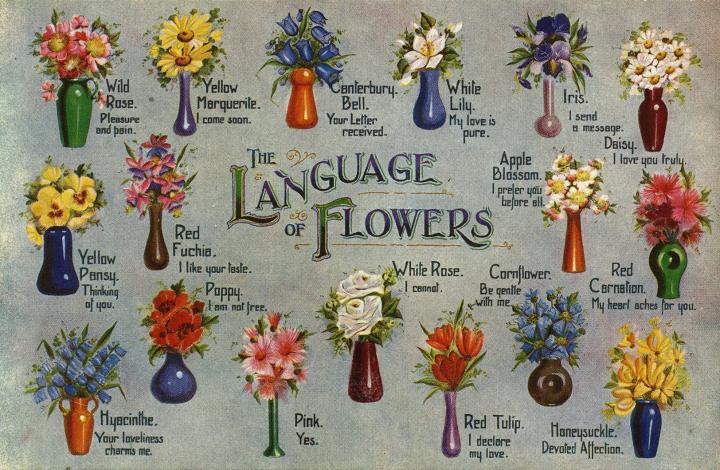
can we speak in flowers? it will be easier for me to understand. -author unknown

Standard

what is your favorite flower?

do you know what it’s saying?


THE HISTORY OF FLOWER MEANINGS – The Language of Flowers

The symbolic language of flowers has been recognized for centuries in many countries throughout Europe and Asia. They even play a large role in William Shakespeare’s works. Mythologies, folklore, sonnets, and plays of the ancient Greeks, Romans, Egyptians, and Chinese are peppered with flower and plant symbolism—and for good reason. Nearly every sentiment imaginable can be expressed with flowers. The orange blossom, for instance, means chastity, purity, and loveliness, while the red chrysanthemum means “I love you.”

FLOWERY LANGUAGE OF THE VICTORIAN ERA

Learning the special symbolism of flowers became a popular pastime during the 1800s. Nearly all Victorian homes had, alongside the Bible, guidebooks for deciphering the “language,” although definitions shifted depending on the source.

In the Victorian era, flowers were primarily used to deliver messages that couldn’t be spoken aloud. In a sort of silent dialogue, flowers could be used to answer “yes” or “no” questions. A “yes” answer came in the form of flowers handed over with the right hand; if the left hand was used, the answer was “no.”

Plants could also express aversive feelings, such as the “conceit” of pomegranate or the “bitterness” of  aloe. Similarly, if given a rose declaring “devotion” or an apple blossom showing “preference,” one might return to the suitor a yellow carnation to express “disdain.”

How flowers were presented and in what condition were important. If the flowers were given upside down, then the idea being conveyed was the opposite of what was traditionally meant. How the ribbon was tied said something, too: Tied to the left, the flowers’ symbolism applied to the giver, whereas tied to the right, the sentiment was in reference to the recipient. And, of course, a wilted bouquet delivered an obvious message!

More examples of plants and their associated human qualities during the Victorian era include bluebells and kindness, peonies and bashfulness, rosemary and remembrance, and tulips and passion. The meanings and traditions associated with flowers have certainly changed over time, and different cultures assign varying ideas to the same species, but the fascination with “perfumed words” persists just the same.

There is a language, little known,
Lovers claim it as their own.
Its symbols smile upon the land,
Wrought by nature’s wondrous hand;
And in their silent beauty speak,
Of life and joy, to those who seek
For Love Divine and sunny hours
In the language of the flowers.

–The Language of Flowers, London, 1875


text credits: Old Farmer’s Almanac, Catherine Boeckmann

art credit: Illustrated postcard. Printed in England/The Regent Publishing Co Ltd.-Dumbarton Oaks Archives

hidden life radio.

Standard

listen….

Silent tree activity, like photosynthesis and the absorption and evaporation of water, produces a small voltage in the leaves. In a bid to encourage people to think more carefully about their local tree canopy, sound designer and musician Skooby Laposky has found a way to convert that tree activity into music.

By connecting a solar-powered sensor to the leaves of three local trees in Cambridge, Massachusetts, Laposky was able to measure the micro voltage of all that invisible tree activity, assign a key and note range to the changes in that electric activity, and essentially turn the tree’s everyday biological processes into an ethereal piece of ambient music.

You can check out the tree music yourself by listening to the Hidden Life Radio—Laposky’s art project—which aims to increase awareness of trees in Cambridge, Massachusetts, and the city’s disappearing canopy by creating a musical “voice” for the trees.

The project features the musical sounds of three Cambridge trees: a honey locust, a red oak, and an 80-year-old copper beech tree, all located outside the Cambridge Public Library. Each tree has a solar-powered biodata sonification kit installed on one of its branches that measures the tree’s hidden activities and translates it into music.

According to WBUR, between 2009 and 2014, Cambridge was losing about 16.4 acres of canopy annually, which is a huge loss considering that tree canopies are crucial to cities,  cooling them down during the summer, reducing air pollutino, sucking up carbon, and providing mental health benefits.

Laposky hopes that people will tune into Hidden Life Radio and spend time listening to the trees whose music occurs in real-time and is affected by the weather. Some days they might be silent, especially when it hasn’t rained for several days and they’re dehydrated. The project will end in November, when the leaves will drop — a “natural cycle for the project to end,” Laposky says, “when there aren’t any leaves to connect to anymore.”


 “in a cool solitude of trees

where leaves and birds a music spin,

mind that was weary is at ease,

new rhythms in the soul begin.”

-william kean seymour

source credits: Kristin Toussaint, The Optimist Daily, WBUR Radio

summer reading.

Standard

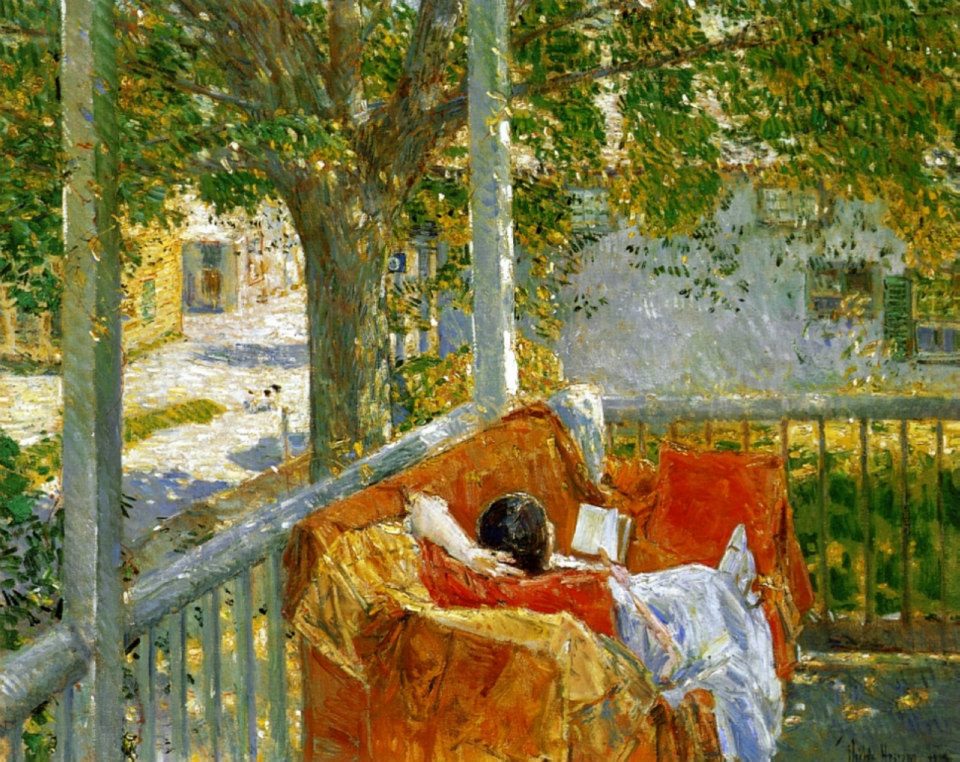
(not me, just someone who also loves summer reading, but probably does not nod off like i do)

“here is this delicious book and the whole day, both yours.”

the true pleasure or summer reading lies not so much in the novel itself, the writer hildegarde hawthorne explained in 1907, but the choice to devote oneself to it. summer reading as we now know it emerged in the u.s. in the. mid-1800s, buoyed by an emerging middle class and the birth of another cultural tradition: the summer vacation.


Art credit: Couch on the Porch, Cos Cob, Frederick Childe Hassam, 1914

from the earth.

Standard

white lotus farms, ann arbor, mi

it’s national farmer’s market week – shop from your local farms

Dubbed “the farmers’ market effect” by the New York Times, a recent study shows that vouchers that permit low-income women to shop at a local farmers’ market increase fruit and vegetable consumption in their families. “It’s not clear why mothers visiting a farmers’ market wound up buying more vegetables than grocery store shoppers, but some women told the researchers that the produce sold at markets seemed to be fresher and of higher quality than supermarket offerings. Many shoppers also said they enjoyed the pleasant community experience and the chance to interact directly with growers.”

“raw ingredients trump recipes every time;

farmers and ranchers who coax the best from the earth

can make any of us appear to be a great cook.”

-judy rodgers, the zuni cafe cookbook

krabby!

Standard

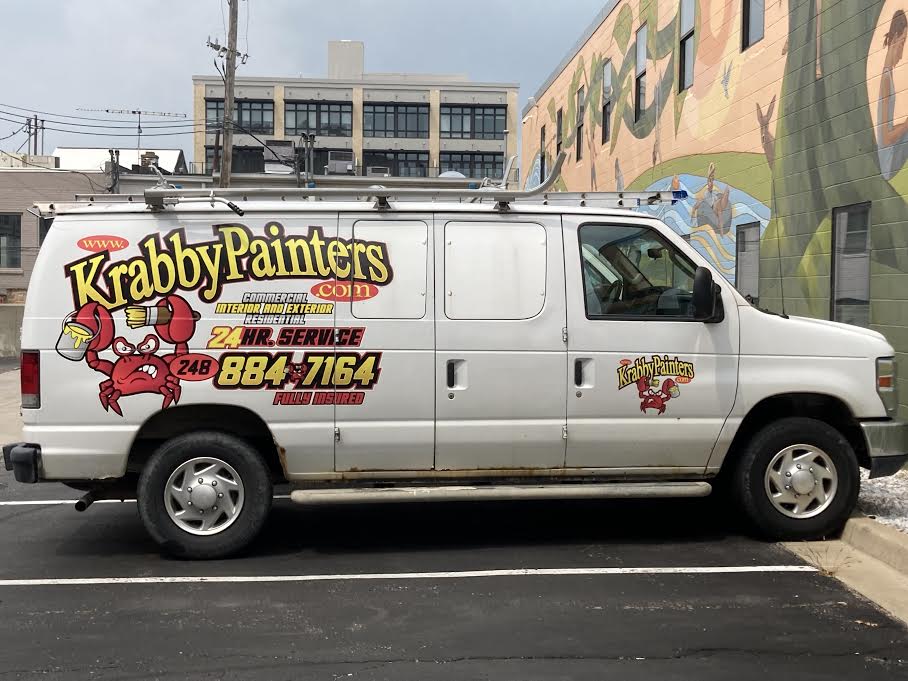
not sure this is the best brand name and marketing plan

or that there was a focus group….


“these were such friendly people, they didn’t notice how crabby we were, and before you knew it everyone was as happy as they were.”

-nora raleigh baskin

middle of the road.

Standard


road plan haiku

this plan gives me pause

some things better on paper

may not go as planned.


“the middle of the road is where the white line is – and that’s the worst place to drive.”

-robert frost