Monthly Archives: April 2022

on siblings day.

Standard

returning.

(a repost)

with

one sister visiting

one sister gone too soon

 only brother on his way

 grandchildren in tow

we visited the place

where we had grown up.

it looked much the same

yet felt somehow not.

 much like us.

“there is nothing like returning to a place that remains unchanged

to find the ways in which you yourself have altered.”

-nelson mandela

as poetry.

Standard

“some of us don’t want to be tough alpha leaders.
some of us just want to write
and wander
the garden
and breathe in the sky
and nourish and nurture
and quietly create
new pathways
and live our
lives as art.
to know the earth
as poetry.”
-victoria erickson, rhythms and rhymes
in honor of national poetry month
art credit: Edgar Degas | Landscape | The Metropolitan Museum of Art


magic spell.

Standard

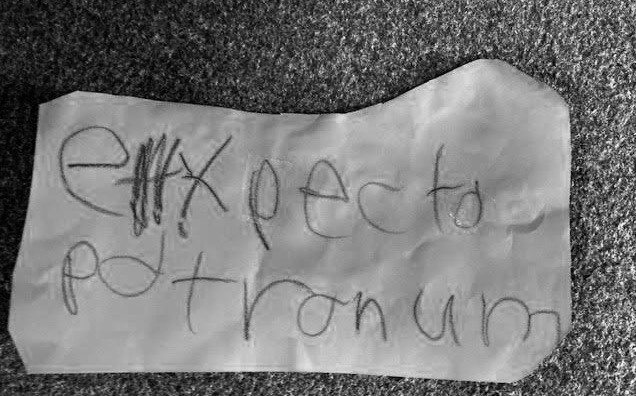
 “expecto petronum”

“dear miss kennedy, i know this spell. if you do that magic it just keeps you safe from stuff if you are in danger.”

– from my student, l.

one of kindest and most wonderful gifts i’ve ever received 

“kindness is a magical spell –

performed by enlightened beings –

meant to enchant hearts and lift weary souls that they might fly.”

-richelle e. goodrich

the truth.

Image

would you believe…?

Standard

saw this (now vintage) ad 

from my younger days

and wondered

how many of you still owe columbia house the $1.00?

i keep waiting for someone to come to the door

looking to take back my records or cassettes.

or the dollar that i never sent in. 

“both my parents worked, so i was home alone a lot, and i would listen to their records.

they belonged to the columbia house record club, so they had records!”

-lyle lovett

the art and joy of puttering.

Standard

If waiting for an important telephone call, or stuck in writer’s block with a looming deadline, we’ll inevitably rearrange our record collection or clear up the papers dotted around your office – and it’s sometimes the most relaxed you’ll feel all day.

We’re not alone in this. As we faced pandemic stresses, many people reported finding renewed interest in looking after their homes as a way of coping with the uncertainty. On YouTube, there’s a huge audience for videos of people going about their chores, with millions of views for some of them. Psychologists suggest there are many mechanisms that might explain the perfect pleasure of puttering – and they may well encourage you to engage in it more often.

At the most superficial level, puttering may be useful because it occupies the mind, so that we devote fewer resources to the things that are worrying us. Even if we struggle with structured forms of meditation, for instance, we may find household tasks can anchor us in the here and now. But that will depend on where we place our focus.

In one of the few studies to examine the mental health benefits of washing the dishes, researchers divided 51 participants into two groups. Half read a text that encouraged them to focus their thoughts to the sensations evoked by the activity. “While washing the dishes one should be completely aware of the fact that one is washing the dishes,” they were told. The rest read factual instructions on how to do washing up without explicitly encouraging them to focus their awareness on the sensations it produces.

Afterwards, the participants were asked to take a questionnaire about their feelings. Those who had fully engaged with the sensory experience reported a significantly better mood. This included reduced nervousness and even a sense of “inspiration”, as if the immersion in the simple activity had refreshed their minds.

Unlike other distracting activities – such as playing computer games or watching trashy TV – puttering also has the advantage of being proactive and useful, increasing our “perceived control”.

When we feel anxious, a sense of helplessness can heighten the physiological stress response, increasing levels of cortisol. Over the long term, the sense of helplessness can even harm the function of the immune system. Ideally, we would deal directly with the upsetting situation itself. But research suggests we can gain a perception of control from activities that may have little effect on the situation that’s bothering us.

“It doesn’t necessarily have to align with actual control, as long as we believe, or feel, we have control,” says Stacey Bedwell, a psychologist at the Institute of Psychiatry, Psychology & Neuroscience, King’s College London. Simply being able to change our environment can create a feeling of agency that is beneficial, she says – which may explain why cleaning and organizing our homes can feel so therapeutic.The benefits do not end there. If your puttering takes the form of organizing and decluttering, you may find that the tidier environment is itself a form of solace.

As the University of Michigan psychologist Ethan Kross writes in his book Chatter: The Voice in Our Heads and How to Harness It: “We’re embedded in our physical spaces, and different features of these spaces activate psychological forces inside us, which affect how we think and feel.” If we see order outside, it helps us to feel a bit less chaotic inside, he writes. “[It] is comforting because it makes life easier to navigate and more predictable.”

Brain imaging studies support this view. In general, you see much greater brain activity as you increase the number of distracting objects within a scene – with each object vying for our attention. This may lead your brain to tire so that it struggles to maintain its focus over long periods of concentration.

Importantly, you don’t necessarily have to remove the clutter to prevent this from occurring – simply rearranging it will do. Organizing objects into groups – by color, for example – may provide the brain with more obvious cues for navigating the chaos. This reduces some of that neural confusion – and may improve our focus as a result. By reducing anxiety, soothing stress responses, increasing focus and triggering the release of endorphins, it’s little wonder so many of us take to household chores as soon as we are faced with uncertainty.

Like all activities, the extent of these benefits will be influenced by your personal tastes and the associations that you link with the tasks. If you are housework-averse, and will only pick up a duster under duress, the pleasures of puttering may be forever elusive. But for the homebodies among us, we can now understand why fruitful fidgeting can be such a salve for the restless mind.

“the imagination needs moodling– long, inefficient, happy idling, dawdling, and puttering.”

-brenda ueland

what’s your go-to puttering activity?

BBC, David Robson, science writer, Ethan Cross, author 

between the pages.

Standard

treasures 

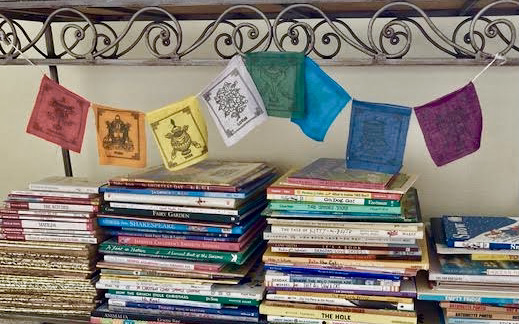
“there is space on everyone’s bookshelves for books we’ve outgrown but can’t give away.

they hold our youth between their pages.”

-enid blyton

spend your hours wisely.

Standard

“a museum is a place where one should lose one’s head.”

-renzo piano

photo credit: university of michigan museum of natural history

erased.

Standard

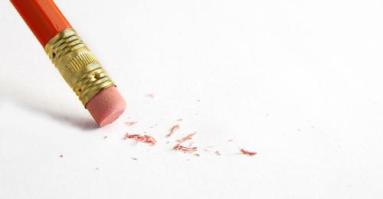
Happy Birthday to the Modern Pencil

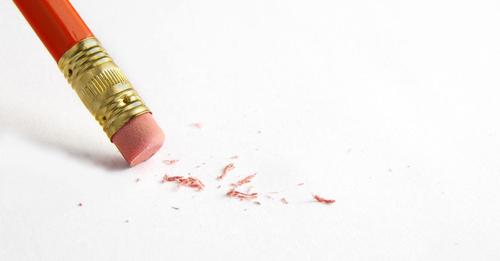
Was sticking an eraser on the back of a pencil common sense, or a new invention? This week in 1868, Philadelphia stationery store owner H.L. Lipman patented something that seems incredibly obvious in hindsight: a regular pencil, with an eraser on the end.

Although Lipman is credited with this innovation, his pencil with eraser looked a little different than its modern descendant. Rather than being glued onto the end, Lipman envisioned a pencil with a chunk of rubber eraser in the core that could be accessed by sharpening it, the same way you would a pencil lead.

Graphite pencils had been around since the 1500s, writes David Green for Haaretz. But until the 1770s, the preferred tool used to erase pencil marks was balled-up bread.

Lipman’s name hasn’t gone down in history, maybe because he didn’t manage to hold on to his patent. After gaining it, he sold it to Joseph Reckendorfer in 1862 for about $2 million in today’s money. Reckendorfer also didn’t get much use out of the patent. He took another company to court over their use of his patent, only for it to be invalidated by the court’s decision, which stated that Lipman merely combined two existing things, but didn’t really produce something new.

Lipman essentially imagined the pencil as having a graphite end and a rubber eraser end.

“It may be more convenient to turn over the different ends of the same stick than to lay down one stick and take up another,” the decision noted. “This, however, is not invention within the patent law.”

Over his career, though, Lipman also made a number of contributions to the 19th-century office:

He was also America’s first envelope manufacturer, and it was he who had the idea of adding adhesive to the back flap, so as to make sealing easier. He devised a methods for binding papers with an eyelet that preceded the stapler by two decades. And Lipman was the first to produce and sell blank postcards in the United States, in 1873.

Pencils aren’t really a notable object, writes Henry Petroski in The Pencil: A History of Design and Circumstance, but they shape how people do their work. Unlike the pen, a more permanent writing instrument, the pencil doesn’t usually get sayings (it’s the pen that’s mightier than the sword, for example) or a lot of credit. But pencil is an essential creative medium, he writes, because it can be erased—as everyone from architects to artists can tell you.

“Ink is the cosmetic that ideas will wear when they go out in public,” he writes. “Graphite is their dirty truth.”

credits: kat eschner, smithsonian.com, smithsonian magazine

fools.

Standard

happy april fools’ day, a day meant to celebrate the fool in all of us. 


“to the wise, life is a problem; to the fool, a solution.”

-marcus aurelius