Category Archives: Life

i prefer living in color. – david hockney

Standard

 unprsouth.com

Most of the basic English names for colors—like red, yellow, green, and blue—are amongst the oldest recorded words in our language and can be traced right back to the Old English period. One exception to that rule is the color orange, which didn’t begin to appear in the language until after oranges (the fruit) were imported into Britain from Europe in the Middle Ages. Before then, what we would describe as orange today had just to be called either “red” or “yellow” (or, if you wanted to be really specific, “red-yellow”). But the English language being as enormous as it is, a predictably enormous vocabulary of words have been invented, borrowed, and accumulated over the centuries to describe almost every color and shade imaginable—from the precise color of a bear’s ears, to the murky green of goose droppings. Nineteen brilliantly-named examples of colors you’ve probably never heard of are listed here.

1. AUSTRALIEN

The 1897 guide House Decoration, Whitewashing, Paperhanging, Painting, Etc. includes, in a chapter dedicated to mixing oil paints, “a list of new colors for ladies’ dresses,” among which is listed australien. Inspired by the rusty color of the rocks and deserts of the Australian outback, the name australien was used by dressmakers and fashion houses in late Victorian England for a deep orange color.

2. BANAN

The color of a ripe banana? That’s banan.

3. BASTARD-AMBER

Bastard-amber is the name of an amber-colored spotlight used in theaters to produce a warm peach or pink glow on stage. It’s often used to recreate sunlight, or to give the illusion of dawn or dusk.

4. DRAKE’S-NECK

The drake in question here is the male mallard, a species of duck found across North America, Europe, and Asia. The males have an iridescent bottle-green head and neck, which gave its name to rich green-colored dye called drake’s-neck in the early 18th century.

5. DRUNK-TANK PINK

Drunk-tank is the name of a bright shade of pink that has been the subject of a number of studies on the effects of colors on human temperament since the mid-1960s. This particular color—also known as Baker-Miller pink, after the two U.S. Navy officers who invented it—has been demonstrated in numerous experiments to have a calming influence, and so is often used in prisons and police holding cells to help keep inmates relaxed and to discourage unruly behavior.

6. FALU

Falun is a small city in central Sweden renowned for its copper mining industry. Since the mid-16th century (at least), all of the wooden homes, barns, outhouses and other buildings in and around Falun have been traditionally painted a deep rust-red color known as falu that is manufactured from the iron-rich waste materials left over from the mines.

7. FLAME-OF-BURNT-BRANDY

As the dyeing industry developed in the 19th century and was able to produce more and more colors, dressmakers and designers were left to concoct a whole range of weird and wonderful names for the new colors at their disposal. Flame-of-burnt-brandy was just one of them, described in 1821 by one ladies’ magazine as a mixture of “lavender grey, pale yellow, and dark lilac.” Other equally evocative names dating from the same period include dragon’s blood (a deep purplish-red), d’oreille d’ours (a rich brown, literally “bear’s ears”), elephant’s breath (steel grey) and flamme de Vesuve (“the flame of Vesuvius,” or the color of lava).

8. GINGERLINE

Not just another word for anything ginger-colored, gingerline is actually a 17th century English alteration of the Italian word for “yellow,” giallo, and describes a rich orange-yellow. According to one description, it refers very precisely to the color of ripe kumquats.

9. INCARNADINE

Incarnadine is an etymological cousin of the adjective “incarnate,” meaning “having bodily form.” In this sense it literally means flesh-colored, but Shakespeare used it to mean blood-red in Macbeth, and nowadays it’s usually used to refer to a rich crimson or dark-red color.

10. LABRADOR

Not, as you might think, the color of a Labrador dog, labrador is actually a shade of blue that takes its name from the mineral labradorite, a turquoise form of feldspar.

11. LUSTY-GALLANT

Lusty-gallant was originally the name of a dance popular in Tudor England, but somehow, in the late-1500s, its name became attached to a pale shade of red, similar to coral pink. Quite how or why this happened is unclear, but according to the Elizabethan writer William Harrison, dressmakers at the time had a habit of giving increasingly bizarre names to the colors of their clothes in the hope of making them more appealing to buyers. In his Description of England, written in 1577, Harrison lists the names of several “hues devised to please fantastical heads,” including “gooseturd green, pease-porridge tawny, popinjay blue, lusty-gallant, [and] the-devil-in-the-head.”

12. NATTIER

Jean-Marc Nattier (1685-1766) was a French rococo artist known for a series of portraits of women from the court of Louis XV of France depicted as characters from Greek mythology. Despite achieving enormous popularity during his lifetime—his contemporaries thought his work so exquisite that they even accused him of painting with makeup rather than paint—Nattier is relatively little-known today, but he lives on in the name of a deep shade of slate-blue that he used in a number of his paintings, most notably a portrait of The Comtesse de Tillières (1750), nicknamed “The Lady in Blue.”

13. PERVENCHE

Pervenche is the French word for periwinkle, which came to be used in English in the 19th century as another name for the rich purplish-blue color of periwinkle flowers.

14. PUKE

Fortunately, when William Shakespeare wrote of a “puke-stocking” in Henry IV: Part 1 (II.iv), he didn’t mean anything having to do with vomit. In 16th century England, puke was the name of a high quality woolen fabric, which was typically a dull, dark brown color.

15. SANG-DE-BOEUF

Unsurprisingly sang-de-boeuf, or “oxblood,” is the name of a rich shade of red that was originally a blood-colored pottery glaze made by heating copper and iron oxide at a very high temperature. Although the name sang-de-boeuf dates back no further than the late 19th century, the technique used to manufacture oxblood glazes was first developed as far back as the 1200s in China.

16. SINOPER

Popular amongst Renaissance artists, sinoper or sinople was an artist’s pigment containing particles of hematite, an iron-rich mineral that gave it a rich rust-red color. Its name comes from the town of Sinop on the Black Sea coast of Turkey, from where it was first imported into Europe in the late Middle Ages.

17. VERDITER

Verditer is both an old fashioned name for verdigris, the green rust-like discoloration of copper and brass, and the name of blue-green pigment dating from the 1500s. Its name, which is derived from the French verte-de-terre, or “green of the earth,” is today used in the name of a bright turquoise songbird, the verditer flycatcher, which is native to the Himalayas.

18. WATCHET

Watchet is a very pale blue color, similar to sky blue. According to folk etymology, the color takes its name from the town of Watchet on the coast of Somerset in southwest England, the cliffs around which appear pale blue because they are rich in alabaster. As neat a story as this is, however, it’s much more likely that watchet is really derived from waiss, an old Belgian-French word for royal blue.

19. ZAFFRE

Zaffre is the name of an ancient blue pigment originally produced by burning ores of cobalt in a furnace. Its name was borrowed into English from the Italian zaffera in the 17th century, and is ultimately descended from the Latin word for “sapphire.”

credits: mentalflossmagazine.com, unprsouth.com

“children are the living messages we send to a time we will not see.” – john w. whitehead

Standard

10672233_10152844931981694_189749389040454942_n

first sleepover

at peaches’ cottage

for

babies b and j

and

we are

making

shadow puppets

on the wall

and

there is

a

feeling

of

magical electricity

in the air

deep meaning lies often in childish play. ~johann friedrich von schiller


Watch me get kicked out of Seth Rudetsky’s master class Nov. 2 (Plus, Tomfoolery update!)

Standard

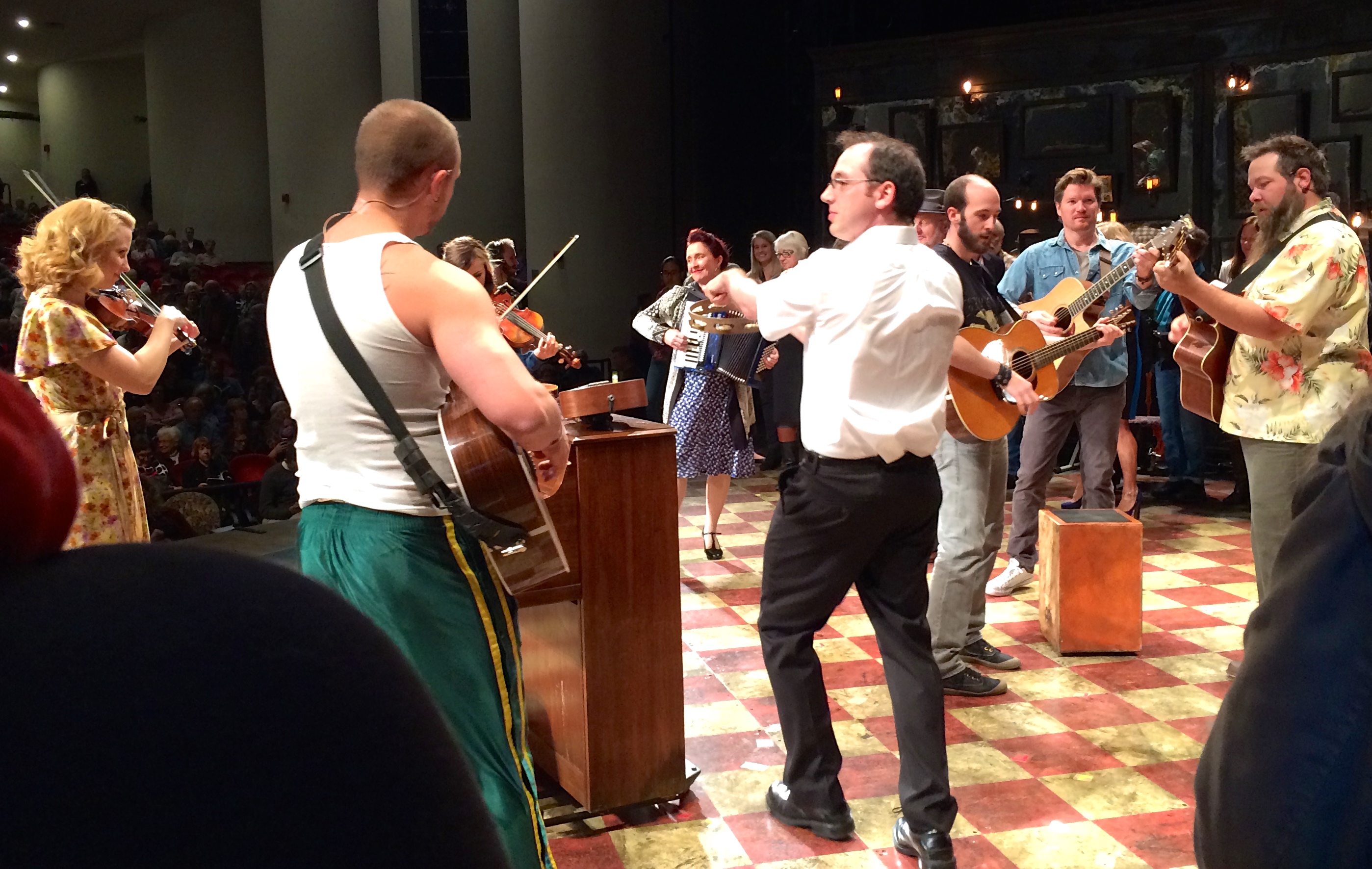
i was so excited to see my fellow blogger’s , (roy sexton), latest show, with the penny seats theater company, ‘tomfoolery’, a bawdy musical romp. lots of laughs, sweat, tunes, hats, and irish beer. could not have been a better combination. bravo!

Sexton's avatarReel Roy Reviews

Tomfoolery Cast (Photo by Victoria Gilbert) Tomfoolery Cast (Photo by Victoria Gilbert)

Second performance of Tomfoolery was a hit! What a fun night – with a record attendance for us li’l Penny Seats!

Thanks to everyone who attended (and anyone I missed):

Roxane Raffin Chan and Kevin Chan, Magda Gulvezan and Dan Johnson, Sam Gordon, Linda Hemphill, Angie Choe and Sean, Jeff Weisserman, Barbie Amann Weisserman,  Bob Hotchkiss, Beth Kennedy, Nick Oliverio, Meredith Brandt, Alex and Cristina Rogers, Davi Napoleon, Jason Gilbert, Trista Selene Kreutzer-Whalen, Roxanne Kring and Joe Diederich, Kyle Lawson, Sean Murphy, Rachel Green Murphy, the Biber family, and Ryan Lawson.

Get your tickets, kids, for 10/16 or 10/23 – they are almost all gone … and that’s no “tomfoolery” –  http://pennyseats.org/box-office/

Seth RudetskyAND, thanks to the Farmington Players and Amy Becker Lauter for including me among Seth Rudetsky’s “students” for their upcoming master class with him on November 2 from noon to 3…

View original post 327 more words

one doesn’t have a sense of humor. it has you. – larry gelbart

Standard

78325467-1024x1024

when i went

to pick out the carpeting

for my bedroom

up in the cozy loft

of the cottage

the woman

helping me

asked

all of

the relevant questions

including

‘is it a high traffic area?’

i looked her in the eye

and

just couldn’t help myself

when i answered

‘well, i am single and it is my bedroom, so wouldn’t that be funny if i said yes?’

she stopped for a minute

looked back at me

with a confused expression

and checked something off on her paper

i’d love to see her notes

—-

it is requisite for the relaxation of the mind that we make use,

from time to time, of playful deeds and jokes.

– thomas aquinas

food is our common ground, a universal experience.  – james beard

Standard

58c721ce-b10d-4713-9449-95b4acc91b9c

nothing like a lunch

with

the kinders

and

pre-kinders

especially

when it’s taco day

it takes it to

a whole other level

one little guy

whose eyes

opened wide

 upon seeing the taco

filled to the edge

with all sorts

of colorful things

and

put on his plate

and wondering

how

he would ever manage

to get it

into his mouth

and

away from the floor

calmly says,

‘i’m going to need chopsticks to eat this’

i always admire those

out of the box thinkers

well played little man

and i must admit

i hadn’t thought of that

but we may

have to call in

the big guns

for this one

eatensil - kogibbq.com

meet the eatensil

keepcalmomatic.uk.com

image credits: photo bucket, keepcalmomatic.uk.com, kogibbq.com

just a dance.

Standard

10689578_519068068230051_6047439117535640567_n


quote by: robert brault

“the creative adult is the child who has survived.” – ursula le guin

Standard

10672260_519124974891027_543289079999547037_n

image credit: the intelligent optimist

if you look at little kids and wild animals, these are two groups of things that whenever i’m with them forces me to be in the moment. – dominic monaghan

Standard

IMG_0317

baby j

checked out the competition 

both showed up

on the green carpet

sporting the same

flashy fashion palette

who wore it best?

who dressed you?

mother nature.

who dressed you?

my momma.

every child is born a naturalist. his eyes are, by nature, open to the glories of the stars,

the beauty of the flowers, and the mystery of life. –  r. s search
* * * * * *

clothes make a statement. costumes tell a story. ~mason cooley

Standard

shaggylamb.com

i’ve begun to

think about

my costume

with

 halloween

arriving

in just

a few weeks

and

i remember

the year

i dressed up

as

a weather girl

when

i wore

my yellow raincoat

a string of pearls

high heels

t.v. makeup

and

curled hair

but

people guessed

that i was

a flasher

and

that didn’t

go

exactly

as planned

image credit: shaggylamb.com

we shouldn’t teach great books; we should teach a love of reading. – b. f. skinner

Standard

the teatime reader

loved

walking around

the neighborhood

on this cool fall day

and seeing

a young child

sitting all alone

under a tree

reading

a book

aloud

happily lost

in the  

magical world

of her

imagination

he that loves reading has everything within his reach. 

– william godwin