
how to spend a beautiful fall day
when you love music?
meet up with people who love it too
and make music where you are.
a lovely surprise concert i enjoyed when walking in the park.
—
“music always has the answer”
-wordporn
how to spend a beautiful fall day
when you love music?
meet up with people who love it too
and make music where you are.
a lovely surprise concert i enjoyed when walking in the park.
—
“music always has the answer”
-wordporn
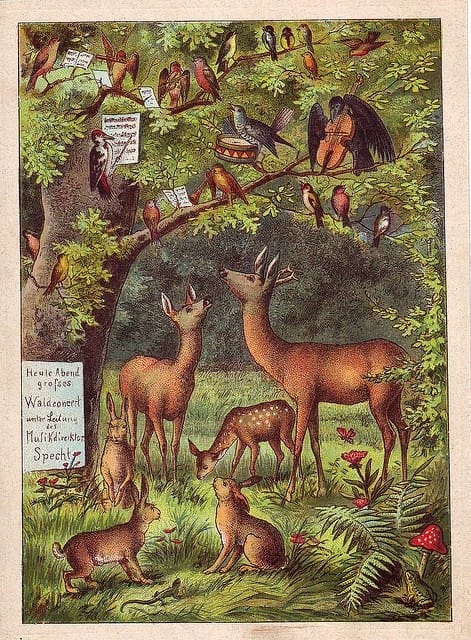
“Tonight! A big forest concert under the direction of Musical Director Woodpecker!”
*(just because we all need a fluffy forest concert break about now)
—
“i’m afraid concerts spoil people for everyday life.”
-l.m. montgomery, anne of green gables
—
image credit: Peter Gray’s Delightful vintage art, from an old German children’s book
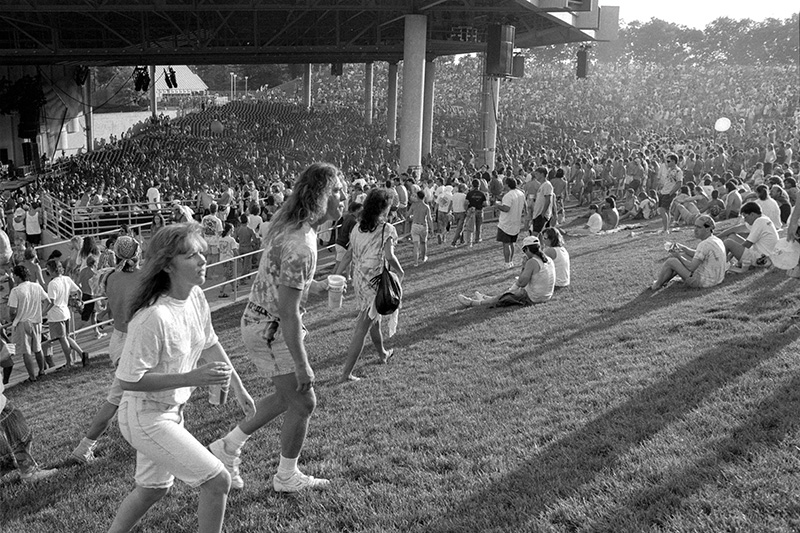
remembering 50 years of magical music memories at pine knob
one of the greatest outdoor amphitheaters ever, and still rocking. 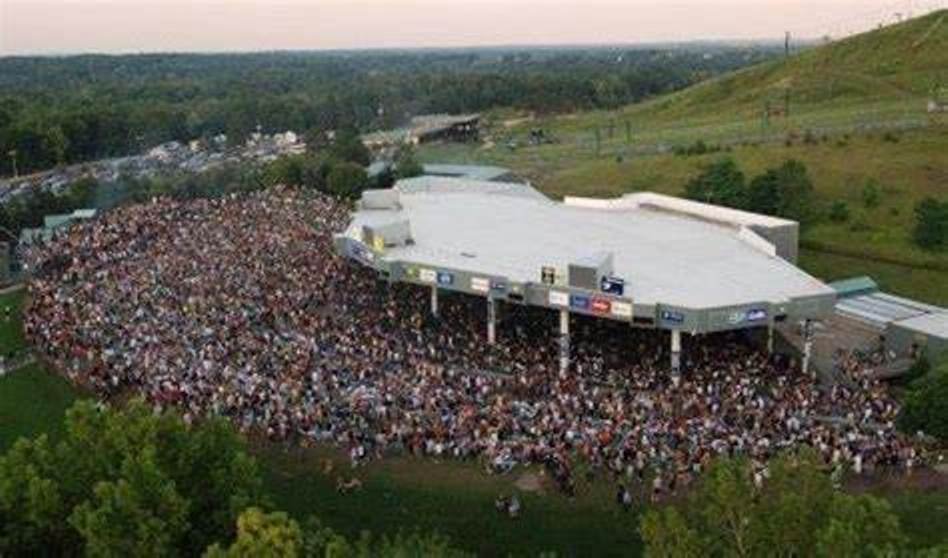
i’m sure you can pick me out here,
on a typical night in the middle of the hill on the lawn
early 70s, where i saw my first live concert, Focus, performing their one hit, “Hocus-Pocus.”
—
Pine Knob. A holy musical pilgrimage for metro Detroiters for 50 years.
The award-winning theater was christened with a matinee concert by teenage heartthrob David Cassidy on June 25, 1972 (a few days later, old-school crooner Andy Williams and Quincy Jones hosted a five-night run at Pine Knob to mark the occasion). It was the largest venue of its type in the country at the time, currently able to accommodate 15,000 patrons.
A couple of weeks later, the first rock concert at Pine Knob forced the police to shut the place down — a sign that Clarkston’s new venue had a little something for everyone.
When the James Gang rolled into Pine Knob that inaugural summer, an estimated 25,000 “young people” tried to storm the venue. That’s according to a report in the Detroit Free Press, which noted that the rest of the “hard rock” concerts scheduled for that summer would be canceled after the ruckus. That included an upcoming show by Detroit’s own Bob Seger, who would go on to play more than 25 sold-out shows at the venue over the years.
Maybe you were at that show, or the more than 3,000 other concerts that have taken place there. Thousands have made memories at Pine Knob over the years, whether blurry-eyed ones from the top of the hill or once-in-a-lifetime front row experiences from within the comfort of the pavilion (which, admittedly, could’ve been blurry-eyed, too).
When Pine Knob changed its name to DTE Energy Music Theatre in 2001, it was those memories that kept the original name alive. Even the bands that played there and recorded live albums there called it Pine Knob. “It’s always been Pine Knob to me. I always call it that from the stage,” Peter Frampton told Billboard earlier this year. “I am really happy Pine Knob’s true identity has finally been returned.” (Frampton recorded his 1999 album Live in Detroit at Pine Knob.) For its 50th anniversary, new sponsors made the wise move to tap into that well of nostalgia by bringing back the original name and some of the retro aesthetic to the signage and logo.
—
“you create a community with music, not just at concerts but by talking about it with your friends.”
-david byrne
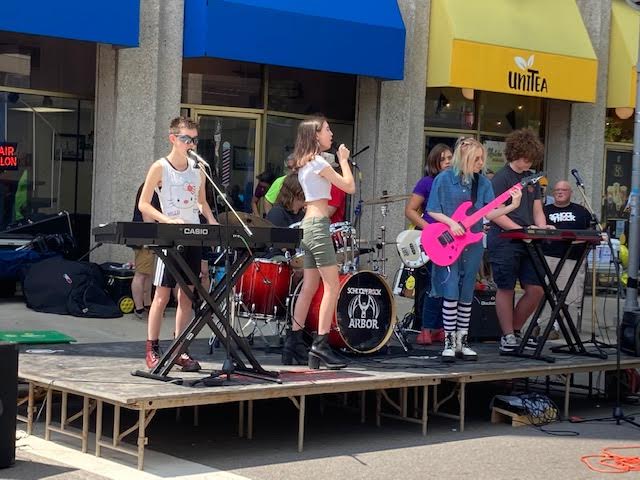
all celebrated and welcome
young punks
older one-man bands
all ageless in years
music to our ears.

“music, once admitted to the soul, becomes a sort of spirit, and never dies.”
-edward bullwar lytton
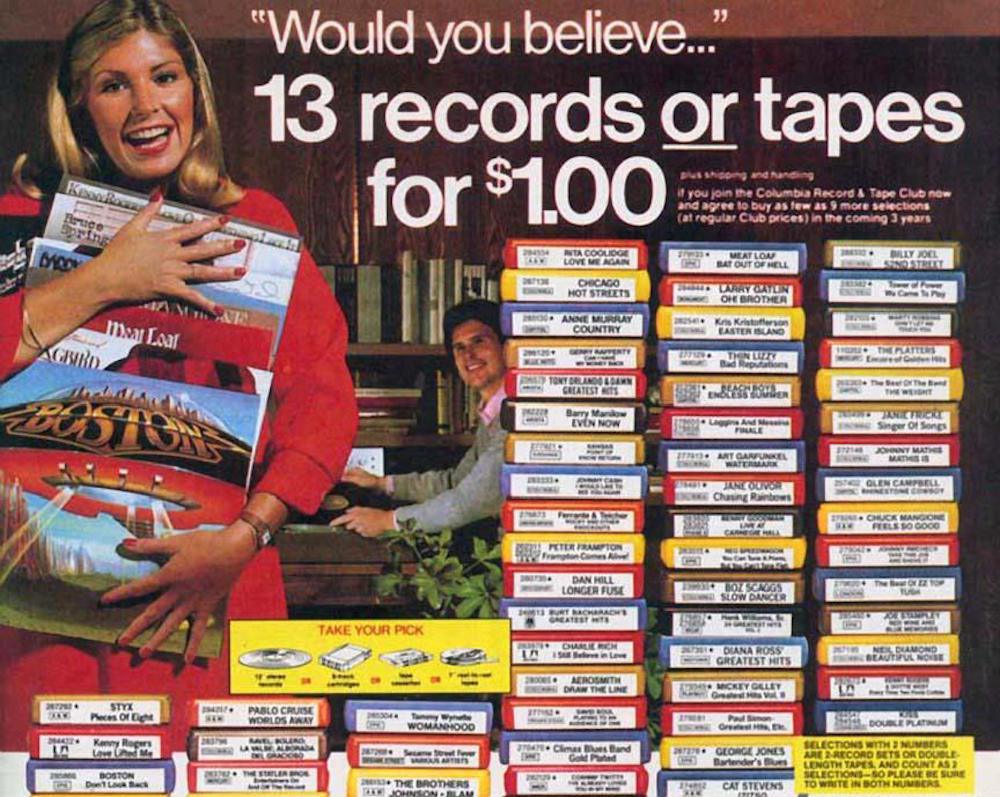
saw this (now vintage) ad
from my younger days
and wondered
how many of you still owe columbia house the $1.00?
i keep waiting for someone to come to the door
looking to take back my records or cassettes.
or the dollar that i never sent in.
—
“both my parents worked, so i was home alone a lot, and i would listen to their records.
they belonged to the columbia house record club, so they had records!”
-lyle lovett
– Dante Alighieri
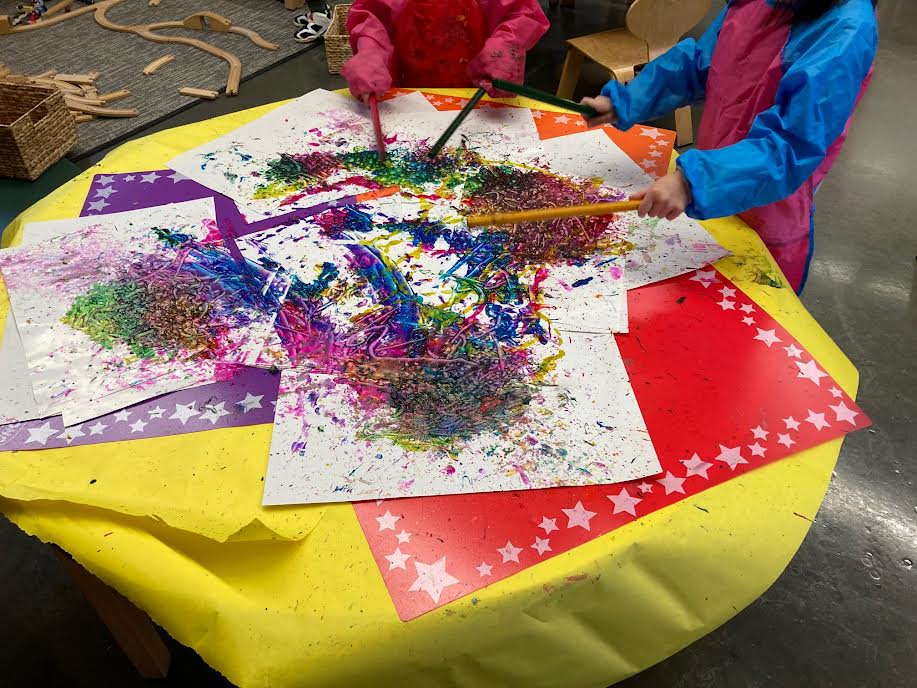
the kinder drummed on paint while listening to music
creating vibrant, splashy, coloring-bursting art
—
“creativity is intelligence having fun.”
– albert einstein
pat metheny, side-eye tour, orchestra hall, detroit, michigan
detroit symphony orchestra paradise jazz series
october 2021
amazing experience
—
We’re all familiar with the sense of wonder and joy we experience when we hear a song or piece of music we love, but there’s something even more magical about hearing that song performed live. Although many artists offered streamed performances online during the pandemic, these didn’t quite leave us with the same enchanted feelings as concerts. So what makes live music different? Columbia associate music professor Mariusz Kozak explains why live music is so powerful.
Live music allows us to experience what philosopher Alfred Schütz called a “mutual tuning-in.” This term refers to the phenomenon where we experience the passage of time and emotions with others. This is part of the reason humans need social interaction to thrive. When we attend a concert, we’re experiencing the tone of the music—fast, slow, happy, sad—with others around us. This creates a sense of intimacy with the crowd around us. This is also why research shows that babies who are bounced in time to music with an adult display more altruism towards that person.
This pleasurable effect gained from synchronizing with those around us is what makes live music and dance so powerful. Although most people probably relate to this feeling when remembering their favorite concert, this feeling is not limited to conventional music. It can also be experienced through collective visual synchronization. In the deaf community, facial gestures and movements are to convey emotions in music performance. The collective interpretation of the emotions behind these facial gestures also promotes a sense of unity.
The Blackfeet in North America use the same word to refer to music, dance, and ceremony, indicating the essential role of gathering to fully appreciate the benefits of music. Close friends can even experience this synchronization when walking or talking together.
Experiencing music in the presence of others cultivates a feeling of unity and empathy within us which exceeds anything we could experience by ourselves. As we head back to in-person concerts and relish this feeling once again, know that the true power of the music you’re hearing might not come from the artist, but in fact your fellow concert goers.
– Mariusz Kozak, Associate Professor of Music and Music Theory, Columbia University
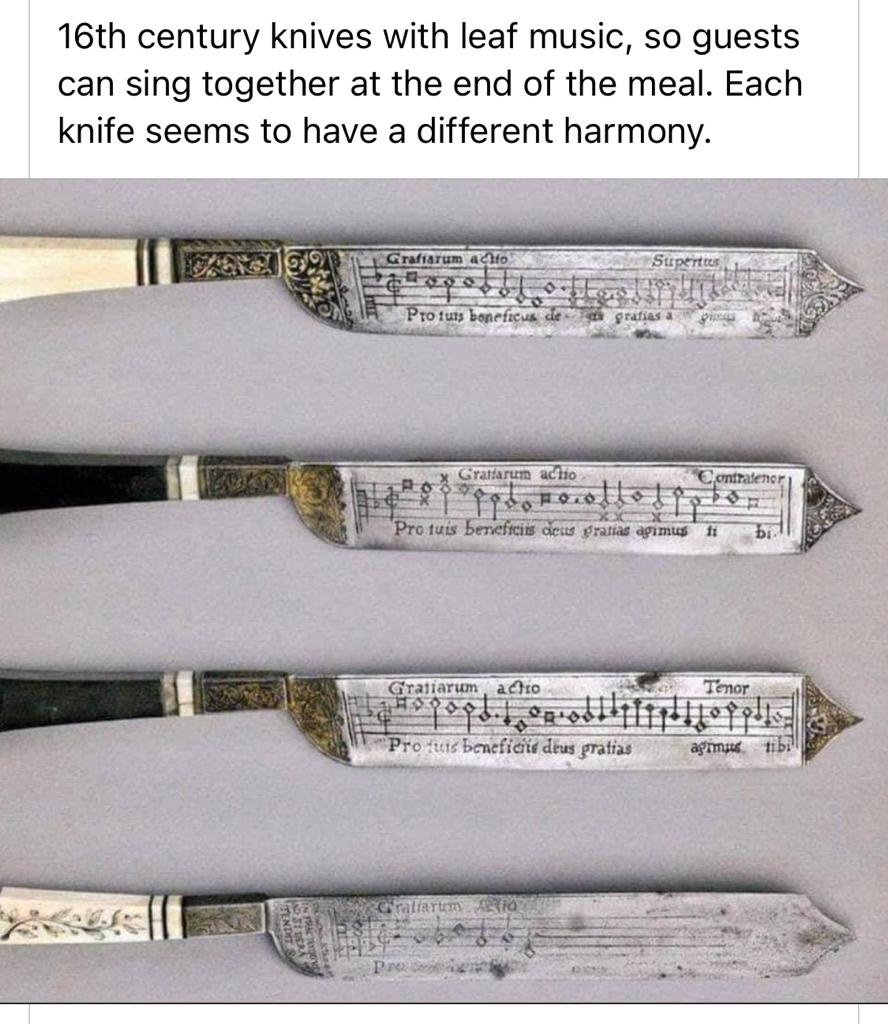
i found this picture of these knives and really wanted to know more. their story is fascinating.
—
Knives with musical notes on the blades are known as notation knives. A notation is the written version of a physical process, such as the sound of music. Once it is written down it can be preserved and recreated. Sung at four different levels.They are the four parts Superius (Soprano) Countratenor (Alto), Tenor, and Bassus (Bass) to be sung simultaneously as in a hymn.
These knives are etched with notations expressing gratitude for a meal. On one side of the blade the inscription translates as, ‘The blessing of the table. May the three-in-one bless that which we are about to eat’, to be sung before the meal is taken. On the other side the notation gives thanks after the meal: ‘The saying of grace. We give thanks to you God for your generosity’. The point of the knife allows meat or bread to be skewered and offered to a fellow diner. Notation knives are extremely rare.
The interesting history of notation knives is explained here on YouTube and the music has been gloriously performed toward the end of the video. It’s only 5 minutes long . Well worth the time! https://youtu.be/-mai-7WUbBo
“those who wish to sing, always find a song.”
-swedish proverb
—
credits: Victoria and Albert Museum, AHRC, Flora Dennis, University of Sussex
 I didn't have my glasses on....