just because taking 4 minutes to watch this might make you smile all day. (sound up!)
just because taking 4 minutes to watch this might make you smile all day. (sound up!)

National Park Service Notice –
READ: Please don’t run from bears or push your slower friends down in attempts of saving yourself.
As a follow-up to a previous post, if you come upon a stationary bear, move away slowly and sideways; this allows you to keep an eye on the bear and avoid tripping. Moving sideways is also non-threatening to bears. Do NOT run, but if the bear follows, stop and hold your ground. Like dogs, they will chase fleeing animals. Do NOT climb a tree. Both grizzlies and black bears can climb trees. Do NOT push down a slower friend (even if you think the friendship has run its course).
Stay calm and remember that most bears do not want to attack you; they usually just want to be left alone. Don’t we all? Identify yourself by making noise so the bear knows you are a human and not a prey animal. Help the bear recognize you as a human. We recommend using your voice. (Waving and showing off your opposable thumb means nothing to the bear) The bear may come closer or stand on its hind legs to get a better look or smell. A standing bear is usually curious, not threatening.
P.S. We apologize to any “friends” who were brought on a hike as the “bait” or were sacrificed to save the group. You will be missed.
#FindYourPark #RecreateResponsibly
https://www.nps.gov/subjects/bears/index.htm
—
“i’d rather write about polar bears than people”
-mary oliver
—
image credit: Bear resting on a log thinking bear things at Katmai National Park & Preserve, NPS/ J. Ehrlenbach

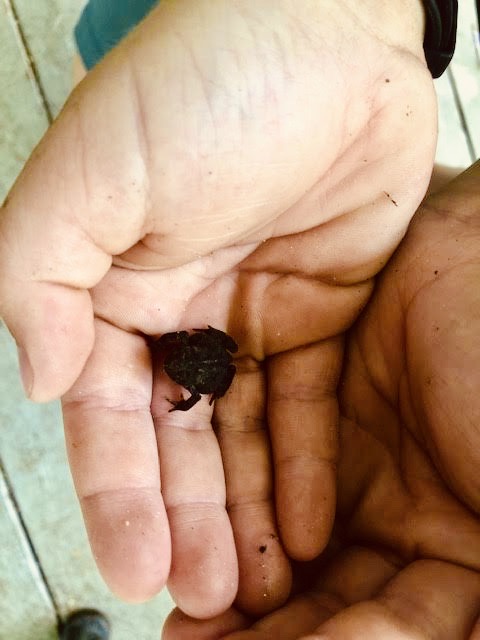
a tiny toad crossed paths with grandie f
i wonder which one was more excited to meet the other.
—
“the smaller the creature, the bolder its spirit.”
-suzy kassem, Rise Up and Salute the Sun
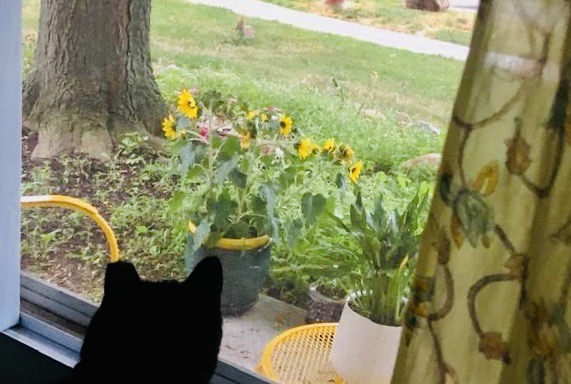
bunny stops by the yard for a quick breakfast
kitty sees bunny and considers breakfast
bunny sees kitty and keeps eating
kitty sees bunny seeing kitty
one inside, one outside
only a screen between them
understanding
each is safe
but what goes on in their heads?
—
“it is easy to be brave from a safe distance. “
-aesop

with the absence of so many humans
the animals have reclaimed their territory
and even branched out to try things that might be new
when i saw this goose standing full of pride and bravado on top of the bridge
all i could think of was that scene from ‘titanic’ when jack said to rose:
“i’m the king of the world!”
and he believed that for a little while.
—
“the higher we soar the smaller we appear to those who cannot fly”
– friedrich nietzsche

After the aquarium closed its doors to the public on March 1, its population of 300-odd spotted garden eels became increasingly bashful, burrowing into the sand whenever staff members were around. Although that isn’t abnormal behavior for wild garden eels, the ones in captivity at Sumida had adapted to the consistent, non-threatening presence of human visitors, and no longer tried to hide whenever someone approached.
This return to reticence is making it hard for employees to monitor their health, so they’ve devised a plan to reacclimate the tiny creatures to the existence of people: a three-day “face-showing festival” from Sunday, May 3, to Tuesday, May 5. During that time, the aquarium is requesting that people FaceTime the eels, waving or calmly calling out to them for up to 5 minutes before disconnecting.
Since they’ll be using FaceTime, you’ll need an iPhone, iPad, or other iOS device to call in. Staff members will be accepting calls on five tablets around the tanks, so there are five different email addresses you can try if you’d like to chat with the eels:
helpchin001@gmail.com
helpchin002@gmail.com
helpchin003@gmail.com
helpchin004@gmail.com
helpchin005@gmail.com
The lines will be open each day from 10:30 a.m. to 2 p.m JST, and because Tokyo is 13 hours ahead of EST, participants in the U.S. will technically need to call in the night before; i.e. from Saturday, May 2, to Monday, May 4, between the hours of 9:30 p.m. and 1 a.m EST.In other words, it’s the perfect time to read a very short bedtime story to a very small eel.
“i don’t mind eels. except as meals.”
-ogden nash
—
credits: ellen gutosky, mental floss

on a long walk in the park each day
i see people and animals outside
staying a safe distance from each other
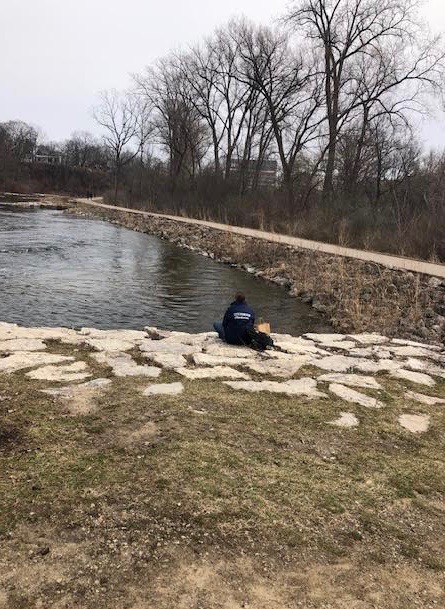
alone
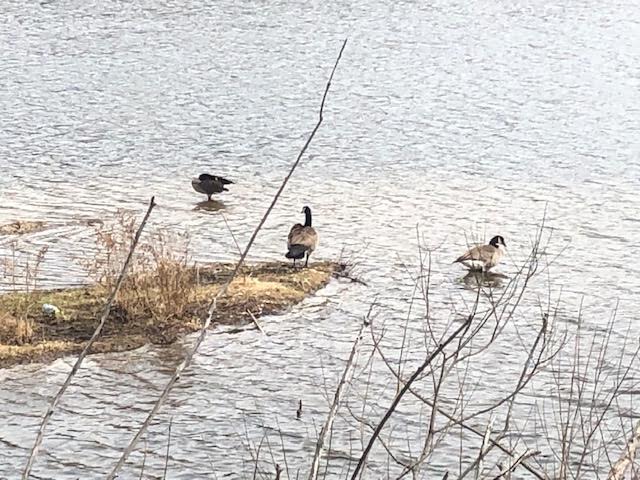
alone together
—
“nothing makes the earth seem so spacious as to have friends at a distance;
they make the latitudes and longitudes.”
-henry david thoreau
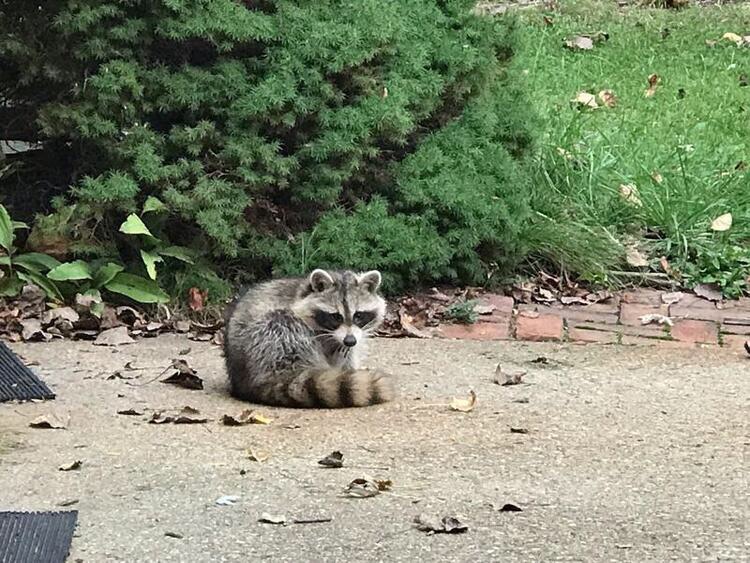
on my neighborhood nextdoor site – written by a kind neighbor:
“we found a raccoon in our driveway that looks sad and is not moving.
is there anything we can do about it?”
—
“let us fill our hearts with our own compassion –
towards ourselves and towards all living beings.”
-thich nhat hanh
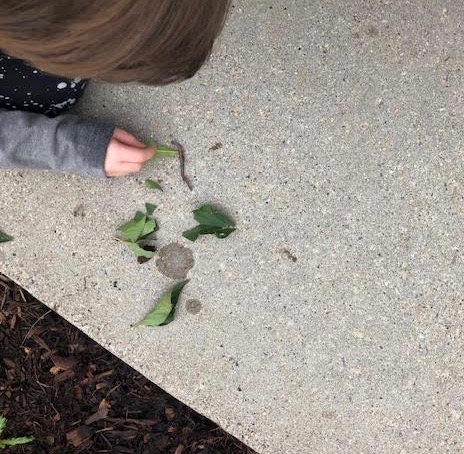
feeding the worms and roll-poly’s
everyone’s got to eat
all meals are free and served with love
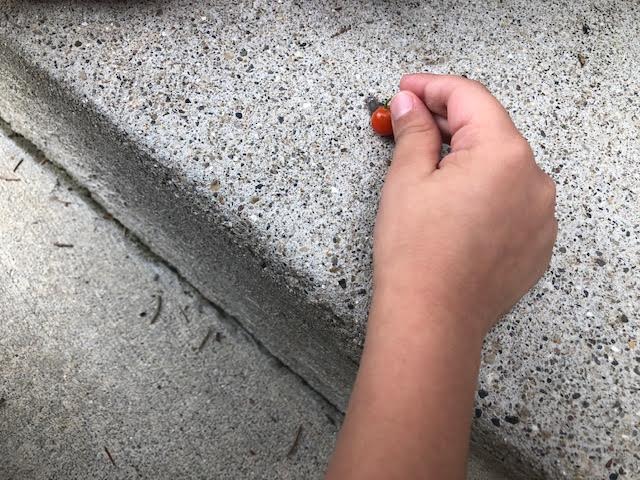
“food is our common ground.”
-james beard

The bee friend – painting by Hans Thoma
The Custom of Telling the Bees
There was a time when almost every rural British family who kept bees followed a strange tradition. Whenever there was a death in the family, someone had to go out to the hives and tell the bees of the terrible loss that had befallen them. Failing to do so often resulted in further losses such as the bees leaving the hive, or not producing enough honey or even dying. Traditionally, the bees were kept abreast of not only deaths but all important family matters including births, marriages, and long absences due to journeys. If the bees were not told, all sorts of calamities were thought to happen. This peculiar custom is known as “telling the bees”.
Humans have always had a special connection with bees. In medieval Europe, bees were highly prized for their honey and wax. Honey was used as food, to make mead, and as medicine to treat burns, coughs, and other ailments. Beeswax candles burned brighter, longer, and cleaner than other candles. Bees were often kept at monasteries and manor houses, where they were tended with the greatest respect and considered part of the family or community. It was considered rude to quarrel in front of bees.
The practice of telling the bees may have its origins in Celtic mythology that held that bees were the link between our world and the spirit world. So if you had any message that you wished to pass to someone who was dead, all you had to do was tell the bees and they would pass along the message. Telling the bees was widely reported from all around England, and also from many places across Europe. Eventually, the tradition made its way across the Atlantic and into North America.
The typical way to tell the bees was for the head of the household, or “goodwife of the house” to go out to the hives, knock gently to get the attention of the bees, and then softly murmur the solemn news.

A widow and her son telling the bees of a death in the family.
Painting by Charles Napier Hemy
In case of deaths, the beekeeper also wrapped the top of the hive in black. If there was a wedding in the family, the hives were decorated and cake left outside so that the bees could partake in the festivities. Newlyweds introduced themselves to the bees of the house, otherwise their married life was bound to be miserable.
The intimate relationship between bees and their keepers has led to all sorts of folklore. According to one it was bad luck to buy or sell hives, because when you sell one, you sell your luck with your bees. Instead, bees were bartered or given as gifts. If bees flew into a house, a stranger would soon call. If they rested on a roof, good luck was on its way.
But the relationship between bees and humans goes beyond superstition. It’s a fact, that bees help humans survive. 70 of the top 100 crop species that feed 90% of the human population rely on bees for pollination. Without them, these plants would cease to exist and with it all animals that eat those plants. This could have a cascading effect that would ripple up the food chain. Losing a beehive is much worse than losing a supply of honey. The consequences are life threatening. The act of telling the bees emphasizes this deep connection humans share with the insect.

