Tag Archives: creative

“art is not a thing. it is a way.”-elbert hubbard

Standard


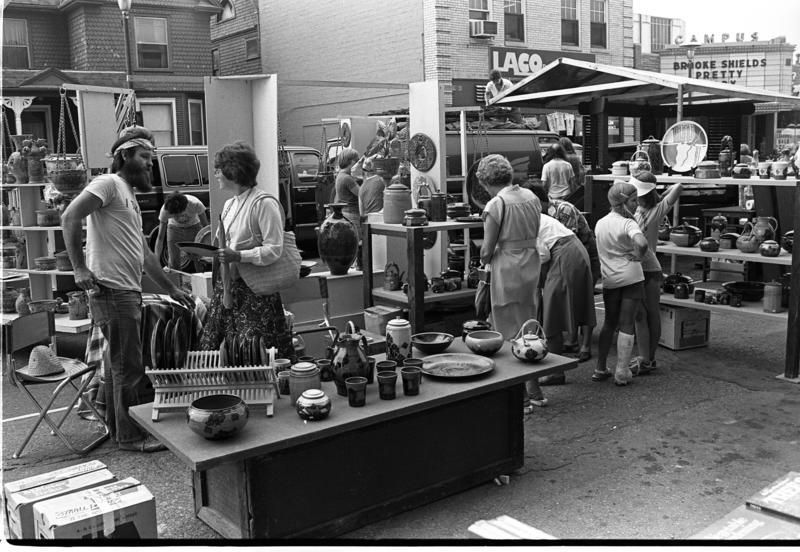
ann arbor art fair – july 1978

it began in 1960 

when

 132 artists (99 of them local)

 strung their artwork between parking meters

and locals came by

curious to see if artists

would really put their work on display in the street. 

  it now hosts over 1,000 artists and 500,000 + visitors

from near and far each year.

the ann arbor art fairs

(actually now a group of four)

will kick off today and take over the city

for what always promises to be four days

of creative display, talks with artists,

bargaining, excitement.

music, children’s activities,

and always, always

lots of surprises. 

“the art world is filled with vibrancy.”

-rachel kushner

image credit: ann arbor news archives, ann arbor public library old news, m live. com


lemons.

Standard


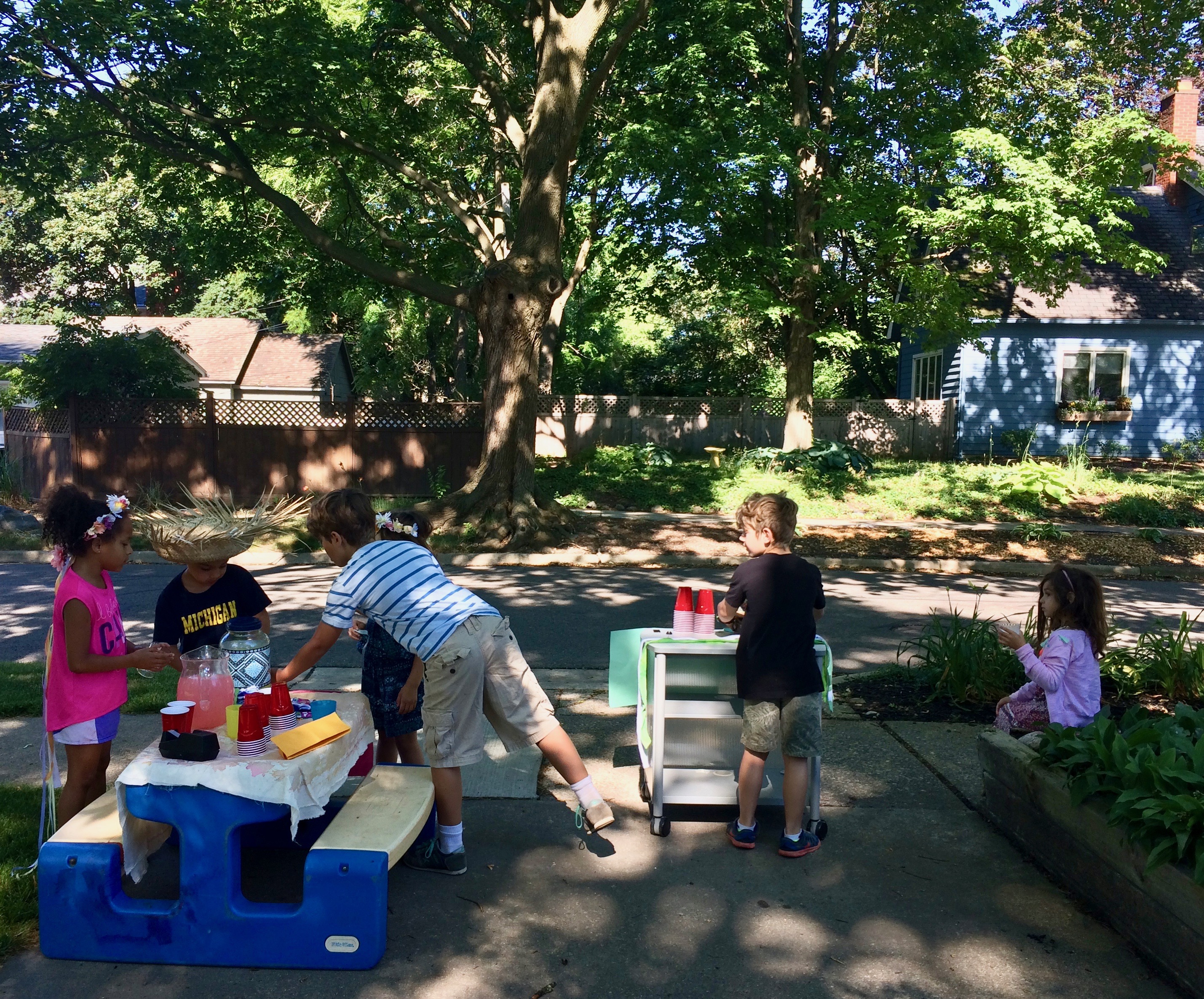
who wouldn’t buy from these six?

not many customers were available

 and most who stopped by

had no money on them

so they changed their marketing plan

 added music, dance, costumes

 even an impromptu wedding

and

after drinking away

much of the merchandise

everyone still made a profit

not bad for a day’s work.

“if life gives you lemons, don’t settle for simply making lemonade – make a glorious scene at a lemonade stand.”

-elizabeth gilbert

magical fathering.

Standard

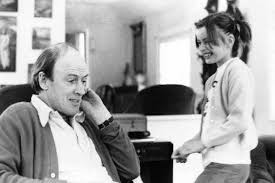
children’s book author roald dahl and his daughter, lucy

What If Willy Wonka Was Your Dad?

Roald Dahl’s Magical Parenting With Food

“food was a huge part of our upbringing,” lucy dahl says. her father delighted his children with fanciful “midnight feasts” in the woods and often used mealtime to test out new characters from stories he was working on.

three-course dinner chewing gum.
fizzy lifting drinks.
everlasting gobstoppers.

these, of course, are the creations of willy wonka, who himself is the creation of author roald dahl.  food is a huge part of his work, and as it turns out, dahl’s creative and sometimes twisted approach to food wasn’t confined to his books.

“food was a huge part of our upbringing,” says dahl’s daughter lucy.
tn this week’s episode of the sporkful podcast, ahead of father’s day, lucy shares stories of the witch’s potions that accompanied bedtime, the cabbage her father said came straight from the queen’s garden, and being woken up in the middle of the night to eat chocolate.

“everything about our childhood was eccentric,” she says, “although we didn’t realize it at the time because it was just normal to us.” lucy dahl is 51 now, but she still bursts with childlike glee when she recalls her father’s “midnight feasts.”

he’d wake the kids up in the middle of the night and pile them into the car – which was full of hot chocolate and cookies – and drive them up the road in the english countryside where they lived.
then they’d walk in to the woods in their pajamas to look for badgers.

“you couldn’t talk, and he’d say, ‘nobody move! and if you’ve got an itch, blow on it. try and hold your breath, try not to breathe!’ ” lucy recalls. “and sure enough, mr. badger would come prowling out and walk right past us. it was incredibly exciting.”only once they had seen an animal could they tuck in to their sweet feast.”and then,” lucy says, “we’d all go home, back to bed, delighted.”

roald dahl kept his kids entertained during normal eating hours, too. he often used mealtime to test out new characters from stories he was working on.”the minpins lived in the woods beyond our house,” lucy remembers, referring to one of her father’s last books, about a tiny people who live inside trees. “the BFG – the big friendly giant – lived underneath our orchard. it all coincided with what we ate. for breakfast were minpins’ eggs and fried bread. but what they actually were were quail eggs.”

just as roald dahl used stories to bring food to life at home, he used food to bring characters to life in his books. willy wonka’s fizzy lifting drinks aren’t just a fun idea – they also tell us something about who he is. in fantastic mr. fox, the three mean farmers who are out to get mr. fox are described only by their body shapes and their diets.

so this father’s day, wake your kids up in the middle of the night, take them into the woods in their pajamas to look for badgers, load them full of chocolate, then put them back to bed.

“even though you’re growing up,

you should never stop having fun. “

– nina dobrev


credits: npr, the spoon, the sporkful, dan pashman, m.haircloth

mercury.

Standard

http://www.npr.org/event/music/531907516/watch-sufjan-stevens-nico-muhly-and-bryce-dessner-play-planetarium-track-mercury?utm_source=facebook.com&utm_medium=social&utm_campaign=nprmusic&utm_term=music&utm_content=20170608


Watch Sufjan Stevens, Nico Muhly And Bryce Dessner Play ‘Planetarium’ Track ‘Mercury’

Early on a spring morning in Manhattan, Sufjan Stevens, Bryce Dessner, Nico Muhly and Nadia Sirota gathered at Reservoir Studios in Manhattan to play a song first performed five years ago and an ocean away.

“Mercury” is the closing track off Planetarium, a song cycle about the planets by Stevens, Dessner, Muhly and James McAlister. The work was originally composed on commission for the Dutch concert hall Muziekgebouw Eindhoven, and first performed there in 2012. Five turns around the sun later, Planetarium will arrive in recorded form on June 9 via 4AD.

“Mercury” is one of the most intimate songs on the record, a quality that’s emphasized by its spot just after the 15-minute, ambient, electronic epic, “Earth.” Where the record’s other songs foreground synthesizers and spastic electric drum samples reminiscent of 2010’s The Age of Adz, “Mercury” largely rests on Muhly’s gentle piano work and Stevens’ beautiful vocal. Where once, in the original live performances, the song swelled to a cinematic rush on the order of Illinois, it’s now spare and elegant. Its warm intimacy is all the more apparent in the group’s live performance, which features Dessner of The National lightly doubling on guitar Stevens’ wordless refrain at the song’s close.

Like many of the pieces on the record, its lyrics are a constellation of the cosmic, the personal and the mythological. The song, named for the messenger god, is a perfect musical setting for the feeling of having something dear carried away from you. “All that I’ve known to be of life / and I am gentle,” Stevens sings. “You ran off with it all.”

“Life is so abundant here, and yet we’re so obsessed with the exterior of here,” Stevens told All Songs Considered‘s Bob Boilen in a companion interview. “That’s what’s so interesting, there’s a sort of beautiful, perfect order to life on earth that’s so mysterious and so profound. And yet, as people, we really fuck it up. We’re so dysfunctional. And we seek guidance from the exterior world — from the heavens — to help us understand our purpose here, and to sort of create a sense of order.”

Stevens, Muhly and Dessner have created their own sense of order here. The musicians will present Planetarium at four shows this summer (all of them terrestrial):

July 10 — Paris, FR — Philharmonie de Paris

July 18 — Brooklyn, NY — Celebrate Brooklyn! – Prospect Park

July 20 — Los Angeles, CA — Hollywood Forever Cemetery

July 21 — Oakland, CA — Fox Theater

You can watch a video of the interview — and listen to the full-length interview — on All Songs Considered.

CREDITS:

Producers: Bob Boilen, Ben Naddaff-Hafrey; Director: Mito Habe-Evans; Editor: Nickolai Hammar; Violist: Nadia Sirota; Audio Engineering: Daniel Availa, Fritz Meyers, Josh Rogosin, James Yost; Videographers: Annabel Edwards, Mito Habe-Evans, Nickolai Hammar; Special Thanks: St. Rose Music; Series Producer: Mito Habe-Evans; Executive Producers: Anya Grundmann, Keith Jenkins; Special Thanks: Mark and Rachel Dibner of the Argus Fund

“after silence, that which comes nearest to expressing the inexpressible is music.”

-aldous huxley
through my fingers.

Standard

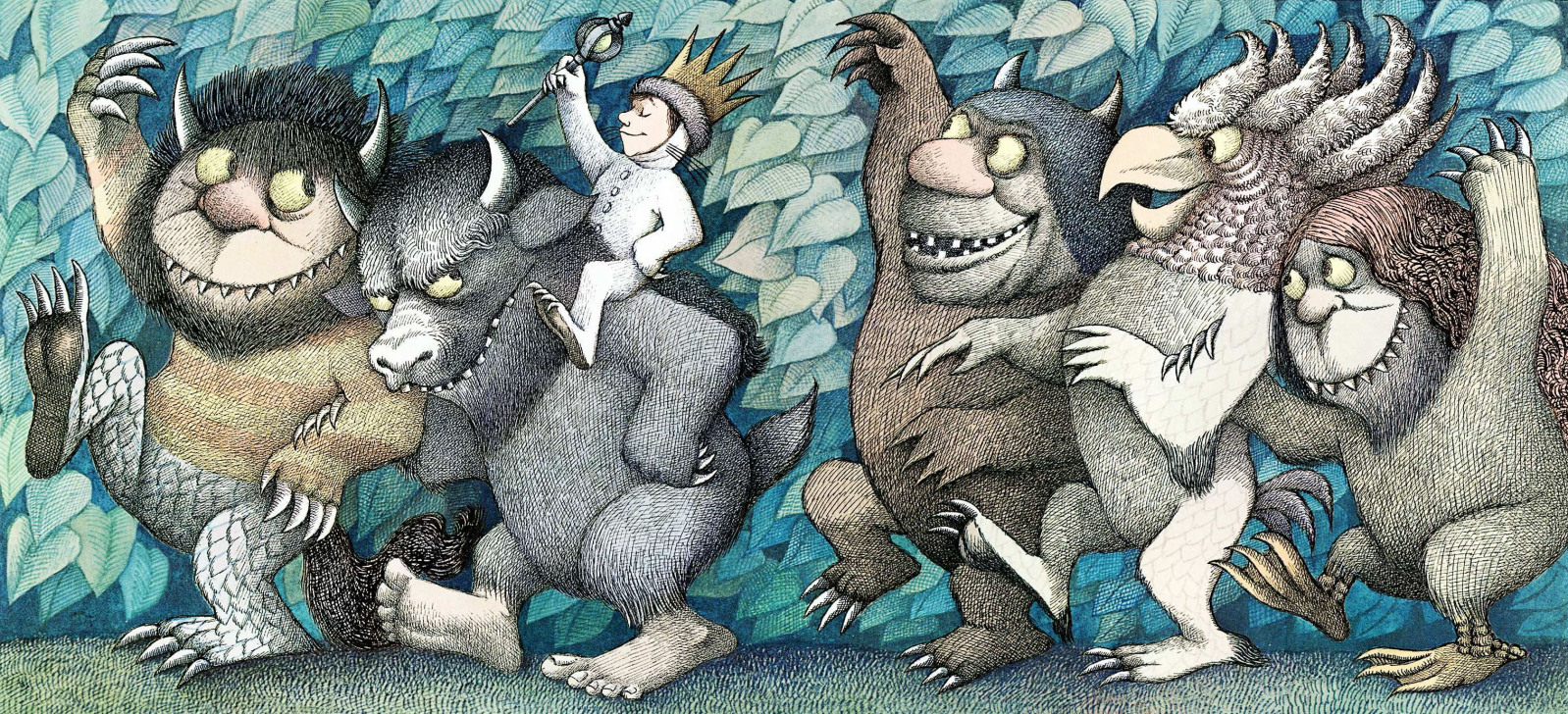
maurice sendak’s

“where the wild things are”

was initially pitched as

 “where the wild horses are”

his editor loved the pitch but

sendak could not draw horses

so the wild things he drew

ended up being

caricatures of his relatives.

“writing, to me, is simply thinking through my fingers.”
-isaac asimov

credits: maurice sendak, “where the wild things are” – 1963, harper and collins


stillness.

Image

13652945_552586261587499_2557473112577093821_o

gather here.

Standard

img_7609

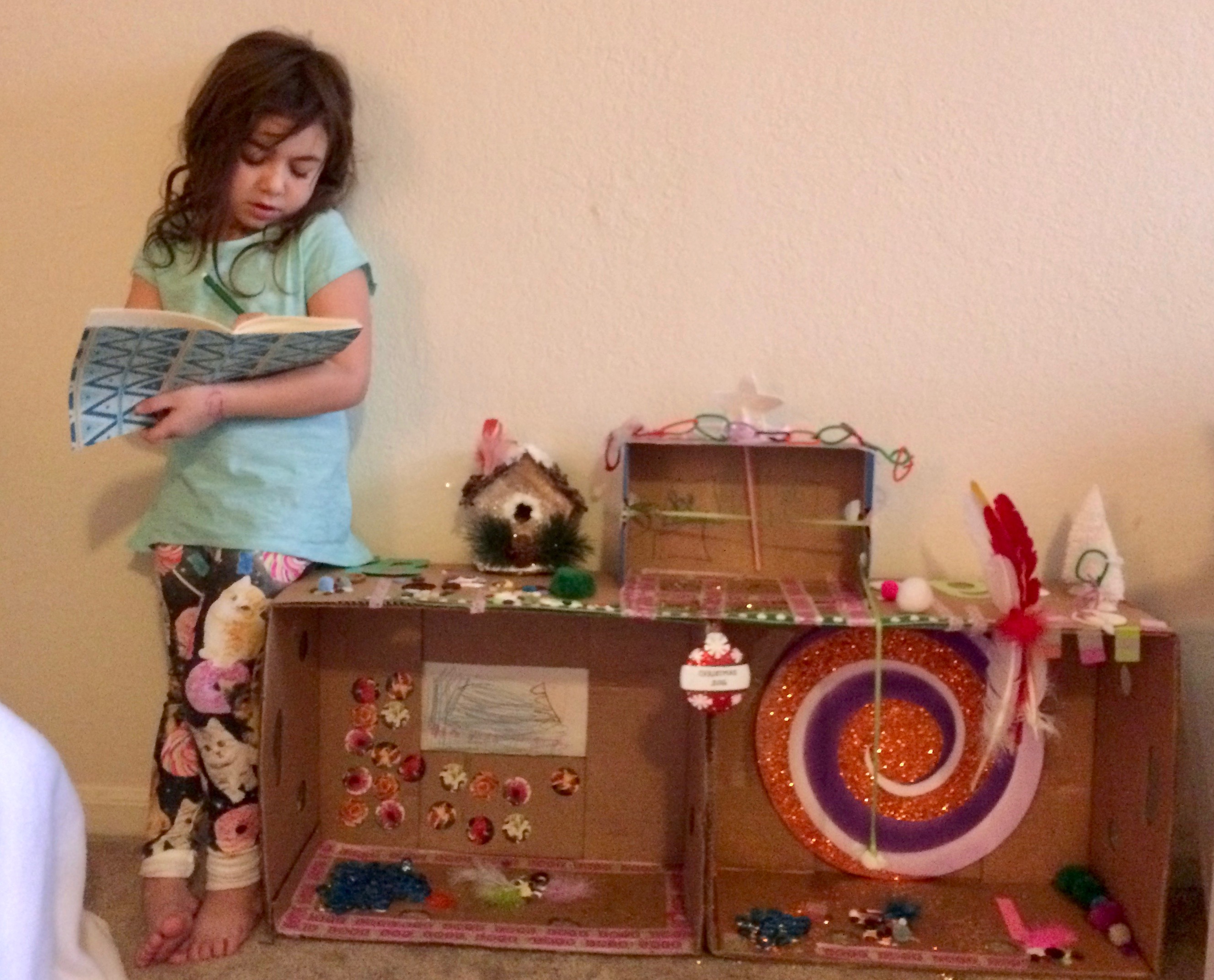
when grandie v and i

have finished building our indoor winter fairy village

 with jewels and feathers and sparkles, a flower vine swing, love tape, and puff ball beds

it is very important to write about it and invite them to move in tonight. 


“when I sound the fairy call, gather here in silent meeting,

chin to knee on the orchard wall, cooled with dew and cherries eating.

merry, merry, take a cherry, mine are sounder, mine are rounder,

mine are sweeter for the eater, when the dews fall, and you’ll be fairies all.”

 -emily dickinson

observer.

Standard

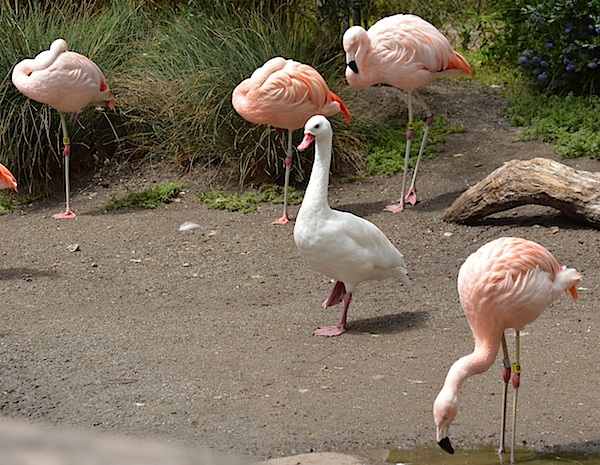
duck

15727045_10155591215348496_823598165500869167_n

credits: terry gross – fresh air/npr radio, google images


love’s labours.

Standard

unknown
Behold: The World’s Largest (Three-Ton) Gingerbread Village, GingerBread Lane.

                                    The village becomes larger and more elaborate each year. 

The day after Christmas is typically a time for relaxation and reflection after a harried holiday season. But not for Jon Lovitch—December 26 is the day he gets started on next year’s Christmas miracle. Driven by visions of Yuletide glory, he hits up stores’ post-holiday sales and stocks up on the sugar, candy and other sweets he’ll use to build his next GingerBread Lane.

The 39-year-old chef has been building gingerbread houses since he was a teenager. But Lovitch is no run-of-the-mill gingerbread aficionado. GingerBread Lane, which is on display through January 10 at the New York Hall of Science in Queens, New York, recently broke the Guinness World Record for world’s largest gingerbread village. For the last three years, he’s won the title annually, beating out villages in Norway and other countries.

Made using 682 pounds of homemade gingerbread dough, 775 pounds of candy sourced from more than 11 countries and 3,900 pounds of icing, GingerBread Lane weighs in at around three tons and takes up 500 square feet of space. Between buying supplies, making dough and icing from scratch and decorating each of the 1,102 buildings right down to their gumdrop-speckled rooftops, the completely edible village took about 1,500 hours to construct over the course of an entire year.
“I’m a chef by trade and a food purist, so I don’t believe in using ingredients that are inedible,” Lovitch tells Smithsonian.com. “Sure, it would be much easier to build if I used Styrofoam and glue, but Guinness mandates it’s built in such a way, and that’s the same way I’ve always done it.”

When Lovitch isn’t hunched over his oven in his cramped Bronx apartment, he serves as executive chef at the historic Algonquin Hotel in Times Square in New York City. Because of space restraints in his home kitchen, he can only work in batches on nights and weekends. He makes about three pounds of icing at a time and stores his creations in a spare bedroom. As a result, his entire home smells like a Christmas bakery year-round.“By the end of summer I can’t even smell it anymore,” he says, “but whenever I have friends over, they always comment on it.”
Lovitch’s schedule increases in intensity once July rolls around. He does the bulk of the baking during the summer. It isn’t until fall that he begins work on each structure’s details, from the intricate candy-coated rooftop of the S.C. Kringle & Co. Department Shoppe to the lifelike stonework on the exterior of a row of gingerbread brownstones. Lovitch even uses specially ordered coffee-flavored gum from Japan to simulate brown bricks.
“I try to make my village as lifelike and detailed as possible—it’s a cross between something in a Charles Dickens’ A Christmas Carol and a Tim Burton movie,” says Lovitch. Kids aren’t the only people drawn to the delicious intricacy of his gingerbread creations, he says: “Seniors are also really into it.”
GingerBread Lane’s appeal is widespread, but it can’t last forever. After several weeks delighting kids of all ages, Lovitch must dismantle GingerBread Lane on January 10. Rather than throw his creations in the trash, he invites visitors to come to the New York Hall of Science and take home buildings for free on a first-come, first-served basis. “Taking it apart can be gut-wrenching,” he says. “You realize as you give away each piece that you’ll never see it again. Just like Christmas, it’s an ephemeral thing. A brief, fleeting moment in time.”  

“and I had but one penny in the world. thou should’st have it to buy gingerbread.”

– william shakespeare, Love’s Labours Lost


credits: smithsonianmag.com, jennifer nalewki


unicorn.

Standard

img_0398

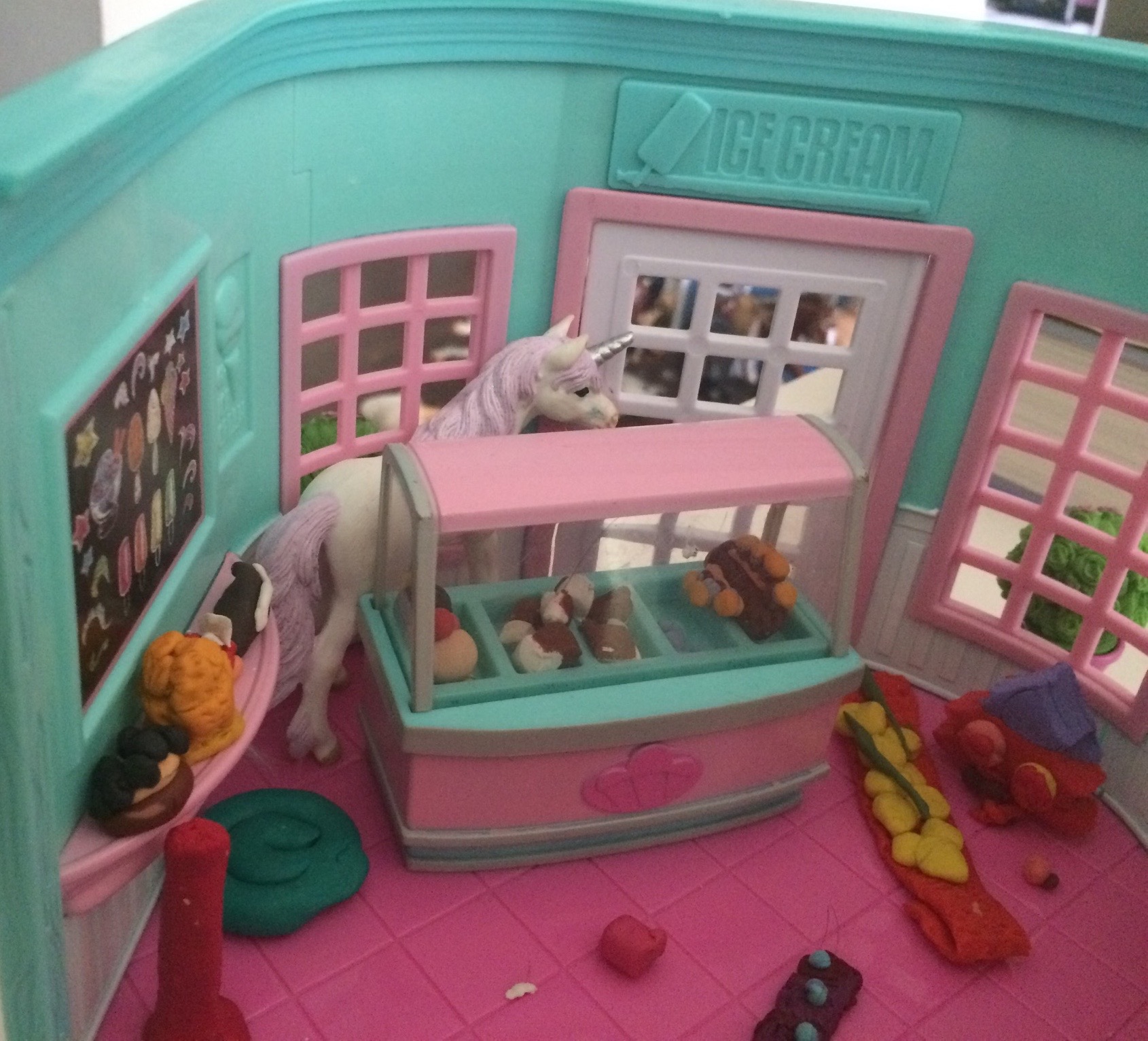
and in a tiny shop, 

filled with delicate treats

ice cream, cookies, cakes, and sweets

who better to sell these lovely delights

than a shining unicorn-

so brave and full of light?


“there are wild elephants in the country,

and numerous unicorns which are nearly as big,..”

–marco polo

my poem is dedicated

to my very young grandie, v,

who is an amazing artist

with a boundless imagination. 

may you always have

magical unicorns in your life.

love, peaches