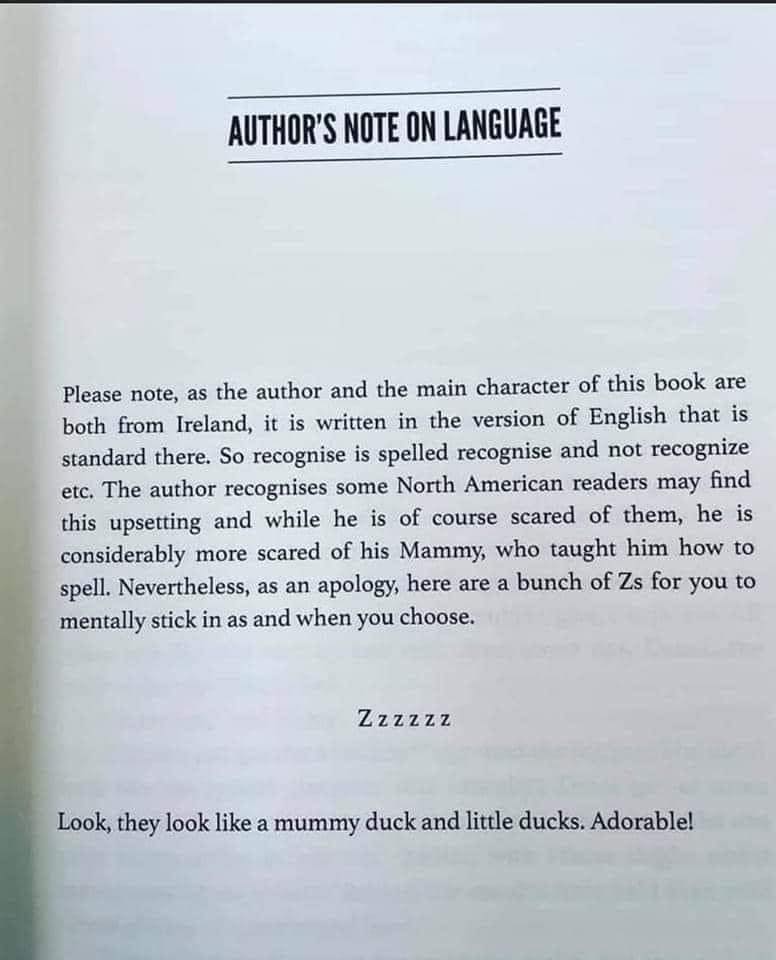
“drawing on my fine command of the English language, i said nothing.”
-robert benchley
—
book source credit: Disaster Inc. by Caimh McDonnell
“drawing on my fine command of the English language, i said nothing.”
-robert benchley
—
book source credit: Disaster Inc. by Caimh McDonnell
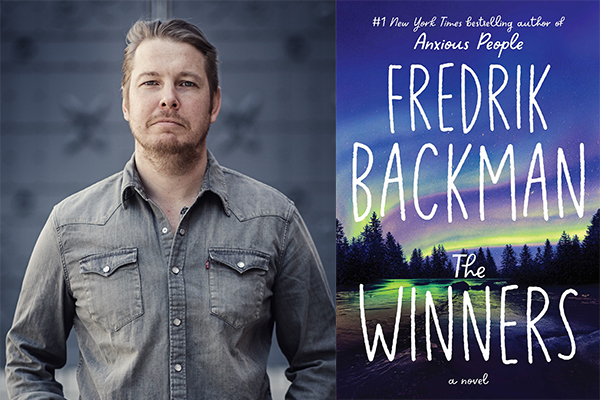
what a wonderful 90 minutes
spent (online) with one of my all-time favorite authors
*fredrik backman.
public libraries in 37 states hosted this live chat with fredrik
as he continued on a worldwide book tour
for his latest work, ‘the winners.’
he spoke openly about his struggles with anxiety
being on the autism spectrum
the pressures of a success which he never expected
his wife as his partner and support in all things
her important roles
organizing his promotional side of being an author
helping him to stay grounded
encouraging him taking as many breaks as needed.
i first became acquainted with his writing with the arrival of his book (and later, film),
‘a man called ove’
and there was no going back.
when he was asked about his writing process in today’s chat,
i found that we have a somewhat similar process.
his reply:
“my process is just chaos. all of these ideas are just in my head, like horses in a burning barn, trying to get out. my brain is always working, hearing a bit of conversation, crossing paths with a stranger, a place i happen into, anything is fair game, and i think, i would love to include those words or that person in my writing. i am always observing, listening, taking it all in, my brain never stops. i have to write an idea down on whatever i can find, an envelope, a scrap of paper, a receipt….then 3 weeks later i’ll make my family insane by asking, “where is that envelope i wrote my idea on a few weeks ago?” i have to scour our whole apartment looking for it and make everyone crazy. i suppose that is my process.”
amazing.
“words are not small things.”
-fredrik backman, beartown
—
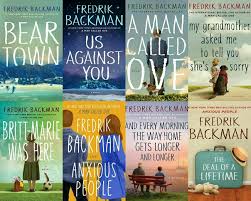
*Fredrik Backman is the #1 New York Times bestselling author of A Man Called Ove, My Grandmother Asked Me to Tell You She’s Sorry, Britt-Marie Was Here, Beartown, Us Against You, and Anxious People, as well as two novellas and one work of nonfiction. His books are published in more than forty countries. He lives in Stockholm, Sweden, with his wife and two children. Connect with him on Facebook and Twitter @BackmanLand or on Instagram @BackmanSK.

after 4 years and 4 tries
at last i find myself in
the erma bombeck writer’s workshop
at the university of dayton
her alma mater
where she has left an endowment
to support writers of humor and the human condition
i’ve always admired her style of writing
her daughter spoke of growing up in the family
the joy of erma’s looks at life
already feeling inspired and so lucky
with very welcoming writers
of all shapes and sizes, ages and stages
beginning to accomplished author
each with a unique story and reason
all with a common passion
the desire to write.
—
“to say, ‘well, i write when i really get into it’ is a bunch of bull.
put the paper in the typewriter, stare at it a long time,
get snowblindness if you have to, but write something.”
-erma bombeck
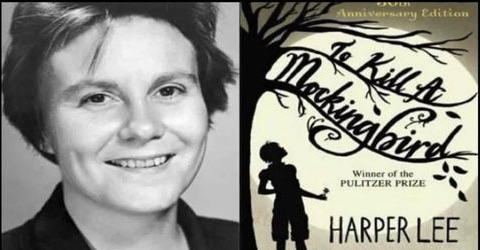
Harper Lee — the famously private author, might never have written the classic “To Kill A Mockingbird” if it hadn’t been for a 1950s Christmas gift.
Back in 1956, Lee was a ticket agent for British Overseas Airways Corporation. Like most struggling writers, she was having trouble balancing her job and finding time to write. She told this to her New York City friends, Michael and Joy Brown (who were also friends of Truman Capote).
Michael was a successful “industrial musical writer” whom American corporations hired to create performances to inspire their workers. His clients ranged from DuPont to JC Penney, and he was raking in the money for songs like “The Wonderful World of Chemistry.”
So in 1956, the Browns’ gave Lee the best Christmas present of all: An entire year’s salary so she could take time to write whatever she wanted. “There was an envelope on the tree, addressed to me. I opened it and read: ‘You have one year off from your job to write whatever you please. Merry Christmas,'” she wrote in McCall’s Magazine in 1961. “ They assured me that it was not some sort of joke. They’d had a good year, they said. They’d saved some money and thought it was high time they did something about me.”
Lee took that time to write “To Kill A Mockingbird,” which sold over 40 million copies worldwide, has been translated into over 40 languages, served as the basis for a hugely popular film, and for which she won a Pulitzer Prize.
—
“when life gives you a gift, receive it with all your heart.”
-enid ivanov
—
credits: Megan Willett-Wei, Insider

I signed his copy of ‘The Tale of Despereaux’ and he said, “My teacher said fifth grade is the year of asking questions.”
“Really?” I said.
“Yeah,” he said. He took out a notebook. “Every day we’re supposed to ask someone different a good question and listen really good and then write down the answer when they’re done talking.”
“Oh,” I said, “I get it. I’m someone different. Okay, what’s your question?”
“My question is how do you get all that hope into your stories?”
“That’s not a good question,” I said. “That’s a great question. Let me think. Um. I guess that writing the story is an act of hope, and so even when I don’t feel hopeful, writing the story can lead me to hope. Does that make sense?”
“Yeah,” he said. He looked me in the eye. “It’s kind of a long answer. But I can write it all out. Thanks.”
He picked up his copy of Despereaux, and walked away—writing in his notebook.
This was years ago.
Why did I wake up this morning and think of this child?
Maybe because this is a time to start asking good questions, a time to write down the answers, a time to listen to each other really well.
I’m going to get myself a little spiral bound notebook.
I’m going to listen and hope.
-Kate DiCamillo – American author
that surprising and wonderful moment
when you discover
there is yet one more unread book
written by one of your favorite authors
hiding in plain sight
waiting for you to pick it up.
—
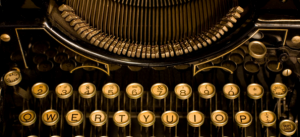
“the exact day I became a poet was april 1, 1965,
the day I bought my first typewriter.”
-august wilson
—
in honor of poetry month.
mine was the day I learned to hold a pencil
and found a scrap of paper to scribble on.
—
image credit: daskeyboard
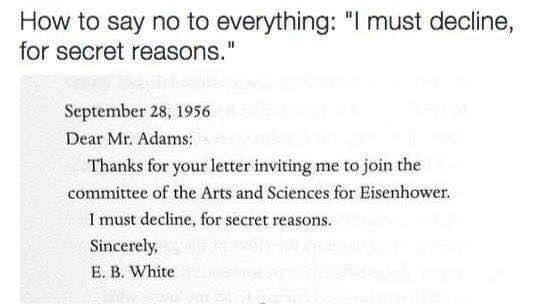
-e.b. white, author
 I didn't have my glasses on....