
my next stack to climb.
—
“I will always find peace in rain and adventure in reading.”
-viola cn
my next stack to climb.
—
“I will always find peace in rain and adventure in reading.”
-viola cn

“I made this thank you note. I’m going to give it to my family.”
“what are you thanking them for?”
“I’m going to thank them for being my family.”
—
“if the only prayer you ever say in your entire life is thank you, it will be enough.”
*Meister Eckhart
*Eckhart von Hochheim (c. 1260 – c. 1328), commonly known as Meister Eckhart, was a German theologian, philosopher, and mystic.

(not me, but someone who approaches things the same way I do)
—
my favorite quote or word to live by:
‘go.’
in every sense of the word.
—
—
image credit: vintage pinterest

“peace is the only battle worth waging.”
-albert camus
—
art credit: laurachjones art – ‘peaceful’

walking on a bridge and looking down at each side
same day, same time, same place
what you don’t see
is what is happening just below the bridge
to make each side of the very same river
act in a very different way

“no bridge has ever taken sides.”
-ljupka cvetanova, the new land
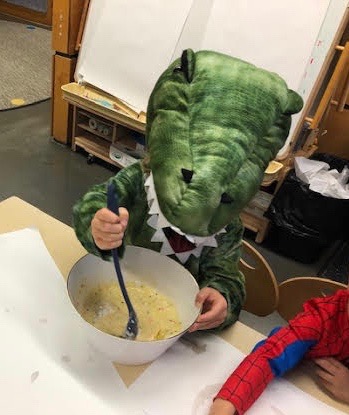
back to school today
back to the kinder
who are not limited by conventions
and are open to the future.



lincoln logs were invented by frank lloyd wright’s son.
—
a trivial gift for you on january 4th, in honor of national trivia day
—
‘i think Iim a trivia nerd. i love to learn about everything. i’m curious.’
-adam rodriguez
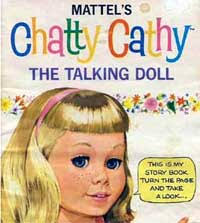
I was 6 years old and so excited to finally get my chatty-cathy
a doll with a string in the back
that you could pull and she would talk
(18 phrases at random)
‘please take me with you’
‘may I have a cookie?’
‘I love you.’
she was a wonderful doll
we were happy together
until
I came home one day
and noticed to my horror
that my oldest sister
had given her a haircut
(picture a choppy hacked pixie cut with stringy bits)
I did not have a good reaction to it
I exploded in tears
very dramatically
sobbing and instantly tattling on her
chatty’s hair never grew back
and one day she was gone.
(the doll, not my sister)
after all these years
I still bring it up
to my sister
every so often
she always tells me
she had no idea
I would have such a strong reaction
she was just trying to give her a fancy hair style
and while I have long-ago forgiven her
I still have no idea
what chatty may have said to her during the haircut.
‘
—
“a beloved doll’s voice speaks directly to your soul
in a way that cannot be explained in words.”
-gayle wray
p.s. I am not a fan of dolls as an adult, they kind of terrify me, especially talking ones.
—
image credit: Mattel Toys

Rod Serling – working at home in Connecticut, 1956
anti-war and social justice activist, tv-writer, producer, narrator
and one of my idols.
—
*In 1955, the miscarriage of justice in the Emmett Till case proved a galvanizing point in the Civil Rights Movement. Rod Serling, a 30-year-old rising star in a golden age of dramatic television, watched the events play out in the news. He believed firmly in the burgeoning medium’s power for social justice. “The writer’s role is to be a menacer of the public’s conscience,” Serling later said. “He must have a position, a point of view. He must see the arts as a vehicle of social criticism and he must focus the issues of his time.”
Soon after the trial concluded, Serling, riding off the success of his most well-received teleplay to date, felt compelled write a teleplay around the racism that led to Till’s murder. But the censorship that followed by advertisers and networks, fearful of blowback from white, Southern audiences, forced Serling to rethink his approach. His response, ultimately, was “The Twilight Zone,” the iconic sci-fi anthology series that spoke truth to the era’s social ills and tackled themes of prejudice, bigotry, nuclear fears, war, among so many others. At this point in history, the censors didn’t know what to make of this genre and he was free to deliver his message in a new way.
—
in honor of Rod Serling on national science fiction day,
who understood the power of the arts
as a way to communicate important messages.
—
“there are weapons that are simply thoughts.
for the record, prejudices can kill and suspicion can destroy.”
-rod serling
—
credits: Getty Images, *Smithsonian Magazine

