Tag Archives: words

crabwise.

Standard

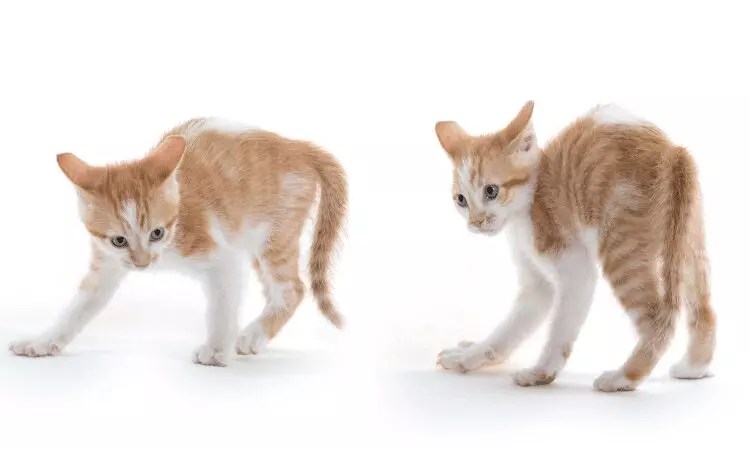
not olive, but she walks like this sometimes.

is it a crab? is it a cat? what is it doing?

CRABWISE!

KRAB-wiyz

Part of speech: adverb

Origin: English, 20th century

Definition: To, toward, or from the side, typically in an awkward way.

Examples in a sentence:

“Roberto moved crabwise without taking his eyes off the dodgeball.”

“My cat only moves crabwise if she knows I’m going to try to give her a pill.”

“some things cannot be changed. you cannot teach a crab to walk straight.”

-aristophanes


aha!

Standard

yesterday was my favorite day of the week for crosswords

sunday paper delivered at home

weekend puzzle inside

waiting to challenge me

my personal process may include

a tiny bit (iota) of cursing (*&@^) at times

until that ‘aha’ (eureka moment) arrives.

word of the day:

cruciverbalist

cru-sih-Ver-be-list

part of speech: noun

origin: american english, mid 1970s

definition: a person who enjoys or is skilled at crosswords.

example in a sentence:

“my mother, the cruciverbalist, still receives the daily newspaper so she can solve the crossword with her pen.”

“just got excited at a crossword clue that was ‘cheese lovers’ and was like ooh,

there’s a name for people like me it turns out it was: mice.

-word porn

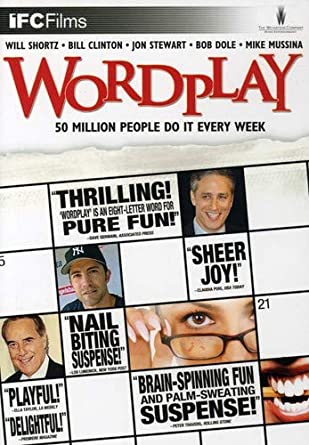
one of my fav films

these are my people.


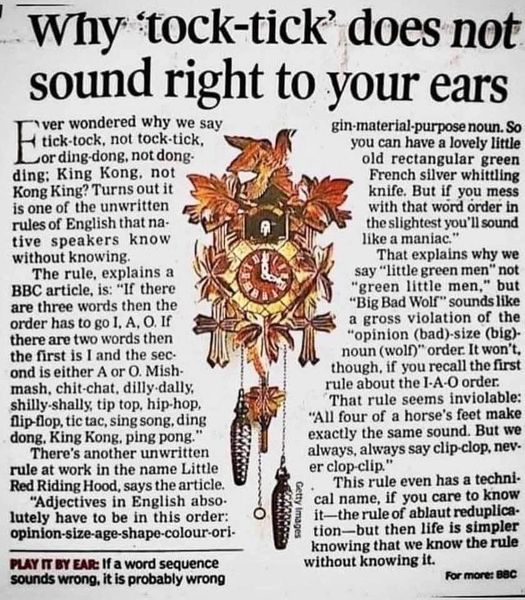
noetic or poetic?

Standard

NOETIC

no-ED-ik

Part of speech: adjective 

Origin: Greek, mid-17th century

Definition: Relating to mental activity or the intellect.

Examples in a sentence:

“The philosophy department attracts noetic students.”

“Noah was equally athletic and noetic”

Some travel life, 

Shining brightly noetic

But as for me, 

 I’d rather wax poetic. 

-beth


image credit: npr brightside

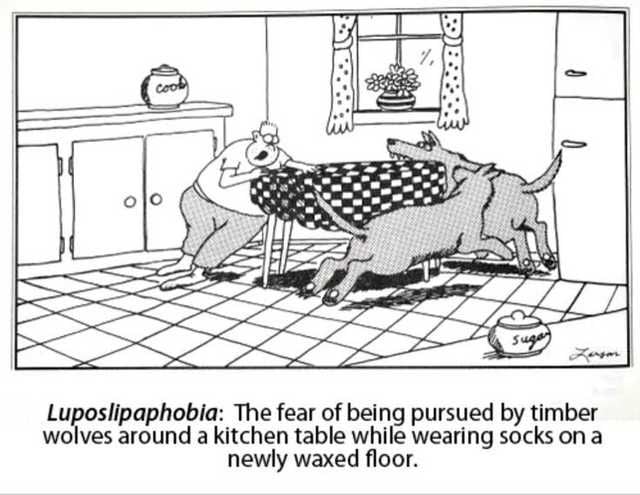
luposlippapaphobia.

Standard

word of the week

you never know when you might need this

it could be just the perfect word to describe your circumstances.


image credit – gary larson, the far side

good words.

Standard

sometimes finding good words is a walk in the park.


“good words are worth much, and cost little.”

-george herbert


gallup park in winter, ann arbor, mi, usa


huh?

Standard

The word “huh” packs a lot of meaning into just one syllable. When we use it, we might be expressing confusion, asking for clarification, or requesting that a statement be repeated. We’re also communicating so concisely there’s hardly a break in the conversation, making “huh” the politest kind of interruption.

No wonder, then, that the word “huh” appears in multiple languages. In fact, according to a recent study in the journal PLOS ONE, linguists have found that the word is used to express confusion not only in related language families, but across multiple, independently developed languages. The researchers, who recently won an Ig Nobel Prize honoring their study, argued that “huh?” is so common it may actually be universal.

According to New York Magazine,  the researchers studied conversational use of the word “huh” in 10 different languages, including English, Icelandic, Murrinh-Patha (from Australia), and Cha’palaa (from Ecuador). Though these languages don’t share an origin, they still employ “huh” in much the same way.

The researchers believe that the widespread use of the word “huh” is an example of convergent evolution. In each language, “huh” developed independently, but was shaped by similar environmental or linguistic pressures—for example, the need for a relatively polite way to signal confusion. According to the study, the word “fulfills a crucial need shared by all languages –the efficient signaling of problems of hearing and understanding.”

“Huh” is not an innate human sound, like a grunt or emotional cry, the researchers say. Rather, it’s learned, taught to children, and passed down linguistically from generation to generation. According to researchers, its universality is a result of its important conversational function. Most of us probably take the word “huh” for granted—or don’t even think of it as a word at all—but according to researchers, that’s exactly why it’s so important: It doesn’t draw attention to itself.


“before I came here I was confused about this subject.

having listened to your lecture I am still confused. but on a higher level.”

-enrico fermi


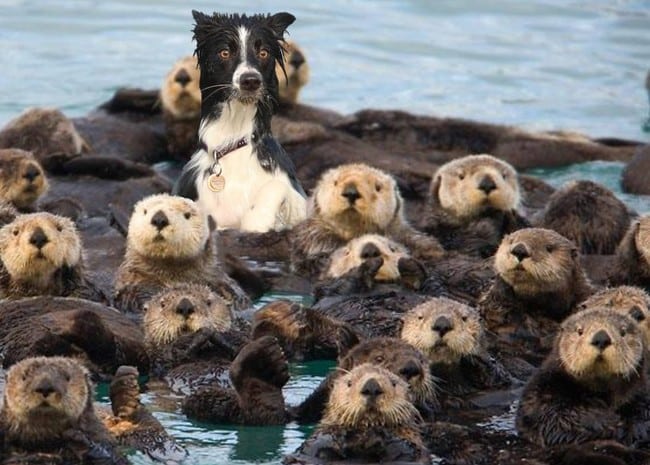
Source Credit: New York Magazine, Photo credit: Animal Channel


animal planet

know what?

Standard

“I only know that I know nothing” 

Socrates


source credit: bbc

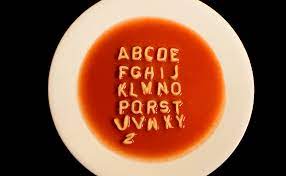
alphabet soup.

Standard

i have always loved alphabets

when i was young

one of my favorite days ever

was when i could finally

decode the letters and read words

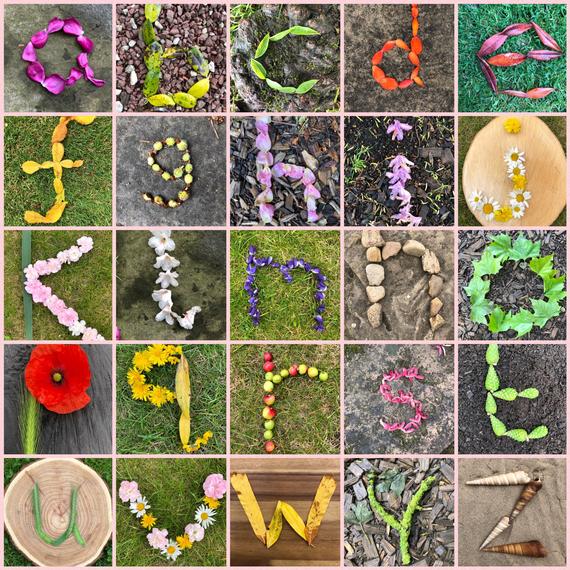
i love alphabets created out of every imaginable material, and alpha art and images of all kinds

today i tried to look up the word for someone who loves alphabets

and there was nothing to be found

the closest i could come was for someone who loves words:

What do you call a person who loves words?
A logophile is a person who loves words; a word nerd.
Because it’s not all that commonly known,
logophile is probably most commonly used by logophiles themselves.
(of which i am one)
but alas, ironically, no word for someone who loves the letters that make up every word.

“human society, the world, and the whole of mankind is to be found in the alphabet.”

-victor hugo


wobbly.

Standard

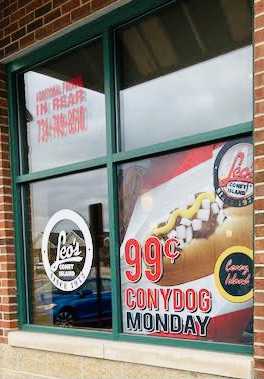
when i stopped by my favorite coney island restaurant to pick up a giant greek salad

(in detroit, coney dogs and greek food under one roof are a restaurant tradition)

something on their monday special sign stuck out

while the words ‘coney island’ were displayed on 3 signs all around it

and coney island is a part of the restaurant’s name

the special somehow became ‘cony‘ dog monday.

i know how hard it is to be your own editor

and i am easily amused

but it just struck me as really funny

that no one noticed

 it’s the most popular item they sell.

“my spelling is wobbly. it’s good spelling but it wobbles, and the letters get in the wrong places.”

-A. A. Milne

the history of how you felt.

Standard

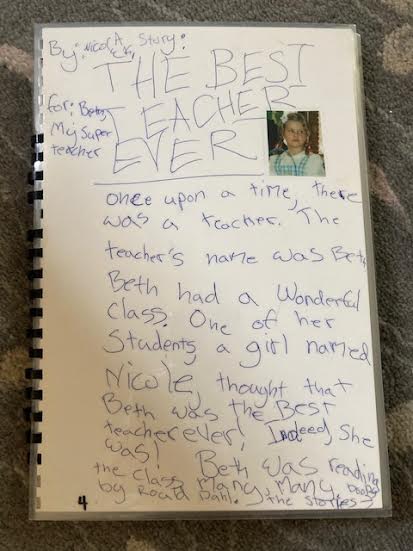
 loving my new journals and so looking forward to filling them


“language allows us to reach out to people, to touch them with our innermost fears, hopes, disappointments, victories.

to reach out to people we’ll never meet.

it’s the greatest legacy you could ever leave your children or your loved ones:

the history of how you felt.”

-simon van booy