i have always been drawn to legends, fables, myths, and folk and fairy tales
and also have a love of tiny things
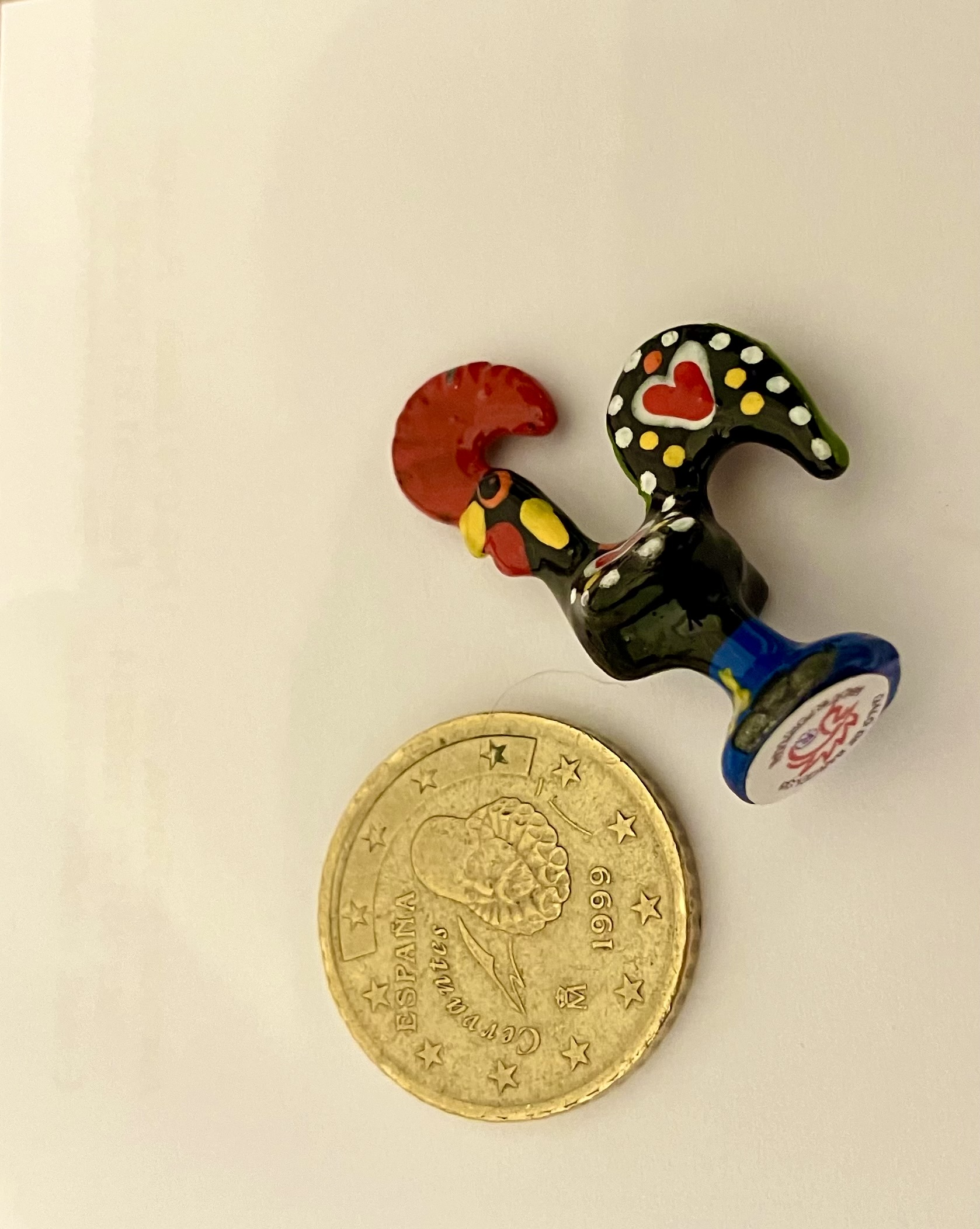
that is how this tiny painted ceramic rooster
came to travel home with me from portugal
not much bigger than a coin
but a mighty symbol
its presence is deeply intertwined with portuguese culture,
symbolizing the values of integrity, righteousness, and the pursuit of justice.
—
the tale that started it all:
The folk tale of the rooster of Barcelos, tells the story of a dead rooster’s miraculous intervention in proving the innocence of a man who had been falsely convicted and sentenced to death. The story is associated with the 17th-century calvary that is part of the collection of the Archaeological Museum located in Paço dos Condes, a gothic-style palace in Barcelos, Portugal.According to the tale, a landowner in Barcelos had stolen silver and the inhabitants of that city were looking for the thief. A man became a suspect, despite his pleas of innocence. He swore that he was merely passing through Barcelos on a pilgrimage to Santiago de Compostela to fulfill a promise. Nevertheless, the authorities arrested the man and condemned him to hang.The man asked them to take him in front of the judge. Affirming his innocence, the man pointed to a roasted rooster on top of the banquet table and exclaimed, “It is as certain that I am innocent as that rooster will crow when they hang me.” The judge pushed aside his plate, deciding not to eat the rooster, but otherwise ignored the appeal.However, while the pilgrim was hanged, the roasted rooster stood up on the table and crowed as predicted. Understanding his error, the judge ran to the gallows, to discover that the man had been saved from death thanks to a poorly made knot. The man was immediately freed.Some years later, he returned to Barcelos to sculpt the Calvary (or Crucifix) to the Lord of the Rooster (Portuguese: “Cruzeiro do Senhor do Galo“) The monument is located in the Barcelos Archaeological Museum.
==
‘asleep in the legends of old.’
-John Keats, from The Feast of St. Agnes
—
other interesting barcelos rooster facts:
In the 1990s U.S. sitcom Seinfeld, Elaine’s first apartment is shown furnished in kitschy style, cluttered with bric-a-brac, including a rooster of Barcelos.
The cathedral of Santo Domingo de la Calzada in Spain keeps two live chickens in remembrance of the local version of the event.
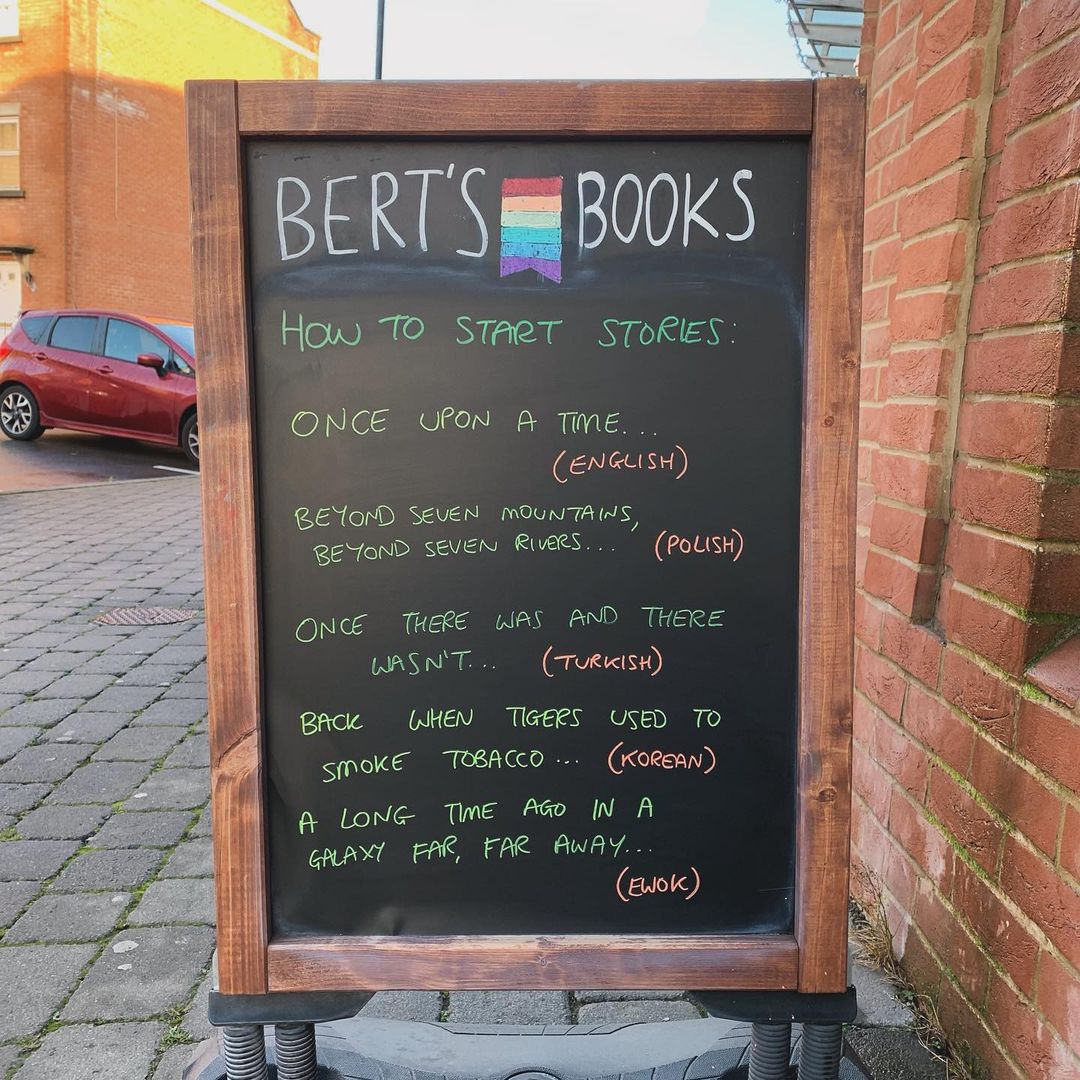
how interesting to see how different cultures/languages might start their books. the last one is pure fun.
how do stories start in your culture/language?
—
how some have responded:
Hungarian tales mix a lot of them, but my favourite is like: “Once upon a time, where it wasn’t, far beyond the glass mountain, where the short-tailed piglet roams, there lived a(n)….”
My mother used to say “When Donkeys wore high hats and Hyde Park was a flower pot “
Romanian : “There was once, as if never, because if it weren’t, the story wouldn’t be told”
“we have an obligation to read aloud to our children. to read them things they enjoy. to read to them stories we are already tired of. to do the voices, to make it interesting, and not to stop reading to them just because they learn to read to themselves. use reading-aloud time as bonding time, as time when no phones are being checked, when the distractions of the world are put aside.”
-neil gaiman, english author of short fiction, novels, comic books, graphic novels, audio theatre, and screenplays
—
*World Read Aloud Day is celebrated on the first Wednesday in February. This is a day dedicated not just to reading, but to the art and practice of reading aloud. Stories were passed down from generation to generation even before writing was invented. Oral forms of storytelling were the earliest way of preserving human knowledge, insight, and creativity. This day helps us bring this tradition back to reading while promoting literacy.
—
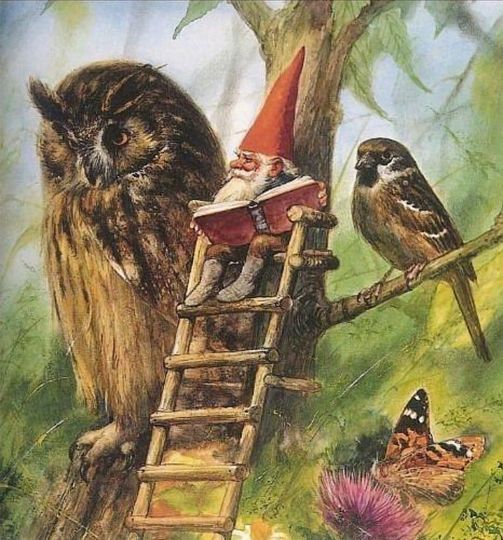
art credit: ‘gnome’ by rien poortvliet, illustrator




 I didn't have my glasses on....