treasures
—
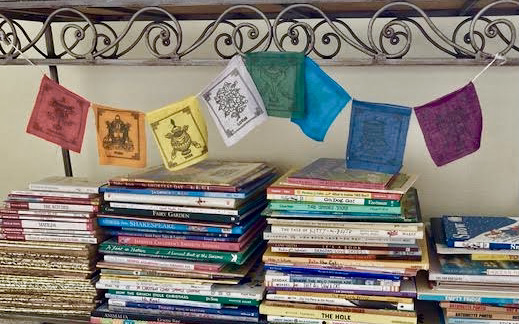
“there is space on everyone’s bookshelves for books we’ve outgrown but can’t give away.
they hold our youth between their pages.”
-enid blyton

treasures
—
“there is space on everyone’s bookshelves for books we’ve outgrown but can’t give away.
they hold our youth between their pages.”
-enid blyton

“a museum is a place where one should lose one’s head.”
-renzo piano
—
photo credit: university of michigan museum of natural history
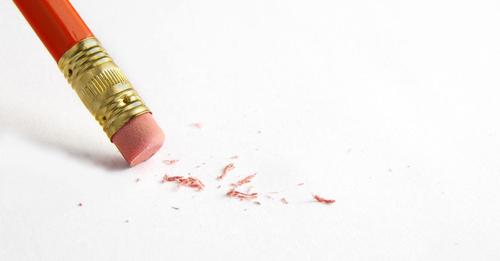
Was sticking an eraser on the back of a pencil common sense, or a new invention? This week in 1868, Philadelphia stationery store owner H.L. Lipman patented something that seems incredibly obvious in hindsight: a regular pencil, with an eraser on the end.
Although Lipman is credited with this innovation, his pencil with eraser looked a little different than its modern descendant. Rather than being glued onto the end, Lipman envisioned a pencil with a chunk of rubber eraser in the core that could be accessed by sharpening it, the same way you would a pencil lead.
Graphite pencils had been around since the 1500s, writes David Green for Haaretz. But until the 1770s, the preferred tool used to erase pencil marks was balled-up bread.
Lipman’s name hasn’t gone down in history, maybe because he didn’t manage to hold on to his patent. After gaining it, he sold it to Joseph Reckendorfer in 1862 for about $2 million in today’s money. Reckendorfer also didn’t get much use out of the patent. He took another company to court over their use of his patent, only for it to be invalidated by the court’s decision, which stated that Lipman merely combined two existing things, but didn’t really produce something new.
Lipman essentially imagined the pencil as having a graphite end and a rubber eraser end.
“It may be more convenient to turn over the different ends of the same stick than to lay down one stick and take up another,” the decision noted. “This, however, is not invention within the patent law.”
Over his career, though, Lipman also made a number of contributions to the 19th-century office:
He was also America’s first envelope manufacturer, and it was he who had the idea of adding adhesive to the back flap, so as to make sealing easier. He devised a methods for binding papers with an eyelet that preceded the stapler by two decades. And Lipman was the first to produce and sell blank postcards in the United States, in 1873.
Pencils aren’t really a notable object, writes Henry Petroski in The Pencil: A History of Design and Circumstance, but they shape how people do their work. Unlike the pen, a more permanent writing instrument, the pencil doesn’t usually get sayings (it’s the pen that’s mightier than the sword, for example) or a lot of credit. But pencil is an essential creative medium, he writes, because it can be erased—as everyone from architects to artists can tell you.
“Ink is the cosmetic that ideas will wear when they go out in public,” he writes. “Graphite is their dirty truth.”
—
credits: kat eschner, smithsonian.com, smithsonian magazine
happy april fools’ day, a day meant to celebrate the fool in all of us.
—
“to the wise, life is a problem; to the fool, a solution.”
-marcus aurelius
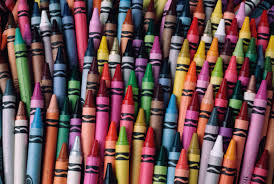
National Crayon Day on March 31 sparks fond memories of childhood creations in full color as we celebrate one of America’s most beloved toys, the crayon! Crayons delight our senses not just with their brilliant colors but also with their distinct smell, the feel of them in our hands, and for some kids, the waxy taste. With over 12 million crayons made daily, one is never far from reach. So, grab your box of 64 crayons, sharpener included, and get ready for some artistic expression and nostalgia.
Crayons have a colorful history. While hued wax molds have existed for centuries, the modern-day crayon got its start in the 1900s. Crayola crayons were introduced in 1903 by Binney & Smith as a safer and cheaper alternative to the art utensils in use at that time. Binney & Smith premiered their famous eight-pack of crayons with the color line-up: Black, Brown, Orange, Violet, Blue, Green, Red, and Yellow. This color mix, along with their names, remained unchanged for 45 years. Since then, many colors have been added, color names and packaging have changed, and color styles such as neon, metallics, and glitter have emerged. A few colors have even been retired from the color wheel, typically on March 31.
The Crayola crayon has a special place in the hearts of Americans and Americana. It was one of the original inductees into the National Toy Hall of Fame in November 1999. It is estimated the average American will have used 730 crayons by their 10th birthday. Even Mr. Rogers has had his hand in the history of crayons by molding the official 100 billionth crayon in February 1996 at the Crayola plant in Easton. Crayons not only add color to our lives, but they’ve also been held as an analogy for the colorfulness of the human race and our ability to live together in a diverse world. Crayons have been used for creating artwork for years.
Originally used for industrial purposes, their popularity soared when the brand Crayola was introduced. Crayons are used as a medium for creating artwork by children in schools mostly, but is also popular among adults who use it for creating contemporary art. Many households have a box of crayons stashed away somewhere, and today is the day it is pulled out. Everyone can enjoy crayons for creating vivid drawings.
BY THE NUMBERS
100 – the number of colors Crayola crayons are available in.
50 – the number of crayon colors retired by Crayola.
3 billion – the number of crayons produced by Crayola in a year.
18th – the ranking in terms of how familiar the crayon scent is to adults.
1962 – the year when Crayola changed the name of their crayon ‘Flesh’ to ‘Peach.’
15 feet – the length of the world’s biggest crayon.
223 billion – the number of Crayola crayons produced to date.
730 – the number of crayons used by the average kid by the age of 10.
—
“we could learn a lot from crayons; some are sharp, some are pretty, some are dull, while others bright, some have weird names, but they all have learned to live together in the same box.”
-Robert Fulghum, american author
—
credits: national days

when meeting my friend for lunch
we decided to eat on the light side
share some apps
not knowing
the ‘apps’ were giants
no small plates action going on here
math is not really my favorite thing
but just by looking at it
it was clear
we had grossly underestimated
the sheer size of things
quickly and accurately assessing
that
we were in trouble.
—
“never order food in excess of your body weight.”
-erma bombeck

a kind tribute
to my little himilayan irish kitty
yeti kennedy
from my compassionate vet’s office
in a perfect circle
he
appeared from the wild
returned to the wild.
—
“trees are as close to immortality as the rest of us ever come.”
― karen joy fowler
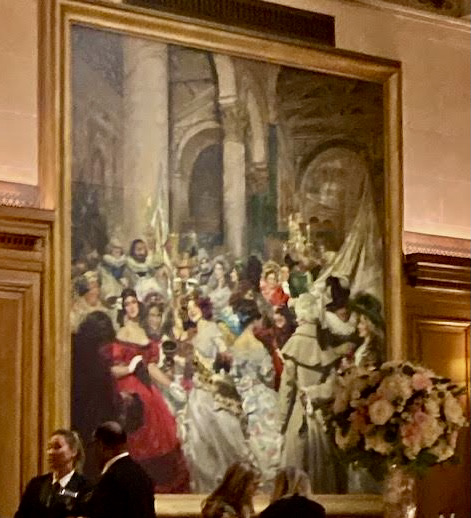
( festive artwork that was a precursor to the night’s joyful celebration)
seeing this painting upon entering the room
where my dear friend
finally had the chance
to have the wedding she’d always wanted
delayed by two long years of pandemic
i knew it would be a memorable celebration
that really lived up to the artist’s vision
and then some.
—
“all great celebrations break away from the mundane.”
-jessica marie baumgartner
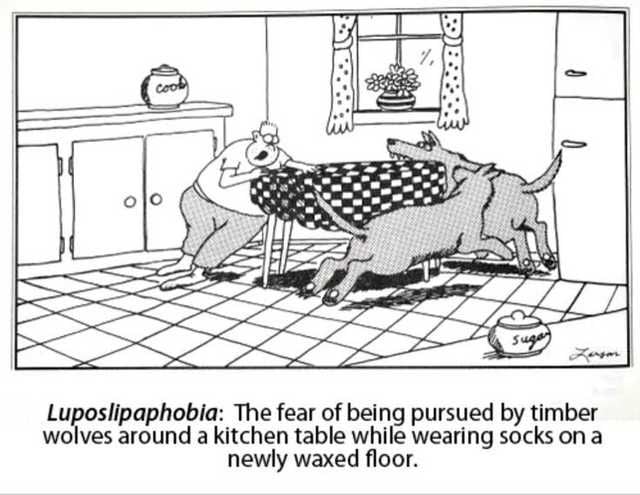
word of the week
you never know when you might need this
it could be just the perfect word to describe your circumstances.
—
image credit – gary larson, the far side

this is someone else (who is not me)
goofing off to celebrate one holiday,
while actively ignoring the clutter of the other holiday.
—
how incredibly lucky
that right after i realized it is
‘clutter awareness week’
i found out it is also
‘international goof off week’
so i decided to go all in on the goof off celebration.
i’ve never been one to shy away from honoring a holiday
but i can only spread myself so thin.
happy holidays to those of you who celebrate one or both.
—
“but i love to feel events overlapping each other, crawling over one another like wet crabs in a basket.”
lawrence durrell
—
image credit: animal rescue site news

