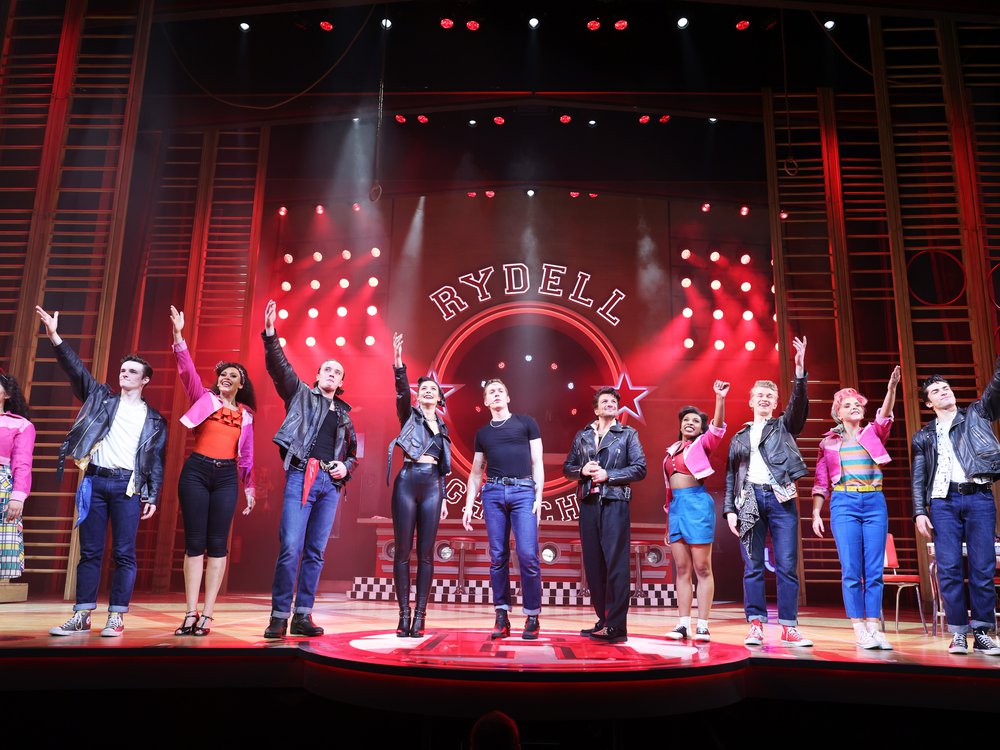
Press night performance of Grease at London’s Dominion Theatre
A new program in London will soon start giving away unsold theater tickets to those who couldn’t otherwise afford them. Called the Ticket Bank, it will aim to dole out 1,000 tickets per week to theater, dance, music and comedy shows. The tickets will be free or pay-what-you-can.
The Ticket Bank is an arts-oriented variation on a food bank: giving donations, or any available surplus, to those in need. The pilot program will launch on January 9, 2023 and run for one year.
Report an ad
“There are brilliant people putting together food banks and heat banks, but that doesn’t give humanity its basic needs from a soul point of view,” Chris Sonnex, who conceived of the idea, tells the Guardian’s Harriet Sherwood. “People who are suffering as a result of the cost of living also need access to community, entertainment and things that warm the soul.” Sonnex is the artistic director at Cardboard Citizens, a performing arts organization for people with the experience of homelessness. “Art,” he tells the Guardian, “is a human right.”
The initiative is focused on the skyrocketing cost of living, which puts cultural experiences out of reach for more and more people—especially in major cities like London. But it also aims to help cultural institutions like theaters, which have seen dwindling audiences due to economic crises and pandemic restrictions.
London isn’t the first city to launch a unique program to reinvigorate interest and participation in the arts. Several other cities, including Quebec and Brussels, have opened up their museums for free mental health visits in recent years. Twice yearly, during New York City’s Broadway Week, popular shows offer tickets at a majorly discounted rate.
Report an ad
Sonnex enlisted the Cultural Philanthropy Foundation, an organization aiming to “democratize access to culture,“ to help make the project happen. “Very rarely do you come across an idea that is so simple and brilliant that you can’t believe it doesn’t already exist,” Caroline McCormick, the foundation’s chair, says. “When Chris Sonnex told me his idea for the Ticket Bank, my response was as simple as his idea. ‘We have to make this happen.’”
Seven theaters have agreed to participate in the imitative: the National Theater, the Roundhouse, the Barbican, the Almeida, Gate, Bush and Tara theatres. Another seven will be announced in January.
“Everybody’s seen the value, everyone wants to make it work,” McCormick tells BBC News.
A group of London and UK-based partners will ensure the tickets reach people and communities in need or historically underserved by cultural organizations.
Report an ad
While “a million different barriers” make accessing the arts difficult, “one of the biggest is ticket prices,” Sonnex tells the Guardian. “It’s important to reach as many people as possible to say: This is for you.”
—
“i believe in the healing power of the arts,
and whenever you can bring art into anyone’s life, it’s a special thing.”
-austin nichols
—
credits: smithsonian magazine, molly enking, getty images, david m. bennett, the guardian, harriet sherwood, bbc news, the ticket bank
When was the last time you called someone a GOAT? Or declared an “inflection point,” or answered a yes-or-no question with “absolutely”?
Probably too recently, say the faculty of Lake Superior State University, the Michigan college that releases an annual list of words that they say deserve to be “banished” from our vocabularies over “misuse, overuse and uselessness.”
“Our nominators insisted, and our Arts and Letters faculty judges concurred, that to decree the Banished Words List 2023 as the GOAT is tantamount to gaslighting. Does that make sense?” said Rodney S. Hanley, the university’s president. “Irregardless, moving forward, it is what it is: an absolutely amazing inflection point of purposeless and ineptitude that overtakes so many mouths and fingers,” Hanley added.
Here’s the full list of the school’s banished words for this year:
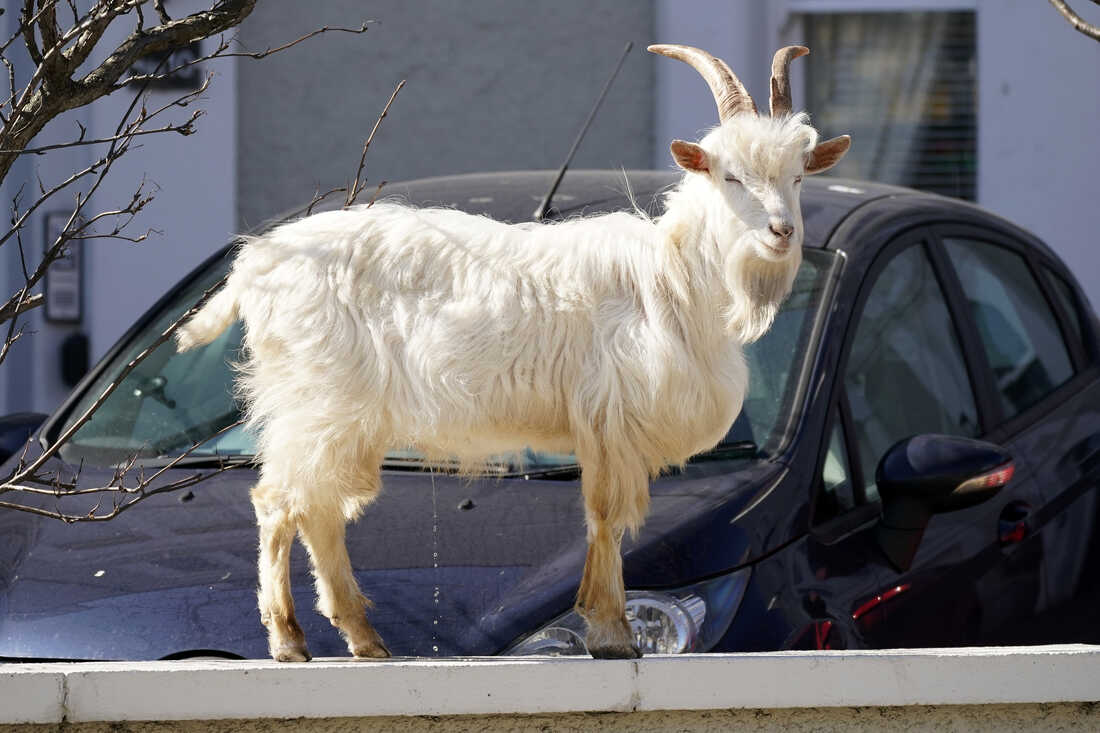
GOAT
Inflection point
Quiet quitting
Gaslighting
Moving forward
Amazing
Does that make sense?
Irregardless
Absolutely
It is what it is
Out of over 1,500 nominations — from people across the U.S. and as far afield as New Zealand and Namibia — judges declared that this year’s top offender was “GOAT,” the acronym for “greatest of all time.”
Nominators and faculty alike found the term objectionable due both to its impossibility – how can anyone declare a single best of all time when another may come along in the future – and the liberal way the title is dispensed these days.
“The singularity of ‘greatest of all time’ cannot happen, no way, no how. And instead of being selectively administered, it’s readily conferred,” said Peter Szatmary, a spokesperson for Lake State.
Lake State’s faculty judges would likely argue that was too many people (and non-people) described as “the greatest of all time.” “Words and terms matter. Or at least they should,” Szatmary said.
Joining “GOAT” in banishment are nine other words and phrases that nominators and judges complained were used so often that they had become disconnected from their literal meanings – like “amazing,” which nominators fretted no longer meant “dazzling” or “awe-inspiring.”
“Not everything is amazing; and when you think about it, very little is,” one nominator noted.
Sponsor Message
Frequently targeted are of-the-moment phrases like “in these uncertain times” (as so many COVID-related messages began in 2020), “information superhighway” (banished in 1995) and “filmed before a live studio audience” (such a vice it was banished twice, first in 1987 then again in 1990).
—
“the flowery style is not unsuitable to public speeches or addresses, which amount only to compliment.
the lighter beauties are in their place when there is nothing more solid to say;
but the flowery style ought to be banished from a pleading, a sermon, or a didactic work.
-voltaire
—
credits: npr, becky sullivan, image, christopher furlong, getty images